Our verdict
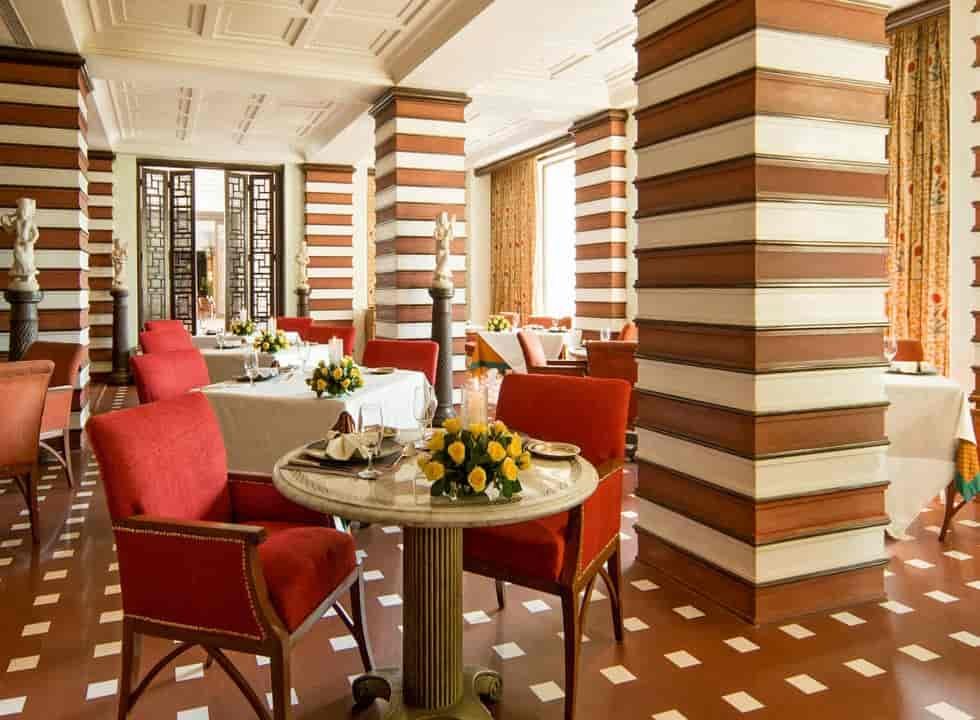
"Esphahan at the Oberoi Amarvilas It’s easy to feel like one of the Mughal royals whose kitchens inspired the menus at this fine-dining restaurant, thanks to the polished service, serene garden views, and elegant decor of rich woods and plush fabrics. The food would do the palace cooks proud, too, with an extensive à la carte menu full of delights like perfectly marinated, charcoal-grilled kebabs (a mixed platter is available so you can try each of the tempting choices), Bengal prawn curry, stuffed banana chilis, Mughul-style fish curry, and quail simmered in sealed pots that are heated underground. For a signature experience, try one of the traditional Indian thalis, a three-course meal accompanied by tandoor-baked breads, homemade pickles, rice pilaf, and more sides, or one of the six-course tasting menus, which feature dishes that meld Indian and Western flavors; think lamb with quinoa, “24-carat gold” chicken, and apple fritters in saffron sauce."

Pearl is the En Primeur Club membership app — saves, bookings, and concierge access live there. Same editors, same standards.
- Address
- The Oberoi Amarvilas, Taj East Gate Rd, Agra, Uttar Pradesh 282001, India
- Phone
- +91 562 223 1515
- Website
- oberoihotels.com
- Directions
- Get directions
The menu
What to order
- Esphahani raan
- Tandoori chicken
- Mixed kebab platter
Dining in the Shadow of the Taj
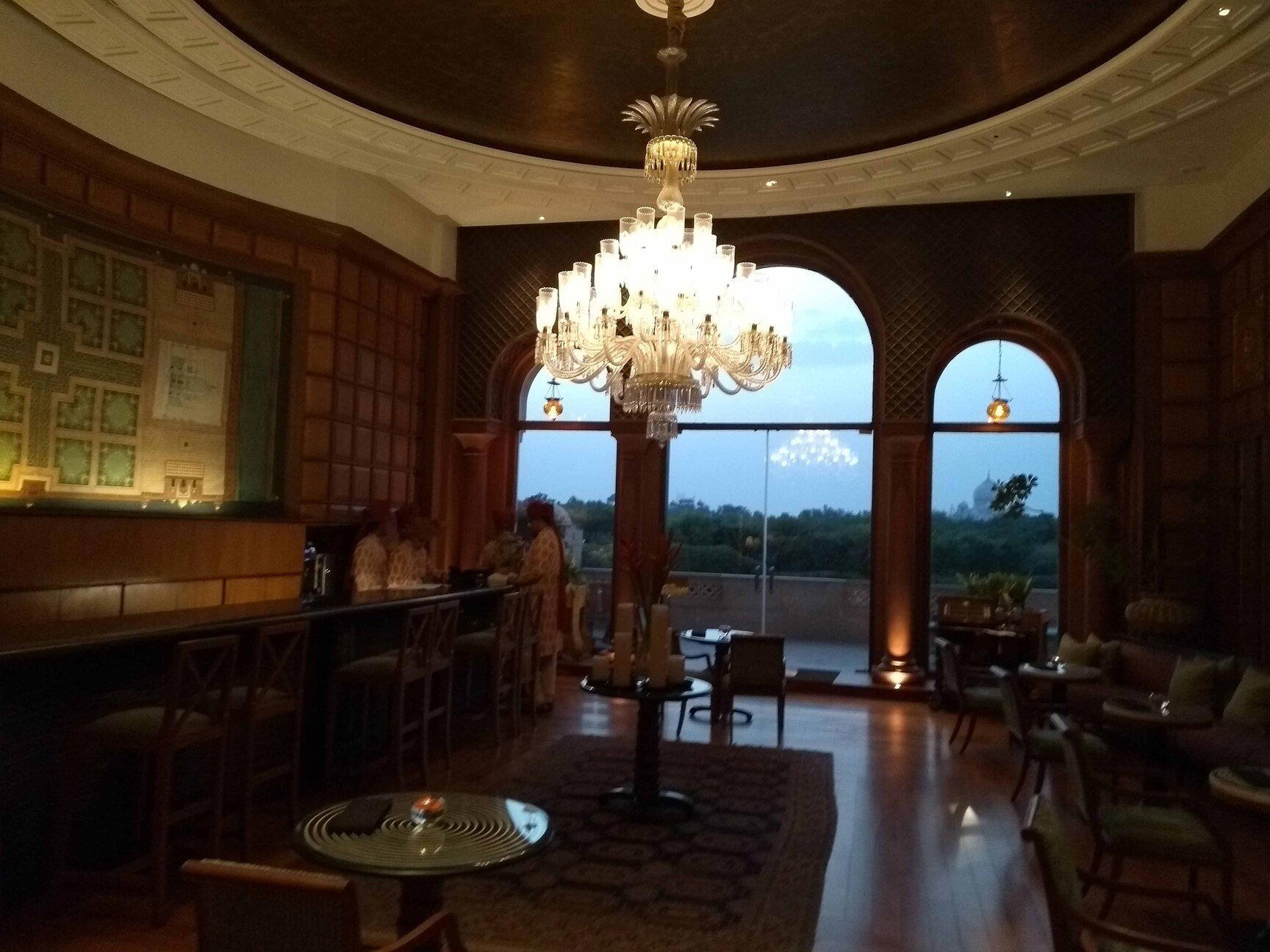
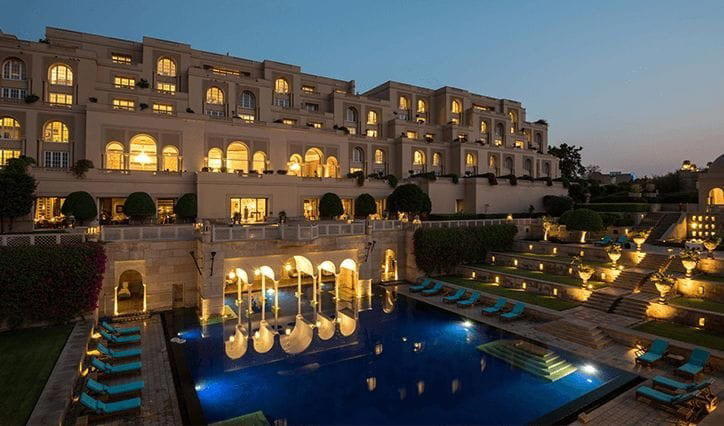
To approach Esphahan at The Oberoi Amarvilas is to understand something about how India's luxury hospitality sector has positioned itself against the country's most visited monument. The Oberoi Amarvilas sits on Taj East Gate Road with unobstructed sightlines to the Taj Mahal itself, and the hotel's dining room inherits that geometry. Arriving guests pass through Mughal-inflected corridors of inlaid stone and warm lamplight before reaching a restaurant that reads, architecturally, as a continuation of the city's 17th-century court aesthetic rather than an interruption of it. The arched ceilings, the low-lit warmth, the distant marble glowing through the windows at dusk: the physical setting does a significant amount of editorial work before a dish arrives at the table.
That context is worth establishing because Esphahan does not operate like a standalone restaurant. It functions as the centrepiece dining expression of a hotel whose positioning is explicitly tied to Agra's heritage, and the cuisine it serves is shaped by that relationship. For a broader sense of where Esphahan fits among Agra's dining options, our full Agra restaurants guide maps the city's range from accessible local kitchens to heritage dining rooms. Esphahan occupies the most formal tier of that spectrum, alongside comparators like Bellevue and Green Park, though it operates in a different register entirely: hotel fine dining anchored to regional culinary tradition rather than casual or mid-market Indian cooking.
The Mughal Kitchen as Source Material
The editorial angle that matters most at Esphahan is not the room or the service, though both are consistent with Oberoi's group-wide standards. What distinguishes this restaurant's identity within the Agra dining conversation is its relationship to Mughal culinary tradition as a sourcing and cooking framework. The Mughal court that built the Taj Mahal also produced one of the most elaborately documented food cultures in Indian history, one that drew on Persian spicing, Central Asian meat traditions, and subcontinental agricultural produce in combinations that remain distinct from both North Indian home cooking and the generalised "Mughal cuisine" found in restaurants across the country.
Esphahan's menu draws on that lineage. Dishes like slow-cooked lamb preparations, saffron-laced rice, and yoghurt-based marinades reference a cooking tradition where ingredient provenance and preparation time were markers of courtly prestige. The slow-cooking methods associated with dum cooking (a technique also central to Inja in New Delhi and the canonical Adaa at Falaknuma Palace in Hyderabad, both of which engage seriously with royal Indian food traditions) require a level of patience in sourcing and kitchen organisation that separates serious practitioners from decorative ones. At its core, dum cooking is an ingredient argument: the technique only justifies its time investment if the raw materials merit it.
India's premium hotel dining rooms have increasingly leaned into regional sourcing as a differentiator. Farmlore in Bangalore takes this furthest by making the farm supply chain the explicit subject of its menu. Naar in Kasauli applies a similar mountain-sourcing logic. Esphahan's approach is more classically framed: the sourcing argument is implicit in the tradition itself rather than narrated on the menu. The cuisine's historical prestige rested on access to rare ingredients, and a serious contemporary expression of it should reflect that same attention to provenance.
Placing Esphahan in India's Fine Dining Conversation
India's premium restaurant tier has expanded and diversified considerably over the past decade. The conversation now includes technically ambitious modern Indian cooking at places like Americano in Mumbai, hyperlocal seafood-forward menus at Bomras in Anjuna, and deep regional specificity at Kappa Chakka Kandhari in Chennai and Leela Kerala Terrace in Trivandrum. Against that backdrop, a hotel restaurant anchored to Mughal culinary heritage occupies a particular niche: it is less about culinary innovation and more about authoritative execution of a defined historical tradition.
The comparison set that makes most sense for Esphahan includes Bukhara (known for its tandoor-heavy North-West Frontier cooking), Dum Pukht (which has made sealed slow-cooking its signature), and Varq (which takes a more international approach to Indian ingredients). Of those, Dum Pukht is the most relevant peer: both restaurants treat slow-cooked meat dishes as their highest expression and both derive authority from a hotel setting that reinforces the food's formal positioning. Esphahan's differentiation, if it holds, comes from the Agra location itself: eating Mughal-inflected food within visual range of the Taj Mahal carries a contextual weight that no Delhi or Mumbai dining room can replicate.
Elsewhere in India's heritage dining tier, venues like Ran Baas The Palace in Qila Mubarak, Dining Tent in Jaisalmer, and Neel in Patiala engage with royal Indian food traditions in ways shaped by their specific regional and architectural contexts. Palaash in Yavatmal and The Malabar House in Fort Cochin approach heritage differently, through ingredient and cultural specificity rather than courtly register. Esphahan sits in the courtly tradition, and that framing shapes what the restaurant is asking you to value.
For international reference points on what serious technique-led fine dining looks like at the level Esphahan aspires to, the precision cooking at Le Bernardin in New York City and the multi-course narrative format at Lazy Bear in San Francisco illustrate how defined culinary traditions are translated into formal dining experiences at the highest tier.
Planning Your Visit
Esphahan is located within The Oberoi Amarvilas on Taj East Gate Road, placing it among the hotels closest to the Taj Mahal's eastern entrance. For travellers visiting the Taj at dawn (the standard recommendation for light quality and crowd management), an evening meal at Esphahan fits naturally as the day's formal anchor. The restaurant's position within a five-star hotel means dress standards align with the property's formal expectations; smart attire is consistent with the dining room's tone. Booking through The Oberoi Amarvilas reservation system is the reliable approach; Agra's peak tourist season runs from October through March, when demand for both the hotel and the restaurant is highest. Summer months bring significantly reduced visitor numbers, which may translate to easier access and a more considered pace of service.
Frequently asked questions
Is Esphahan suitable for children?
Esphahan sits within The Oberoi Amarvilas, a property that operates at the formal end of Agra's hotel sector, and the dining room reflects that register. Families visiting the Taj Mahal complex do bring children, though the setting is better matched to older teenagers who can engage with a structured, course-based meal. Younger children are not excluded, but the pacing and formality of the room are calibrated for adult dining.
What's the vibe at Esphahan?
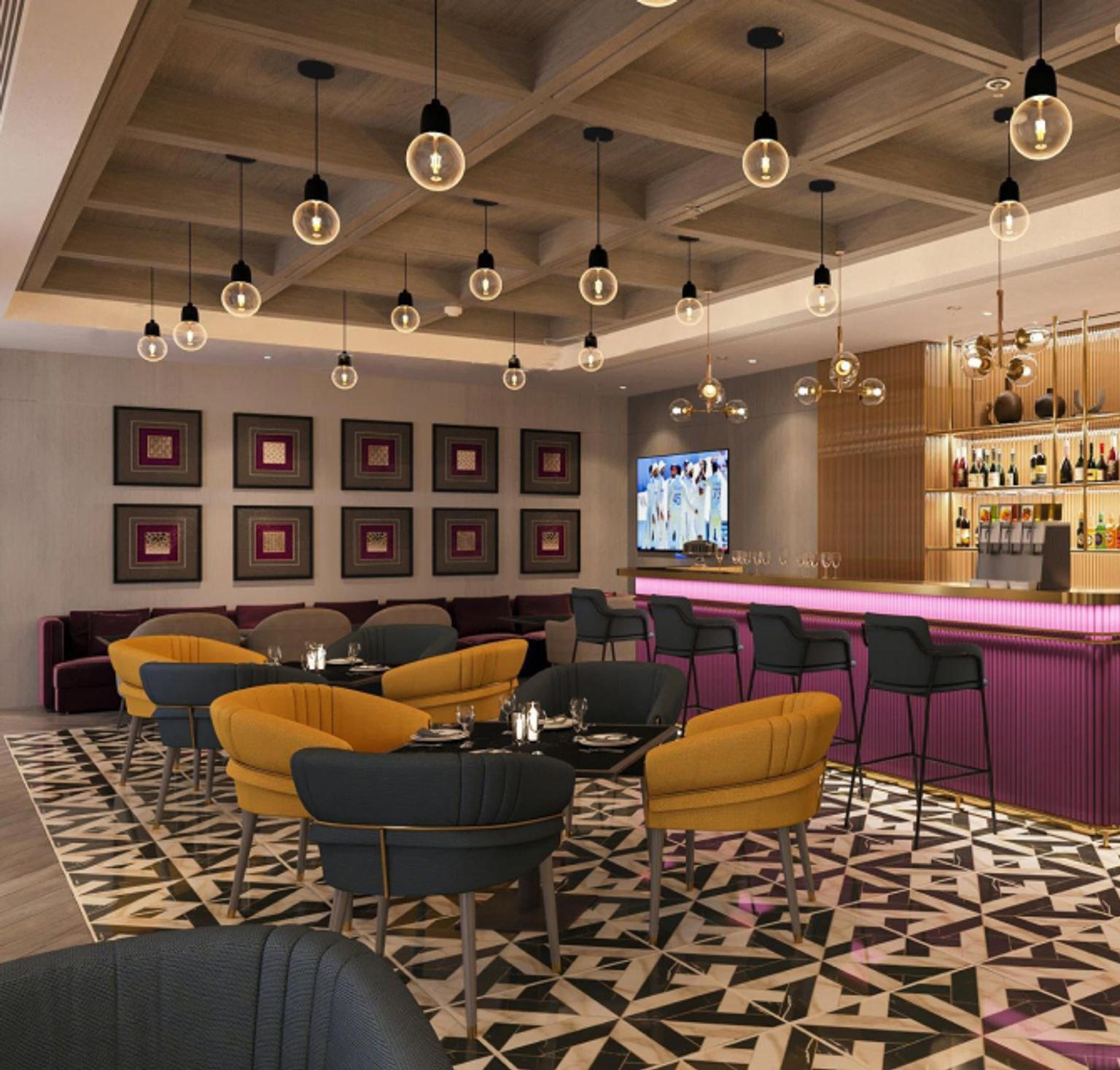
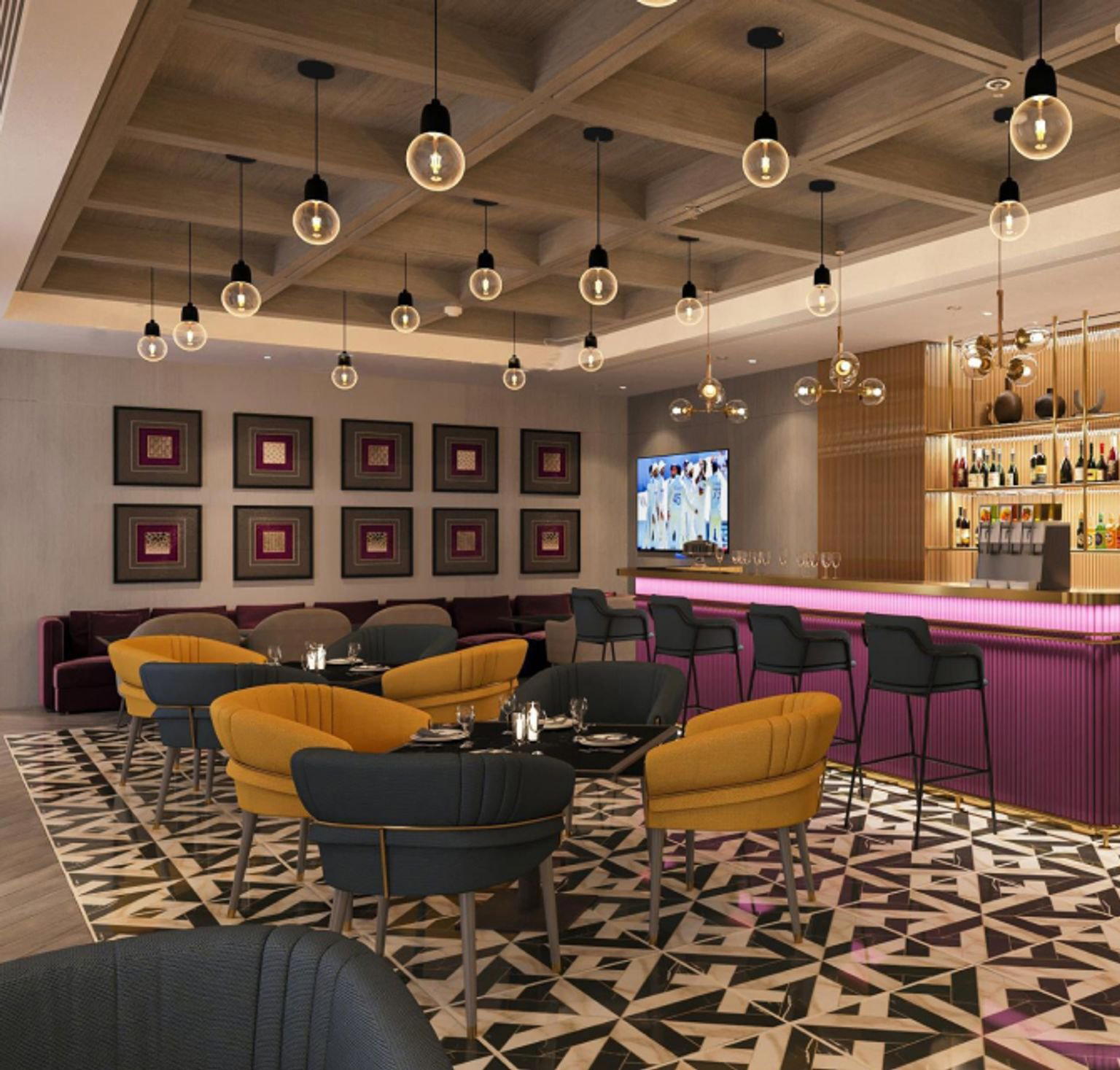
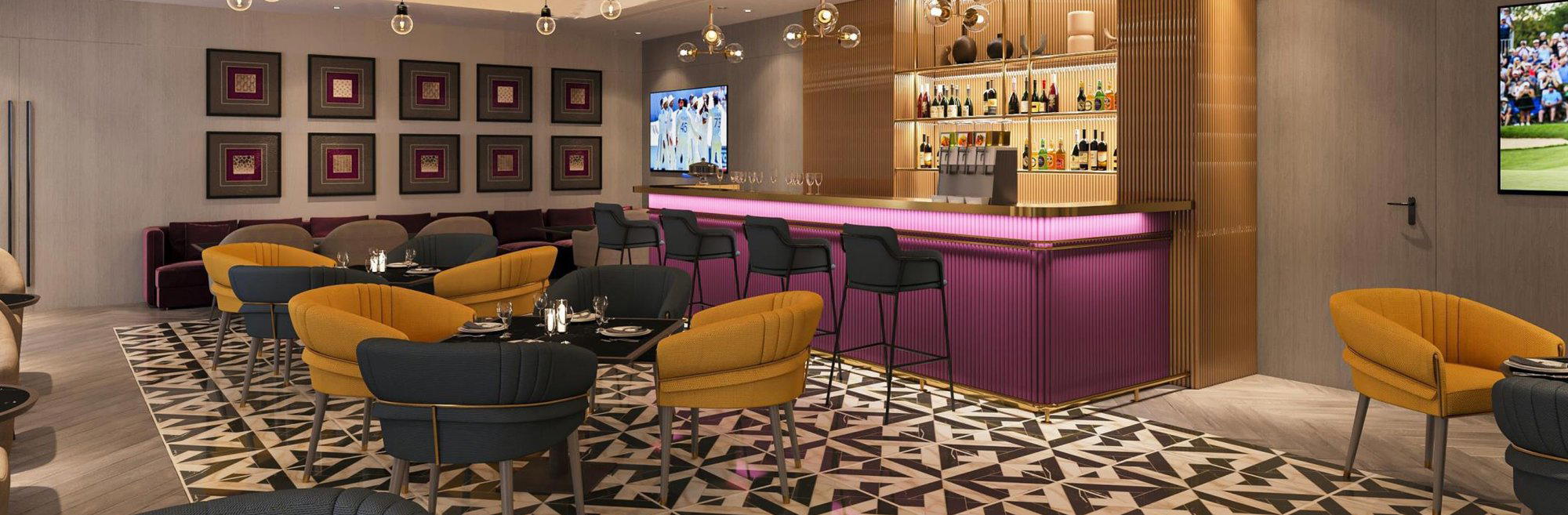
The room draws on Mughal architectural references, with arched interiors and a measured formality consistent with Oberoi's group-wide approach to fine dining. Located on Taj East Gate Road inside The Oberoi Amarvilas, it occupies one of Agra's most architecturally deliberate hotel properties, and the dining room amplifies that aesthetic. The atmosphere runs formal rather than animated, suited to occasion dinners and travellers who want the Taj Mahal proximity to extend into the evening.
Does Esphahan offer a view of the Taj Mahal during dinner?
The Oberoi Amarvilas on Taj East Gate Road is positioned among the hotels with the closest sightlines to the Taj Mahal, and the property is designed to maximise those views across its public spaces. Whether the Esphahan dining room itself offers a direct Taj Mahal view depends on table placement and current room configuration, so guests prioritising that aspect should confirm when booking through the hotel. The proximity alone, inside one of Agra's most architecturally deliberate properties, makes the location a significant part of the dining context.
What's the best thing to order at Esphahan?
Esphahan's kitchen draws from the Mughal culinary tradition, which means the menu centres on slow-cooked preparations, aromatic spice work, and techniques with roots in the royal courts of northern India. Without a current published menu, specific dish recommendations require confirmation directly with the restaurant or through The Oberoi Amarvilas reservations team. The broader Mughal canon at this level typically prioritises dum-cooked meats and layered rice preparations as signature formats.
What's the address for Esphahan?
Esphahan is located at The Oberoi Amarvilas, Taj East Gate Rd, Agra, Uttar Pradesh 282001, India, Agra.
Quick Comparison
| Venue | Cuisine | Price | Awards | Notes |
|---|---|---|---|---|
| EsphahanThis venue — the venue you are viewing | Traditional Mughlai Tandoor | $50–100 | Not listed | Not listed |
| Bukhara | North West Frontier Tandoori | $30–50 | World's 50 Best #37 · La Liste Top Restaurants | Modern Indian |
| Indian Accent | Modern Indian Fine Dining | $50–100 | World's 50 Best #46 · La Liste Top Restaurants | Indian |
| Dum Pukht | Awadhi Dum Pukht Fine Dining | $50–100 | World's 50 Best #89 · La Liste Top Restaurants | Indian |
| Varq | Contemporary Indian Fine Dining with Molecular Fusion | $100–150 | Not listed | International |
| Karavalli | Coastal South Indian Seafood | $20–30 | La Liste Top Restaurants | Indian |
Continue exploring
More in Agra
Restaurants in Agra
Browse all →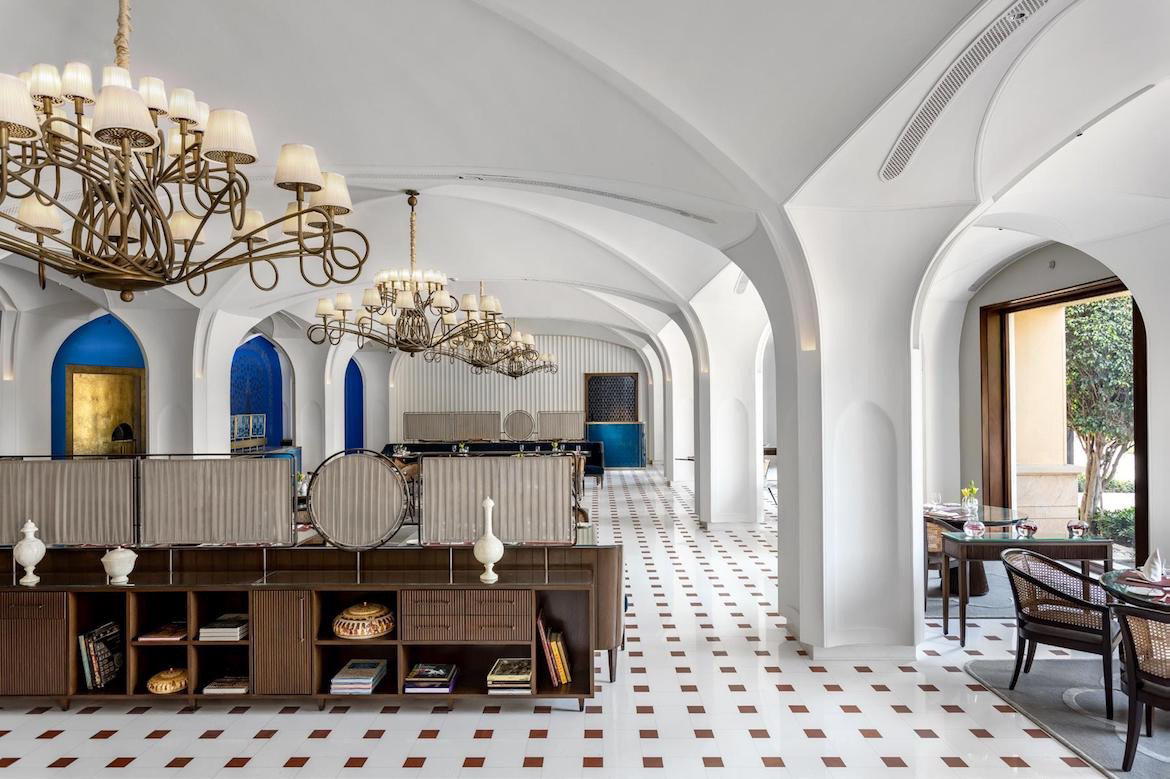

Details
- Elegant
- Ornate
- Sophisticated
- Intimate
- Special Occasion
- Date Night
- Celebration
- Live Music
- Hotel Restaurant
- A La Carte
- Tasting Menu
- Vegetarian Friendly
- Vegan Options
- Gluten Free Options
Demure candlelit tables in a courtyard with intricate carvings, imposing pillars, rich woods, plush fabrics, and serene garden views.