Our verdict
Nam Nam – Dabba sits on Invalidenstraße in Vienna's third district, a neighbourhood where the city's appetite for casual, flavour-driven eating has quietly grown alongside its fine-dining corridor. The address places it within reach of the Belvedere quarter's daytime foot traffic, while the name signals a format built around the dabba tradition of portioned, sequential eating rather than à la carte choice.

Pearl is the En Primeur Club membership app, where members save venues, book tables and use the concierge.

Vienna's Third District and the Case for Sequential Eating
Vienna's dining geography has long been defined by the grand sweep of its first-district institutions and the Michelin-weighted corridor running through the inner city and Stadtpark. But the third district, anchored by the Belvedere gardens and the quieter residential blocks around Invalidenstraße, has developed its own register: smaller formats, fewer covers, and kitchens that tend to think in courses rather than menus. Nam Nam – Dabba at Invalidenstraße 13 fits that pattern. The name itself is a signal. A dabba, in South Asian culinary tradition, is a container, a vessel for portioned food carried, shared, and consumed in sequence. Transplanting that logic to Vienna produces something that sits outside the city's usual binary of à la carte brasserie and tasting-menu fine dining.
That middle ground is increasingly contested in European cities. At the leading end, Vienna has Steirereck im Stadtpark and Amador anchoring the creative tasting-menu tier. At the casual end, the city's Würstelstand and Beisl culture is entrenched. What occupies the middle, progressive, sequential formats that don't require black-tie commitment, is a smaller and more interesting category.
The Dabba Format: How the Meal Unfolds
The dabba structure is worth understanding as a dining philosophy before arriving. Where a traditional tasting menu progresses through a chef's narrative logic, the dabba format borrows from the South Asian tradition of presenting multiple dishes simultaneously or in rapid succession, each component calibrated to work alone and in combination. Texture, temperature, and intensity shift across the sequence without the long pauses of European fine dining. The meal moves.
This contrasts sharply with what Vienna's leading tasting rooms deliver. Konstantin Filippou and Mraz & Sohn both operate within a European tasting-menu grammar: a clear opening-middle-close structure, extended courses, and pacing measured in hours. The dabba approach compresses that arc. Courses arrive with more urgency. The meal rewards attention rather than patience.
For a city that prizes ceremony, this format is a deliberate counterpoint. It draws a line between formal and informal not through decor or dress code, but through the rhythm of eating itself. Internationally, this kind of structured informality has become a distinct tier: Atomix in New York City uses a card-based tasting format to add intellectual structure without ceremony. Le Bernardin, by contrast, maintains full European formality. Nam Nam – Dabba's format sits closer to the former impulse, even if the culinary references are distinct.
Invalidenstraße: A Neighbourhood in Transition
The address at Invalidenstraße 13 places Nam Nam – Dabba in a block that the third district's gradual gentrification has reached but not yet overrun. The Belvedere is a short walk south. The Landstraße U-Bahn interchange connects the street efficiently to the rest of the city. This is not a destination neighbourhood in the way that Vienna's first or seventh districts function for visitors; it rewards the deliberate traveller who has already covered the obvious ground and is looking for something off the tourist-facing axis.
That geographic positioning matters for the format. A dabba-style restaurant in central Vienna would compete directly on tourist footfall. On Invalidenstraße, the likely audience skews local, which tends to produce a more honest calibration of value, pacing, and quality. Restaurants that survive on neighbourhood regulars rather than passing visitors make different calculations about what matters.
Where Nam Nam – Dabba Sits in Vienna's Broader Scene
Vienna's awarded dining scene is weighted toward Austrian and modern European cooking. Doubek and Mraz & Sohn represent the creative-Austrian strand. The South and Southeast Asian register that Nam Nam – Dabba's name invokes is less represented in the city's upper tier, which makes the format and reference points more legible as a deliberate positioning choice rather than a market-driven one.
Austria's wider fine-dining geography stretches well beyond Vienna. Ikarus in Salzburg operates a rotating guest-chef model that pulls in international references. Döllerer in Golling an der Salzach and Obauer in Werfen have built long track records in the Alpine register. Landhaus Bacher in Mautern an der Donau represents the Danube-wine-country tradition. Closer to the mountains, Griggeler Stuba in Lech, Gourmetrestaurant Tannenhof in Sankt Anton am Arlberg, and Schwarzer Adler in Hall in Tirol anchor the Tyrolean end of the market. Kräuterreich by Vitus Winkler in Sankt Veit im Pongau and Ois in Neufelden operate in smaller towns with strong local identities. Restaurant 141 by Joachim Jaud in Mieming completes the picture of a country where serious cooking spreads well outside its capital. Against all of that, a Vienna restaurant working with Asian culinary grammar on a quiet third-district street represents a different kind of ambition.
Planning Your Visit
Invalidenstraße 13 is accessible from Stadtpark via a short walk northeast, or directly from the Landstraße-Wien Mitte transport hub. The third district's parking is less pressured than the inner city, which makes it workable by car for those arriving from outside Vienna. Visitors coming from the Belvedere, a logical pairing given the proximity, should allow time between the gallery and dinner rather than rushing the transition. The dabba format rewards arriving without urgency. For a broader orientation to eating in the city, our full Vienna restaurants guide maps the full range from fine dining to neighbourhood formats.
Frequently asked questions
Is Nam Nam – Dabba a family-friendly restaurant?
The dabba format at Invalidenstraße 13 is structured around a sequential meal progression that rewards engagement with each course as it arrives. That rhythm tends to suit adults more naturally than younger children who may find the pacing less accommodating. Vienna's third district has family-compatible options nearby, but Nam Nam – Dabba is better positioned as an adult dining experience.
Is Nam Nam – Dabba better for a quiet night or a lively one?
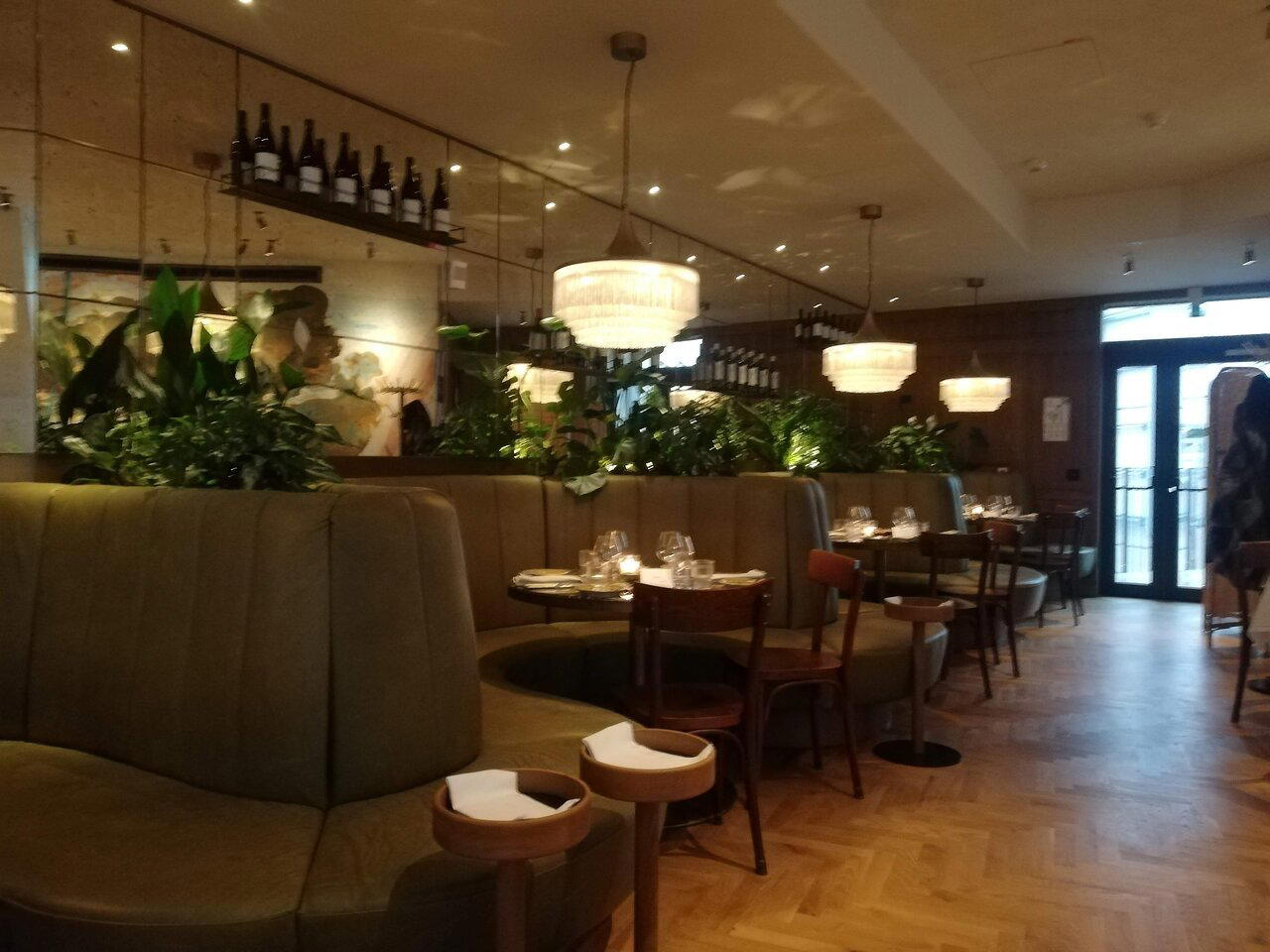
The dabba format and the Invalidenstraße 13 address place this squarely in mid-register territory: more focused than a neighbourhood Beisl, less ceremonial than Vienna's formal tasting-menu rooms. Expect a setting oriented around the meal itself rather than ambient energy. It suits an evening where the food is the primary conversation.
How does the dabba concept at Nam Nam – Dabba differ from a conventional set menu in Vienna?
A conventional set menu in Vienna follows a chef-directed narrative arc, typically moving from amuse-bouche through to dessert as a single progressive statement. The dabba tradition originates in South Asian food culture, where meals are built around multiple self-contained portions sequenced to be eaten together or in close succession rather than as a linear story. At Invalidenstraße 13 in Vienna's third district, that structural difference means the diner's relationship with the meal is fundamentally different from what the city's standard tasting-menu rooms produce.
What's the must-try dish at Nam Nam – Dabba?
EP Club does not hold confirmed dish-level detail for Nam Nam – Dabba at this time. In a dabba-format kitchen, the sequenced structure of the meal is typically the defining experience rather than any single item. Arriving with that framing in mind is the more useful preparation.
Where exactly is Nam Nam – Dabba?
Nam Nam – Dabba is located at Invalidenstraße 13, 1030 Wien, Austria, Vienna.
Do they take walk-ins at Nam Nam – Dabba?
Dabba-format restaurants in European cities often operate with fixed seatings that make walk-in access inconsistent, particularly later in the week. Checking directly via the venue before arriving at Invalidenstraße 13 is advisable.
What makes Nam Nam – Dabba worth seeking out?
Vienna's awarded dining scene defaults heavily toward Austrian-rooted tasting menus and established brasserie formats. A kitchen working within the dabba structure occupies a genuinely distinct position in that context, offering a meal architecture that differs in both cultural origin and pacing from what the city's first and fourth districts typically produce. That structural difference, situated in the third district's still-transitional Invalidenstraße corridor, is the specific case for visiting.
Price and Positioning
Comparable venues nearby, for context on price, style, and recognition.
| Venue | Cuisine | Price | Notes |
|---|---|---|---|
| Nam Nam – DabbaThis venue (the venue you are viewing) | Indian Curry Takeaway | $1–10 | Not listed |
| Nirvana | Modern Indian Cuisine | $20–30 | Stephansdom, Modern Indian Cuisine |
| Cibo Colorato | Neapolitan Pizza | $20–30 | Wien-Mitte, Neapolitan Pizza |
| Rossini | Traditional Italian Trattoria | $20–30 | Innere Stadt, Traditional Italian Trattoria |
| Pepper & Ginny | Vegan Deli | Not listed | Innere Stadt, Vegan Deli |
| Vietthao | Authentic Vietnamese | $20–30 | Staatsoper, Authentic Vietnamese |
Continue exploring
More in Vienna
Restaurants in Vienna
All restaurants in Vienna →
Bars in Vienna
All bars in Vienna →



Details
- Trendy
- Casual
- Casual Hangout
- Small Plates
- Vegetarian Friendly
- Vegan Options
Current opening hours
- Monday
- 11 AM–3 PM
- Tuesday
- 11 AM–3 PM
- Wednesday
- 11 AM–3 PM
- Thursday
- 11 AM–3 PM
- Friday
- 11 AM–3 PM
- Saturday
- Closed
- Sunday
- Closed
Hours can change for holidays and private events. Hours as of .
Casual takeaway spot with a fast-paced lunch atmosphere focused on quick, flavorful Indian street food.