
Nakazato places Tokyo wagashi in a quieter Komagome register, away from hotel lounges and Ginza gift counters. Its Tabelog 100 selection for Tokyo Japanese traditional sweets in 2023, take-out format, and sub-JPY 999 spend make it a low-ceremony stop for readers who want neighbourhood confectionery with credible local recognition.
Pearl is the En Primeur Club membership app — saves, bookings, and concierge access live there. Same editors, same standards.
- Address
- 1 Chome-6-11 Nakazato, Kita City, Tokyo 114-0015, Japan
- Phone
- +81 3-3823-2571
- Website
- nakazato-kashi.com
 Saves & bookings on Pearl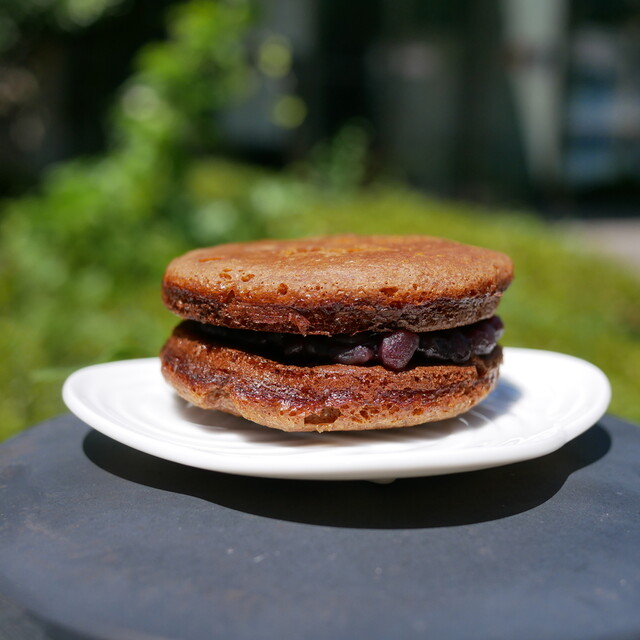
Komagome changes the tempo before any sweet is ordered. The station area sits north of Tokyo’s central dining glare, with small shopfronts, residential errands, and a rhythm closer to daily use than destination theatre. In that setting, Japanese confectionery reads differently: less as a souvenir category, more as a local habit shaped by timing, season, and the short walk between rail platform and counter.
Nakazato belongs to that older Tokyo pattern. The format is take-out rather than a long cafe sit, the category is Japanese traditional sweets, and the spending bracket sits under JPY 999. That combination matters in a city where premium dining often announces itself through counters, courses, and reservation pressure. Wagashi works by another code: compact purchases, precise craft, and a customer base that may be buying for home, guests, or a train ride rather than a photographed meal.
Komagome gives Tokyo wagashi a practical, local frame
Tokyo’s sweets culture is often misunderstood by visitors who meet it first in department-store basements. Those food halls are useful, but they flatten context. Neighbourhood confectioners keep the category attached to everyday rituals: seasonal gifting, tea at home, family visits, and small purchases made with little ceremony. Komagome, with Rikugien nearby and older residential streets around the station, gives that tradition a grounded setting rather than a luxury-retail frame.
The recognition here is not decorative. A place selected for Tabelog’s Tokyo Japanese traditional sweets and Japanese sweets cafe 100 list in 2023 sits inside a citywide field where longevity, consistency, and local affection carry weight. The listed Tabelog score of 3.68 also signals a serious audience by Japanese review standards, where scores are typically conservative. For an international reader used to inflated star averages, that number should be read with local calibration.
The contrast with nearby restaurant spending is instructive. Grill K Komagome honten occupies a casual restaurant bracket around JPY 1,000 to JPY 2,999 depending on meal period, while Yakitori Sekine and Ikewanagi no Mise Tsugumi An sit in much higher dinner ranges. Wagashi under JPY 999 is not competing with those meals. It fills the gap between meal and gift, between station errand and seasonal custom. That is why the experience feels sharper when treated as part of a neighbourhood day rather than as a standalone pilgrimage.
A take-out sweet shop, not a tasting-menu performance
Important detail is the format. Take-out changes the reader’s expectations: no long table time, no chef narration, no progression of courses. The quality test shifts to selection, packaging, turnover, and how naturally the shop fits into local traffic. In Tokyo, that can be more revealing than another high-ticket dining room because it shows how craft survives at ordinary purchase size.
That also explains the value of restraint in planning. This is a daytime stop, not a late-night dessert plan. It works well around Komagome, Yanesen, or a north-Tokyo itinerary where food is threaded through walking rather than booked as the day’s central event. Pairing a wagashi run with gardens, temples, or older shopping streets gives the visit context. Treating it like a restaurant reservation misses the point.
For broader Tokyo dining, the city now splits into highly structured formats and friction-light specialists. The former includes counters such as 124. KAGURAZAKA (Yakitori) or higher-spend grilled and eel formats in the comparison set; the latter includes curry shops, cafes, and sweets counters where the appeal is narrow and exact. Readers mapping the city by category can compare the spectrum through 3 Chome no Curry Ya San, 2D Cafe, 12/10 Shinjuku ten, and . 鮪と炭火焼き うお炭 秋葉原店.
How to place it in a Tokyo itinerary
Nakazato makes the strongest case as a north-Tokyo punctuation mark. The address places it in Kita City, close to Komagome Station, which makes it easier to fold into a day than many specialist counters farther from transit. The opening pattern is daytime and Sunday is closed, so the intelligent move is to treat it as a planned daytime purchase rather than an after-dinner fallback.
Payment habits also matter in this category. Cash remains the cleanest assumption for small traditional shops in Tokyo, especially where card and electronic payments are not accepted. That is not a flaw; it is part of the operating scale. The same applies to the absence of private rooms or private-use framing. This is a shop-format sweets stop, not a hosted dining event.
For readers building a wider food map, use it as a corrective to Tokyo’s reservation-heavy reputation. The city’s restaurant culture is not only omakase, wagyu counters, and hotel dining rooms. It also includes inexpensive craft categories with award-list recognition, narrow opening windows, and strong neighbourhood identity. For a wider scan, see Our full Tokyo restaurants guide, then place sweets alongside Our full Tokyo bars guide, Our full Tokyo hotels guide, Our full Tokyo wineries guide, and Our full Tokyo experiences guide.
Japan’s casual-specialist map extends well beyond Tokyo, and it rewards the same kind of category-specific reading. Compare the domestic spread through -Grilled beef Sukiyaki- KAMAKURA TANUKIAN 鎌倉 たぬき庵 in Kamakura.cafe in Osaka.know in Kumamoto, (Shoku) Vietnam in Kawasaki, [Curry Senmon Ten] Maruyama Kyoju. in Sapporo, and [ki:] in Kyoto. For Japanese food culture abroad, Jōdo Saké Bar in Los Angeles and Onigiri Time in Pasadena show how narrower formats travel when stripped of Tokyo’s neighbourhood context.
Fast Comparison
Comparable venues side-by-side for orientation.
| Venue | Cuisine | Price | Notes |
|---|---|---|---|
| NakazatoThis venue — the venue you are viewing | Traditional Japanese Wagashi Shop | $ | Not listed |
| レベル | Modern Japanese Fine Dining | $ | Shinjuku |
| Jikasei Chuka Soba Toshioka | Ramen & Tsukemen Counter | $ | Shinjuku |
| Pinocchio | Japanese Kissaten / Pancakes | $ | Itabashi |
| Kitchen Nankai Chiyoda kanda jinbou ten | Japanese Yoshoku | $ | Chiyoda |
| Men Mitsui | Refined Tokyo Ramen | $ | Taitō |
Recognition history
Dated appearances from independent guides and award organizations, with the underlying list record or original source where available.
Tabelog 100 #49 · No. 49
Tabelog · Tabelog 100 - Japanese traditional sweets / Japanese sweets cafe - TOKYO - 2023









At a Glance
- Classic
- Quiet
- Well Known
- Solo
- Family
- Casual Hangout
- After Work
- Historic Building
- Standalone
- Local Sourcing
Current opening hours
- Monday
- 10 AM–5 PM
- Tuesday
- 10 AM–5 PM
- Wednesday
- 10 AM–5 PM
- Thursday
- 10 AM–5 PM
- Friday
- 10 AM–5 PM
- Saturday
- 10 AM–4 PM
- Sunday
- Closed
Hours can change for holidays and private events. Last verified .
A small, old-school Japanese confectionery with a simple storefront and a quiet, utilitarian interior that focuses on takeaway rather than lingering, reflecting its long history and neighborhood roots.