
Michelin Plate
Our verdict
A Michelin Plate-recognised Japanese restaurant in Stuttgart's Feuerbacher Tal district, nagare brings the precision and restraint of Japanese cooking to a city whose dining scene skews heavily toward Central European and French traditions.

Pearl is the En Primeur Club membership app — saves, bookings, and concierge access live there. Same editors, same standards.
- Address
- Feuerbacher-Tal-Straße 34, 70469 Stuttgart, Germany
- Phone
- +49 711 93541290
- Hours
- Mon–Wed ClosedThu–Sun 6–10 PM
- Website
- restaurant-nagare.de
- Directions
- Get directions
- Booking
- Book on TheFork
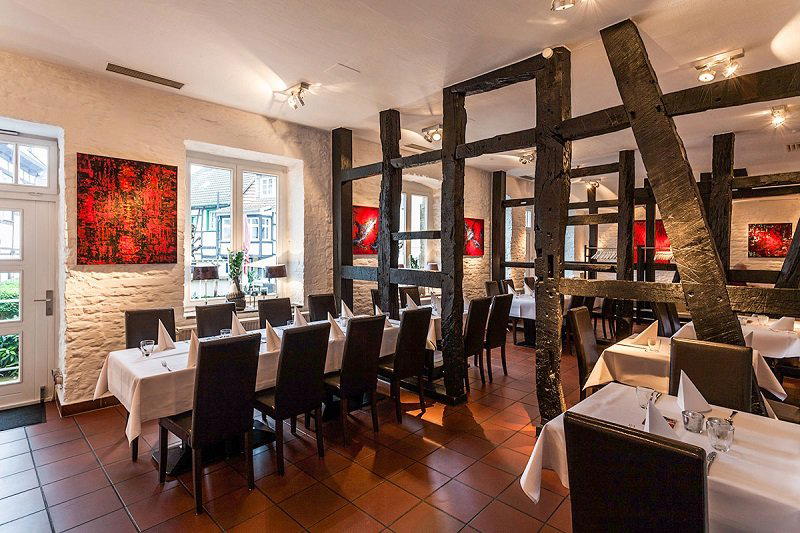
Japanese Cooking in a City Built on Riesling and Schnitzel
Stuttgart's dining identity has long been shaped by Swabian tradition and the gravitational pull of French technique. The city's leading tables, from the creative programming at Speisemeisterei to the modern cuisine at 5, tend to orbit a recognisable European axis. Against that backdrop, a Michelin-recognised Japanese restaurant operating in the Feuerbacher Tal neighbourhood carries a certain quiet significance. nagare does not announce itself loudly. The address, a residential stretch of Feuerbacher-Tal-Straße in the 70469 district, sits well north of the city centre's restaurant clusters, in an area more accustomed to apartment buildings than tasting menus. That remove is part of the experience: you travel to it deliberately, which tends to filter the room toward guests who are there for the food.
What Japanese Cuisine Means in a German Context
Germany's relationship with Japanese cooking has matured considerably over the past decade. In Berlin, formats like CODA Dessert Dining show how far the country's restaurant culture has moved toward precision-led, concept-driven dining. In Munich, addresses such as JAN demonstrate the appetite for serious international cooking outside the capital. Stuttgart has historically lagged on this front. Its Michelin-decorated restaurants, including Der Zauberlehrling and Délice, operate within broadly European frameworks. An authentically Japanese kitchen with consecutive Michelin recognition therefore occupies a category with very little local competition.
Japanese cuisine in the European context often gets flattened into two commercial registers: casual sushi chains at one end and expensive omakase counters at the other. nagare's mid-range price point, indicated by the €€ classification, suggests a more considered middle position, where craft and cultural specificity are present without the barrier of premium counter pricing. That positioning mirrors how some of Japan's most serious regional cooking actually functions at home, where rigour does not automatically translate into expense.
The intellectual framework of Japanese cooking, with its emphasis on seasonal produce, technique discipline, and restraint as a form of expression, stands at some remove from Stuttgart's local culinary character. Swabian cooking rewards richness: Maultaschen, Linsen mit Spätzle, roast meats. French-influenced dining, which has shaped the city's leading end through restaurants like Hegel Eins, applies classical European structure.
Michelin Recognition in Context
The Michelin Plate, awarded in both 2024 and 2025, signals food that meets the guide's quality threshold without yet reaching the Bib Gourmand or starred tiers. Within the Michelin framework, the Plate sits below the star and Bib distinctions, but its consecutive award across two years carries real meaning: it signals consistency, not a one-cycle anomaly.
To understand where nagare sits in the broader German restaurant picture, consider the tier above it. Three-Michelin-starred German restaurants like Schwarzwaldstube in Baiersbronn, Aqua in Wolfsburg, and Vendôme in Bergisch Gladbach represent the country's highest-recognised kitchens. ES:SENZ in Grassau occupies another distinct regional position. nagare does not compete in that bracket. It competes, instead, in the category of serious, committed cooking that makes a neighbourhood worth visiting: the kind of restaurant that anchors a local food culture rather than existing for destination diners alone.
The Cultural Roots of the Cooking
Japanese restaurant culture, at its most principled, treats simplicity as the product of discipline rather than the absence of effort. The Japanese culinary tradition draws heavily on seasonality codified over centuries, from the washoku framework of rice, miso, and pickles that UNESCO recognised as intangible cultural heritage in 2013, to the precision of katachi (form) in presentation. These principles do not travel automatically; they require kitchens willing to source correctly, train consistently, and resist the pressure to adapt dishes toward local preference at the expense of integrity.
A Japanese restaurant in Stuttgart operates at a different remove from that source, which makes the discipline required to earn and retain Michelin recognition more, not less, meaningful.
The cuisine type listed for nagare is simply Japanese, without subcategory designation. That breadth is informative. It suggests a kitchen working across the Japanese repertoire rather than narrowing to a single format (sushi-only, ramen-only, izakaya), which is typically the model for restaurants trying to introduce Japanese cooking to audiences who are encountering it seriously for the first time.
Getting There and Planning a Visit
Feuerbacher-Tal-Straße 34 sits in the Feuerbach district, north of Stuttgart's central ring. The area is accessible by S-Bahn from Stuttgart Hauptbahnhof, with Feuerbach station serving as the nearest rail point. The neighbourhood has a residential rather than a dining-district character, which means nagare is unlikely to be a walk-past discovery. Visitors from outside Stuttgart may want to build a broader trip using our full Stuttgart restaurants guide alongside the city's hotels guide, bars guide, wineries guide, and experiences guide to make the journey worthwhile across a full day or weekend.
The €€ price point positions nagare accessibly relative to Stuttgart's decorated European tables. Where starred addresses like Speisemeisterei or 5 price at the €€€€ tier and Der Zauberlehrling operates at €€€, nagare delivers Michelin-recognised cooking at a lower per-head entry point. For guests visiting in autumn and winter, when Japanese culinary tradition places particular emphasis on warming, ingredient-led preparations, the season aligns well with the cuisine's natural rhythms. Specific booking methods, opening hours, and phone contact are not published in available listings at this time; checking directly or via restaurant discovery platforms before visiting is advisable.
Frequently asked questions
What does dinner at nagare typically cost?
Pricing at nagare is listed as €€.
What distinctions does nagare have?
nagare has received recognition including: Michelin Plate (2025); Michelin Plate (2024).
What should I order at nagare?
The kitchen works within Japanese culinary tradition, where restraint and technique carry more weight than elaborate presentation. Given the mid-range price point (€€) and two consecutive Michelin Plate recognitions in 2024 and 2025, the cooking is consistent enough to trust the chef's selections rather than building a custom order. Seasonal Japanese formats typically reward diners who follow the kitchen's lead rather than ordering à la carte selectively.
Where is nagare located?
nagare is located at Feuerbacher-Tal-Straße 34, 70469 Stuttgart, Germany, Stuttgart.
Do they take walk-ins at nagare?
Phone and booking details are not publicly listed for nagare at this time. The Feuerbach address at Feuerbacher-Tal-Straße 34 is accessible from Stuttgart Hauptbahnhof via S-Bahn, making it practical to visit and enquire directly. For a venue with two consecutive Michelin Plate awards, securing a reservation in advance is the more reliable approach.
What is nagare known for?
Nagare is one of Stuttgart's few Japanese restaurants to hold Michelin recognition, receiving the Plate in both 2024 and 2025. That consistency signals food that meets the Michelin quality threshold in a city where the dominant culinary reference points are Swabian and French. The venue sits in the Feuerbach district, outside Stuttgart's central restaurant cluster, and operates in the mid-range price bracket (€€).
Peers Worth Knowing
A short peer table to compare basics side-by-side.
| Venue | Cuisine | Price | Awards | Notes |
|---|---|---|---|---|
| nagareThis venue — the venue you are viewing | Modern Japanese Creative Cuisine | $100–150 | Michelin Plate | Not listed |
| Speisemeisterei | Modern Creative Fine Dining | $200–300 | 2 Michelin Stars · La Liste Top Restaurants | Creative |
| 5 | Modern Fusion Fine Dining | $150–200 | 1 Michelin Star | Modern Cuisine |
| Der Zauberlehrling | Modern Fusion Fine Dining | $150–200 | 1 Michelin Star | Creative |
| Hupperts | Modern German Fine Dining | $100–150 | 1 Michelin Star | Classic Cuisine |
| Wielandshöhe | Classic French Fine Dining with Swabian Influences | Not listed | 1 Michelin Star · Falstaff Restaurant - 94 Falstaff Points | Classic French |
Recognition history
Dated appearances from independent guides and award organizations, with the underlying list record or original source where available.
Michelin Plate
Michelin · 2026 Michelin Plate
Full recognition history (3 entries)
Michelin Plate
Michelin
Michelin Plate
Michelin
Continue exploring
More in Stuttgart
Restaurants in Stuttgart
Browse all →
Bars in Stuttgart
Browse all →

Hotels in Stuttgart
Browse all →

Details
- Minimalist
- Modern
- Intimate
- Elegant
- Date Night
- Special Occasion
- Business Dinner
- Open Kitchen
- Sake Program
- Tasting Menu
- A La Carte
- Small Plates
- Sake
- Vegetarian Friendly
Current opening hours
- Monday
- Closed
- Tuesday
- Closed
- Wednesday
- Closed
- Thursday
- 6–10 PM
- Friday
- 6–10 PM
- Saturday
- 6–10 PM
- Sunday
- 6–10 PM
Hours can change for holidays and private events. Last verified .
Minimalist Far Eastern-style interior with a calm, cozy, and sophisticated atmosphere praised for its pleasant mood.