My Mem occupies a residential address on Deisterstraße in Hanover's Linden district, a neighbourhood that has drawn independent restaurants working outside the city's formal fine-dining tier. The kitchen applies continental technique to regionally sourced ingredients, positioning the restaurant within a broader pattern of mid-market European cooking that has taken hold across Germany's secondary cities over the past decade.
Pearl is the En Primeur Club membership app — saves, bookings, and concierge access live there. Same editors, same standards.
- Address
- Deisterstraße 24, 30449 Hannover, Germany
- Phone
- +491743272789
- Website
- mymem1407.de
- Directions
- Get directions
 Saves & bookings on Pearl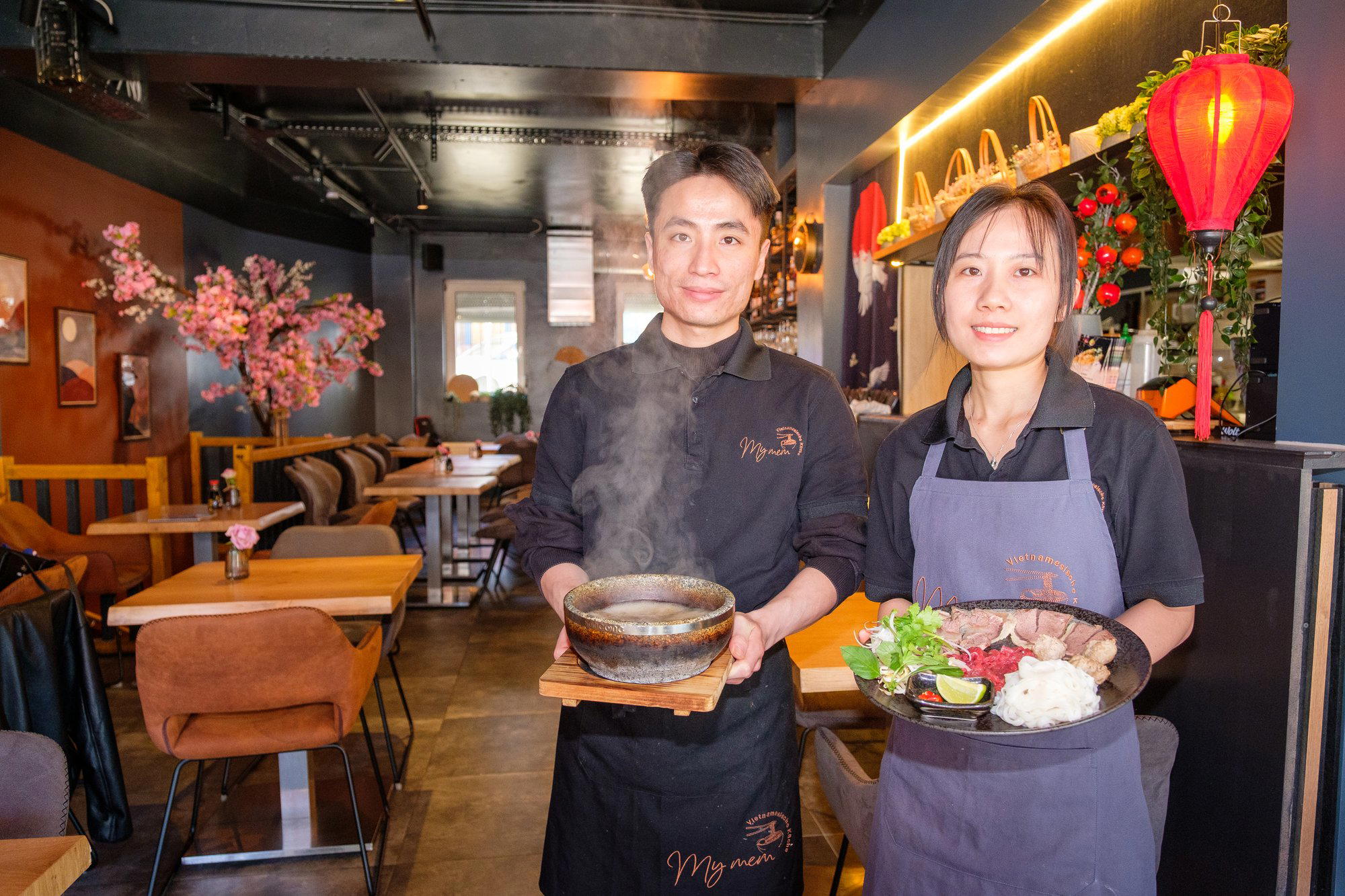
Linden and the Rise of Neighbourhood-Driven Dining in Hanover
My Mem is a Vietnamese and Japanese restaurant at Deisterstraße 24 in Hanover's Linden district. Linden, the western borough that borders the Ihme canal, has accumulated a cluster of independent operators working at a price point below the tasting-menu tier, drawing a local clientele that is less interested in occasion dining and more interested in neighbourhood regularity. My Mem, at Deisterstraße 24, sits inside that pattern. The address is residential in character, the kind of street where a restaurant earns its place through consistent quality rather than destination-dining theatre.
This neighbourhood positioning matters because it sets the competitive frame. Hanover's higher-end creative restaurants, including Jante and Votum, operate in a different register entirely, with tasting formats and price brackets that place them closer to Germany's regional fine-dining circuit than to everyday urban eating. My Mem operates in the space between those anchored fine-dining addresses and the casual end of the market, a tier that European cities have seen expand considerably since 2015 as ingredient-focused, technique-literate cooking moved away from formal rooms and into neighbourhood settings.
Where Local Ingredients Meet Continental Method
The more telling context for My Mem is what has happened across Germany's secondary cities as a generation of cooks trained in classical and modern European kitchens has moved toward smaller, independently run rooms. At restaurants like Handwerk in Hanover, the model involves applying precise technique to regional produce without the full apparatus of a tasting menu or a sommelier-led wine program. My Mem appears to work within a similar logic, where the kitchen's competence comes from an engagement with method rather than from seasonal ingredient novelty alone.
That intersection of imported technique and indigenous product has become one of the defining tensions in German mid-market cooking. Chefs trained in French classical tradition, or in the product-first Nordic school, have applied those frameworks to Lower Saxon ingredients: root vegetables from the Leine valley, pork and game from the surrounding agricultural belt, freshwater fish from regional rivers. The results tend to sit closer to Marie's French-inflected precision than to the international eclecticism of a restaurant like Albertz., but the underlying logic is the same: European technique applied with enough local grounding to give the menu a sense of place rather than a sense of borrowed identity.
Germany's broader fine-dining circuit provides useful orientation. At the upper end of the national conversation, addresses like Aqua in Wolfsburg, Vendôme in Bergisch Gladbach, and Waldhotel Sonnora in Dreis represent the classical peak of German restaurant culture, while CODA Dessert Dining in Berlin and ES:SENZ in Grassau signal how far the country's avant-garde tier has pushed the formal experiment. My Mem operates well below that stratosphere, in the functional middle ground where most urban diners actually eat.
Reading the Room: What the Deisterstraße Address Signals
Location in a city like Hanover carries information. Restaurants that open in residential streets rather than in the Mitte or along the main commercial corridors are typically making a calculation: lower rent enables more kitchen investment, and a local clientele provides the repeat business that keeps a small operation solvent without relying on tourist or expense-account traffic. That structural logic is visible across European cities with strong neighbourhood dining cultures, from the inner arrondissements of Lyon to the residential belts around Hamburg's Altona. Restaurant Haerlin in Hamburg anchors the city's formal fine-dining tier, but it is the smaller rooms in the surrounding boroughs that sustain Hamburg's daily eating culture. Hanover follows a comparable pattern.
The international comparison is instructive too. The intersection of local sourcing and globally trained technique that defines this restaurant tier is not a German-specific phenomenon. At JAN in Munich, a South African perspective reshapes Bavarian produce through a lens formed elsewhere. At the upper end of the global conversation, Le Bernardin in New York City demonstrated decades ago that classical French technique applied with absolute precision to the leading available product is an entirely sufficient formula. Atomix in New York City extends that principle through a Korean lens. My Mem's scale and position in Hanover places it far from those reference points in ambition and price, but the underlying question is the same: does the technique serve the ingredient, or does the ingredient become a pretext for technique?
Planning a Visit
My Mem is located at Deisterstraße 24 in the Linden district, reachable from Hanover's central station by tram on lines that serve the western boroughs, with the journey running under fifteen minutes. The restaurant is walk-in friendly, and opening hours run Mon to Thu and Sun from 12 to 10 PM, Fri and Sat from 12 to 11 PM.
For context on Hanover's wider dining range, the EP Club Hanover restaurants guide maps the city's key addresses across price points and cooking styles. Visitors interested in how precision cooking sits alongside neighbourhood accessibility will find that My Mem occupies a position in Hanover's dining map that more formal rooms simply do not occupy. Victor's Fine Dining by Christian Bau in Perl represents yet another register of German formal cooking. My Mem's interest lies precisely in what it is not: it is not a destination-dining exercise or a room calibrated for the expense-account occasion. It is a neighbourhood restaurant in a city that has been building a genuine neighbourhood restaurant culture, and that is what makes it worth understanding on its own terms.
Credentials Lens
Comparable venues nearby, for context on price, style, and recognition.
| Venue | Cuisine | Price | Notes |
|---|---|---|---|
| My MemThis venue — the venue you are viewing | Vietnamese and Japanese | $$ | Not listed |
| Stadtmauer am Lister Platz | Modern German Crossover | $$ | List |
| Butjer | Smashed Burgers | $$ | Linden-Mitte |
| Lindener Lehmofen | Turkish Street Food | $$ | Linden |
| Francesca & Fratelli | Italian Pizza | $$ | Oststadt |
| Suppenhandlung | German Soup Specialties | $$ | Nordstadt |
Continue exploring
More in Hanover
Restaurants in Hanover
Browse all →
Bars in Hanover
Browse all →
Hotels in Hanover
Browse all →

At a Glance
- Cozy
- Casual Hangout
Current opening hours
- Monday
- 12–10 PM
- Tuesday
- 12–10 PM
- Wednesday
- 12–10 PM
- Thursday
- 12–10 PM
- Friday
- 12–11 PM
- Saturday
- 12–11 PM
- Sunday
- 12–10 PM
Hours can change for holidays and private events. Last verified .
Cozy atmosphere.