Lindener Lehmofen sits in Linden, Hanover's most culinarily restless neighbourhood, where neighbourhood dining has historically meant something more considered than city-centre showmanship. The address at Falkenstraße 21 places it inside a district shaped by decades of independent restaurant culture, where cooking traditions, including the clay-oven formats the name references, carry specific cultural weight.
Pearl is the En Primeur Club membership app — saves, bookings, and concierge access live there. Same editors, same standards.
- Address
- Falkenstraße 21, 30449 Hannover, Germany
- Phone
- +4951134005267
- Website
- lindener-lehmofen.de
- Directions
- Get directions
 Saves & bookings on Pearl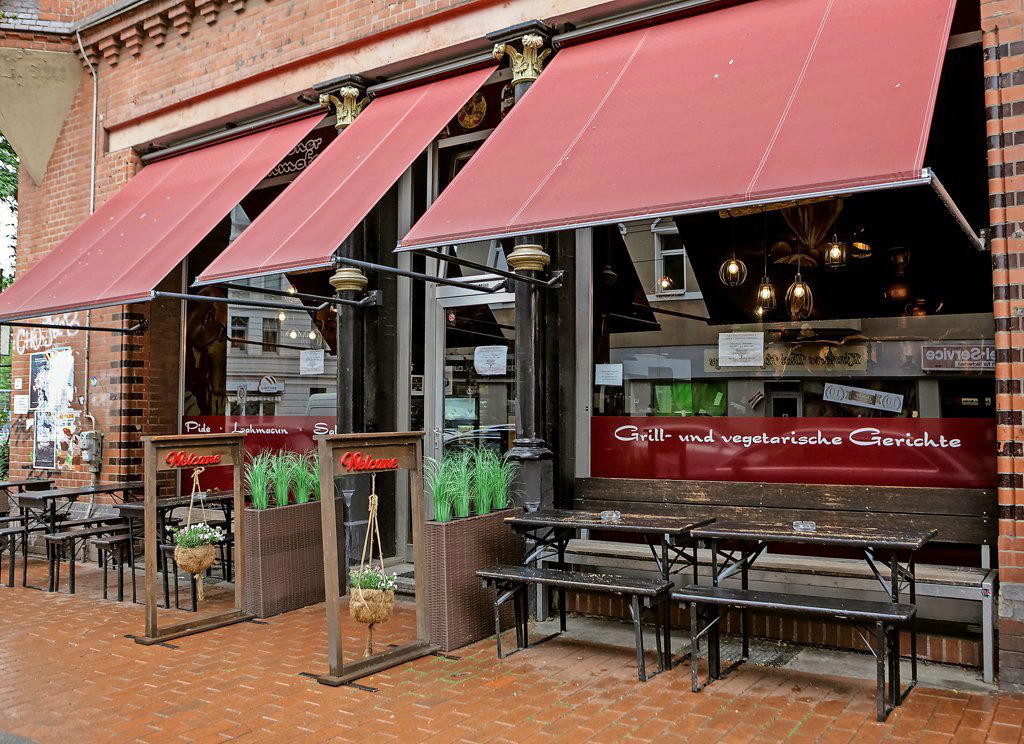
Clay, Fire, and the Linden Tradition
In Hanover's Linden district, durable dining institutions tend to share a common quality: they are built around a cooking method or cultural tradition rather than a chef's personal narrative. Linden has long operated as the city's counterweight to the formal fine-dining corridor closer to the Altstadt, with a restaurant culture that prizes specificity of technique and community rootedness over Michelin visibility. Lindener Lehmofen, at Falkenstraße 21, takes its name from the Lehmofen, the clay oven, a cooking form with roots across Central Asia, the Middle East, and the Caucasus that arrived in German cities through successive waves of immigration and trade. That cultural lineage matters here. A clay oven is not a gimmick; it is a technology refined over millennia for managing radiant heat, moisture retention, and the particular crust that forms when dough or protein meets a porous, superheated surface.
Linden itself rewards understanding before a visit. The neighbourhood sits west of the city centre, and its dining scene has historically attracted restaurants that would look underfunded by the standards of central Hanover but cook with considerably more intention. It is the kind of district where a restaurant's reputation travels by word of mouth across years rather than by press cycle, and where regulars are measured in decades rather than seasons. Lindener Lehmofen fits that template. The Falkenstraße address puts it inside a residential stretch of Linden-Mitte, away from the louder thoroughfares, which means the clientele tends to arrive with purpose rather than impulse.
What the Clay Oven Represents in a German City
The Lehmofen format occupies an interesting position in the broader German dining context. Germany's premium restaurant tier, the Michelin-starred rooms at places like Aqua in Wolfsburg or JAN in Munich, operates on a European fine-dining grammar that draws heavily from French classical tradition. Beneath that tier, the more culturally specific cooking traditions, including the tandoor and clay-oven formats common across Turkish, Central Asian, and Caucasian cuisines, occupy a parallel track that rarely intersects with the award conversation but frequently outperforms in terms of raw cooking quality and ingredient focus.
That parallel track has become more visible across German cities in the past decade, as a generation of diners with broader reference points has started treating clay-oven cooking with the same seriousness previously reserved for tasting menus. In Hanover, this shift is legible across the Linden neighbourhood more than anywhere else in the city. While the starred and near-starred rooms, Jante, Votum, and Handwerk, concentrate their ambition in the fine-dining format, Linden's independent kitchens pursue a different kind of rigour: technique fidelity, sourcing discipline, and the slow work of building a regular clientele over years.
Hanover's Dining Tiers and Where Linden Sits
Hanover does not have the density of starred restaurants found in Hamburg or Munich, but it has a functioning hierarchy. At the leading end, a small cluster of creative and French-influenced rooms handles the formal occasion market. Marie and Albertz. operate in that register. Further down the price ladder, neighbourhood restaurants in Linden and Nordstadt fill a middle tier that German dining culture has historically done well: considered cooking at approachable prices, without the ceremony of a tasting menu format.
Lindener Lehmofen's positioning in Linden places it in that middle tier, where the competitive pressure comes not from Michelin benchmarks but from the accumulated reputation of the neighbourhood itself. Linden diners tend to be loyal and comparative, with years of experience across the district's independent kitchens. That audience is harder to satisfy with surface-level execution than a tourist-facing room might be, and the restaurants that survive multiple years in Linden have generally earned their position through consistency rather than hype. For the broader German context of what serious cooking looks like outside the starred tier, the contrast is useful: Schwarzwaldstube in Baiersbronn and Vendôme in Bergisch Gladbach represent what formal ambition looks like at the highest level; the restaurant operates on a different but legitimate axis entirely.
The Cultural Weight of the Lehmofen Format
Clay-oven cooking carries specific cultural associations depending on which tradition you trace. In Turkish and Central Asian contexts, the tandır or Lehmofen is a communal cooking instrument, often associated with flatbreads, slow-roasted meats, and the kind of cooking that requires patience and knowledge of heat management rather than precision equipment. In the context of a Hanover neighbourhood restaurant, that tradition translates into a cooking style that rewards ingredients capable of benefiting from prolonged dry heat and smoke, bread with a particular char and chew, proteins with rendered fat and concentrated flavour, dishes where the oven's character is the point rather than a production detail.
This sits in productive contrast to the format-driven cooking visible at the city's higher-end rooms, or at places like CODA Dessert Dining in Berlin or ES:SENZ in Grassau, where the format is the concept. At the restaurant, the format is the technique, which is a meaningful distinction: the cooking method precedes the concept, and the menu is organised around what the oven does well rather than around a narrative imposed from outside. That approach places the restaurant in a tradition shared by particularly technically grounded rooms globally, from Le Bernardin in New York City (where a single cooking medium defines the menu's logic) to Atomix in New York City (where cultural specificity is the structural principle).
Planning a Visit
Linden's restaurant strip is denser along Limmerstraße and its surrounding streets, so arriving in the neighbourhood with time to explore makes sense; the area has enough independent dining and bar culture to fill an evening before or after a meal. For anyone building a Hanover itinerary around serious eating, the fuller picture is available in our full Hanover restaurants guide, which maps the city's dining options across price tiers and neighbourhoods.
Price Lens
Comparable venues nearby, for context on price, style, and recognition.
| Venue | Cuisine | Price | Notes |
|---|---|---|---|
| Lindener LehmofenThis venue — the venue you are viewing | Linden, Turkish Street Food | $$ | Not listed |
| Street Kebab | Hanover, German-Turkish Doner Kebab | $ | Not listed |
| Mama's Kitchen | Nordstadt, Authentic Hong Kong Cantonese | $$ | Not listed |
| Chai'n more | central, Indian-German Fusion | $$ | Not listed |
| Stadtmauer am Lister Platz | List, Modern German Crossover | $$ | Not listed |
| früher Vogel | Not listed | $$ | Pattensen b. Hannover, Modern Breakfast Cafe |
Continue exploring
More in Hanover
Restaurants in Hanover
Browse all →
Bars in Hanover
Browse all →
Hotels in Hanover
Browse all →

At a Glance
- Cozy
- Casual Hangout
Current opening hours
- Monday
- 12–9 PM
- Tuesday
- 12–9 PM
- Wednesday
- 12–9 PM
- Thursday
- 12–9 PM
- Friday
- 12–9 PM
- Saturday
- 1–9 PM
- Sunday
- 3–9 PM
Hours can change for holidays and private events. Last verified .
Charming casual eatery with a relaxing outdoor seating area well-suited for unwinding.