Our verdict
Butjer occupies a quiet address on Falkenstraße in Hanover's Linden district, a neighbourhood that has developed a reputation for independent, craft-led dining away from the city centre. The kitchen positions itself at the intersection of local northern German produce and technique-driven preparation, placing it in the same conversation as Hanover's growing tier of serious independent restaurants.

Pearl is the En Primeur Club membership app, where members save venues, book tables and use the concierge.

The menu
What to order
- Smashed Burger Classics
- Loaded Fries
- Buttermilk Chicken Tenders
Linden's Quietly Serious Dining Scene
Hanover's most interesting restaurant development over the past decade has not happened in the city's commercial core. It has happened in Linden, the dense, residential district west of the Hauptbahnhof where independent operators have gradually built a dining culture that rewards regulars and curious visitors alike. Falkenstraße 11A sits inside this pattern. The address is not the kind that travel writers reach for first, which is precisely why it tells you something about how Butjer fits into the city's restaurant geography: it operates on local trust and word-of-mouth rather than tourist proximity.
This matters because Hanover's fine-dining tier has historically concentrated around prestige addresses and hotel dining rooms. What Linden represents is a different model, one where lower overhead allows kitchens to take more considered positions on sourcing and format. Butjer belongs to that cohort, and understanding the neighbourhood context is the most useful frame for approaching the restaurant.
Where Local Produce Meets Imported Technique
Across Germany's mid-tier fine-dining scene, a distinct current has emerged: kitchens applying French or Scandinavian preparation logic to the specific agricultural output of their immediate region. This is not fusion in the superficial sense. It is a more disciplined project, one that asks what northern German ingredients look like when treated with the precision and restraint that define contemporary European technique. At places like Jante and Handwerk in Hanover, that conversation is already well-established. Butjer enters it from Linden's quieter position, drawing on the same broader tendency without the awards scaffolding that surrounds those better-documented addresses.
The editorial interest here is not in any single dish but in what the approach implies about sourcing geography. Lower Saxony's agricultural profile, heavy in root vegetables, game, freshwater fish, and dairy from the Weser and Leine river plains, gives kitchens working in this mode a distinctive pantry. When that pantry meets technique borrowed from further afield, whether the clean-flavoured reductions of French classical training or the fermentation and preservation instincts of Nordic cooking, the results tend toward a kind of northern restraint that sits apart from the richer, more baroque register of traditional German festive cooking. Germany's broader fine-dining conversation, visible at restaurants like Schwarzwaldstube in Baiersbronn or Aqua in Wolfsburg, has long operated at this intersection, and the question for any Hanover address working in this vein is how specifically it can root that broader tendency in local terroir.
Hanover's Independent Restaurant Tier in Context
To place Butjer accurately, it helps to map the range of independent dining options the city currently offers. At the upper end, Jante and Votum occupy the creative fine-dining bracket, where tasting menus, extended wine programs, and kitchen-counter formats signal a particular kind of ambition. Handwerk and Marie sit at a slightly more accessible price point, modern cuisine and French-influenced cooking respectively, both operating in the €€€ range where three courses with wine remains a serious but not prohibitive commitment. Albertz. rounds out the picture at a different register.
Butjer sits within this independent tier rather than above it, which shapes what the visit asks of you. You are not arriving at a restaurant with a declared destination status or an awards shortlist that pre-explains the ambition. You are arriving at a Linden address where the case for the kitchen is made on the plate, and the surrounding neighbourhood, with its mix of neighbourhood bars, specialist food shops, and a general preference for craft over spectacle, provides the appropriate frame of reference.
For readers who move between European dining cities, the comparison that comes to mind is the kind of independently-owned, neighbourhood-serious restaurant that cities like Copenhagen, Lyon, and increasingly Hamburg have produced in residential districts. Restaurant Haerlin in Hamburg represents the best of that Hamburg tier, but the more useful comparison for Butjer is the level just below the flagship, where kitchens do serious work without the institutional weight of a grand hotel dining room or a multi-star rating behind them.
Germany's Mid-Tier Fine Dining and What It Means for Visitors
Germany's restaurant scene is sometimes under-read by international visitors who focus on the obvious Michelin clusters in Munich, the Black Forest, or the Mosel. That reading misses a layer of genuinely interesting, technically accomplished cooking in mid-sized cities operating below the recognition threshold. JAN in Munich, Vendôme in Bergisch Gladbach, CODA Dessert Dining in Berlin, and addresses like Victor's Fine Dining by christian bau in Perl, ES:SENZ in Grassau, Schanz in Piesport, and Waldhotel Sonnora in Dreis collectively demonstrate how distributed serious cooking has become across German-speaking Europe. Hanover's independent scene participates in that distribution, and Butjer represents one node in it. Internationally, the technique-meets-terroir project Butjer is part of echoes programs at places like Le Bernardin in New York City or Lazy Bear in San Francisco, where the commitment to craft over spectacle defines the dining identity as much as any individual dish.
Planning Your Visit
Falkenstraße 11A is reachable from Hanover's centre in under fifteen minutes by tram, with the Linden district well-served by lines running west from the Hauptbahnhof. Because Butjer operates without the booking infrastructure of larger restaurant groups, and because Linden's dining addresses tend to carry local regulars who plan ahead, arriving with a reservation is advisable rather than optional, particularly for weekend evenings when the neighbourhood's restaurants fill early. Readers consulting our full Hanover restaurants guide will find the broader context for how Butjer sits within an evening's planning across the district.
Frequently asked questions
Where exactly is Butjer?
Butjer is located at Falkenstraße 11 A, 30449 Hannover, Germany, Hanover.
Is Butjer in Linden worth the trip from central Hanover for international visitors?
Falkenstraße 11A is under fifteen minutes from Hanover's city centre by tram, making Butjer one of the more accessible neighbourhood restaurants in Germany's mid-tier fine dining circuit. For visitors already exploring Hanover's restaurant scene beyond the obvious Michelin clusters, Linden represents the city's clearest concentration of independent culinary ambition. Butjer is a reference point within that district.
What do regulars order at Butjer?
The kitchen's approach, grounded in the Hanover mid-tier fine dining scene, suggests a rotation tied to seasonal produce rather than a fixed signature dish. Visiting without a fixed agenda is, in this case, the more reliable strategy.
How far ahead should I plan for Butjer?
Butjer sits at Falkenstraße 11A in Linden, a district that has drawn increasing attention as Hanover's most active independent dining corridor over the past decade. That reputation has consequences for availability. Booking at least two to three weeks ahead is a reasonable baseline, with more lead time advisable around weekends and seasonal peaks.
Peers You’d Cross-Shop
| Venue | Cuisine | Price | Awards | Notes |
|---|---|---|---|---|
| ButjerThis venue (the venue you are viewing) | Smashed Burgers | $10–20 | Not listed | Not listed |
| Jante | Modern European Fine Dining | Not listed | 2 Michelin Stars · La Liste Top Restaurants | Creative |
| Marie | Modern French with Asian Accents | Not listed | 1 Michelin Star | French |
| Handwerk | Modern European Fusion with Nordic & Far Eastern Influences | $100–150 | 1 Michelin Star | Modern Cuisine |
| Schorse im Leineschloss | French Bistro | $50–100 | Michelin Plate | International |
| Albertz. | Modern German Eatery | $30–50 | Not listed | Not listed |
Continue exploring
More in Hanover
Restaurants in Hanover
All restaurants in Hanover →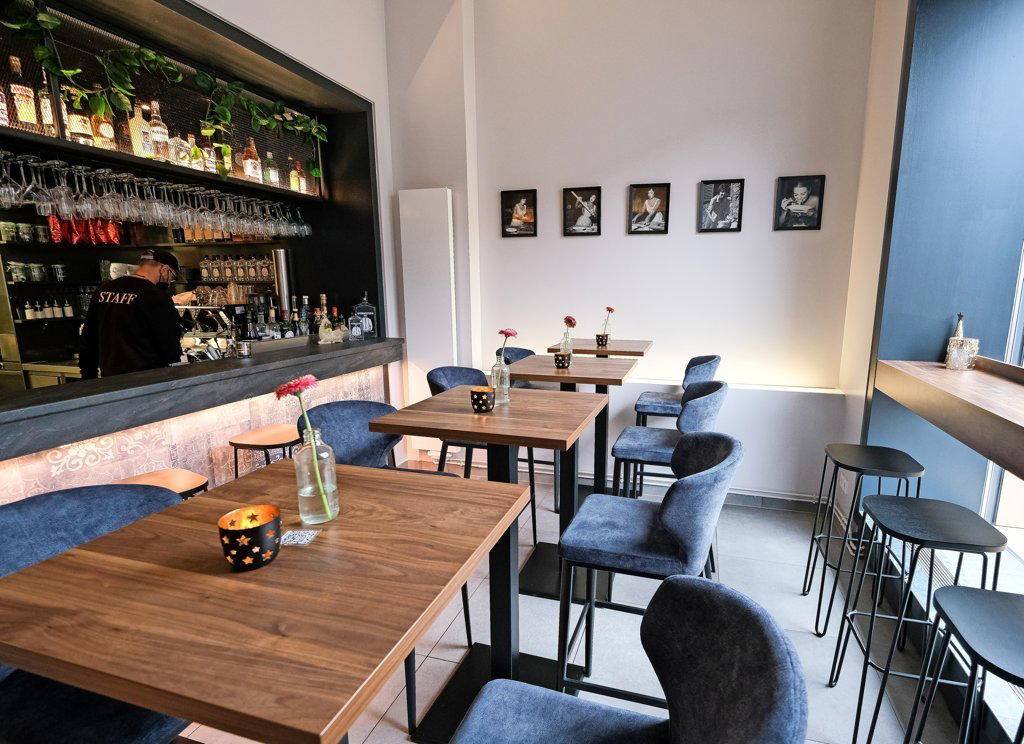
Hotels in Hanover
All hotels in Hanover →

Details
- Lively
- Trendy
- Casual Hangout
- After Work
- Open Kitchen
- Beer Program
- A La Carte
- Vegetarian Friendly
- Vegan Options
Current opening hours
- Monday
- 3–11 PM
- Tuesday
- 3–11 PM
- Wednesday
- 3–11 PM
- Thursday
- 3–11 PM
- Friday
- 3–11 PM
- Saturday
- 3–11 PM
- Sunday
- 12–9 PM
Hours can change for holidays and private events. Hours as of .
Casual pub-like atmosphere with a popular Tuesday pub quiz and energetic vibe.