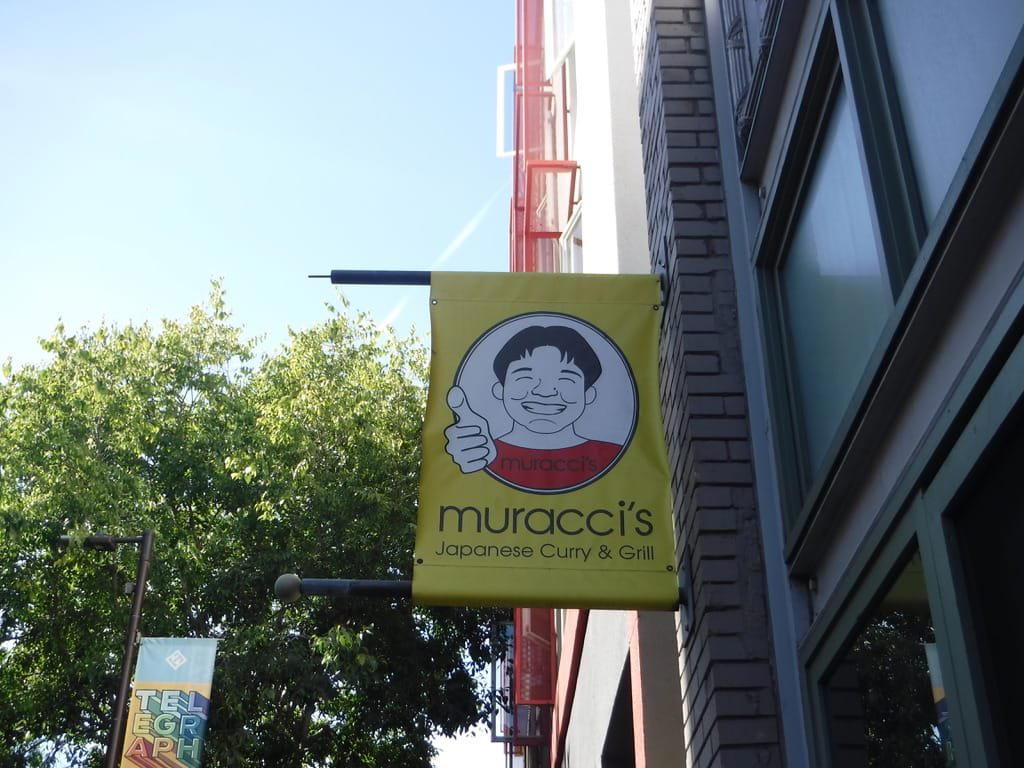
Muracci's Japanese Curry & Grill
Muracci's Japanese Curry & Grill brings the warming, slow-cooked register of Japanese curry to the Bay Area, operating from its San Francisco Kearny Street address within easy reach of Berkeley's broader Japanese dining corridor. The format sits squarely in the counter-service tradition, quick, affordable, and built around a dish that rewards repetition rather than occasion dining.
 Discover on Pearl
Pearl is the En Primeur Club membership app — saves, bookings, and concierge access live there. Same editors, same standards.
- Address
- 307 Kearny St, San Francisco, CA 94108
- Phone
- (415) 773-1101
- Website
- muraccis.com
Japanese Curry in the Bay Area: A Format Worth Understanding
Japanese curry occupies a specific and sometimes underappreciated position in the country's broader Japanese food culture. It is not ramen, not sushi, not the omakase format that draws long reservation queues and critical column inches. Instead, it belongs to a quieter, more domestic register, the weekday school lunch, the railway station diner, the canteen that feeds workers rather than impresses editors. That positioning is not a limitation. It is the point. The leading Japanese curry operations in North American cities understand this and commit to the format's inherent values: depth of sauce built over time, protein cooked without flourish, and a rice-to-curry ratio that is genuinely considered. Muracci's Japanese Curry & Grill, operating from 307 Kearny Street in San Francisco's Financial District and drawing a consistent following from the wider Bay Area including Berkeley, belongs to this tradition.
The Counter-Service Model and What It Actually Signals
Across California's Japanese restaurant scene, two broad operating formats have become entrenched. The first is the experience-led, often omakase or izakaya format, multi-course, time-intensive, premium-priced, represented at the upper end by venues like AKEMI in Berkeley. The second is the counter-service specialist, where a single category of dish is executed with enough consistency and depth to build a loyal repeat audience without requiring a formal dining infrastructure. Muracci's operates firmly in the second mode. That model carries its own logic: reduced overhead, tighter ingredient focus, and a format that can actually sustain lunch-volume throughput without compromising the sauce quality that makes the dish worth eating.
This matters from an environmental standpoint as well. Counter-service Japanese curry, when operated with discipline, generates far less waste than a multi-course kitchen. The sauce-based format means proteins and vegetables are integrated rather than plated as separate components that fail to get fully consumed. Portion standardization, which the format demands, also reduces the kitchen-side food waste that plagues more elaborate service models.
What Draws Berkeley Diners Across the Bay
Berkeley's own Japanese food corridor, running through spots like Ajanta and branching into the city's broader dining mix alongside places like Agrodolce, 900 Grayson, and Angeline's Louisiana Kitchen, does not have a dominant Japanese curry specialist in the same counter-service mold. That gap is part of what positions Muracci's as a reference point for East Bay diners willing to make the BART trip to the Financial District. The Kearny Street address sits in a dense lunch corridor, which means the operation has been tested by high-volume weekday demand, arguably the most reliable stress test for any counter-service kitchen.
For context, that kind of sustained lunchtime throughput is the proving ground for the format's core promise. A curry that holds at temperature, maintains sauce viscosity, and doesn't break down across a two-hour service window is a different technical achievement from a dish prepared to order in a slower dinner setting. The fact that Muracci's has maintained a consistent following in that environment says something concrete about the kitchen's execution, even without the formal awards or Michelin recognition that signals quality in other dining categories.
Japanese Curry and the Sustainability Lens
Among Japanese food formats exported to North America, curry sits in an interesting position relative to environmental impact. Sushi omakase, at the high end, faces increasing scrutiny over bluefin sourcing and the carbon footprint of air-freighted fish. Ramen's pork-heavy broth tradition, while efficient in its use of cuts, is protein-intensive at scale. Japanese curry, by contrast, has historically been a format built around making the most of modest ingredients, root vegetables, inexpensive cuts of meat, a sauce that stretches relatively small quantities of protein across a full meal. That structural efficiency is not incidental. It reflects the dish's origins in institutional Japanese cooking, where resource economy was built into the format from the start.
The Bay Area's dining culture has been more attentive to sourcing transparency than most American markets, with venues across the price spectrum, from the farm-integrated model of Single Thread Farm in Healdsburg and Blue Hill at Stone Barns in Tarrytown to the produce-focused California cuisine that defines much of Berkeley's dining identity, making explicit commitments to local and ethical sourcing. Muracci's operates in a different price bracket from those fine-dining examples, but the Bay Area context means local sourcing expectations permeate even the counter-service tier. Diners in this market ask questions about where ingredients come from, and operations that ignore that expectation tend to find themselves out of step with the room.
Where Muracci's Sits in the Broader Conversation
It is worth placing Muracci's in the context of the American dining spectrum more broadly. At one end, tasting-menu destinations like The French Laundry in Napa, Alinea in Chicago, Le Bernardin in New York City, Atomix in New York City, Lazy Bear in San Francisco, Providence in Los Angeles, Addison in San Diego, The Inn at Little Washington, Emeril's in New Orleans, and 8 1/2 Otto e Mezzo Bombana in Hong Kong represent the pinnacle of the occasion-dining tier. Muracci's is not in that conversation and does not need to be. Its comparable set is the serious, focused counter-service Japanese specialty operator, a category that has its own standards, its own regulars, and its own form of credibility built on repetition rather than revelation.
For readers using our full Berkeley restaurants guide to plan a broader Bay Area itinerary, Muracci's functions as a reliable midweek option rather than a destination anchor. That is not a diminishment. In a dining ecosystem where occasion restaurants absorb most of the attention and budget, the dependable specialist that does one thing with consistency and doesn't require planning three months in advance fills a genuine gap.
Planning a Visit
Muracci's operates from 307 Kearny Street in San Francisco's Financial District, making it most accessible by BART to Montgomery or Embarcadero stations for visitors coming from Berkeley. The counter-service format means no reservations are required, walk-in only, which is standard for the category. The lunch window, particularly on weekdays, is when the kitchen operates at its highest volume and presumably its most consistent output.
Cuisine-First Comparison
Comparable venues nearby, for context on price, style, and recognition.
| Venue | Cuisine | Price | Awards | Notes |
|---|---|---|---|---|
| Muracci's Japanese Curry & GrillThis venue — the venue you are viewing | Japanese Curry House | $$ | , | |
| Manpuku | Japanese Sushi | $ | , | College Avenue |
| Kirala | Traditional Japanese Sushi and Robata | $$ | , | South Berkeley |
| GA.RA | Vietnamese Coffee Bar | $$ | , | Berkeley |
| Ramen House Ryowa | Japanese Ramen | $$ | , | Downtown Berkeley |
| Passione Emporio | Authentic Handmade Italian Pasta & Pizza | $$ | , | West Berkeley |
Continue exploring
More in Berkeley
Restaurants in Berkeley
Browse all →
Bars in Berkeley
Browse all →
Hotels in Berkeley
Browse all →
At a Glance
- Cozy
- Casual Hangout
Casual and cozy atmosphere in a small fast-casual spot.