Manpuku
Our verdict
Manpuku occupies a quiet stretch of College Avenue in the Elmwood district, where Berkeley's neighborhood dining culture runs deeper than any single trend. The address places it within a cluster of independent restaurants that serve the residential south end of the city, a corridor where regulars outnumber tourists and repeat visits tell you more than a single review ever could.

Pearl is the En Primeur Club membership app — saves, bookings, and concierge access live there. Same editors, same standards.
- Address
- 2977 College Ave, Berkeley, CA 94705
- Phone
- (510) 848-2536
- Hours
- Mon–Fri 11:30 AM–2 PM, 4–8 PMSat 11:30 AM–8 PMSun Closed
- Website
- manpukuorder.com
- Directions
- Get directions
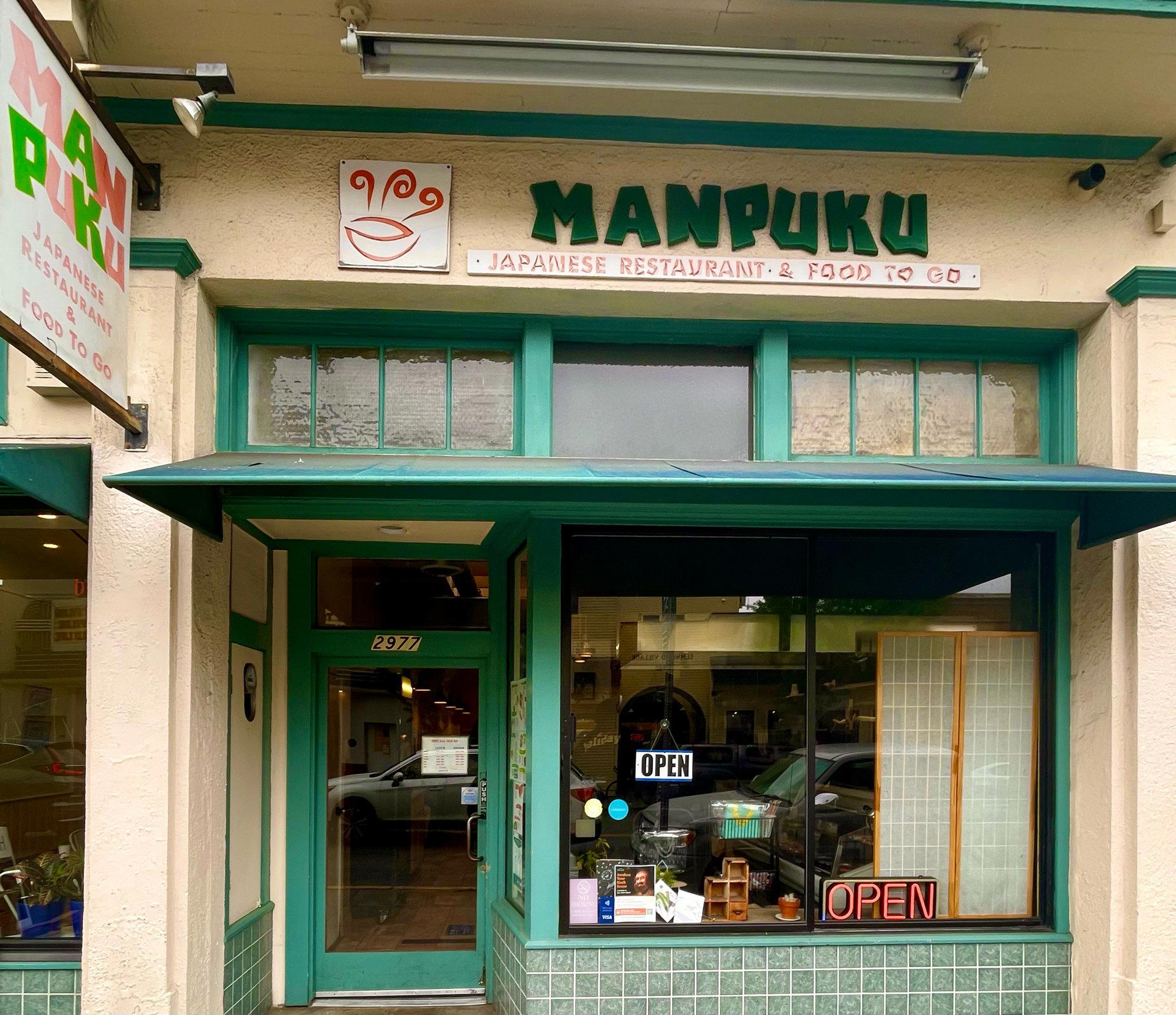
College Avenue and the Elmwood Dining Corridor
College Avenue south of Ashby Avenue operates differently from the more trafficked blocks closer to the UC Berkeley campus. The Elmwood district has long attracted the kind of independent operator who prices for neighborhood regulars rather than destination diners, and the rhythm of the street reflects that: slower, more residential, less performative. Manpuku, at 2977 College Ave, sits inside that pattern. The address alone signals something about the intended audience and the style of hospitality on offer.
This part of Berkeley has developed a coherent dining character over decades. Unlike the Telegraph Avenue corridor or the downtown stretch near BART, Elmwood restaurants tend to build loyalty through consistency rather than novelty. Openings here rarely generate the kind of media attention that attaches to spots in Temescal or the Gourmet Ghetto, but the tenure of individual businesses along College Avenue often surpasses those in flashier zip codes. That durability is itself an editorial signal worth reading. A restaurant that holds a neighborhood address over multiple years in a city with Berkeley's cost pressures and diner expectations has demonstrated something that no single award cycle captures.
Where Manpuku Sits in Berkeley's Independent Scene
Berkeley's independent restaurant scene is layered in ways that the city's reputation for casual food sometimes obscures. The same city that put Chez Panisse on the map also sustains a dense mid-tier of neighborhood spots that draw on regional cuisines with real depth. Within that mid-tier, College Avenue is a reliable address for regulars: 900 Grayson has built a long-standing following in the area, and further along the Berkeley dining map, places like Ajanta, Agrodolce, and AKEMI demonstrate how varied the independent offer across the city actually is. Angeline's Louisiana Kitchen illustrates a different strand of that same independence, anchored in a specific regional tradition rather than a generalist approach.
Manpuku fits into a category of neighborhood Japanese restaurants that California's Bay Area has sustained with particular consistency. Japanese dining in the East Bay ranges from ramen counters and izakayas to omakase formats that compete directly with San Francisco's more prominent counters. The neighborhood end of that spectrum, where Manpuku operates, typically prioritizes accessible price points and familiar formats over tasting-menu theater. Comparing it to the caliber of tasting-room operations like Lazy Bear in San Francisco, Alinea in Chicago, or The French Laundry in Napa frames a different conversation entirely: Manpuku's context is the neighborhood dining room, not the destination counter, and that distinction shapes every expectation a visitor should bring to College Avenue.
The Elmwood Address as Experience Frame
Approaching Manpuku from the Ashby end of College Avenue, the physical environment establishes the register before anything on the menu does. The Elmwood district runs quieter than the central Berkeley blocks: more foot traffic from residents than browsers, more parking than you'd expect, a pace that belongs to a neighborhood rather than a commercial strip. For a dining experience, that environmental frame carries weight. Restaurants that occupy genuinely residential corridors tend to produce a different style of service than those performing for a passing tourist audience.
The practical logistics follow from the address. College Avenue is served by AC Transit, and the neighborhood is navigable by bike from much of south Berkeley and the Rockridge BART station across the Oakland border. For visitors arriving from San Francisco or the South Bay, the context of the meal shifts once you cross the Bay Bridge: you are not in a dining destination district, and the experience at this address is not designed to be treated like one. That recalibration is part of what the Elmwood corridor offers.
Japanese Neighborhood Dining in the Bay Area Context
California's relationship with Japanese cuisine runs across a wider range than most coastal cities manage. The Bay Area specifically has sustained everything from low-key teriyaki counters to Michelin-starred omakase operations. The neighborhood tier of that range, which includes the kind of establishment Manpuku represents, is where most East Bay residents actually engage with Japanese food on a regular basis. That tier is less scrutinized by national publications than the best of the market, yet it carries more of the city's actual dining culture.
For comparative scale, the broader American fine dining conversation around Japanese-influenced formats includes operations like Atomix in New York City and international benchmarks like 8 1/2 Otto e Mezzo Bombana in Hong Kong. Domestically, the West Coast high end runs through venues like Providence in Los Angeles, Single Thread Farm in Healdsburg, and Addison in San Diego.
The same logic applies across American regional dining when you look at long-standing neighborhood institutions rather than destination restaurants. Le Bernardin in New York City, Emeril's in New Orleans, Blue Hill at Stone Barns in Tarrytown, and The Inn at Little Washington in Washington all represent a tier of American dining where the institutional weight of the operation is as much a part of the experience as any single dish. Manpuku's version of institutional weight is neighborhood tenure on College Avenue, which is its own credential in the East Bay context.
Planning a Visit
For visitors building a Berkeley dining itinerary, College Avenue in Elmwood functions leading as a neighborhood destination rather than a single-venue excursion. The street rewards walking: multiple independent operators occupy the same stretch, and the area's residential character makes it a reasonable base for exploring south Berkeley more broadly. Our full Berkeley restaurants guide maps the broader dining picture across the city's distinct corridors, which helps in building a visit that uses the neighborhood's actual geography rather than treating each address as an isolated stop.
Given the limited data available on current hours, booking method, and pricing, confirming operational details directly before visiting is the appropriate approach for any restaurant in this tier. The Elmwood corridor's independent operators occasionally adjust hours seasonally, and walk-in availability varies by day of the week and time of year.
Frequently asked questions
What part of town is Manpuku in?
Manpuku is located at 2977 College Ave, Berkeley, CA 94705, Berkeley.
How does Manpuku fit into Berkeley's broader Japanese dining scene?
Manpuku occupies the Elmwood stretch of College Avenue, a corridor that functions more like a residential-neighborhood dining strip than a destination dining cluster. The Bay Area has sustained serious Japanese cooking across multiple formats and price points for decades, and Berkeley's independent scene sits within that continuum. Manpuku's College Avenue address places it among independently operated spots whose local regulars, rather than critical recognition, tend to define the reputation.
What's the must-try dish at Manpuku?
Specific menu details for Manpuku are not published in a format that allows reliable verification, so singling out one dish risks steering you wrong. College Avenue's dining corridor, where Manpuku sits at 2977, rewards guests who ask staff directly about the day's strengths rather than arriving with a fixed order in mind.
How hard is it to get a table at Manpuku?
Reservation and walk-in details for Manpuku have not been publicly documented in a way we can confirm. Given the Elmwood district's character as a low-turnover neighborhood corridor rather than a high-volume destination block, demand patterns here tend to differ from Berkeley's campus-adjacent dining rush. Contacting the restaurant directly at 2977 College Ave is the practical starting point.
What's the signature at Manpuku?
Without a published menu or documented press record to draw from, naming a single signature risks misdirection. What the address does establish is context: Manpuku operates in a stretch of College Avenue where Japanese neighborhood restaurants have built followings through consistency over spectacle, which itself is a kind of signature in the Bay Area's Japanese dining scene.
Cuisine Context
Comparable venues nearby, for context on price, style, and recognition.
| Venue | Cuisine | Price | Notes |
|---|---|---|---|
| ManpukuThis venue — the venue you are viewing | Japanese Sushi | $10–20 | Not listed |
| Norikonoko Japanese Restaurant | Homestyle Japanese | Not listed | Telegraph |
| Tofu N Sushi | Japanese Tofu and Sushi | $20–30 | Northwest Berkeley |
| Naan N Curry | Northern Indian Curry House | Not listed | Berkeley |
| Yin Ji Chang Fen 銀記腸粉 | Guangzhou-Style Rice Noodle Rolls | $10–20 | Downtown Berkeley |
| Ramen House Ryowa | Japanese Ramen | Not listed | Downtown Berkeley |