
Tabelog 100
Our verdict
Motomachi Santos belongs to Kobe’s kissaten tradition: small-scale, morning-friendly, low-priced, and built around coffee-shop staples rather than restaurant theatre. Its Tabelog 100 Kissaten selections in 2021 and 2022 place it in a national conversation about Japanese coffee shops, while its Motomachi address keeps it tied to the city’s old trading-quarter rhythm.

Pearl is the En Primeur Club membership app — saves, bookings, and concierge access live there. Same editors, same standards.
The menu
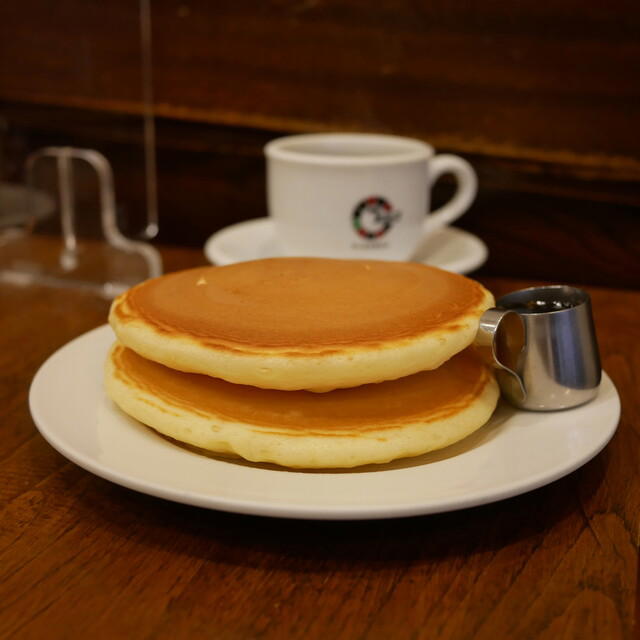
What to order
- Pancakes
- Sandwiches
- Morning set breakfast
- Kobe cheese toast
- Coffee
Kobe’s shopping streets and side lanes suit the kissaten form: regulars, steady pacing, and menus that make coffee, pancakes, and sandwiches a complete urban meal. Motomachi Santos fits that grammar with unusual clarity. It does not compete with Kobe’s beef counters, hotel dining rooms, or tasting-menu restaurants; it belongs to the older coffee-shop category that shaped daily eating in Japanese cities before specialty coffee became an international design language.
That distinction matters in Kobe. The city’s restaurant identity is often reduced to beef and port-city cosmopolitanism, but its everyday food culture is broader: bakeries, Western-style grills, gyoza shops, standing bars, and kissaten all carry parts of the same urban story. A coffee shop in Kobe is therefore not a footnote, but a compact expression of how the city eats between errands, work, shopping, and station transfers.
A Kobe kissaten measured by restraint, not spectacle
The kissaten category rewards consistency over novelty. The format is closer to civic habit than restaurant trend: coffee-shop food, familiar categories, and a pace that supports repeat use. Motomachi Santos was selected for Tabelog’s Kissaten 100 in 2022, a useful signal because the list separates traditional Japanese coffee shops from broader café culture. Its listed categories, kissa, pancake, and sandwich, place it in the classic register rather than the dessert-café or brunch-specialist lane.
Price also defines the experience. With a listed range of - JPY 999 - JPY 999 for both lunch and dinner, it sits far from Kobe’s more formal dining rooms. The point is not hierarchy, but purpose. Kobe can stage polished meals with wine and table service; it also preserves low-cost coffee-shop culture built on frequency, familiarity, and a room that works as part of daily life.
Within Kobe, that role sharpens. Grill Ippei Motomachi ten and Gyoza Daigaku occupy other everyday dining registers, while Tachinomi ZUTTO points to the standing-drink tradition. Motomachi Santos belongs beside them in a practical Kobe circuit: quick, local, and shaped around repeatable pleasures rather than occasion dining. For readers mapping the city, other Kobe dining rooms show the beef-counter side, while the city’s coffee-shop lineage gives Motomachi Santos its clearest frame.
Why the coffee-shop format still carries cultural weight
Travellers often misread Japanese kissaten culture, expecting either a third-wave café or dessert destination. The older model is more disciplined: seating habits, timing, payment expectations, and reliable food categories. At Motomachi Santos, the appeal depends less on advance ceremony than on understanding the category: a Kobe coffee shop whose public reputation is tied to kissa, pancakes, and sandwiches.
The food categories tell the story. Pancakes and sandwiches connect naturally with coffee-shop cooking and the everyday ways Kobe absorbs familiar, Western-influenced forms. Japanese port cities adapted outside techniques and domestic tastes in practical ways, and Kobe remains one of the clearest places to see that adaptation at street level. A kissaten pancake is not necessarily a hotel brunch object; a sandwich here is not a chef-driven statement. Both belong to modest, repeatable comfort refined by Japanese coffee shops for decades.
That is why Tabelog Kissaten 100 recognition carries more weight than a generic café accolade. It signals category authority, identifying coffee shops that matter within a specific Japanese dining tradition rather than measuring tasting-menu ambition or luxury service. Motomachi Santos, with a Tabelog score of 3.68 and selection in the category in 2022, has enough public validation to merit attention from travellers who usually aim only at Kobe beef or harbor-view dining rooms.
The better comparison is not with destination restaurants outside the category, but with Kobe’s layered day-to-night eating pattern. Other Kobe dining rooms reflect different slices of the city’s range, while broader city planning belongs in Our full Kobe restaurants guide. For a wider stay, the adjacent rails matter too: Our full Kobe hotels guide, Our full Kobe bars guide, Our full Kobe wineries guide, and Our full Kobe experiences guide help keep the coffee-shop stop in proportion.
Planning the stop around Kobe rather than around a reservation
The practical case is simple: a Kobe coffee shop with low listed spend and a format that suits a light meal or coffee-shop pause. It folds easily into a Kobe itinerary rather than demanding the mindset of a stand-alone expedition. The value is in treating it as part of the city’s daily rhythm, not as a luxury booking or a long destination meal.
The experience is best read through its category and public listing: kissa, pancake, and sandwich, with a modest posted budget and Tabelog Kissaten 100 recognition. That reinforces the public coffee-shop character. This is a place to understand Kobe through everyday use rather than through a hosted meal or formal business setting. Its Kobe location places it within the city’s commercial grain, useful before shopping, walking, or a later dinner elsewhere.
The editorial verdict is restrained but clear. Motomachi Santos matters because it preserves a Kobe dining register many visitors under-schedule: the award-recognized kissaten, modest in price, and culturally specific. Travellers chasing only high-ticket meals miss how the city breathes between formal reservations. This is where Kobe’s coffee-shop tradition becomes legible.
For cross-city context, Japan’s casual dining spectrum runs wide, with other unnamed rooms in major cities reflecting different local grammars. Abroad, Japanese formats travel in many directions, but Motomachi Santos is better understood on its own terms: affordable, category-specific, and woven into Kobe’s daily rhythm.
Frequently asked questions
Where is Motomachi Santos located?
Kobe.
What price level is Motomachi Santos?
Pricing at Motomachi Santos is listed as - JPY 999 - JPY 999.
What are Motomachi Santos's hours?
Specific opening hours are not provided in the verified venue facts.
What has Motomachi Santos built its reputation on?
Its reputation rests on kissaten fundamentals: kissa, pancake, and sandwich categories, a Tabelog score of 3.68, and a place on Tabelog’s Kissaten "Tabelog 100" list in 2022. The Kobe setting suits the format, with a listed low-cost menu range.
Price and Recognition
Comparable venues by category and price.
| Venue | Cuisine | Price | Awards | Notes |
|---|---|---|---|---|
| Motomachi SantosThis venue (the venue you are viewing) | Retro Japanese coffee shop & café | $10–20 | Tabelog 100 | Not listed |
| Mama no Eranda Motomachi Cake Motomachi honten | Classic Kobe cake shop & café | $1–10 | Tabelog 100 #83 | Chūō, Classic Kobe cake shop & café |
| Suzuki Shoten | Gelato & Ice Cream | $1–10 | Tabelog 100 #92 | Higashinada, Gelato & Ice Cream |
| un peu de | Artisanal bakery and sandwich shop | $1–10 | Tabelog 100 #56 | Higashinada, Artisanal bakery and sandwich shop |
| Akaneya Coffee Ten | Not listed | $1–10 | Tabelog 100 | Chūō, Traditional Japanese coffee shop (kissaten) |
| arima gelateria Stagione | Kita, Handmade Gelato & Café | $1–10 | Tabelog 100 #10 | Not listed |
Recognition history
Dated appearances from independent guides and award organizations, with the underlying list record or original source where available.
Tabelog 100
Tabelog · Tabelog 100 - Kissaten - 2026
Full recognition history (2 entries)
Tabelog 100 #37 · No. 37
Tabelog · Tabelog 100 - Kissaten - 2022
Continue exploring
More in Kobe
Restaurants in Kobe
All restaurants in Kobe →

Bars in Kobe
Browse all →



Details
- Classic
- Cozy
- Quiet
- Casual Hangout
- Solo
- Brunch
- After Work
- Standalone
- Historic Building
- Design Destination
- Street Scene
- A La Carte
- Coffee
- Tea
Current opening hours
- Monday
- 8 AM–7 PM
- Tuesday
- 8 AM–7 PM
- Wednesday
- 8 AM–7 PM
- Thursday
- Closed
- Friday
- 8 AM–7 PM
- Saturday
- 8 AM–7 PM
- Sunday
- 8 AM–7 PM
Hours can change for holidays and private events. Last verified .