Moonlight Cafe
On Cortland Avenue in Bernal Heights, Moonlight Cafe occupies a neighborhood that has quietly built one of San Francisco's more considered casual dining scenes. The cafe sits a comfortable distance from the tourist circuits of the Ferry Building and the Mission's marquee restaurants, drawing a local crowd that values consistency over spectacle. Specific menu details and booking logistics are best confirmed directly with the venue.
Pearl is the En Primeur Club membership app — saves, bookings, and concierge access live there. Same editors, same standards.
- Address
- 634 Cortland Ave, San Francisco, CA 94110
- Phone
- +14156476448
- Directions
- Get directions
 Saves & bookings on Pearl
Bernal Heights and the Anatomy of a Neighborhood Cafe
San Francisco's dining conversation tends to organize itself around a handful of flagship corridors: the tasting-menu circuit running through SoMa and the Financial District, where Benu, Atelier Crenn, and Quince compete in the $$$$ tier; the chef-driven progressive rooms like Lazy Bear and Saison that require advance planning and commitment. Below that altitude, a different kind of institution operates in the residential neighborhoods, and Cortland Avenue in Bernal Heights is one of the city's cleaner examples of that pattern. Moonlight Cafe occupies a stretch of this street at number 634, in a district that functions more like a small town commercial strip than a dining destination in the conventional sense.
Bernal Heights has a specific atmospheric register. The hill itself keeps the neighborhood slightly removed from the fog that blankets other parts of the city, and Cortland's low-slung retail blocks retain a physical scale that the more developed corridors have lost. Arriving here on foot or by transit from the Mission or Glen Park BART, you pass hardware stores, small bakeries, and the kind of dry cleaners that have held the same corner for decades. The cafe sits inside that ecology rather than apart from it, which is the defining quality of neighborhood dining that gets overlooked when the conversation focuses exclusively on chef pedigree and tasting menus.
What the Neighborhood Context Signals About the Experience
Across American dining, the neighborhood cafe format has split into two distinct operating models. The first trades on identity and concept, importing the language of fine dining into casual formats, the kind of operation that appears in national food media within months of opening. The second is older and quieter: it accumulates regulars, adjusts to the community it serves, and earns its reputation through repetition rather than launch. Cortland Avenue's dining character skews toward the latter. The avenue's restaurants and cafes tend not to generate the booking pressure of the city's destination rooms, but that accessibility is itself part of the proposition. Compare the planning calculus: a table at The French Laundry in Napa or Single Thread Farm in Healdsburg requires months of advance coordination and a significant per-person financial commitment. The neighborhood cafe format operates on a different logic entirely, one where spontaneity remains possible and the relationship between diner and room can develop over many visits rather than a single high-stakes evening.
This distinction matters beyond convenience. The sensory environment of a neighborhood cafe is calibrated differently from a tasting-menu room. Lighting tends to be warmer and less deliberate. Sound levels reflect a mix of tables rather than a choreographed quiet. The rhythm of service moves with the street outside rather than against it. These are not concessions to informality; they are the conditions that allow a specific kind of ease that the more architected dining formats cannot reproduce. Restaurants like Alinea in Chicago or Le Bernardin in New York City are built around controlled, high-intensity experiences; the neighborhood cafe answers a different need in the dining ecosystem.
Reading Cortland Avenue Against the Broader San Francisco Scene
San Francisco's residential neighborhood dining has historically been strongest in the Mission and the Outer Sunset, with Bernal Heights occupying a middle position: more established than the Excelsior's emerging corridors, less celebrated than Valencia Street's density of recognized names. Cortland Avenue has, over the past decade, developed a reliable cluster of independent operators that serve the neighborhood's demographic without attempting to export themselves to a citywide audience. That localism is both a constraint and a quality signal. Venues that survive on Cortland do so by earning repeat business from people who live within walking distance, which imposes a different kind of accountability than the one-time destination crowd applies.
The comparison to the city's refined dining tier is instructive precisely because it is not a competition. Blue Hill at Stone Barns in Tarrytown and Providence in Los Angeles operate at a level of sourcing discipline and kitchen investment that defines a specific ambition; the neighborhood cafe makes no claim to that tier and should not be measured against it. What it can do, and what Cortland Avenue's better operators have demonstrated, is provide a consistent, unpretentious experience that the destination format structurally cannot. Our full San Francisco restaurants guide maps these different tiers in more detail for readers planning across the full spectrum.
Planning a Visit to Moonlight Cafe
For verified current information on hours and reservations, the venue should be contacted directly at its Cortland Avenue address. The surrounding neighborhood offers good transit access via the 67-Cortland bus line, and the area is walkable from the Mission's 24th Street BART station in approximately fifteen to twenty minutes on foot.
How It Compares: A Logistics Overview
| Venue | Neighborhood | Price Tier | Booking Lead Time | Format |
|---|---|---|---|---|
| Moonlight Cafe | Bernal Heights | Unconfirmed | Likely walk-in friendly | Neighborhood cafe |
| Lazy Bear | Mission | $$$$ | Weeks to months | Progressive American tasting |
| Benu | SoMa | $$$$ | Weeks to months | French-Chinese tasting |
| Atelier Crenn | Cow Hollow | $$$$ | Weeks in advance | Modern French tasting |
| Quince | Jackson Square | $$$$ | Weeks in advance | Contemporary Italian |
The table above reflects the significant spread across San Francisco's dining formats. The restaurant's position at the neighborhood end of this spectrum means it serves a fundamentally different function in a visit to the city, one that rewards the traveler who wants contact with how the city actually eats on a given Tuesday rather than an orchestrated special-occasion event. For readers whose itineraries extend across the country, venues like Addison in San Diego, Atomix in New York City, Bacchanalia in Atlanta, The Inn at Little Washington, Emeril's in New Orleans, and 8 1/2 Otto e Mezzo Bombana in Hong Kong represent the high-investment, destination-format tier that requires different planning logic entirely.
City Peers
Comparable venues nearby, for context on price, style, and recognition.
| Venue | Cuisine | Price | Notes |
|---|---|---|---|
| Moonlight CafeThis venue — the venue you are viewing | American Breakfast & Cafe | $ | Not listed |
| Peter Kettle Corn | Gourmet Kettle Corn | $ | Laurel |
| Kate's Kitchen | American Breakfast & Southern Comfort | $ | Hayes Valley |
| Swensen's | Classic American Ice Cream Parlor | $ | Russian Hill |
| Bi-Rite Creamery | Seasonal Small-Batch Ice Cream Shop | $ | Mission Dolores |
| Orphan Andy's Restaurant | Classic American Diner | $ | Castro/Upper Market |
Continue exploring
More in San Francisco
Restaurants in San Francisco
Browse all →
Bars in San Francisco
Browse all →
Hotels in San Francisco
Browse all →

At a Glance
- Cozy
- Casual
- Brunch
- Casual Hangout
- Family
- Group Dining
- Standalone
- Beer Program
- Local Sourcing
Current opening hours
- Monday
- 7 AM–8 PM
- Tuesday
- 7 AM–8 PM
- Wednesday
- 7 AM–8 PM
- Thursday
- 7 AM–8 PM
- Friday
- 7 AM–8 PM
- Saturday
- 7 AM–8 PM
- Sunday
- 7 AM–8 PM
Hours can change for holidays and private events. Last verified .
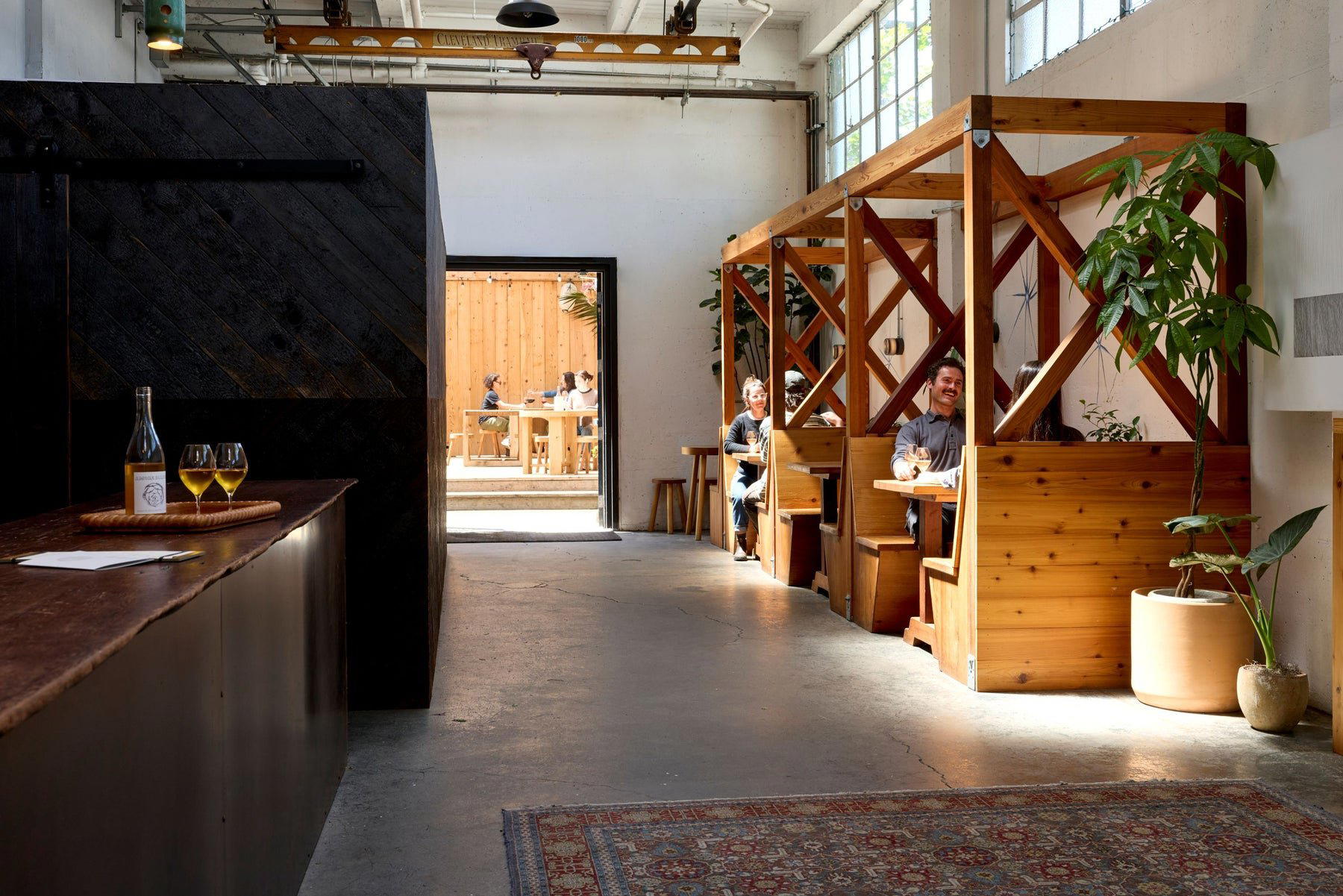
Inviting and cozy with local art creating a welcoming environment well-suited for casual dining with friends and family.