Michelin Bib Gourmand
Our verdict
Set inside a restored century-old eye clinic in Taichung's Central District, Moon Pavilion holds a 2025 Michelin Bib Gourmand and serves Taiwanese cooking anchored in regional condiments and traditional flavour logic. Hakkanese kumquat sauce, Taichungese Nalta jute, and ingredients sourced from distinct Taiwanese counties give the kitchen a geography-driven rigour unusual at this price point.

Pearl is the En Primeur Club membership app, where members save venues, book tables and use the concierge.
The menu
What to order
- Braised pork belly
- Lu Rou Fan rice
- Fruit-flavored sundaes
A Century-Old Clinic, Reframed
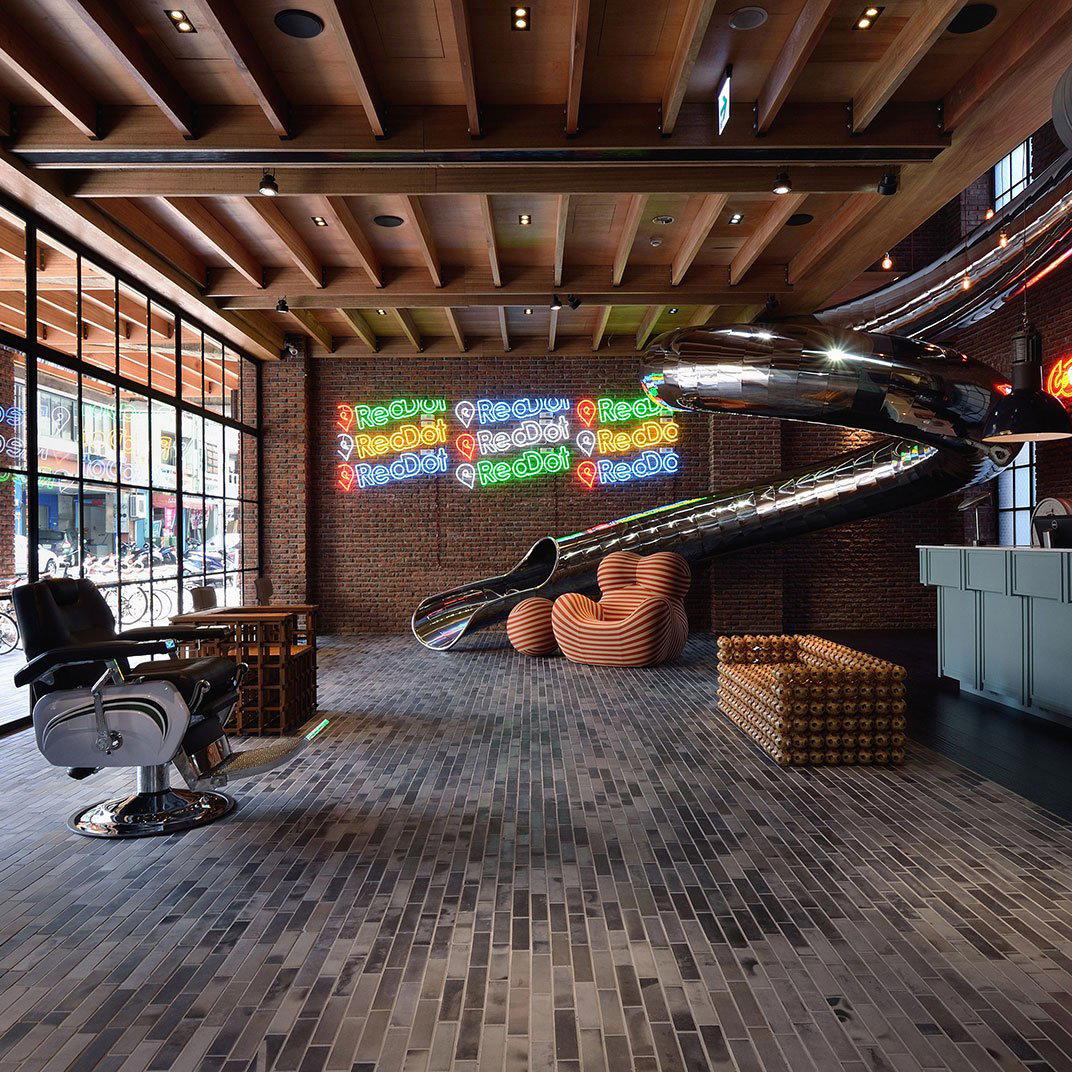
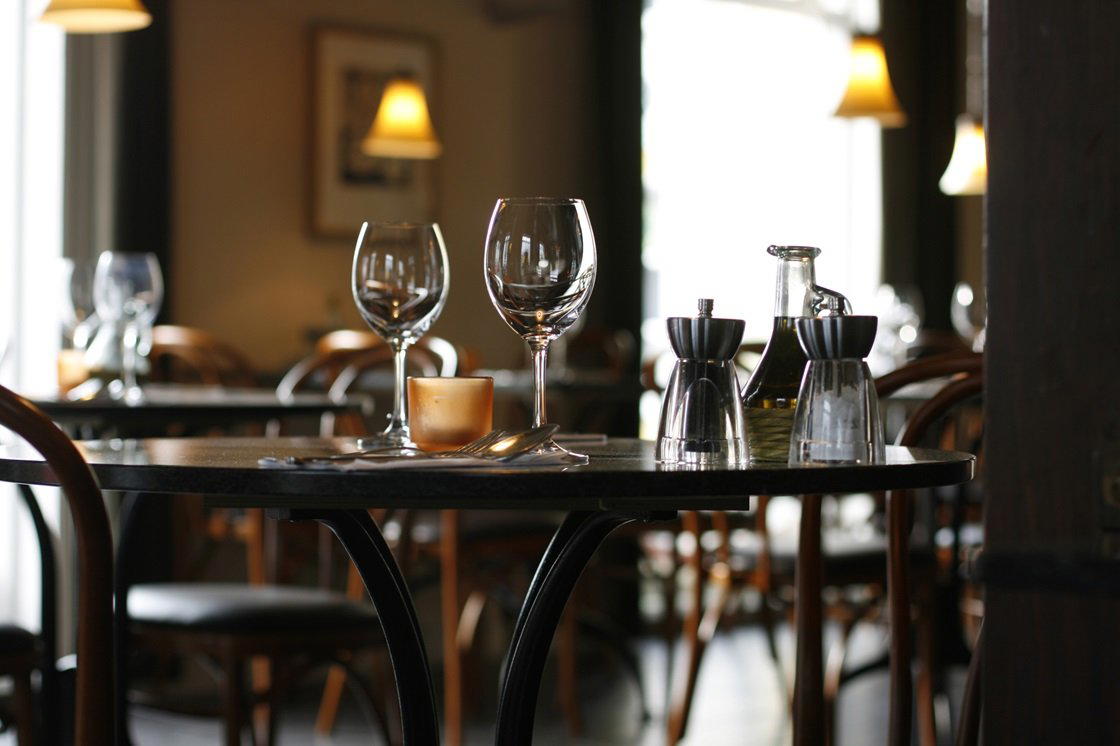
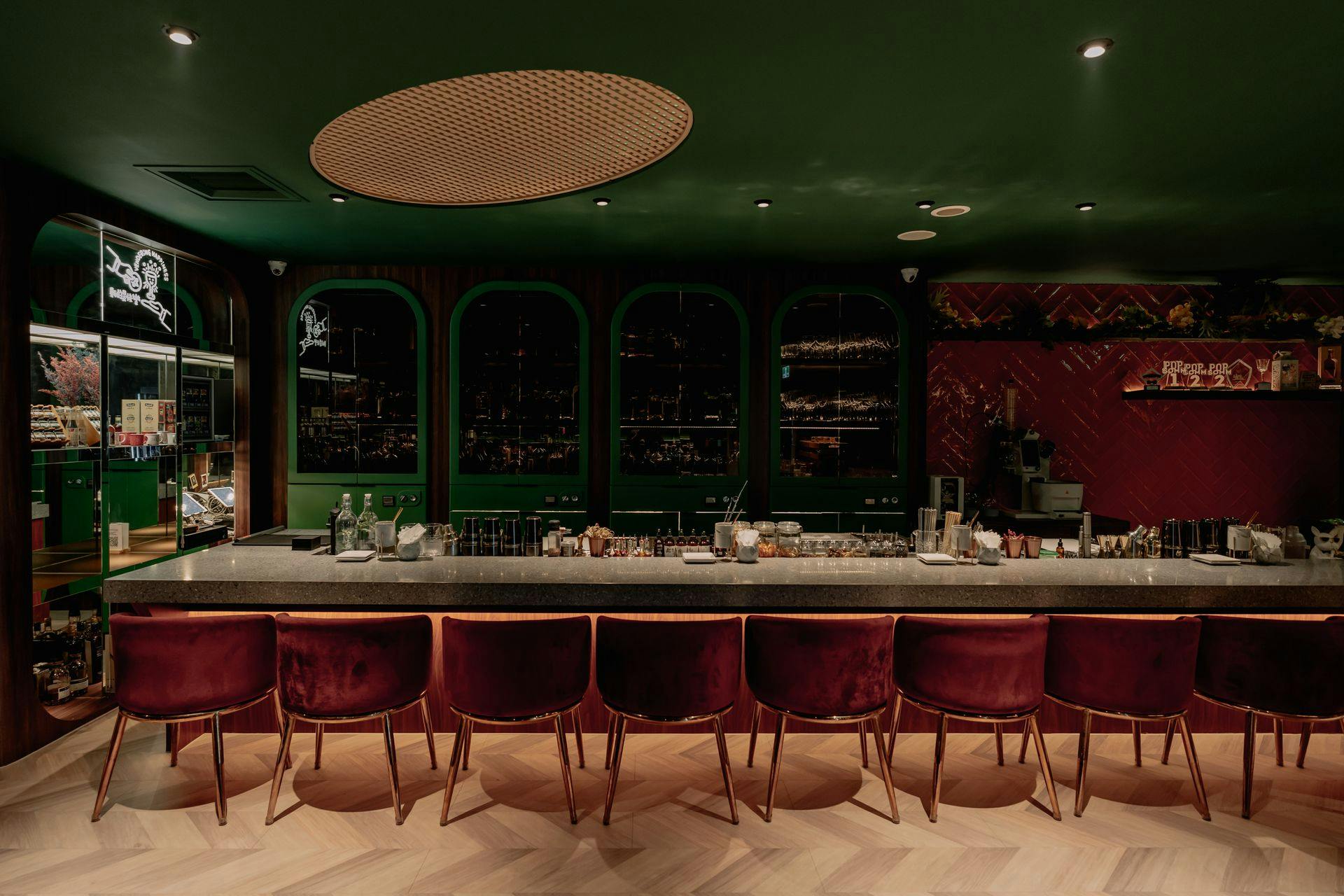
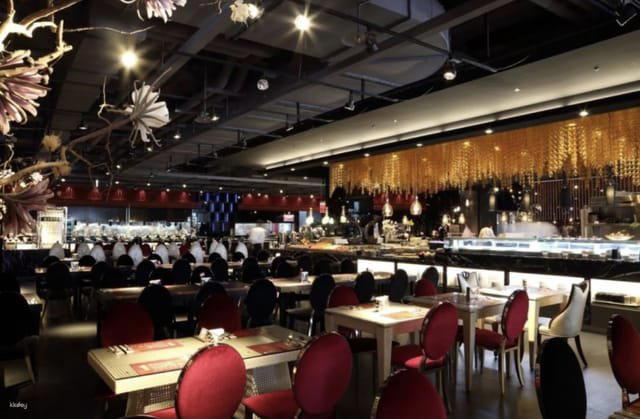
The Central District of Taichung holds some of the city's most layered architectural history, and the building at 20 Zhongshan Road makes that history impossible to ignore. The original structure served as an eye clinic for over a century; its wrought iron fittings and exposed red brickwork have been preserved rather than erased. Against that industrial-Victorian shell, colourful velvet-covered banquettes introduce a deliberate visual tension that reads less like interior decoration and more like an editorial argument about what Taiwanese dining spaces can be. You register the contrast before the menu arrives.
This kind of adaptive reuse has become a marker of Taichung's more considered dining addresses. Where some restaurants treat heritage buildings as passive backdrops, Moon Pavilion lets the friction between old structure and new furniture do conceptual work. The room earns its setting.
The Geography of the Plate
Taiwanese cuisine at its most rigorous is a cuisine of regions, not a monolith. The island's counties developed distinct condiment traditions, fermentation cultures, and agricultural outputs over centuries, and the most interesting kitchens in Taiwan are those that treat that regional specificity as a structural ingredient rather than decorative footnote. Moon Pavilion's menu is built around exactly this logic.
Two ingredients make the case clearly. Hakkanese kumquat sauce brings the preserved-citrus sharpness that defines the Hakka culinary tradition in Taiwan's western foothills and Miaoli County. Nalta jute, the leafy vegetable with a distinctive mucilaginous texture and mild bitterness, is sourced in its Taichungese form, connecting the kitchen directly to the agricultural output of the city it occupies. These are not interchangeable inputs. Using a Taichung-grown Nalta jute rather than a generic substitute is a sourcing decision that carries flavour and provenance simultaneously.
This approach positions Moon Pavilion within a small cohort of Taiwanese restaurants treating county-level ingredient sourcing as a form of culinary argument. The practice aligns with what the Michelin Guide has increasingly recognised across Taiwan: that precision in provenance, when applied to local rather than imported luxury ingredients, produces cooking with genuine regional identity. The 2025 Bib Gourmand reflects that judgment, placing Moon Pavilion in the category reserved for kitchens delivering strong quality relative to price. At the $$ price range, it competes in a different tier from venues like YUENJI, which operates at the $$$$ level, and sits closer in accessibility to addresses like Chef Ah-Hsi's Old Time Restaurant, where traditional Taiwanese flavour logic is also the organising principle.
Old-Time Taiwanese Flavour, Specific and Deliberate
The phrase the Michelin citation uses is telling: "the old-time Taiwanese palate." This is not nostalgia for its own sake. Old-time Taiwanese cooking prioritised balance over intensity, using condiments and aromatics to create layered depth rather than immediate impact. It is a flavour register that requires restraint and technical confidence to execute, particularly when the reference points are regional rather than pan-island or fusion-inflected.
The kitchen's use of condiments from different Taiwanese counties as active recipe components rather than table accompaniments reflects this tradition accurately. A kumquat sauce is not garnish; in Hakka cooking it functions as an acid-sweet counterpoint that reshapes the protein or vegetable it accompanies. That kind of integration demands an understanding of how regional Taiwanese condiments behave in combination, not just their surface characteristics.
For context on how this compares across Taiwan's wider Taiwanese-cuisine tier: Fujin Tree Taiwanese Cuisine & Champagne (Songshan) in Taipei approaches traditional Taiwanese food from a different angle, pairing it with Champagne and occupying a more lifestyle-forward register. Golden Formosa and Mipon, both Taiwanese-focused restaurants in Taipei, operate in their own distinct interpretive modes. Moon Pavilion's specific claim is fidelity to regional county ingredients within a mid-range price structure.
Taichung's Wider Table
Taichung has built a credible dining scene across multiple categories, and Moon Pavilion sits within a cluster of addresses worth understanding in relation to each other. Chien Wei Seafood represents a different face of Taiwanese ingredient specificity, focused on marine sourcing. Chin Chih Yuan (Central) occupies the Central District alongside Moon Pavilion. Feng Chi Goose illustrates how Taichung's traditional meat preparations hold their own in a competitive local market.
Across Taiwan more broadly, the Michelin network has validated a range of approaches to Taiwanese cooking: logy in Taipei operates at the opposite end of the formality spectrum, while GEN in Kaohsiung, A Cun Beef Soup (Baoan Road) in Tainan, and Akame in Wutai Township each engage with Taiwanese food culture from different geographic and cultural vantage points. Moon Pavilion's regional-condiment methodology gives it a distinct position within that network. For those extending travel beyond Taichung, Volando Urai Spring Spa & Resort in Wulai District offers a very different format.
Planning Your Visit
Moon Pavilion is located on the second floor at 20 Zhongshan Road in Taichung's Central District, placing it within walking distance of the area's main thoroughfares and accessible by public transport from Taichung Station. At the $$ price range, it remains one of the more accessible Michelin Bib Gourmand addresses in Taiwan. Booking in advance is advisable, particularly for weekend evenings, given both the recognition and the size constraints that a converted heritage building typically imposes. Phone and online booking details are best confirmed directly with the venue. Those planning a broader Taichung stay should consult our full Taichung restaurants guide, our full Taichung hotels guide, our full Taichung bars guide, our full Taichung wineries guide, and our full Taichung experiences guide for a complete picture of the city's offer.
Frequently asked questions
What's Moon Pavilion known for in terms of accolades?
Moon Pavilion has received recognition including: Michelin Bib Gourmand (2025); In a restored century-old eye clinic, Moon Pavilion juxtaposes colourful velvet-covered banquettes with original wrought iron and red bricks for an interesting clash of industrial and Victorian styles. The food….
Where is Moon Pavilion located?
Moon Pavilion is located at 400, Taiwan, Taichung City, Central District, Zhongshan Rd, 20號2樓, Taichung.
What do people recommend at Moon Pavilion?
The Michelin citation points to dishes that foreground county-specific condiments as their defining feature, particularly preparations using Hakkanese kumquat sauce and Taichungese Nalta jute, ingredients that distinguish Moon Pavilion's approach from generalist Taiwanese menus. Ordering around those condiment-led recipes gives the clearest picture of what earned the venue its 2025 Bib Gourmand recognition. Because the kitchen works within a mid-range price tier ($$), most guests work through several plates rather than a single set course, which allows those regional contrasts to accumulate across the meal.
What type of food is Moon Pavilion known for?
What's the pricing like at Moon Pavilion?
Pricing at Moon Pavilion is listed as $$.
The Minimal Set
A compact comparison to help you place this venue among nearby peers.
| Venue | Cuisine | Price | Awards | Notes |
|---|---|---|---|---|
| Moon PavilionThis venue (the venue you are viewing) | Modern Taiwanese | $10–20 | Michelin Bib Gourmand | Not listed |
| JL Studio | Modern Singaporean Cuisine | $100–150 | 3 Michelin Stars · World's 50 Best #50 | Modern Singaporean, Singaporean |
| Sur- | Modern Taiwanese Fine Dining | $50–100 | 1 Michelin Star | Taiwanese contemporary |
| L'Atelier par Yao | Modern French Fine Dining with Eastern Fusion | Not listed | 1 Michelin Star | French Contemporary |
| Oretachi No Nikuya | Japanese Yakiniku | $50–100 | 1 Michelin Star | Barbecue |
| YUENJI | Modern Taiwanese Fine Dining | $100–150 | 1 Michelin Star | Taiwanese |
Recognition history
Dated appearances from independent guides and award organizations, with the underlying list record or original source where available.
Michelin Bib Gourmand
Michelin
Full recognition history (3 entries)
Michelin Bib Gourmand
Michelin
Michelin Bib Gourmand
Michelin