Momosan Boston
Momosan Boston brings the ramen-focused vision of Iron Chef Masaharu Morimoto to the TD Garden corridor at 80 Causeway Street, positioning itself within Boston's expanding Japanese dining scene alongside counters like O Ya and Oishii. The format centers on approachable Japanese noodle and izakaya-style dishes, making it a practical option before events or as a standalone evening out in the West End.
Pearl is the En Primeur Club membership app — saves, bookings, and concierge access live there. Same editors, same standards.
- Address
- 80 Causeway St, Boston, MA 02114
- Phone
- +16172638900
- Website
- momosanboston.com
- Directions
- Get directions
 Saves & bookings on Pearl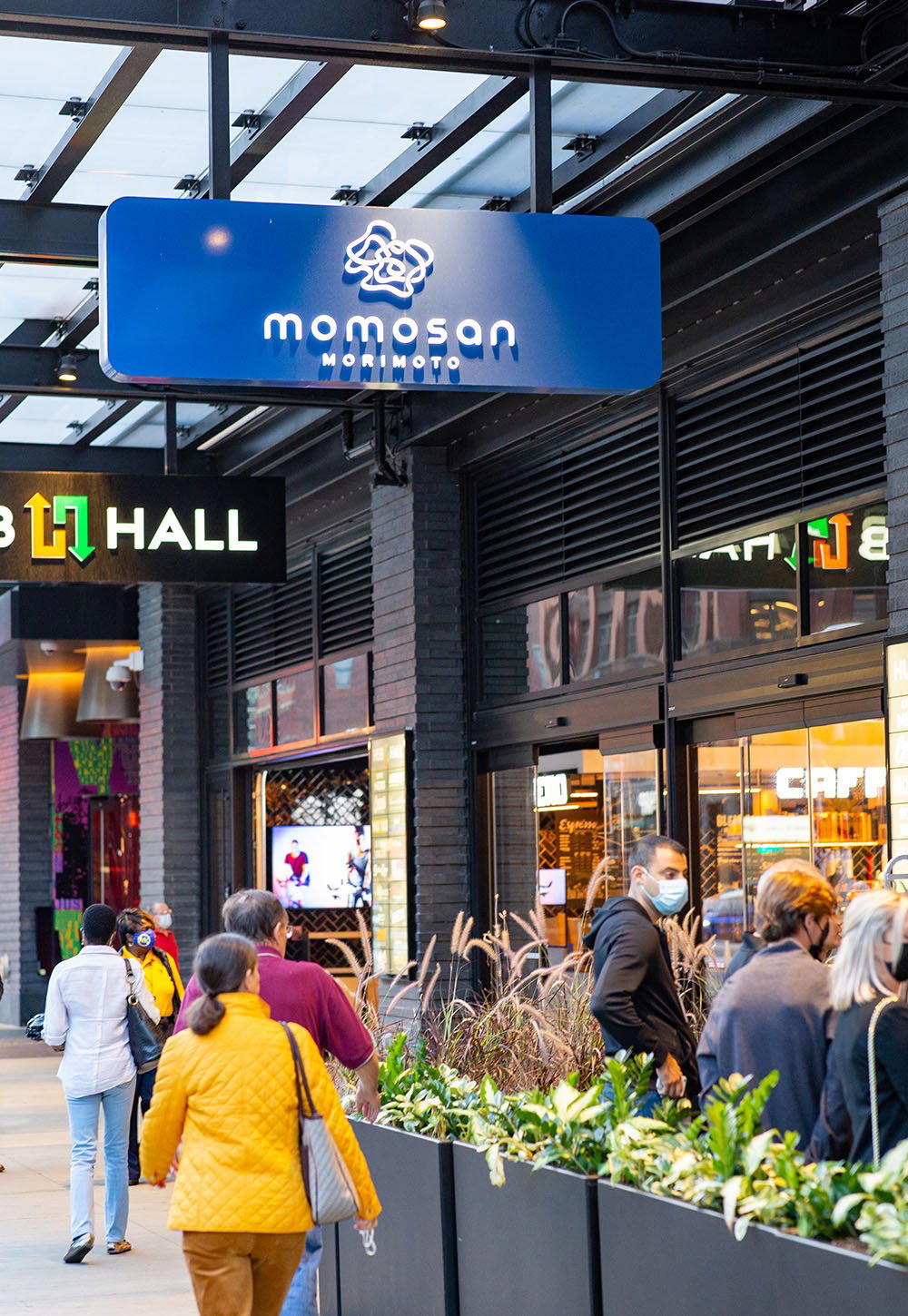
The West End's Japanese Noodle Anchor
Causeway Street runs a particular kind of gauntlet on game nights: crowds funneling toward TD Garden, bars cycling through the same draft handles, and restaurants calibrated for throughput over craft. Momosan Boston is a Japanese ramen and izakaya restaurant at 80 Causeway St in Boston's West End, with a casual dress code and a price tier around $30 per person. Against that backdrop, Momosan Boston occupies a specific niche. It is part of a small national group operating under the Momosan brand, which carries the name recognition of Iron Chef Masaharu Morimoto as its creative foundation. That lineage places the restaurant in a different competitive register than the sports bars flanking it, even if the address keeps it tethered to the arena economy of the West End.
The ramen-and-izakaya format Momosan operates across its locations is worth understanding in the context of what Boston's Japanese dining scene has done over the past decade. The city now supports a range of Japanese dining tiers, from the intimate omakase format at 311 Omakase to the high-end sushi positioning of Oishii Boston, with more casual Japanese formats occupying the middle ground. Momosan sits in that middle tier, where technique is present but the format is designed for sharing, accessibility, and a faster dining rhythm.
Japanese Technique Applied to American Appetite
The editorial angle that matters most for a concept like Momosan is not what it does with premium Japanese ingredients in isolation, but how a Japanese culinary framework lands in an American city with specific tastes and a specific neighborhood character. The Momosan brand applies classical Japanese ramen discipline, long-simmered broths, carefully sourced noodles, structured layering of tare and fat, to a dining room that is not asking its guests to be specialists. That balance is harder to hold than it sounds.
Across American cities, ramen concepts that carry genuine technical ambition have had to make choices about how much of that ambition is visible to the diner. Some, like the more chef-driven omakase operations, make the technique the entire point. Others, like Momosan, absorb the technique into a format where the result reads as comfort and familiarity rather than performance. The izakaya-adjacent menu structure, small plates, skewers, noodle bowls, is itself a Japanese import adapted heavily for American pace and portion expectations. In Boston's restaurant scene, which has long rewarded Japanese-adjacent concepts that are accessible without being generic, that adaptation is a reasonable position to hold.
For context on how imported technique can coexist with regional product identity, the broader American dining conversation has been shaped by places like Single Thread Farm in Healdsburg, where Japanese kaiseki methodology is applied to Northern California ingredients, or Blue Hill at Stone Barns in Tarrytown, where European technique is grounded in hyper-local sourcing. Momosan operates at a different price point and ambition level than either of those, but the underlying tension between imported method and local context is the same structural question every Japanese-influenced restaurant in America has to answer.
Where Momosan Sits in Boston's Dining Geometry
Boston's restaurant geography creates natural comparable venues that are as much about neighborhood as cuisine. The waterfront corridor has its own register: 1928 Rowes Wharf and 75 on Liberty Wharf anchor the harbor end with higher formality and price points. The steakhouse tier, represented by places like Abe & Louie's, draws a different expense-account crowd. And tasting-menu formats, including the Portuguese-influenced counter at Agosto, operate in an entirely different register of commitment and price.
Momosan's position is more fluid. It draws from the pre-game crowd, from diners who want Japanese flavors without the full commitment of an omakase seat, and from the lunch-and-dinner trade that the Causeway Street corridor generates year-round. That positioning is not a compromise so much as a deliberate calibration. The national Momosan brand has operated this way in New York and other markets, establishing a consistent format that travels without requiring the destination status of a standalone chef concept.
Internationally, the question of how Japanese culinary brands translate into new markets is answered differently depending on scale and ambition. Concepts like Atomix in New York City and 8½ Otto e Mezzo Bombana in Hong Kong represent the high end of that translation, where the original concept is rebuilt for a new context with full attention to local product and dining culture. Momosan operates at a different scale, but the underlying question of fit between method and market applies regardless of tier.
Planning a Visit: What to Know Before You Go
Momosan Boston is at 80 Causeway Street, which puts it a short walk from North Station and the TD Garden complex. That proximity means foot traffic is genuinely uneven: evenings before Bruins or Celtics games will see the restaurant operating at a different intensity than a quiet Tuesday. Diners who want a more considered experience should plan accordingly, targeting nights without major events on the arena calendar.
Walk-ins are welcome. The Momosan brand operates consistently across its locations, so the format and general price positioning should be predictable for those who have encountered it in other markets.
The Essentials
Comparable venues nearby, for context on price, style, and recognition.
| Venue | Cuisine | Price | Notes |
|---|---|---|---|
| Momosan BostonThis venue — the venue you are viewing | West End, Japanese Ramen & Izakaya | $$ | Not listed |
| Nowon Seaport | Not listed | $$ | South Boston Waterfront, Korean-American Gastropub |
| Mai | Not listed | $$$ | South Boston Waterfront, French-Inspired Japanese Izakaya |
| TreMonte Restaurant - North End | North End, Northern Italian Trattoria | $$ | Not listed |
| Vinoteca di Monica | North End, Rustic Regional Italian | $$ | Not listed |
| Back Bay Social | Back Bay, New American Bistro | $$ | Not listed |
Continue exploring
More in Boston
Restaurants in Boston
Browse all →
Bars in Boston
Browse all →
Hotels in Boston
Browse all →
Wineries in Boston
Browse all →
At a Glance
- Lively
- Trendy
- Energetic
- Group Dining
- Casual Hangout
- After Work
- Open Kitchen
- Sake Program
Current opening hours
- Monday
- 11:30 AM–9 PM
- Tuesday
- 11:30 AM–9 PM
- Wednesday
- 11:30 AM–9 PM
- Thursday
- 11:30 AM–10 PM
- Friday
- 11:30 AM–10 PM
- Saturday
- 11:30 AM–10 PM
- Sunday
- 11:30 AM–9 PM
Hours can change for holidays and private events. Last verified .
Energetic and casual atmosphere with a focus on lively dining amid steaming ramen bowls and Japanese bar snacks.