Vinoteca di Monica
Vinoteca di Monica occupies a Richmond Street address in Boston's North End, the neighborhood that remains the densest concentration of Italian-American dining in New England. The restaurant operates within a tradition of family-run Italian hospitality that has defined the North End for generations, positioning it as a reference point for the area's more relaxed, trattoria-style end of the Italian dining spectrum.
Pearl is the En Primeur Club membership app — saves, bookings, and concierge access live there. Same editors, same standards.
- Address
- 141-143 Richmond St, Boston, MA 02109
- Phone
- +16172270311
- Website
- monicasboston.com
- Directions
- Get directions
 Saves & bookings on Pearl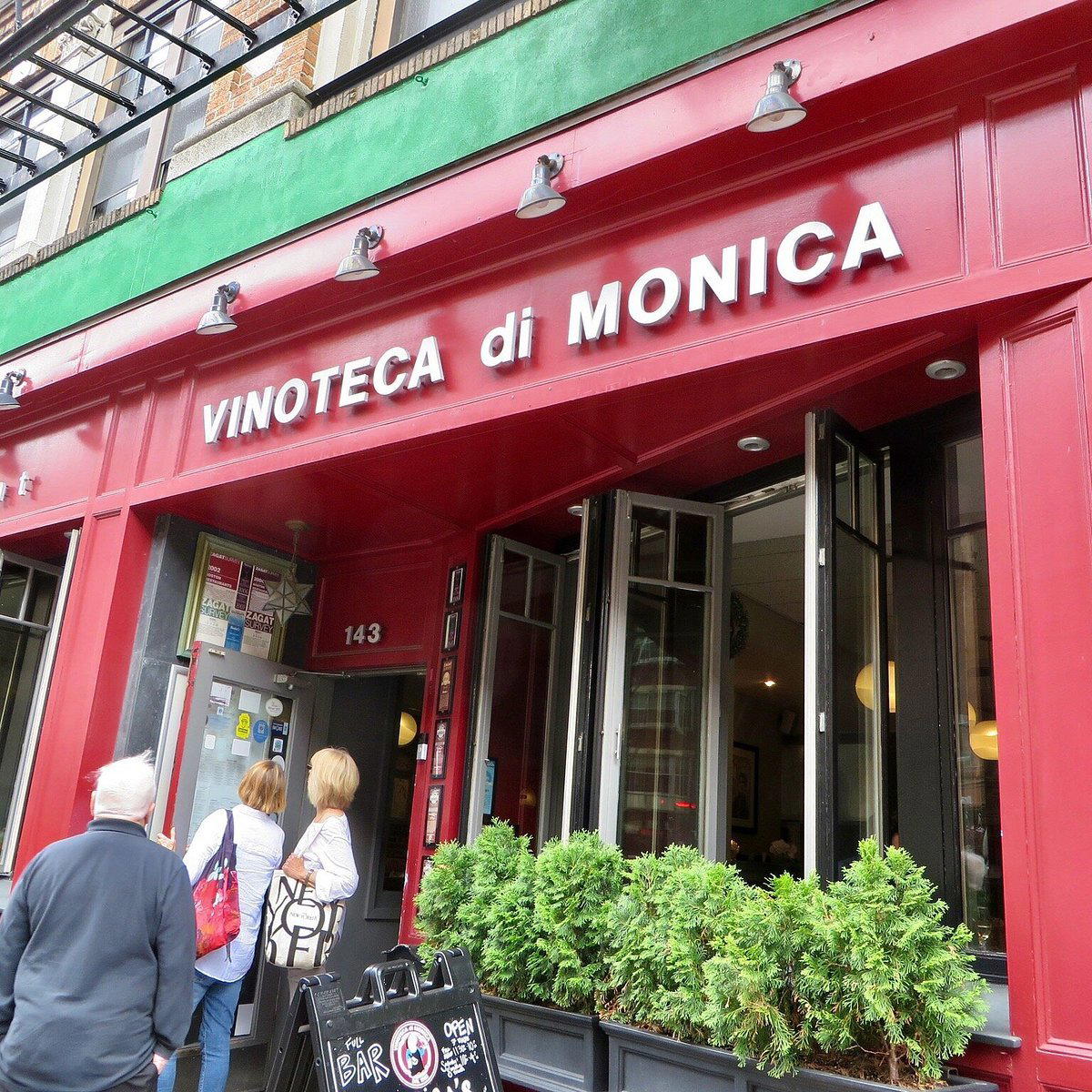
Richmond Street and the Grammar of North End Italian
Boston's North End is one of the few American urban neighborhoods where Italian-American dining culture has maintained genuine continuity across multiple generations. The streets between Hanover and the waterfront carry a density of Italian restaurants that has no equivalent in New England, and Richmond Street sits within that core. Walking the block toward Vinoteca di Monica, the pattern is familiar: narrow facades, hand-painted signage, the smell of garlic reaching the sidewalk before any menu does. This is not a neighborhood that reinvents itself for each dining trend. The North End Italian tradition favors persistence over novelty, and the restaurants that last here tend to do so by holding a specific position in the neighborhood's internal hierarchy rather than chasing the wider Boston dining conversation.
That hierarchy runs from the tourist-facing red-sauce operations on the main Hanover corridor to the quieter, more considered spots that locals and repeat visitors seek out. Vinoteca di Monica's address on Richmond Street places it in the latter category geographically, away from the highest foot-traffic stretch, which in the North End tends to be a reliable indicator of a room that depends more on word of mouth than passing trade.
Italian-American Dining as Cultural Document
The word vinoteca carries specific cultural weight. In Italian usage, it refers to a wine shop or wine bar, a place where the bottle is as central as the plate. That framing, when applied to a North End address, signals something about how the room positions itself relative to the typical Italian-American trattoria model. Most of the neighborhood's longer-running Italian restaurants built their identity around generous portions of pasta, braised meats, and the kind of red-sauce cooking that Sicilian and Neapolitan immigrants brought to Boston's waterfront neighborhoods in the late nineteenth and early twentieth centuries. A name that foregrounds wine suggests a deliberate orientation toward a European enoteca format: smaller, more curated, where the wine list and the food share equal authorship of the experience.
This distinction matters because it places Vinoteca di Monica in a different comparable set than the broader North End pack. It is not competing directly with the high-volume pasta houses on Hanover, nor with the kind of modern Italian-American tasting formats appearing elsewhere in the city. The enoteca model, at its leading, is one of the more honest Italian dining formats: it assumes the guest is there to drink well and eat simply, and it does not require theatrical presentation to justify the bill. For Boston diners who have spent time in Italy's actual wine bars, that framing is recognizable and appealing. For those who have not, it offers a useful education in what Italian hospitality looks like when the focus narrows from spectacle to substance.
The North End in Context: Where Vinoteca di Monica Sits
Boston's Italian dining scene beyond the North End has moved considerably in recent years. The waterfront's 1928 Rowes Wharf and spots like 75 on Liberty Wharf represent the hotel-anchored, expense-account tier of Boston's broader restaurant market. The North End operates at a different register: more neighborhood-scaled, more family-run, and more defined by its own internal logic than by Boston's wider fine-dining benchmarks. Within that internal logic, a wine-forward format occupies a specific niche: it tends to attract a more wine-literate clientele, it usually carries a shorter, more deliberate menu, and it typically sustains a slower, more conversational pace than a busy pasta house running multiple dinner seatings.
Across the broader American Italian dining conversation, this model has produced some of the format's most considered rooms. The enoteca approach visible in Boston's North End echoes traditions visible in cities like New York and San Francisco, where Italian-American dining has similarly split between high-volume crowd-pleasers and quieter, more curated alternatives. Internationally, venues like 8 1/2 Otto e Mezzo Bombana in Hong Kong demonstrate how Italian fine dining travels when the cultural framing is precise and the wine program is given serious weight. The restaurant operates at a much more approachable price register, but the underlying logic of wine-first Italian hospitality connects to the same tradition.
For reference points elsewhere in Boston's dining scene, the contrast with a high-precision format like 311 Omakase or a chef-counter experience like Agosto clarifies where the North End Italian model sits: more accessible, less formal, and rooted in a cultural continuity that the newer formats do not carry. That is not a criticism of either model. It is simply a recognition that Boston's dining scene contains several parallel conversations, and the restaurant is part of the one that has been running longest.
Planning a Visit
Richmond Street is a short walk from the Haymarket MBTA station, making it accessible from most central Boston neighborhoods without requiring a cab or rideshare. The North End dining window runs early by Boston standards, with most restaurants filling between 6 and 8 pm on weekends. For a wine-bar format specifically, arriving at the earlier end of that window tends to produce a better experience: the room is quieter, the staff have more time, and the pace is closer to what an enoteca format is actually designed for. Booking ahead is advisable for weekend visits; the neighborhood's overall popularity means that even the less prominently located spots fill quickly on Friday and Saturday evenings.
Side-by-Side Snapshot
Comparable venues nearby, for context on price, style, and recognition.
| Venue | Cuisine | Price | Notes |
|---|---|---|---|
| Vinoteca di MonicaThis venue — the venue you are viewing | Rustic Regional Italian | $$ | Not listed |
| Massimino's | Authentic Italian Trattoria | $$ | North End |
| Piccolo Nido | Authentic Southern Italian | $$ | North End |
| The Salty Pig | Italian Charcuterie & Wood-Fired Pizza | $$ | Back Bay |
| Isabella | Traditional Italian | $$ | North End |
| Ducali Pizzeria | Roman-Style Pizza | $$ | Inner Harbor |
Continue exploring
More in Boston
Restaurants in Boston
Browse all →
Bars in Boston
Browse all →
Hotels in Boston
Browse all →
Wineries in Boston
Browse all →
At a Glance
- Cozy
- Rustic
- Intimate
- Classic
- Date Night
- Special Occasion
- Wine Cellar
- Extensive Wine List
Current opening hours
- Monday
- 11:30 AM–10 PM
- Tuesday
- 11:30 AM–10 PM
- Wednesday
- 11:30 AM–10 PM
- Thursday
- 11:30 AM–10 PM
- Friday
- 11:30 AM–10 PM
- Saturday
- 10 AM–10 PM
- Sunday
- 10 AM–10 PM
Hours can change for holidays and private events. Last verified .
Convivial and unstuffy family-run atmosphere with a setting a couple notches above casual, featuring accordion music and a full bar.