TreMonte Restaurant - North End
TreMonte Restaurant occupies 76 Salem St in Boston's North End, the neighbourhood that has carried Italian-American cooking through a century of immigration and reinvention. Sitting among the district's most concentrated run of trattorias and red-sauce institutions, it represents the ongoing question every North End kitchen must answer: how much of the old country survives when technique and ingredient sourcing move forward. For a fuller picture of where TreMonte fits within Boston's broader dining scene, see our full Boston restaurants guide.
Pearl is the En Primeur Club membership app — saves, bookings, and concierge access live there. Same editors, same standards.
- Address
- 76 Salem St, Boston, MA 02113
- Phone
- +16175301132
- Website
- tremonterestaurant.com
- Directions
- Get directions
 Saves & bookings on Pearl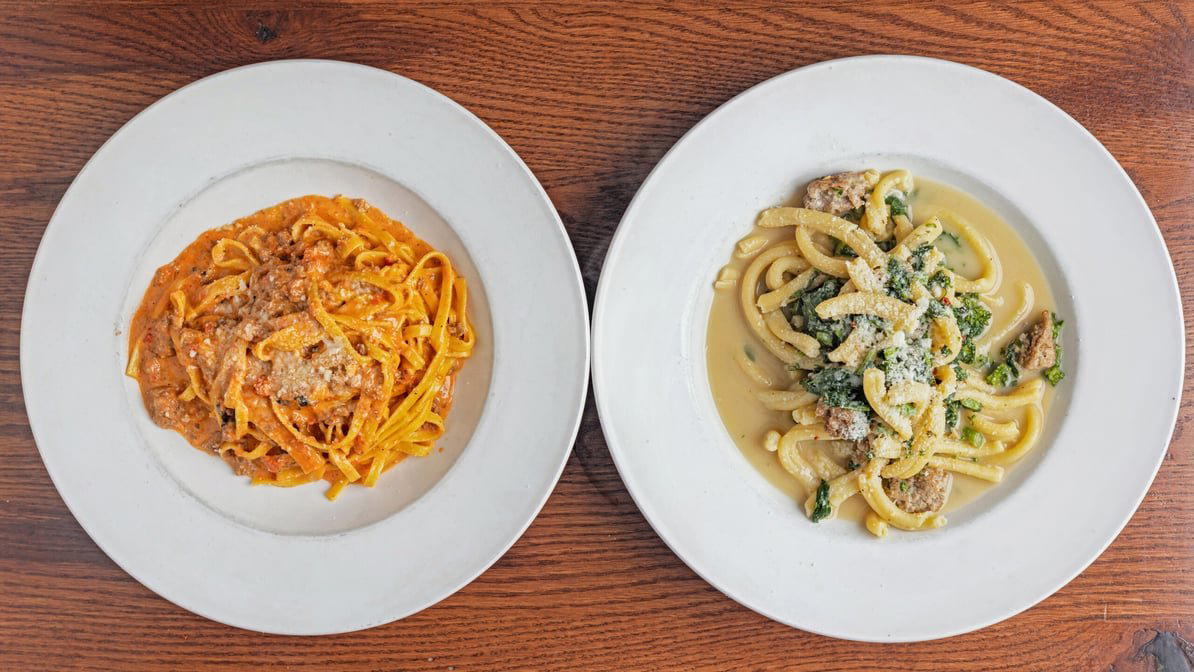
Salem Street and the Weight of the North End
Salem Street runs through the heart of Boston's North End with the confidence of a neighbourhood that has never needed to explain itself. The cobblestones, the narrow building faces, the smell of bread and garlic that arrives before any signage does, these are the conditions under which every restaurant on this stretch operates, and they create an implicit standard. Diners arriving at 76 Salem St are already carrying expectations formed by decades of Italian-American cooking, family-run dining rooms, and the particular kind of loyalty that North End regulars extend slowly and defend fiercely. TreMonte Restaurant enters that context not as a disruption but as a participant in a long-running conversation about what Italian cooking means when it is translated through an American city and then slowly, deliberately, pulled back toward something more considered.
The North End remains the densest concentration of Italian and Italian-American restaurants in Boston, a district where proximity forces comparison and where reputation travels primarily by word of mouth rather than press cycle. In that environment, a restaurant on Salem Street earns its position incrementally, table by table, rather than through a single marquee opening.
The Technique Question: European Training Meets New England Produce
The editorial angle worth examining in any North End Italian kitchen is the degree to which European technique has absorbed, or been reshaped by, the ingredient realities of coastal New England. Italy's culinary regions are built on specific soils, specific seasons, and livestock breeds that do not cross the Atlantic. What does transfer is method: the patience required for slow braises, the precision of fresh pasta made with the correct hydration ratios, the discipline of not overcrowding a sauce.
Boston's ingredient geography is, in many ways, more generous than Italian kitchens get credit for acknowledging. The Gulf of Maine produces shellfish and cold-water fish that rival what arrives at any Adriatic port. Massachusetts farms, particularly those operating in the Pioneer Valley and along the South Shore, supply root vegetables, alliums, and heritage grains with enough character to survive classic preparation without disappearing. The better North End kitchens have learned to treat these inputs as the raw material for technique rather than substitutes for imported product. This is the distinction between restaurants that feel authentically Italian and restaurants that cook authentically well, a gap that matters more as Boston's dining culture matures.
Nationally, this local-ingredient, global-technique intersection has produced particularly interesting restaurant cooking of the past decade. Blue Hill at Stone Barns in Tarrytown built an entire identity around farm-to-counter discipline. Single Thread Farm in Healdsburg applies kaiseki-informed precision to Northern California produce. In Boston specifically, Agosto, with its Portuguese-inspired tasting-menu counter format, has demonstrated that European culinary frameworks applied to local sourcing can produce a distinct and credible dining identity. TreMonte operates in a different register, neighbourhood Italian rather than destination tasting menu, but the underlying logic applies equally: technique is portable, ingredient sourcing is where a kitchen either earns or loses the argument.
North End Context and Competitive Positioning
Placing TreMonte within the North End's competitive set requires acknowledging how varied that set has become. The neighbourhood still has its red-sauce institutions, the restaurants where the sauce recipe predates the current owners and the menu has not changed in thirty years. That format carries genuine value, consistency is not a weakness when the cooking is sound, but it occupies a different tier from kitchens that are actively engaging with technique and sourcing.
Boston's wider restaurant scene offers useful reference points for understanding where more ambitious Italian cooking sits relative to other serious dining formats. 311 Omakase and Agosto operate in the chef's-counter tasting-menu tier, where a single format and controlled seating capacity define the experience. Abe and Louie's holds the premium steakhouse position. 1928 Rowes Wharf anchors the waterfront hotel-dining category. TreMonte sits closer to the neighbourhood trattoria tier but on its more considered end, which means it competes on cooking quality and consistency rather than on spectacle or occasion-dining ceremony.
For raw bar and seafood, the North End's immediate neighbour is Neptune Oyster, whose queue-based system and tight seating capacity have made it a Boston institution in its own right. 75 on Liberty Wharf handles the casual waterfront seafood position across the harbour. These are not direct competitors to an Italian kitchen, but they establish the broader neighbourhood context in which TreMonte operates, a part of Boston where serious eating is expected and where the bar for what counts as good cooking is set by decades of accumulated comparison.
Internationally, the question of what Italian cooking looks like when trained European technique meets local American ingredients has been answered at the highest level by restaurants including Le Bernardin in New York City and, in a different idiom, by Alinea in Chicago and The French Laundry in Napa, kitchens where the dialogue between European training and American produce has been explicit for years. At neighbourhood scale, the same conversation plays out with less fanfare but equal relevance.
Planning Your Visit
76 Salem St sits in the walkable core of the North End, within a few minutes of the Haymarket MBTA station and easily reached on foot from the waterfront. The neighbourhood's dining density means that booking in advance is advisable, particularly on weekends when foot traffic from the rest of Boston converges on the district.
| Venue | Cuisine / Format | Booking | Tier |
|---|---|---|---|
| TreMonte (76 Salem St) | Italian, North End | Not confirmed, contact directly | Neighbourhood Italian |
| Agosto | Portuguese-inspired tasting menu | Advance booking required | Chef's counter / fine dining |
| 311 Omakase | Japanese omakase | Advance booking required | Premium tasting counter |
| Abe and Louie's | Steakhouse | Reservations accepted | Premium steakhouse |
A Credentials Check
Comparable venues nearby, for context on price, style, and recognition.
| Venue | Cuisine | Price | Notes |
|---|---|---|---|
| TreMonte Restaurant - North EndThis venue — the venue you are viewing | Northern Italian Trattoria | $$ | Not listed |
| Si Cara South Boston | Canotto-Style Italian Pizzeria | $$ | South Boston |
| Al Dente Ristorante | Traditional Italian Trattoria | $$ | North End |
| Pagliuca's | Traditional Southern Italian Trattoria | $$ | North End |
| Nando | Sicilian and Modern Italian | $$ | North End |
| Serafina Seaport | Modern Italian with Artisanal Pizza | $$$ | Fort Point Channel |
Continue exploring
More in Boston
Restaurants in Boston
Browse all →
Bars in Boston
Browse all →
Hotels in Boston
Browse all →
Wineries in Boston
Browse all →
At a Glance
- Cozy
- Classic
- Rustic
- Casual Hangout
- Family
- Group Dining
- After Work
- Standalone
Current opening hours
- Monday
- 4–9 PM
- Tuesday
- 4–9 PM
- Wednesday
- 4–10:30 PM
- Thursday
- 4–10:30 PM
- Friday
- 4–11 PM
- Saturday
- 4–11 PM
- Sunday
- 4–9 PM
Hours can change for holidays and private events. Last verified .
Stylish yet welcoming setting with warm neighborhood charm and modern comfort, creating a relaxed dining environment.