Miti Miti
On Fifth Avenue in Brooklyn's Park Slope, Miti Miti occupies a stretch of the borough where global cooking techniques meet locally sourced ingredients. The restaurant draws from a tradition of cross-cultural cuisine that has become one of New York's most productive culinary conversations, positioning it alongside a cohort of neighborhood spots that operate well outside the Manhattan fine-dining orbit.
Pearl is the En Primeur Club membership app — saves, bookings, and concierge access live there. Same editors, same standards.
- Address
- 138 5th Ave, Brooklyn, NY 11217
- Phone
- +17182303760
- Website
- mitimitinyc.com
- Directions
- Get directions
 Saves & bookings on Pearl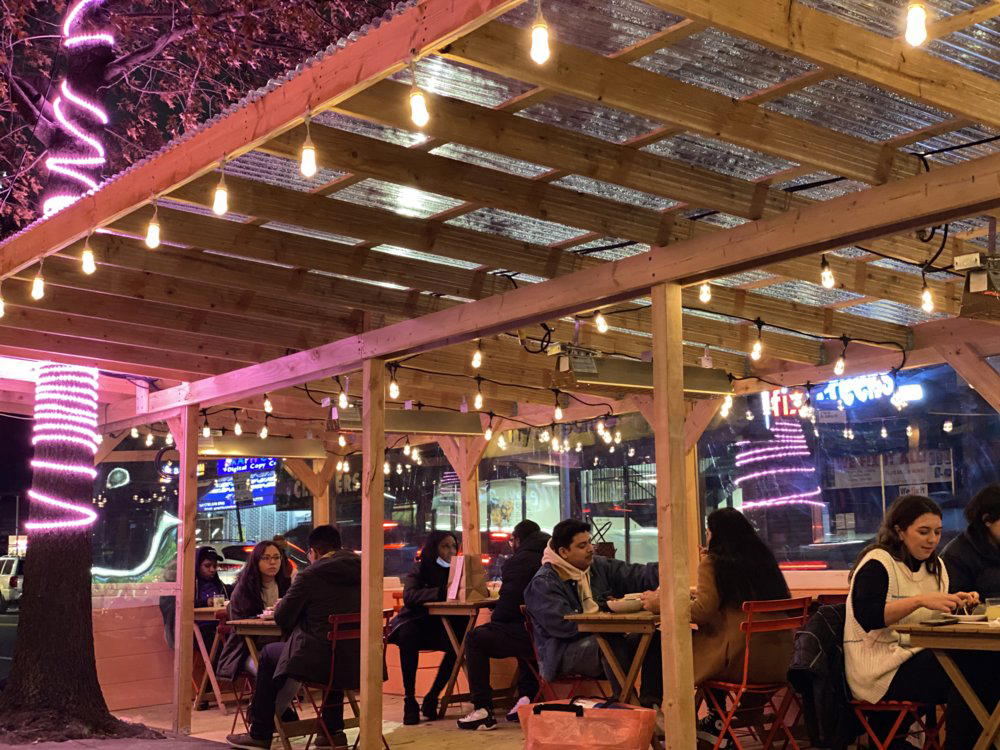
Brooklyn's Cross-Cultural Cooking Conversation
The intersection of imported culinary method and local ingredient sourcing has defined a generation of Brooklyn restaurants, and Fifth Avenue in Park Slope sits at the center of that shift. Where Manhattan's premium tier, counters like Masa or Le Bernardin, built their identities around European and Japanese orthodoxies applied with maximum precision, the borough's more recent cohort has been asking a different question: what happens when those same techniques get redirected toward the products and traditions of the African continent, Latin America, or the Caribbean? Miti Miti, at 138 Fifth Avenue, Brooklyn, is part of that conversation.
The name itself signals duality. In Swahili, "miti" means trees, and the doubling carries a sense of abundance or multiplication, an apt frame for a kitchen operating at the crossroads of culinary traditions rather than inside just one of them. That framing has become increasingly common in New York's mid-tier restaurant scene, where interesting cooking is often happening in neighborhoods with lower overhead and higher appetite for creative risk than Midtown or the Upper East Side.
The Technique-Meets-Terroir Framework
Across the American restaurant scene, productive creative space of the past decade has been the application of precision European and Asian techniques to ingredients and flavor profiles drawn from underrepresented culinary traditions. Miti Miti, a casual Brooklyn restaurant at 138 5th Ave, serves modern Mexican and Latin American dishes at a price point of about $35 per person. Venues like Atomix and Jungsik New York did this for Korean cuisine in Manhattan, earning Michelin recognition in the process. On a different price register and with different source traditions, a cluster of Brooklyn restaurants has been doing something analogous for African and Caribbean cooking.
The editorial angle matters here. This is not fusion in the dismissive sense, a term that became shorthand for unfocused mixing in the 1990s. What the better practitioners are doing is closer to what Blue Hill at Stone Barns does with Hudson Valley agriculture or what Single Thread Farm does in Healdsburg: treating sourcing and technique as equal partners rather than as hierarchy and afterthought. When that discipline applies to West African or East African pantries, the results tend to be both unfamiliar to most diners and formally coherent in ways that reward attention.
Park Slope's Fifth Avenue corridor has developed into one of the more reliable strips in Brooklyn for this kind of cooking. The neighborhood's demographic mix, long-established Caribbean and Latin American communities alongside a newer wave of residents with restaurant spending capacity, creates an audience for menus that take global flavor references seriously without pricing out the communities those references come from.
Placing Miti Miti in Context
Within New York's broader dining geography, the restaurant occupies a position that the city's fine-dining infrastructure, built around Per Se-style formalism or the multi-course precision of places like Alinea in Chicago or The French Laundry in Napa, doesn't address. There is a tier of neighborhood restaurants in Brooklyn and Queens that are doing the actual work of expanding what New York cooking looks like, and that tier rarely gets the critical attention that Michelin-tracked Manhattan destinations do.
That gap in coverage does not reflect a gap in quality. Restaurants like Providence in Los Angeles or Addison in San Diego demonstrate that serious cooking happens far outside the traditional centers of critical gravity. The same logic applies at the neighborhood scale within New York, where particularly technically engaged kitchens are operating without the benefit, or the constraint, of three-Michelin-star expectations.
The restaurant's Park Slope address puts it in a neighborhood that has matured considerably as a dining destination over the past decade. The Fifth Avenue strip is walkable, well-served by the 2, 3, B, and Q subway lines, and dense enough with other quality operators that an evening in the area can extend well beyond a single restaurant. For visitors comparing options, the Brooklyn frame is useful: this is not a destination that competes with Emeril's or The Inn at Little Washington on ceremony or occasion-dining formality. It competes on the quality of its ingredient sourcing, the clarity of its flavor logic, and its willingness to take a culinary tradition seriously on its own terms.
The Broader American Picture
New York's engagement with African diaspora cuisine is still developing its critical vocabulary. Cities like Atlanta, where Bacchanalia has anchored a sophisticated dining scene for decades, have shown that regional and cultural specificity can be the foundation of a restaurant's identity rather than a limiting factor. In San Francisco, Lazy Bear built its reputation on format innovation. The question for New York's cross-cultural neighborhood tier is whether it can develop the same kind of sustained critical infrastructure that turns individual restaurants into scene-defining institutions.
Internationally, the model of local-ingredient-plus-imported-technique has produced particularly decorated restaurants of the past two decades, from 8 1/2 Otto e Mezzo Bombana in Hong Kong, which applied classical Italian discipline to Asian luxury ingredients, to Alain Ducasse at Louis XV in Monte Carlo, where French haute technique has long been applied to the specific products of the Mediterranean littoral. The scale and price point at the restaurant are different, but the underlying logic connects to that tradition.
For readers building a New York itinerary that extends beyond the obvious Michelin circuit, the borough's neighborhood restaurants represent an essential part of the city's actual culinary character. Our full New York City restaurants guide maps that landscape in more detail.
Planning Your Visit
Address: 138 Fifth Avenue, Brooklyn, NY 11217. Neighborhood: Park Slope, accessible via the 2/3 at Bergen Street or the B/Q at Seventh Avenue. Reservations: Walk-in friendly. Dress: casual. Budget: About $35 per person. Leading timing: Weekday evenings tend to offer more flexibility at high-demand Brooklyn neighborhood restaurants than Friday or Saturday service.
- Coconut Shrimp Tacos
- Jerk Chicken Tacos
- Birria Tacos
- BBQ Chicken Nachos
- Lobster Guacamole
- Chicken Mole Enchiladas
- Crispy Brussels Sprouts
At a Glance
Comparable venues nearby, for context on price, style, and recognition.
| Venue | Cuisine | Price | Notes |
|---|---|---|---|
| Miti MitiThis venue — the venue you are viewing | Not listed | $$$ | Not listed |
| tán | Not listed | $$$ | East Midtown-Turtle Bay, Modern Coastal Mexican |
| Centrico | Not listed | $$$ | Tribeca-Civic Center, Regional Mexican Fusion |
| Skinnys Cantina | Not listed | $$ | Long Island City-Hunters Point, Mexican Cantina |
| Añejo | Not listed | $$$ | Hell's Kitchen, Modern Mexican Tequila Bar |
| La Superior | Williamsburg, Authentic Mexican Taqueria | $$ | Not listed |
Continue exploring
More in New York City
Restaurants in New York City
Browse all →
Bars in New York City
Browse all →
Hotels in New York City
Browse all →








At a Glance
- Lively
- Energetic
- Trendy
- Group Dining
- Casual Hangout
- Brunch
- Celebration
- Terrace
- Craft Cocktails
Current opening hours
- Monday
- 11 AM–1 AM
- Tuesday
- 11 AM–1 AM
- Wednesday
- 11 AM–1 AM
- Thursday
- 11 AM–1 AM
- Friday
- 11 AM–2 AM
- Saturday
- 10 AM–2 AM
- Sunday
- 10 AM–1 AM
Hours can change for holidays and private events. Last verified .
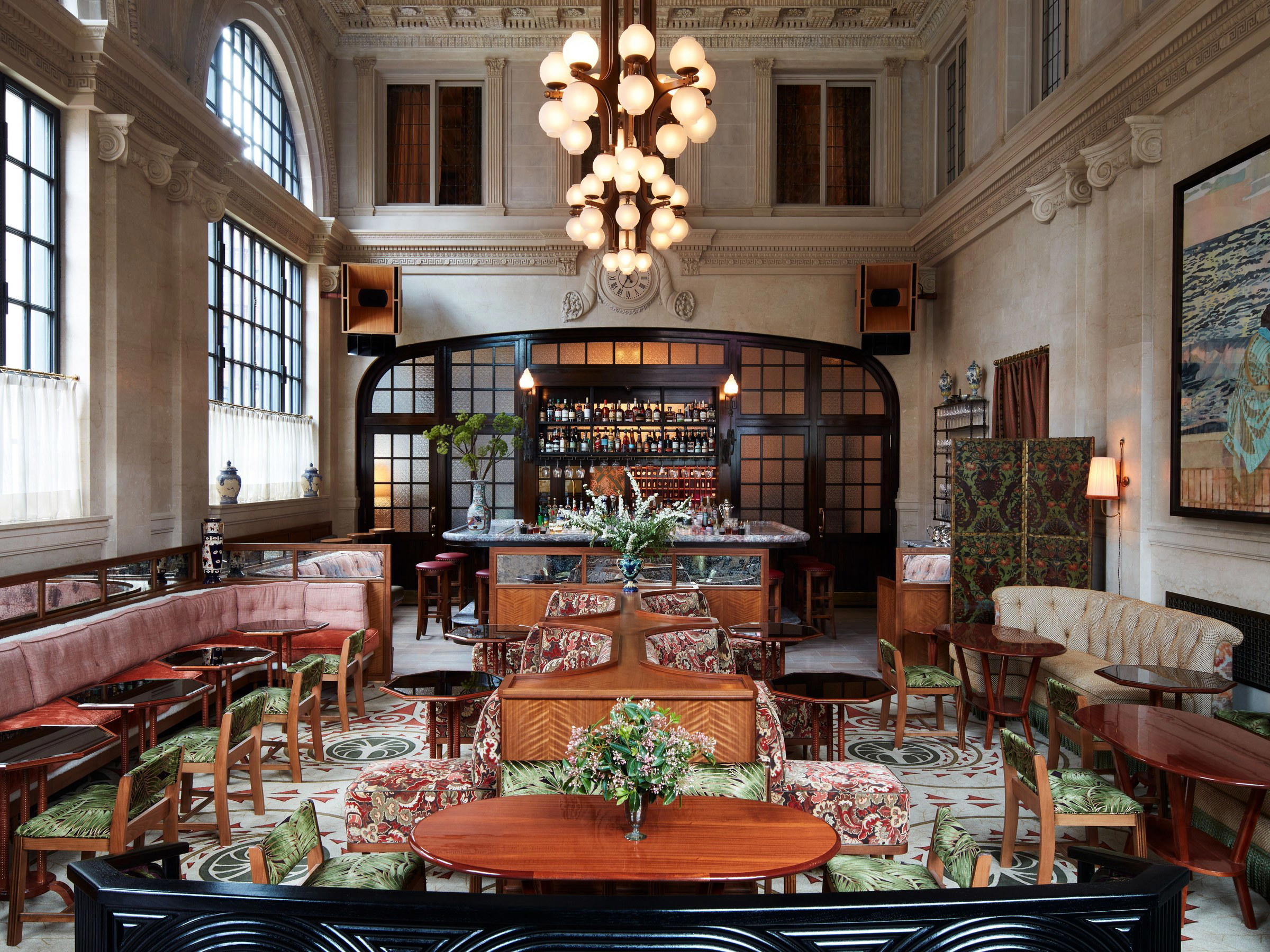
Inviting and festive atmosphere focused on sharing food, drinks, and good times with friends and family; casual and welcoming vibe.