Añejo
Añejo occupies a corner of Hell's Kitchen where Mexican-American drinking culture has found a serious platform. The bar program leans on agave spirits at a moment when the category has outgrown its margarita-and-chips associations, placing Añejo in a comparable set defined less by cuisine type than by how seriously a room treats tequila and mezcal.
Pearl is the En Primeur Club membership app — saves, bookings, and concierge access live there. Same editors, same standards.
- Address
- 668 10th Ave, New York, NY 10036
- Phone
- +1 212 920 4770
- Website
- anejonyc.com
- Directions
- Get directions
 Saves & bookings on Pearl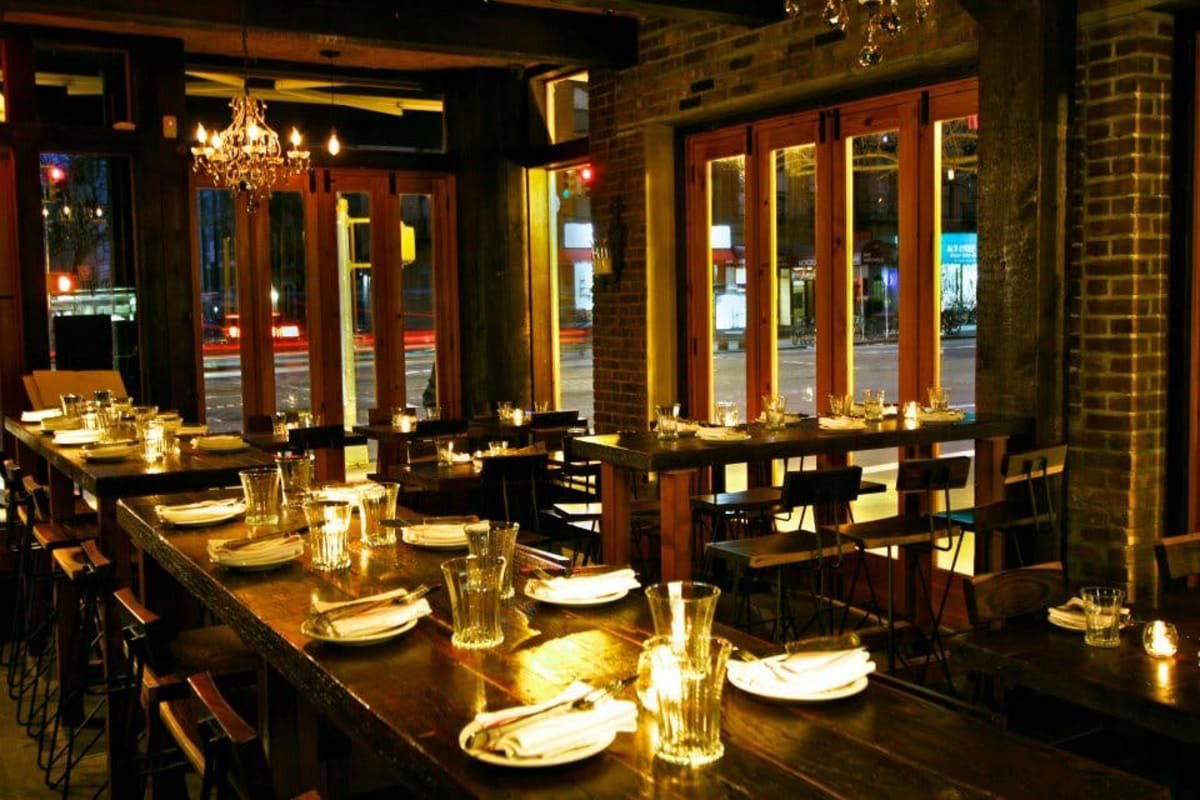
Hell's Kitchen and the Agave Moment
New York's relationship with Mexican food and drink has undergone a meaningful shift over the past decade. The city that once treated tequila as a vehicle for salt and citrus has developed a more considered agave culture, driven partly by the wider American spirits conversation and partly by a new generation of operators who treat mezcal with the same seriousness that the city's leading cocktail programs apply to whiskey or amaro. Añejo, at 668 10th Avenue in Hell's Kitchen, sits inside that shift. The address places it on the western edge of Midtown, a corridor that has grown into a reliable dining and drinking strip as the neighborhood's character has evolved away from its older industrial identity.
Hell's Kitchen has long played host to restaurants that operate with less fanfare than their counterparts in the West Village or on the Lower East Side, partly because the neighborhood draws a working local crowd rather than a destination-dining tourist circuit. That context shapes the kind of venue Añejo represents: a room where the agave program does the serious work, but the overall register stays accessible rather than aspirational in the way that New York's most decorated tables position themselves.
The Agave Program in Context
The broader category shift matters here. Tequila and mezcal have followed a trajectory similar to what American whiskey experienced in the 2000s: a move from commodity to category, from well pours to allocated bottles, from frozen drinks to neat service and cocktail precision. Bars that recognized this early and built their identity around agave depth rather than margarita volume occupy a distinct position in the current market. They are neither the technical clarified-drink operations that define the more experimental end of New York cocktail culture nor the high-volume nightlife venues that use premium agave spirits as a price anchor.
Añejo's positioning within that spectrum reflects where agave bars have landed in cities that take spirits seriously. The comparison set is not Le Bernardin or Masa, whose price points and formal structures define a different tier entirely. It is closer to the mid-register venues in cities like Los Angeles, where Providence represents one end of the culinary ambition spectrum, and the agave-focused drinking culture operates as a parallel track. In San Francisco, operators like Lazy Bear have shown how a specific conceptual commitment can anchor a room's identity over time. The question for any agave-forward venue is whether the spirits program is doing that anchoring work or whether it is window dressing over a more generic food offering.
Evolution and Reinvention in a Shifting Neighborhood
The editorial angle that defines Añejo's story is one of category evolution rather than a single founding moment. Mexican-inflected venues in New York have had to reckon with a shifting consumer who now arrives with more knowledge about production methods, regional differences between mezcal producing states, and the distinction between mass-market tequila and small-batch expressions. A bar that opened in an earlier phase of this conversation would have looked different from one operating in the current environment, where a guest might reasonably ask whether a blanco is highland or lowland grown, or which palenque produced a given mezcal.
That evolution has pushed venues like Añejo toward a more defined identity over time. The Hell's Kitchen location has seen the neighborhood itself change: new residential development along the far west side, the gradual maturation of Restaurant Row as a destination rather than a convenience strip, and the broader gentrification pressures that have reshaped how operators in the area position their offer. Against that backdrop, a venue committed to agave seriousness occupies a more legible niche now than it might have at an earlier point in its history.
For comparison, consider how venues in other American cities have used a specific regional or categorical commitment to build durability. Emeril's in New Orleans built its identity around a cuisine tradition; Frasca Food and Wine in Boulder around a regional Italian wine and food program. The mechanism is the same: a clearly stated point of view that gives a room an identity beyond the generic. Añejo's version of that is the agave commitment in a city where the category has earned serious attention.
Placing Añejo in the New York Dining Conversation
New York's formal dining tier, represented by rooms like Atomix, Eleven Madison Park, and Per Se, operates under a different set of expectations: long tasting menus, substantial advance bookings, and price points that signal occasion dining. Añejo does not belong to that category. Its value to a visitor or local lies in what it represents at a different register: a neighborhood room with a specific spirits focus, in a part of Manhattan that has genuine residential character rather than the tourist density of Midtown or the scene-chasing energy of some downtown corridors.
That positioning is not a limitation. Blue Hill at Stone Barns in Tarrytown and The Inn at Little Washington have demonstrated that destination dining outside a city's core can command serious attention when the conceptual commitment is clear. At the neighborhood scale, clarity of identity performs the same function. A room that knows what it is tends to deliver more consistently than one trying to be multiple things simultaneously.
Know Before You Go
- Address: 668 10th Ave, New York, NY 10036
- Neighborhood: Hell's Kitchen, Manhattan
- Category focus: Agave spirits and Mexican-inflected food and drink
- Price tier: Mid-range by New York standards; not in the tasting-menu category of Smyth in Chicago or Addison in San Diego
- Booking: Recommended
- Hours: Mon: 12–10 PM; Tue: 12–10 PM; Wed: 12–10 PM; Thu: 12–11 PM; Fri: 12 PM–12 AM; Sat: 11:30 AM–12 AM; Sun: 11:30 AM–10 PM
- Getting there:
The Short List
Comparable venues nearby, for context on price, style, and recognition.
| Venue | Cuisine | Price | Notes |
|---|---|---|---|
| AñejoThis venue — the venue you are viewing | Not listed | $$$ | Not listed |
| La Diagonal Agaveria | Not listed | $$$ | Harlem (South), Contemporary Mexican Tapas & Agave Spirits |
| Xixa | Williamsburg, Modern Mexican Fusion | $$$ | Not listed |
| Casa Carmen Flatiron | Not listed | $$$ | Midtown South-Flatiron-Union Square, Traditional Mexican |
| Javelina | Gramercy, Authentic Tex-Mex | $$ | Not listed |
| B'KLYN BURRO | Clinton Hill, SF Mission-Style Burritos | $$ | Not listed |
Continue exploring
More in New York City
Restaurants in New York City
Browse all →
Bars in New York City
Browse all →
Hotels in New York City
Browse all →





At a Glance
- Lively
- Trendy
- Date Night
- Group Dining
- Casual Hangout
- Brunch
- Open Kitchen
- Craft Cocktails
Current opening hours
- Monday
- 12–10 PM
- Tuesday
- 12–10 PM
- Wednesday
- 12–10 PM
- Thursday
- 12–11 PM
- Friday
- 12 PM–12 AM
- Saturday
- 11:30 AM–12 AM
- Sunday
- 11:30 AM–10 PM
Hours can change for holidays and private events. Last verified .
Warm, welcoming, and inviting space with an authentically artistic vibe and cheerful outdoor energy.