
Miraku En puts Amagasaki’s yakiniku culture in a serious but approachable register: beef, cold noodles and tripe, with a Tabelog 100 Yakiniku WEST 2025 selection giving it regional weight. The appeal is not chef theatre; it is sourcing-led grilling in a 100-seat, family-capable room where the table does the final work.
Pearl is the En Primeur Club membership app — saves, bookings, and concierge access live there. Same editors, same standards.
- Address
- Japan, 〒660-0875 Hyogo, Amagasaki, Minamitakeyacho, 2-chome−1 焼肉・冷麺味楽園
- Phone
- +81 6-6411-9329
- Website
- facebook.com
 Saves & bookings on Pearl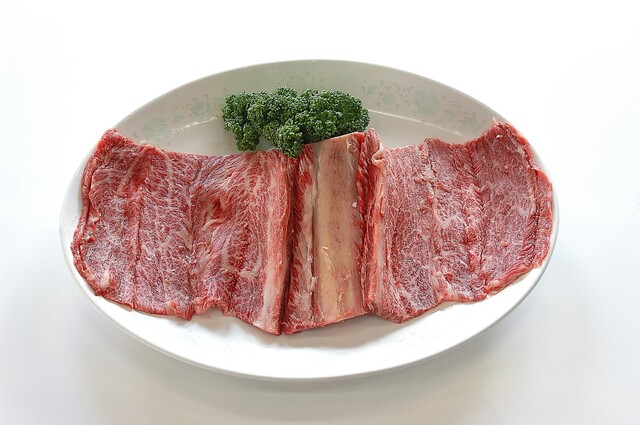
Approach yakiniku in Amagasaki and the signal is rarely ceremony. It is smoke control, table spacing, the rhythm of tongs against metal, and a room built for groups who know that grilled beef is as much about pacing as appetite. Miraku En belongs to that practical Kansai tradition: a house restaurant near Deyashiki, serving Japanese barbecue alongside Korean cold noodles and tripe, with the meal shaped at the grill rather than by a chef’s monologue.
That matters because yakiniku is an ingredient-first format by design. The kitchen can season, cut and portion, but the diner completes the cooking. In weaker rooms, that hands-off structure exposes inconsistency. In stronger ones, it turns sourcing and butchery into the main argument. Miraku En’s selection for Tabelog 100 Yakiniku WEST 2025 places it within a regional category where reputation depends less on novelty and more on repeated performance: beef quality, offal handling, heat management and the ability to feed tables without turning the room into a factory.
Amagasaki yakiniku with beef, tripe and cold noodles in the same frame
Amagasaki’s dining character sits between Osaka appetite and Hyogo neighbourhood regularity. It rewards places that work for families, after-work groups and serious eaters without asking every meal to become a tasting-menu event. In that context, yakiniku has a clear role: generous, social and direct. The format lets a table move between richer cuts, organ meats and a cooling noodle finish, which is why Korean cold noodles and tripe are not side notes here. They are part of the category’s grammar.
Miraku En’s listed categories, yakiniku, Korean cold noodles and tripe, point to a kitchen that treats the meal as more than grilled slices alone. Tripe signals confidence in texture and cleaning; cold noodles give the meal a reset after fat and char. For travellers used to Tokyo counters or Kyoto kaiseki pacing, this is a different kind of precision. The craft is not hushed or linear. It is cumulative, built through cuts, dipping sauces, grill timing and the table’s own judgment.
The price band also defines the experience. At JPY 5,000 to JPY 5,999, the restaurant sits well above Amagasaki’s everyday noodle and casual lunch tier, where places such as Honkaku Sanuki Udon Honoka and other local peers operate at far lower spend. It is not priced like a rarefied wagyu temple, either. That middle-premium position is where yakiniku can be especially compelling: enough budget for careful purchasing, enough informality for repeat local use.
Recognition without fine-dining theatre
The Tabelog 100 Yakiniku WEST 2025 selection is the key external credential, and its relevance is regional rather than decorative. Western Japan’s yakiniku field is dense, with Osaka, Kobe and surrounding commuter cities all competing for beef-driven loyalty. A Hyogo address in that mix has to justify attention against larger dining centres, not simply against nearby shops.
The restaurant has also appeared across Tabelog’s Yakiniku WEST selections from 2020 through 2025, with a Grill WEST selection noted in 2024. That run says more than a single badge. It suggests consistency in a category where diners can quickly detect declining sourcing or inattentive service. A Tabelog score of 3.64 adds another useful signal: in Japan’s user-review culture, scores above the mid-threes often indicate a venue with meaningful local traction rather than broad tourist visibility.
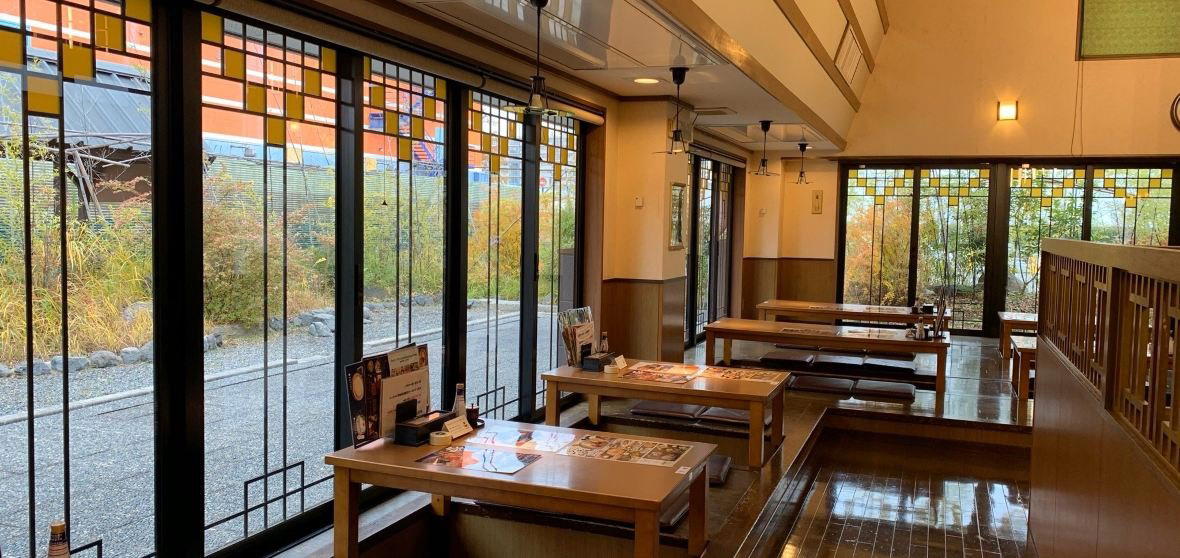
The room’s scale changes the reading. With 100 seats, table seating, tatami space and a special room, this is not the tiny counter model that manufactures scarcity through capacity. It is closer to a serious neighbourhood yakiniku house, where the challenge is maintaining ingredient standards across volume. That distinction matters for planning expectations. The experience is social rather than reverential, and the cooking happens in public, table by table.
Compared with Amagasaki’s lower-priced everyday circuit, from Butanohoshi to Dairen, Gyoraku Karakara and Angle, this is a more deliberate dinner choice. It occupies the slot for guests who want a meat-led evening with enough regional recognition to make the detour credible, while staying grounded in the city’s dining habits.
How to read the room before you plan dinner
The practical shape is unusually clear for a Japan yakiniku address. Dinner service runs Tuesday through Sunday, with Monday closure except when public-holiday scheduling changes the rhythm. Last order is listed at 10:30 PM, which gives late diners some flexibility, though the better reading is to treat this as a full dinner rather than a quick stop. The restaurant is non-smoking, accepts major credit cards, and does not accept electronic money or QR code payments.
Reservations are available for groups of six or more; smaller parties are seated first-come, first-served. That policy suits the restaurant’s group-friendly identity but also means couples and small parties should think about timing. Arriving earlier in the evening reduces the risk of waiting, especially on weekends and holiday-adjacent nights. Parking is available, with 20 spaces in the first lot and 5 in the second, while the rail approach is simple: Deyashiki Station is the nearest stop, with the restaurant listed 112 meters away.
Families are part of the expected audience, not an accommodation added later. Children are welcome, tatami seating is available, and the 100-seat layout gives the room a different temperament from compact urban yakiniku counters. Private rooms and private use are not available, so the trade-off is clear: this is a shared dining room with enough space for family and group meals, not a sealed-off special-occasion box.
For a wider read on the city, start with our full Amagasaki restaurants guide. Travellers building a broader itinerary can also scan our full Amagasaki hotels guide, our full Amagasaki bars guide, our full Amagasaki wineries guide and our full Amagasaki experiences guide. For comparison across Japanese and Japan-adjacent dining formats, see -Grilled beef Sukiyaki- KAMAKURA TANUKIAN 鎌倉 たぬき庵 in Kamakura. 鮪と炭火焼き うお炭 秋葉原店 in Tokyo.cafe in Osaka.know in Kumamoto, (Shoku) Vietnam in Kawasaki, [Curry Senmon Ten] Maruyama Kyoju. in Sapporo, Jōdo Saké Bar in Los Angeles and Onigiri Time in Pasadena.
Snapshot
Comparable venues by cuisine and price in the same metro.
| Venue | Cuisine | Price | Notes |
|---|---|---|---|
| Miraku EnThis venue — the venue you are viewing | Yakiniku (Japanese BBQ) | $$ | Not listed |
| Sanuki Udon Harushin | Sanuki-style Udon & Tempura | $ | /潮江 (Shioe) |
| Tenteko Mukonosou ten | Okonomiyaki | $$ | Mukonoso |
| Taniguchi | Yakitori | $$$ | Mukonoso |
| Ramen Senmon Nagomi | Ramen | $ | Mukogawa |
| Butanohoshi | Tonkotsu Ramen | $$ | Nagasu Nishidori |
Recognition history
Dated appearances from independent guides and award organizations, with the underlying list record or original source where available.
Tabelog 100 #52 · No. 52
Tabelog · Tabelog 100 - Yakiniku - WEST - 2025
Continue exploring
More in Amagasaki
Restaurants in Amagasaki
Browse all →

Bars in Amagasaki
Browse all →
Hotels in Amagasaki
Browse all →


Wineries in Amagasaki
Browse all →
At a Glance
- Lively
- Casual
- Cozy
- Group Dining
- Family
- Casual Hangout
- After Work
- Late Night
- Standalone
- Beer Program
Current opening hours
- Monday
- Closed
- Tuesday
- 5–11 PM
- Wednesday
- 5–11 PM
- Thursday
- 5–11 PM
- Friday
- 5–11 PM
- Saturday
- 5–11 PM
- Sunday
- 5–11 PM
Hours can change for holidays and private events. Last verified .
Typical neighborhood yakiniku with lively atmosphere, casual seating, and a cozy, informal feel suited to after-work gatherings and family meals.