
Sanuki Udon Harushin belongs to Amagasaki’s everyday noodle culture rather than the luxury dining circuit: Sanuki-style udon, Kansai dashi, tempura, and curry udon in a compact local room. Its Tabelog Udon WEST 100 selection in 2024 gives the shop a clear credential, but the appeal is the disciplined, low-friction format that Kansai does so well.
Pearl is the En Primeur Club membership app — saves, bookings, and concierge access live there. Same editors, same standards.
- Address
- 兵庫県尼崎市潮江1丁目8-1-109
- Phone
- +81664984758
- Website
- tabelog.com
- Directions
- Get directions
 Saves & bookings on Pearl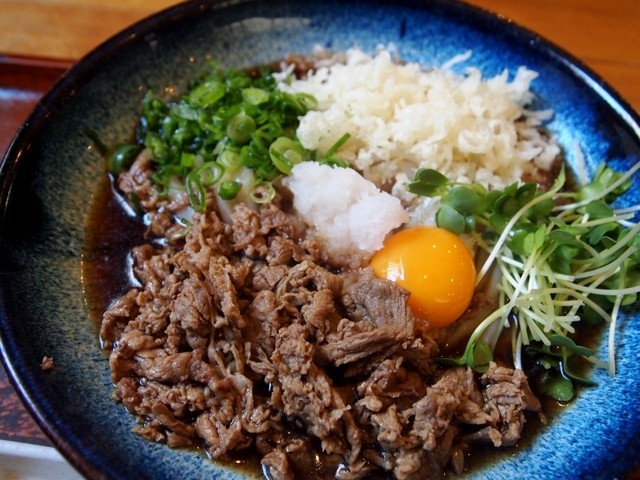
Approaching a serious udon shop in Hyogo is not a red-carpet exercise. The cues are compact frontage, solo diners, families and regulars moving through a meal, and a kitchen working in minutes, not theatrics. In practical, local, rail-connected Amagasaki, a noodle counter can say more about regional taste than a formal dining room.
Sanuki Udon Harushin fits that culture in a Kansai format diners understand: wheat noodles, dashi, tempura and curry udon, with range for quick lunch or simple evening meal. Its 2024 selection in Tabelog’s Udon WEST 100 places it in a curated western Japan udon conversation, not a general local listing. That helps travellers because udon in Japan is intensely regional, and Kansai udon is rarely about excess.
Sanuki technique, Kansai dashi, and the Amagasaki noodle habit
Sanuki udon carries different expectations from the softer, broth-led styles many visitors first meet in Osaka or Kyoto. The noodle is the argument: wheat, chew, temperature and timing. Kansai dashi shifts the register with lighter, savoury broth built on clarity rather than heaviness. Together they explain why a modest shop can attract serious noodle diners. The point is execution, not luxury, at a price tier where mistakes have nowhere to hide.
Harushin’s focus on freshly boiled noodles is not decorative. In udon culture, waiting can signal quality because texture changes quickly after cooking. Boiling to order trades faster turnover for better noodle condition, common where noodles carry the meal rather than merely hold toppings.
The categories tell the story. Tempura and curry udon put the shop in a familiar Kansai casual-dining lane, where solo customers, children, friends and families share the same core vocabulary. Curry udon is practical Japanese comfort: heat, thickness and broth clinging to wheat. Tempura adds crunch, oil management and timing. Here, discipline is measured in small increments.
Amagasaki rewards that specificity. The city has ramen specialists such as Butanohoshi, Chinese-leaning local tables such as Dairen, and udon peers including Honkaku Sanuki Udon Honoka. Against that set, a Tabelog Udon WEST 100 selection gives Sanuki Udon Harushin a stronger specialist signal than its casual noodle price suggests. Travellers using Our full Amagasaki restaurants guide should read it as a precision pick, not a splurge.
Why the room matters less than the timing
Udon shops at this level are often misunderstood by visitors expecting destination-dining codes. The room is not the event; cadence is: order, wait, eat while the noodles are in condition, then move on. Harushin’s counter-plus-tables mix suits that rhythm. Counter seats serve solo diners and quick meals; tables make the same food accessible to families and small groups. That social range is part of udon’s strength in Japan.
The no-reservations format reinforces the meal’s democratic side and changes visitor strategy. This is not a calendar-driven booking like a formal tasting counter; it is a timing decision. Treat it as a local stop within a Hyogo day, not the anchor for an itinerary. Amagasaki’s rail position helps, with Osaka and Kobe in reach, but the appeal is tied to the city’s everyday pace rather than tourism infrastructure.
Comparatively, Angle, Gyoraku Karakara and other Amagasaki listings serve different appetites across the city’s casual spectrum. Harushin’s lane is narrower and more traditional: udon as texture, broth and timing. That narrowness is a strength. In Japanese regional food, breadth is often less persuasive than careful repetition.
The broader lesson is cultural. Sanuki udon became famous through Kagawa, but its influence spread because the format is portable without becoming generic. Kansai dashi localises it. A Hyogo shop serving Sanuki-style noodles with Kansai broth is not just copying another region; it adapts a national noodle language to western Japan’s preference for balance and restraint. That separates a useful meal from another generic stop near a station.
How to place it within an Amagasaki day
For visitors, the decision is about appetite more than occasion. This is a casual udon specialist with enough recognition to justify a detour within Amagasaki, especially for travellers who care about regional noodle styles. It makes less sense for anyone seeking ceremony, long-form service or a drinks-led evening. Sake and shochu are listed, but the core experience remains the bowl.
Japanese cities reward category-specific eating. A day might pair udon here with ramen at Butanohoshi on another visit, or contrast it with a more varied local meal at Dairen. Travellers building a wider Kansai route can use national comparisons cautiously: a café stop such as.cafe in Osaka or a Tokyo izakaya-style listing such as. 鮪と炭火焼き うお炭 秋葉原店 in Tokyo belongs to a different dining grammar. Udon asks for focus.
That focus is why the 2024 Tabelog Udon WEST 100 selection matters. It signals a shop assessed within its category, not padded by atmosphere or luxury cues. Similar category thinking applies across Japan, from [Curry Senmon Ten] Maruyama Kyoju. in Sapporo to (Shoku) Vietnam in Kawasaki, where value lies in a specific food form handled with discipline. Outside Japan, Jōdo Saké Bar in Los Angeles and Onigiri Time in Pasadena show how Japanese formats travel, but Kansai is different: here, the everyday shop is the source material.
For Amagasaki planning beyond the bowl, city pages are more useful than a single-venue itinerary. Pair this restaurant with Our full Amagasaki hotels guide for overnight logistics, Our full Amagasaki bars guide for later drinking, Our full Amagasaki wineries guide for wine-led planning and Our full Amagasaki experiences guide for non-restaurant time. As a regional comparison, -Grilled beef Sukiyaki- KAMAKURA TANUKIAN 鎌倉 たぬき庵 in Kamakura sits in a different tradition, where sukiyaki frames beef and ceremony rather than wheat and broth.
The editorial case for Sanuki Udon Harushin is clear: go for a category-specific Kansai udon meal with a recognised western Japan credential, not spectacle. The meal belongs to everyday Japanese dining, but everyday does not mean casual in execution. In udon, the gap between ordinary and serious can be measured in boiling time, broth balance and whether the kitchen treats a simple bowl as enough.
Budget and Context
Nearby venues at a similar price tier for orientation.
| Venue | Cuisine | Price | Notes |
|---|---|---|---|
| Sanuki Udon HarushinThis venue — the venue you are viewing | Not listed | $ | Not listed |
| Ramen Senmon Nagomi Mukonosou ten | Not listed | $ | Mukonoso, Ramen counter near Mukonoso Station |
| Butanohoshi | Nagasu Nishidori, Tonkotsu Ramen | $$ | Not listed |
| Nagomi (和海) | Mukogawa, Specialty Ramen | $$ | Not listed |
| Taniguchi | Mukonoso, Yakitori | $$$ | Not listed |
| Rock 'n' Billy Super 1 (ロックンビリーS1) | Minamitsukaguchicho, Award-Winning Ramen | $$ | Not listed |
Recognition history
Dated appearances from independent guides and award organizations, with the underlying list record or original source where available.
Tabelog 100 #92 · No. 92
Tabelog · Tabelog 100 - Udon - WEST - 2024
Continue exploring
More in Amagasaki
Restaurants in Amagasaki
Browse all →




Bars in Amagasaki
Browse all →

Hotels in Amagasaki
Browse all →



Wineries in Amagasaki
Browse all →
At a Glance
- Cozy
- Classic
- Solo
- Family
- Casual Hangout
- After Work
- Group Dining
- Standalone
- Sake Program