
Menya Ippachi belongs to Aichi’s serious ramen circuit: a counter-only shop in Taketoyo where house-made noodles, soup, and toppings define the argument. Its selection for Tabelog Ramen AICHI “Tabelog 100” 2025 places it inside the prefecture’s specialist tier, but the appeal is narrower and more grounded: ramen, abura-soba, maze-soba, and tsukemen built around ingredient control rather than spectacle.
Pearl is the En Primeur Club membership app — saves, bookings, and concierge access live there. Same editors, same standards.
- Address
- 2 Chome-60 Kanokoda, 武豊町 Taketoyo, Chita District, Aichi 470-2302, Japan
- Phone
- +81 569-73-2484
- Website
- menya-ippachi.com
 Saves & bookings on Pearl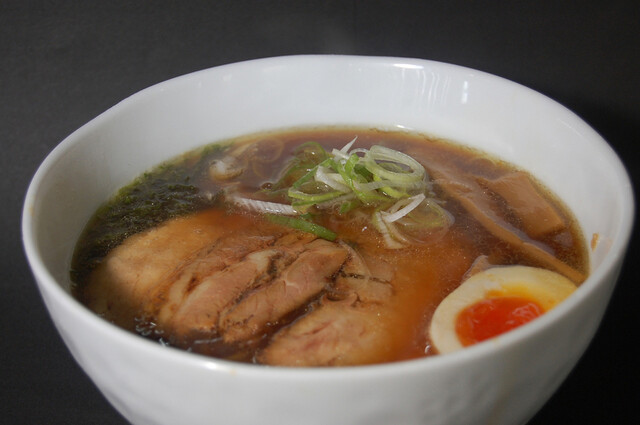
The room reads as ramen should when the kitchen is the point: counter seats, close sightlines, and a pace set by bowls rather than ceremony. In Chita-gun, where dining often sits outside the dense station-to-station rhythm of Nagoya, that intimacy matters. Menya Ippachi is not selling urban theatre; it belongs to the quieter Aichi tradition of specialist shops where the counter is both dining room and production line.
The distinction here is vertical control. The shop’s own description puts the noodles, soup, and toppings under the same house-made umbrella, an important signal in a category where outsourcing can flatten personality. Ramen in Japan is often judged by regional style, but in serious local shops the sharper question is provenance: who controls the noodle texture, who builds the broth base, and how much of the bowl is assembled from components made elsewhere. Menya Ippachi’s answer is unusually complete for its price tier.
House-made components give the bowl its argument
Aichi’s ramen scene does not have a single shorthand in the way Sapporo has miso or Hakata has tonkotsu. A shop can move between ramen, abura-soba, maze-soba, and tsukemen without being trapped by a civic template, but it also loses the protection of regional cliché. The bowl has to justify itself through structure.
Menya Ippachi’s emphasis on natural ingredients and no chemical seasonings places it in the restraint-led side of Japanese ramen, where umami is drawn out rather than amplified by obvious shortcuts. That does not make the cooking austere. It changes the metric. The question is balance: broth depth without heaviness, noodles with enough presence to hold the soup or dipping format, toppings that support rather than crowd the bowl. In this sense, the menu categories matter less as variety than as proof of range. Ramen tests broth integration; tsukemen tests noodle strength; abura-soba and maze-soba expose seasoning clarity because there is less liquid to hide behind.
The 2025 selection for Tabelog Ramen AICHI “Tabelog 100” gives the shop a useful external marker. It is not a luxury award, and that is precisely why it fits the category. Ramen credibility in Japan often comes from repeat local approval rather than polished dining-room signals. A Tabelog score of 3.66, together with past selections in the Ramen EAST lists in 2017, 2018, and 2024, points to sustained recognition rather than a single burst of attention.
Counter ramen outside the Nagoya orbit
Location shapes the experience. Chita-gun is not a place where visitors should expect the frictionless density of a central-city food crawl. The reward is a different kind of meal: destination ramen that sits within daily life, with families, solo diners, and small groups all fitting the format. Counter-only seating keeps the service rhythm compact, while the listing of children welcome and a kids menu makes the shop more flexible than many serious noodle counters.
That combination is worth noting. In Japan, specialist ramen shops can be intimidating for travellers who read counter seating as a signal of speed, silence, or regulars-only confidence. Here, the format remains compact, but the stated family suitability broadens the use case. The better comparison is not with high-design ramen rooms in Tokyo, but with regional shops that earn attention by doing a narrow set of things consistently and accessibly.
Within the Chita area, the broader peer field includes places such as Mutsuki, Menbo Showa Tei, Menya Sakura, ル クーリュズ, and Okura Mochi Tokoname honten, but the restaurant’s ramen-specific recognition gives it a clearer role for travellers building a food itinerary around noodle craft. The draw is not variety for its own sake; it is the chance to see how an Aichi counter shop handles multiple ramen-adjacent formats while keeping ingredient sourcing and in-house preparation central.
How to place it in a Chita-gun food day
For a traveller already in the area, the restaurant works well as the anchor meal rather than a casual add-on. The counter format suits a focused lunch or dinner, and the ramen category keeps the commitment lighter than a tasting-menu booking. Its recognition, price tier, and compact room make it a useful reminder that Japan’s serious dining culture is not confined to sushi counters, kappo rooms, or metropolitan restaurant districts.
Chita-gun rewards planning across categories because the area is spread out rather than stacked vertically. For restaurants beyond this ramen stop, see Our full Chita-gun restaurants guide. If the trip needs a base, compare options in Our full Chita-gun hotels guide. Drinking plans sit separately in Our full Chita-gun bars guide, while broader regional tasting routes belong in Our full Chita-gun wineries guide and Our full Chita-gun experiences guide.
Travellers comparing Japanese casual dining formats across the country can also look beyond Aichi: -Grilled beef Sukiyaki- KAMAKURA TANUKIAN 鎌倉 たぬき庵 in Kamakura, . 鮪と炭火焼き うお炭 秋葉原店 in Tokyo, .cafe in Osaka, .know in Kumamoto, (Shoku) Vietnam in Kawasaki, [Curry Senmon Ten] Maruyama Kyoju. in Sapporo, [ki:] in Kyoto, #肉といえば松田 奈良本店 in Kashihara, 1/3 HAMBURGER FACTORY in Kanazawa, 1000 in Yokohama, 1000mヒュッテ 1000m Hut in Kutchan, Jōdo Saké Bar in Los Angeles, and Onigiri Time in Pasadena.
The editorial case is simple: the restaurant is valuable because it shows how much seriousness can sit inside an everyday ramen price band. The house-made approach, counter-only room, and Tabelog 100 recognition give the meal a clear identity without pushing it into luxury theatre. In Chita-gun, that makes it a practical and culturally specific stop for anyone interested in ramen as craft rather than trend.
At-a-Glance Comparison
Comparable venues by cuisine and price in the same metro.
| Venue | Cuisine | Price | Notes |
|---|---|---|---|
| Menya IppachiThis venue — the venue you are viewing | Casual Japanese Ramen Shop | $ | Not listed |
| レストハウス寺子屋 | Japanese Mountain Comfort Food | $ | 山ノ内町 |
| Nigiri Zushi 150 | Budget counter sushi (150 yen nigiri) | $ | .null |
| Naruto Ya | Ramen & Tsukemen Shop | $ | Naka |
| Chuka Soba Paikaro | Traditional Fukuyama-style ramen shop | $ | Chikusa |
| Tsurukamedo Zenzai | Okinawan Shaved Ice (Zenzai) | $ | Yomitan Village |
Recognition history
Dated appearances from independent guides and award organizations, with the underlying list record or original source where available.
Tabelog 100 #28 · No. 28
Tabelog · Tabelog 100 - Ramen - AICHI - 2025
Continue exploring
More in Chita-gun
Restaurants in Chita-gun
Browse all →
At a Glance
- Cozy
- Lively
- Solo
- Casual Hangout
- After Work
- Family
- Standalone
Current opening hours
- Monday
- 11 AM–2 PM
- Tuesday
- 11 AM–2 PM
- Wednesday
- 11 AM–2 PM, 5:30–8 PM
- Thursday
- 11 AM–2 PM, 5:30–8 PM
- Friday
- 11 AM–2 PM, 5:30–8 PM
- Saturday
- 10:30 AM–2 PM, 5–8 PM
- Sunday
- 10:30 AM–2 PM, 5–8 PM
Hours can change for holidays and private events. Last verified .
Casual and bustling ramen-ya atmosphere with counter-style, no-frills seating focused on quick, satisfying bowls rather than lingering dining.