Meneer De Wit Heeft Honger
On Witte de Withstraat, Meneer De Wit Heeft Honger sits within one of Amsterdam's most densely contested dining streets, where neighbourhood bistros and serious kitchen operations coexist within a few hundred metres. The name, roughly translating as 'Mr De Wit Is Hungry', signals a tone that is knowing rather than reverent, and that informality has shaped both the format and the following the restaurant has built in the Oud-West area.
Pearl is the En Primeur Club membership app — saves, bookings, and concierge access live there. Same editors, same standards.
- Address
- Witte de Withstraat 10, 1057 XV Amsterdam, Netherlands
- Phone
- +31207373184
- Website
- meneerdewitheefthonger.nl
- Directions
- Get directions
 Saves & bookings on Pearl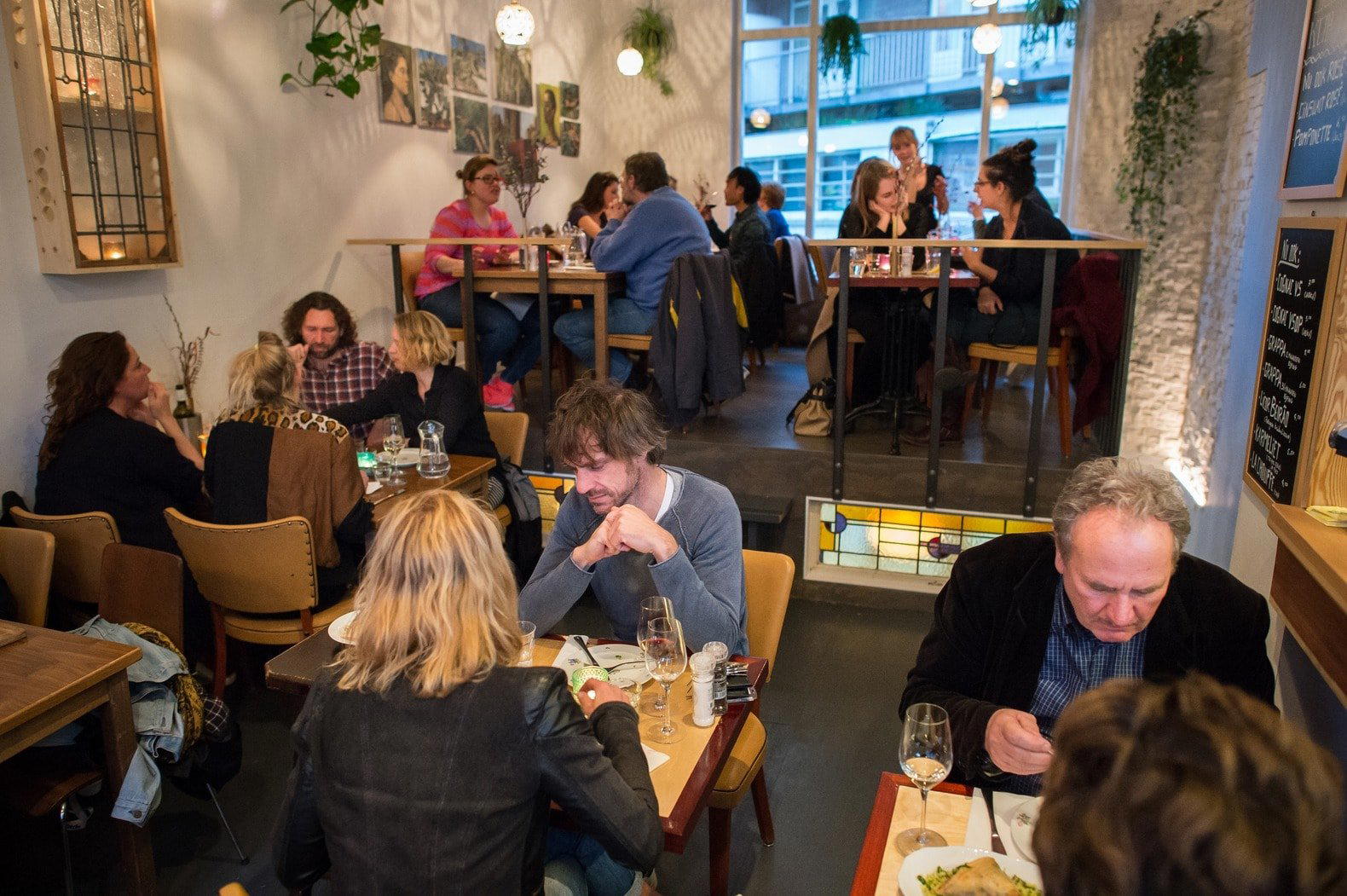
A Street That Sets the Standard
Witte de Withstraat runs through the Oud-West district as one of Amsterdam's more consequential addresses for casual-serious dining. It is not the canal-side grandeur of the Grachtengordel, nor the institutional weight of a hotel restaurant. What defines the street is a particular tension: kitchen ambition operating inside neighbourhood formats, where the bill stays accessible but the sourcing and technique do not. Meneer De Wit Heeft Honger at Witte de Withstraat 10 in Amsterdam reads as a natural product of that environment. The name itself, Mr De Wit Is Hungry, stakes out a position before you open the door, trading on appetite and directness rather than formal distance.
Amsterdam's dining scene has split, over the past decade, into increasingly distinct tiers. At the upper end, Michelin-recognised addresses such as Ciel Bleu, Flore, Spectrum, and Vinkeles occupy a price bracket that demands commitment from the outset, multi-course tasting menus, formal service architecture, and price-per-head figures that place them in conversation with peer restaurants in Paris or Copenhagen rather than their Amsterdam postcode. Meneer De Wit Heeft Honger operates in a different register: the mid-weight neighbourhood category where cooking quality is the primary differentiator and formality is a disadvantage rather than a credential. For comparison within the accessible end of Amsterdam dining, the trajectory of Bistro de la Mer illustrates how classic frameworks can anchor a neighbourhood identity, a different approach, but the same broad tier.
Format and the Neighbourhood Bistro Reinvented
The evolution of the neighbourhood restaurant in European cities has followed a recognisable arc. The model that dominated the 1990s and early 2000s, fixed menus, stable wine lists, incremental change, has largely given way to something more responsive: shorter menus that shift with supply, wine programmes that reflect producer relationships rather than region catalogues, and a service style that prioritises knowledge over performance. Meneer De Wit Heeft Honger belongs to the current iteration of that arc, where the physical setting remains approachable but the kitchen's decision-making operates at a higher register than the room's informality would suggest.
The address on Witte de Withstraat places it in walking distance of the Vondelpark corridor and the broader Oud-West grid, an area where the dining public is local-first and repeat custom matters more than tourist throughput. That demographic shapes the format: a restaurant that plays to regulars builds differently from one optimised for first-time visitors. The name becomes a recurring reference point rather than a novelty, and the menu functions as a conversation rather than a statement.
Dutch Fine Dining in National Context
Placing the restaurant in its national context requires acknowledging how geographically distributed serious Dutch cooking has become. The Netherlands' Michelin-starred restaurants are not concentrated in Amsterdam in the way that Paris monopolises French fine dining. Restaurants such as De Librije in Zwolle, 't Nonnetje in Harderwijk, Aan de Poel in Amstelveen, Brut172 in Reijmerstok, De Bokkedoorns in Overveen, De Groene Lantaarn in Staphorst, De Lindehof in Nuenen, De Lindenhof in Giethoorn, De Nieuwe Winkel in Nijmegen, and De Treeswijkhoeve in Waalre demonstrate that the country's cooking ambition has dispersed well beyond the capital. Amsterdam's dining identity, then, is not defined by institutional fine dining alone. The city's most enduring food addresses have tended to be mid-format operations where craft and accessibility coexist, the category the restaurant occupies.
Internationally, the broader shift toward technically serious casual restaurants has parallels in cities where the formal tasting-menu format has plateaued. Restaurants like Le Bernardin in New York City represent one pole of that spectrum, institutional, award-defined, non-negotiably formal, while operations like Atomix in New York City have found ways to maintain creative seriousness within a more contained footprint. The Dutch neighbourhood bistro, at its leading, occupies its own version of that space: technically grounded, socially accessible, built for return visits.
What to Expect and How to Plan
Witte de Withstraat 10 is accessible by tram from central Amsterdam, with the Oud-West tram network placing the street within direct reach of the main canal ring. For visitors staying in the Jordaan or Museum Quarter, the address is a short ride rather than a destination journey. Reservations are recommended. Given the neighbourhood's density of regulars and the format's suitability for repeat dining, securing a table ahead of a Friday or Saturday visit is advisable.
The Essentials
Comparable venues nearby, for context on price, style, and recognition.
| Venue | Cuisine | Price | Notes |
|---|---|---|---|
| Meneer De Wit Heeft HongerThis venue — the venue you are viewing | Not listed | $$$ | Not listed |
| De Plantage | Plantage, Modern Mediterranean | $$ | Not listed |
| The Joan Amsterdam | Spuistraat Zuid, Modern Mediterranean | $$$ | Not listed |
| Vita Lente | Lootsbuurt, Southern European Café-Bar | $$ | Not listed |
| Brasserie Bruis | Not listed | $$$ | Haarlem city centre, Seasonal French Brasserie |
| Salmuera | Not listed | $$$ | Bloemgrachtbuurt, Latin American Steakhouse |
Continue exploring
More in Amsterdam
Restaurants in Amsterdam
Browse all →
Bars in Amsterdam
Browse all →
Hotels in Amsterdam
Browse all →
Wineries in Amsterdam
Browse all →
At a Glance
- Cozy
- Intimate
- Rustic
- Date Night
- Special Occasion
- Standalone
Current opening hours
- Monday
- Closed
- Tuesday
- Closed
- Wednesday
- Closed
- Thursday
- 6–10 PM
- Friday
- 6–10 PM
- Saturday
- 6–10 PM
- Sunday
- Closed
Hours can change for holidays and private events. Last verified .
Knusse (cozy) atmosphere with wooden tables, evoking the warmth of shared Mediterranean family dining.