
Men Senmon Ten Ajiyoshi is a compact Nagoya udon address with a low-cost lunch format and repeat selection in Tabelog’s Udon EAST “Tabelog 100,” including 2024. The appeal is less about ceremony than concentration: wheat noodles, curry udon, a small room, and the kind of local routine that rewards diners willing to leave the station-area circuit.
Pearl is the En Primeur Club membership app — saves, bookings, and concierge access live there. Same editors, same standards.
- Address
- Japan, 〒462-0022 Aichi, Nagoya, Kita Ward, Kawanakacho, 4−3 中切住宅
- Phone
- +81 52-991-4345
- Website
- tabelog.com
 Saves & bookings on Pearl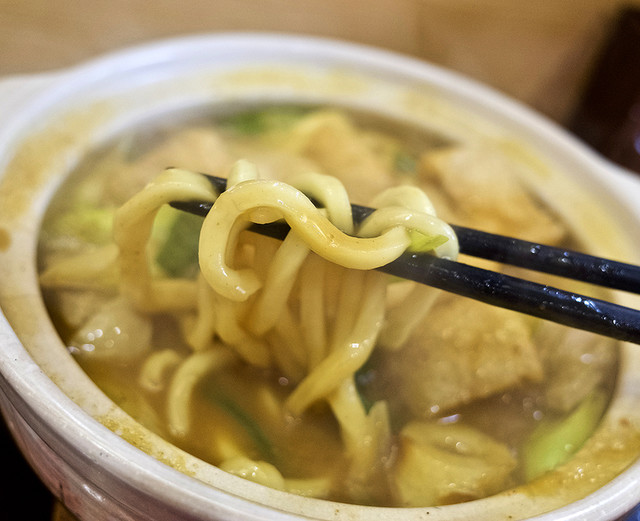
Approaching Kawanakacho, Nagoya’s restaurant energy thins into a residential rhythm: bus stops, apartment blocks, modest storefronts, and lunch rooms for regulars rather than spectacle. Here, udon makes sense. It is immediate, affordable, tactile, and depends more on noodle texture, broth discipline, and turnover than theatre. Men Senmon Ten Ajiyoshi sits in that everyday Japanese dining category where the room is small, the meal is fast, and the question is precision, not luxury.
Nagoya is often discussed through miso katsu, hitsumabushi, kishimen, and morning-service café culture, but its noodle map is broader. Udon houses here sit between quick working lunches and destination bowls; the difference is usually signalled by repeat local attention rather than décor. Selection for Tabelog’s Udon EAST “Tabelog 100” in 2024 places this address in a defined regional conversation: not a Michelin-style luxury tier, but a user-driven Japanese recognition list for specialist shops with sustained pull.
A small udon room built around texture, heat, and turnover
The format is spare in the way serious noodle shops often are. Categories are udon and curry udon, keeping the cooking in a narrow lane rather than a broad izakaya-style menu. That matters. Japanese noodle culture rewards specialization because small differences carry weight: wheat chew, broth cling, and timing between boil, rinse, warm-through, and service. A small udon shop does not need length; it needs consistency at lunch speed.
The physical setup reinforces that reading. The room has 17 seats, including counter seating, tables, and a raised tatami area. That mix gives it a practical neighbourhood-shop cadence: solo diners at the counter, pairs moving quickly through lunch, and small groups with enough room without turning the meal into an occasion. Counter seating also changes the experience. The sounds become part of the meal: boiling water, bowls set down, chopsticks against ceramic, the brief pause before noodles are pulled into broth.
Curry udon adds a distinctly Japanese comfort register to the restrained noodle-shop frame. In Japan, curry udon is not simply curry poured over noodles; the appeal is the interaction between thickened curry, dashi, and wheat. It is filling, aromatic, and direct, especially suited to a midday service window. Ajiyoshi’s low price bracket keeps the choice casual, while repeated Tabelog 100 recognition makes the visit more than convenience for anyone tracing Nagoya’s less formal food culture.
Why this Nagoya noodle stop sits outside the station-dining script
Many visitors eat Nagoya through transport hubs: Meieki for convenience, Sakae for density, and Osu for grazing. Kawanakacho asks for another rhythm. It is not a polished dining district, and that is the point. The city’s everyday food culture often becomes clearer away from hotel corridors, where lunch spots serve a tight local audience and recognition comes from repeat use, not destination design.
Within Nagoya’s broader spread, this differs from a higher-spend meal at Yakiniku Horumon Gensho or a formal kaiseki booking at Onkaiseki Shiratama. It is closer to the city’s affordable noodle and curry-udon lane, where Curry Udon Shachinoya and Niboshi Chuka Soba Gyogyo occupy adjacent budget-conscious territory. The distinction is category, not hierarchy: ramen, curry udon, and wheat-noodle specialists answer different cravings, and Ajiyoshi’s relevance comes from staying tightly inside udon rather than chasing breadth.
The practical intelligence is simple: this is a lunch-focused shop with no reservations, a compact seat count, and cash-only payment. It closes on Mondays, Sundays, and public holidays, and the service window is short. That favours early, decisive planning rather than late flexibility. Parking is available on the south and east sides, with designated spaces identified by green traffic cones at Nos. 17, 18, and 19 under Nakakiri Housing. For public transport, the Nakakiri 4-chome bus stop is more relevant than the railway-station map.
Families should read the format carefully: children under elementary school age are not admitted because hot items are handled. That is not a hospitality flourish; it is a functional rule in a small room serving hot noodles at pace. The better audience is solo diners, pairs, or small groups who understand that value lies in directness.
Where it fits in a sharper Nagoya itinerary
A meal here works as a corrective to over-planned city dining. Nagoya has polished counters and high-spend rooms, but a serious itinerary needs places showing how residents eat. Udon at this price point, with specialist identity and repeat Tabelog 100 selection across multiple years, adds balance and shows Japanese dining reputation is not confined to tasting menus, omakase counters, or hotel restaurants.
Travellers building a fuller Nagoya map can pair this lunch with broader city research through Our full Nagoya restaurants guide, then separate dining from lodging, drinking, and cultural planning via Our full Nagoya hotels guide, Our full Nagoya bars guide, Our full Nagoya wineries guide, and Our full Nagoya experiences guide. Within the local restaurant spread, nearby editorial comparisons include 1022, 451, Aaron, Alan., and All Day Dining Montmartre.
For readers extending the same lens across Japan, the aim is not collecting famous names but understanding formats: sukiyaki in Kamakura, casual seafood grilling in Tokyo, café culture in Osaka, regional dining in Kumamoto, Vietnamese cooking in Kawasaki, curry specialization in Sapporo, and Japanese drinking or rice-ball formats abroad. Useful reference points include -Grilled beef Sukiyaki- KAMAKURA TANUKIAN 鎌倉 たぬき庵 in Kamakura. 鮪と炭火焼き うお炭 秋葉原店 in Tokyo.cafe in Osaka.know in Kumamoto, (Shoku) Vietnam in Kawasaki, [Curry Senmon Ten] Maruyama Kyoju. in Sapporo, Jōdo Saké Bar in Los Angeles, and Onigiri Time in Pasadena.
The editorial call is clear: Men Senmon Ten Ajiyoshi is for diners who value specialist Japanese lunch culture over comfort-zone geography. The reward is not ceremony. It is the compressed pleasure of a small udon room working inside a tight category, with enough recognition to justify the detour and enough everyday character to keep the meal grounded.
A Quick Peer Check
Comparable venues for orientation by cuisine and category.
| Venue | Cuisine | Price | Notes |
|---|---|---|---|
| Men Senmon Ten AjiyoshiThis venue — the venue you are viewing | Udon and curry udon specialist | $ | Not listed |
| Chuka Soba Shirakabe Aoi | Traditional Japanese Ramen & Maze-soba | $ | Higashi |
| Tori Soba Susuru Marunouchi honten | Modern chicken paitan ramen | $ | Naka |
| Betokon Ramen Shinkyo Meieki nishiguchi ten | Health-conscious spicy ramen | $ | Nakamura |
| Masago | Traditional Nagoya ramen (chuka soba) counter | $ | Naka |
| Ichiyoken | Nagoya tonkotsu ramen shop | $ | Tenpaku |
Recognition history
Dated appearances from independent guides and award organizations, with the underlying list record or original source where available.
Tabelog 100 #7 · No. 7
Tabelog · Tabelog 100 - Udon - EAST - 2024
Continue exploring
More in Nagoya
Restaurants in Nagoya
Browse all →

At a Glance
- Cozy
- Classic
- Intimate
- Solo
- Casual Hangout
- Standalone
Current opening hours
- Monday
- Closed
- Tuesday
- 11:30 AM–2 PM
- Wednesday
- 11:30 AM–2 PM
- Thursday
- 11:30 AM–2 PM
- Friday
- 11:30 AM–2 PM
- Saturday
- 11:30 AM–2 PM
- Sunday
- Closed
Hours can change for holidays and private events. Last verified .