On Friedrichstraße, one of Berlin's most commercially saturated streets, McDonald's occupies a position that says more about the city's post-reunification retail geography than about fast food itself. As a reference point for understanding where Berlin's dining spectrum begins, and how far it stretches toward the €€€€ tiers above, it earns its place in any honest account of eating in the German capital.
Pearl is the En Primeur Club membership app — saves, bookings, and concierge access live there. Same editors, same standards.
- Address
- Friedrichstraße 207, 10969 Berlin, Germany
- Phone
- +49 30 25291828
- Website
- mcdonalds.com
- Directions
- Get directions
 Saves & bookings on Pearl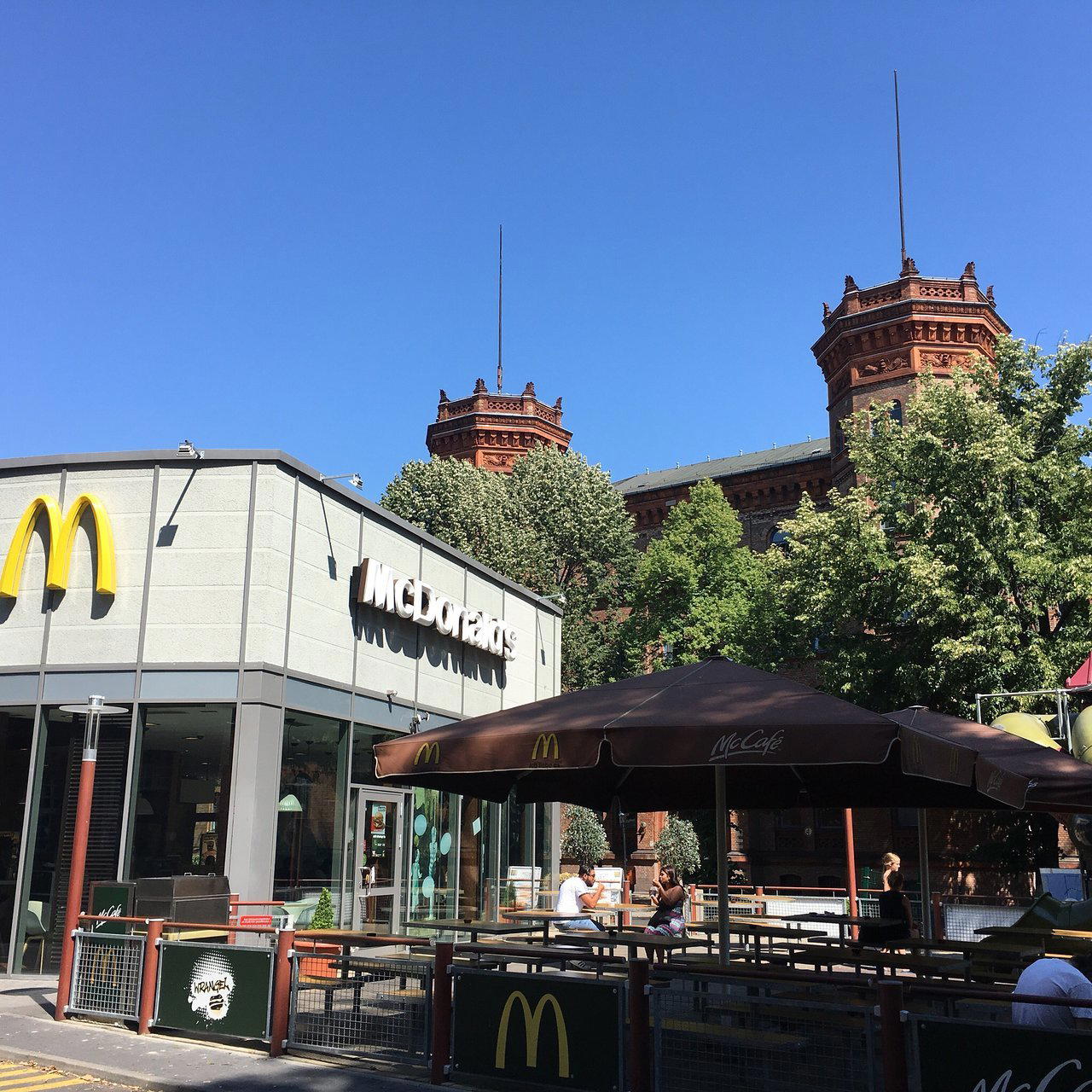
Friedrichstraße and the Full Spectrum of Berlin Dining
Berlin's dining scene spans a wider price and ambition range than almost any other European capital. At one end sit multi-course tasting menus at places like Rutz and Nobelhart & Schmutzig, where a single evening can exceed €200 per head. At the other end, Friedrichstraße 207 is where McDonald's sits on one of the city's most heavily trafficked commercial corridors. That address, running through the heart of the former East-West divide, now functions as a retail and transit artery connecting tourists, office workers, and Mitte residents who need something fast between appointments or before a train.
Understanding where McDonald's sits in Berlin's food geography is not a trivial exercise. Friedrichstraße has undergone repeated reinvention since reunification, and the mix of international chains, mid-market restaurants, and the occasional serious kitchen along its length reflects exactly how Berlin balances its reputation for affordable living against a growing premium hospitality tier. McDonald's here is neither a curiosity nor an embarrassment; it is a functional node in a city where eating decisions are made quickly and the price gap between fast food and fine dining is unusually pronounced.
Daytime Service: The Functional Case
Fast food chains in dense urban corridors operate on a different rhythm from their suburban or highway equivalents, and the restaurant on Friedrichstraße is no exception. Lunchtime on a weekday pulls in a cross-section of the neighbourhood: construction workers from nearby development sites, tourists who have just descended from the S-Bahn at Friedrichstraße station a short walk north, and office staff from the commercial buildings that line this stretch of central Berlin. The format is self-service, counter-ordered, and built around speed. There is no table service, no printed reservation list, and no sommelier. The physical environment is what you would expect from a standardised international rollout: hard seating, high-visibility branding, and lighting calibrated for throughput rather than atmosphere.
The daytime case here is entirely about value density and speed. Berlin's lunch market is competitive at the €5 to 15 range, with döner and currywurst stands, Vietnamese canteens, and Turkish bakeries all competing on the same streets. The restaurant prices itself against that comparable set, not against the €€€€ counters further up the dining ladder. For a traveller with a tight midday schedule, the Friedrichstraße location functions as a predictable, weather-proof option with seating, which is more than some street-food alternatives can offer.
Evening Service: A Different Calculation
The dinner question is where editorial assessment gets interesting. Berlin evenings belong to a different class of dining entirely. The city has a concentration of serious restaurants across multiple cuisine types, and the contrast between a restaurant dinner and what is available within walking or transit distance is sharper here than in most cities. CODA Dessert Dining operates a creative format that has drawn sustained critical attention. FACIL, inside the Mandala Hotel, represents Berlin's contemporary European tier at its most composed. Restaurant Tim Raue occupies a comparable set that competes with addresses in New York and San Francisco.
Against that backdrop, a restaurant dinner in central Berlin is a choice made under specific conditions: budget constraint, time pressure, or a deliberate decision to spend the evening's discretionary euro somewhere other than a restaurant. None of those reasons is irrational, but they are worth naming plainly. The evening trade on Friedrichstraße skews toward tourists who have over-extended their sightseeing and families managing younger children across multiple time zones. The mood after 7pm shifts from the functional efficiency of lunch to something closer to managed exhaustion, which the format is designed to absorb.
Berlin's Premium Tier as Context
Germany's serious restaurant culture extends well beyond Berlin, and understanding where the capital's kitchens sit relative to the national picture adds useful perspective. The country's most decorated addresses include Schwarzwaldstube in Baiersbronn, Aqua in Wolfsburg, Vendôme in Bergisch Gladbach, and Victor's Fine Dining by Christian Bau in Perl. Berlin's own contribution to that tier includes the kitchens mentioned above, plus regional German cooking at places like ES:SENZ in Grassau and Schanz in Piesport. The broader German fine dining circuit also covers Waldhotel Sonnora in Dreis, Restaurant Haerlin in Hamburg, JAN in Munich, and Bagatelle in Trier. Knowing this map matters because it frames what Berlin offers any serious visitor: a city where the distance between a fast-food counter and a three-Michelin-star kitchen can be measured in minutes by U-Bahn.
For anyone planning a Berlin trip with food as a priority, the operative question is how to allocate time and budget across that spectrum. The city's €€€€ tables are not universally harder to book than comparable addresses elsewhere in Europe, but they do require advance planning. The resource savings from a quick lunch at a fast-food counter free up budget and decision-making energy for dinner at the level Berlin's serious kitchens deserve. That is a structural observation about how urban dining economics work in a city with this particular price distribution.
Planning a Visit
The restaurant at Friedrichstraße 207 is walkable from Friedrichstraße S- and U-Bahn station, making it accessible from most central Berlin accommodation without a taxi or tram. No booking is required, dress code is non-existent, and the format is identical to the restaurant locations globally. Hours and menu details follow the chain's standard operating pattern. For allergy or dietary requirements, the restaurant Germany publishes allergen information through its national website and in-restaurant materials. Those with serious allergies should consult the allergen documentation before ordering.
If the goal is a fast, low-cost meal between Berlin's more demanding itinerary items, this address works. If the goal is to eat well in Berlin, the city's serious kitchens are the argument, and they are worth the investment of planning.
Where It Fits
Comparable venues nearby, for context on price, style, and recognition.
| Venue | Cuisine | Price | Notes |
|---|---|---|---|
| McDonald'sThis venue — the venue you are viewing | American Fast Food | $ | Not listed |
| dots | Modern Café & Deli | $$ | Neukolln |
| House of Burgerz | Casual Burgers & Sides | $$ | Mitte |
| Burger Turm | Handcrafted American Burgers | $$ | Tiergarten |
| Cabslam | American Comfort Brunch | $$ | Neukolln |
| Birds in the Kitchen | Polished Fried Chicken Sandwiches | $ | Mitte |
Continue exploring
More in Berlin
Restaurants in Berlin
Browse all →
Bars in Berlin
Browse all →
Hotels in Berlin
Browse all →

At a Glance
- Casual Hangout
- Family
Current opening hours
- Monday
- 8 AM–2 AM
- Tuesday
- 8 AM–2 AM
- Wednesday
- 8 AM–2 AM
- Thursday
- 8 AM–2 AM
- Friday
- 8 AM–4 AM
- Saturday
- 8 AM–4 AM
- Sunday
- 8 AM–2 AM
Hours can change for holidays and private events. Last verified .
Bright, efficient fast food atmosphere with quick counter service and familiar chain lighting.