
A Shinjuku Takashimaya basement-floor wagashi counter with Tabelog 100 recognition for Tokyo Japanese traditional sweets in 2023. The appeal is format as much as fame: take-out daifuku and dorayaki in the department-store food hall, priced in the sub-¥1,000 bracket and built for a precise, fast Tokyo sweets stop rather than a seated café ritual.
Pearl is the En Primeur Club membership app — saves, bookings, and concierge access live there. Same editors, same standards.
- Address
- 5 Chome-24-2 Sendagaya, Shibuya, Tokyo 151-8580, Japan
- Phone
- +81 3-5361-1111
- Website
- takashimaya.co.jp
 Saves & bookings on Pearl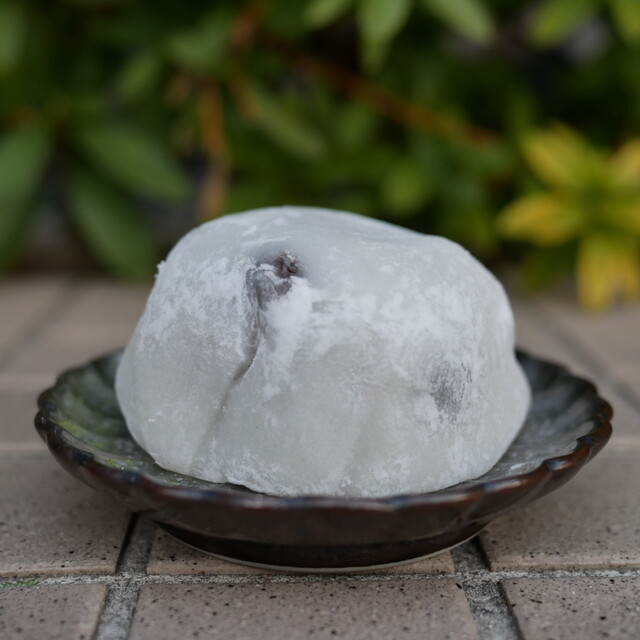
Shinjuku’s department-store basements have their own grammar: bright counters, disciplined queues, gift boxes moving across glass, and customers who know exactly which sweet is worth carrying across the city. In that setting, wagashi is not treated as an afterthought to sushi, ramen, or kaiseki. It is a separate Tokyo habit, tied to seasonality, gifting, train-station convenience, and the quiet hierarchy of specialist counters.
Toranomon Okanoeisen Shinjuku takashimaya ten belongs to that culture rather than to the restaurant-as-destination model. Its public category is Japanese traditional sweets, with daifuku and dorayaki named as core formats, and its service is take-out. That matters. Tokyo’s serious sweet shops often operate with the same discipline as more formal dining rooms, but the transaction is compressed: no table, no course progression, no long explanation, just the counter team managing selection, wrapping, payment, and pace.
Wagashi in a Shinjuku food hall, not a café performance
The useful way to read this address is through the depachika tradition. Tokyo department-store food halls gather highly specific producers under one roof, which changes the way visitors should plan. A sweets counter here competes not only with other wagashi makers, but with bakeries, patisserie counters, prepared-food specialists, and train-friendly purchases aimed at commuters and gift buyers. That pressure rewards clarity: a narrow category, quick service, and products that travel.
The Tabelog 100 selection for Tokyo Japanese traditional sweets and Japanese sweets cafés in 2023 gives the counter a public trust signal in a field where international visitors often lack bearings. Tabelog’s wagashi category is particularly useful because many notable sweet shops do not fit Michelin-style dining logic. They may have no seats, no chef narrative, and no tasting menu, yet still occupy a respected position within the city’s eating culture.
Compared with nearby Shinjuku Takashimaya food-floor options such as Pan Chela Shinjuku takashimaya ten, Patisserie, Toraya An Stand Shinjuku ten, Tsukemen Gonokami Seisakujo, and Le Pan de Joël Robuchon Nyuuman shinjuku ten, this counter sits in a more traditional lane. The comparison is not about luxury; it is about use case. A bakery or patisserie purchase can feel international in reference, while daifuku and dorayaki keep the decision anchored in Japanese confectionery technique and everyday gifting customs.
The counter team is the experience
There is no chef-led dining-room theatre here, and that absence is part of the point. In a take-out wagashi setting, the front counter carries the guest experience: pacing the queue, clarifying what is available, protecting delicate sweets through packaging, and keeping payment moving. The collaboration is practical rather than performative. Production, display, and handover have to align because the customer may be eating later, carrying the box onto a train, or presenting it as a gift.
That team dynamic explains why the format works inside Shinjuku. The station area rewards speed, but wagashi punishes carelessness. Rice-cake sweets, bean-paste confections, and pancake-style dorayaki depend on handling as much as selection. A counter that has earned recognition in this category is being judged not only on flavor, but on consistency across small, repeatable transactions.
For a broader Tokyo eating day, this is a sharp counterpoint to longer meals and bar-led evenings. Pairing a sweets stop with a more structured restaurant plan gives a clearer sense of the city than chasing only tasting menus. EP Club’s wider Tokyo coverage includes neighborhood and category context in Our full Tokyo restaurants guide, while adjacent planning can extend through Our full Tokyo hotels guide, Our full Tokyo bars guide, Our full Tokyo wineries guide, and Our full Tokyo experiences guide.
How to place it in a Tokyo itinerary
The smartest use is as a precision stop, not a lingering meal. The price bracket sits below ¥1,000, the service is take-out, and the setting is Shinjuku Takashimaya’s basement floor. That combination makes it useful before a train, between shopping and dinner, or as a small edible souvenir when a full pastry box feels too fragile or too generic.
Tokyo rewards this kind of sequencing. A day can move from a specialist counter to a casual curry shop, a yakitori room, or a late bar without forcing every stop to carry the weight of occasion. For nearby and broader contrasts, EP Club’s restaurant pages range from 12/10 Shinjuku ten and 2D Cafe to 3 Chome no Curry Ya San, 124. KAGURAZAKA (Yakitori), and. 鮪と炭火焼き うお炭 秋葉原店. The point is not to rank them against wagashi, but to build a day that shows how Tokyo moves between specialism, speed, and ritual.
Outside Tokyo, the same editorial lens applies: a focused format often says more about a city than a broad menu. Compare the tight identity of -Grilled beef Sukiyaki- KAMAKURA TANUKIAN 鎌倉 たぬき庵 in Kamakura.cafe in Osaka.know in Kumamoto, (Shoku) Vietnam in Kawasaki, [Curry Senmon Ten] Maruyama Kyoju. in Sapporo, and [ki:] in Kyoto. Even farther afield, Japanese casual formats translate differently at Jōdo Saké Bar in Los Angeles and Onigiri Time in Pasadena.
The critical read is simple: this is a low-cost, high-specificity Tokyo sweets stop with credible category recognition. It is not trying to be a dining room, and judging it by restaurant metrics misses the value. In Shinjuku, where so much eating is either maximal or hurried, a focused wagashi counter gives the day a quieter register.
Credentials Lens
Comparable venues in the metro at similar price points.
| Venue | Cuisine | Price | Notes |
|---|---|---|---|
| Toranomon Okanoeisen Shinjuku takashimaya ten | Japanese traditional sweets (wagashi) | $ | Shibuya |
| Kitchen Nankai (キッチン南海) | Classic Yoshoku Katsu Curry | $ | Jimbocho |
| UCHOUTEN | Yoshoku (Japanese-style Western) hamburger steak | $ | Toshima |
| JAPANESE ICE OUCA | Japanese Ice Cream and Shaved Ice | $ | Shibuya |
| Oniyanma Nakameguro ten | Udon noodle bar | $ | Meguro |
| Curry no Mise Ganji | Japanese curry shop | $ | Minato |
Recognition history
Dated appearances from independent guides and award organizations, with the underlying list record or original source where available.
Tabelog 100 #37 · No. 37
Tabelog · Tabelog 100 - Japanese traditional sweets / Japanese sweets cafe - TOKYO - 2023













At a Glance
- Quiet
- Solo
- Family
- After Work
- Casual Hangout
- Standalone
Current opening hours
- Monday
- 10:30 AM–7:30 PM
- Tuesday
- 10:30 AM–7:30 PM
- Wednesday
- 10:30 AM–7:30 PM
- Thursday
- 10:30 AM–7:30 PM
- Friday
- 10:30 AM–7:30 PM
- Saturday
- 10:30 AM–7:30 PM
- Sunday
- 10:30 AM–7:30 PM
Hours can change for holidays and private events. Last verified .
Located in the basement depachika of Shinjuku Takashimaya, it feels like a calm, efficient counter-style sweets shop focused on takeaway, with bright department-store lighting and a traditional Japanese confectionery aesthetic rather than a sit-down café atmosphere.