
Matsumoto belongs to Kyoto’s small-format soba culture rather than the city’s kaiseki theatre. Its seven-seat counter, sake-bar category, and repeated Tabelog 100 Soba selection put it in a narrow lane: serious buckwheat noodles, compact service, and a room designed for diners who treat soba as the main event.
Pearl is the En Primeur Club membership app — saves, bookings, and concierge access live there. Same editors, same standards.
- Address
- 京都府京都市中京区中之町577
- Phone
- +81752565053
- Website
- tabelog.com
 Saves & bookings on Pearl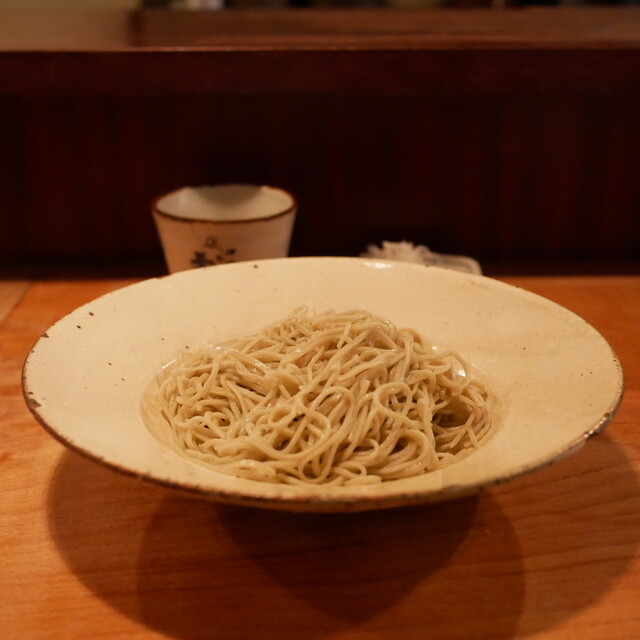
Kyoto’s better soba rooms announce themselves quietly: a counter, low conversation, and the expectation that scent matters as much as seasoning. In a city better known abroad for kaiseki formality and temple-district sweets, soba moves differently: faster, stripped back, less theatrical, but not casually so. The attention is in proportion, timing, and restraint.
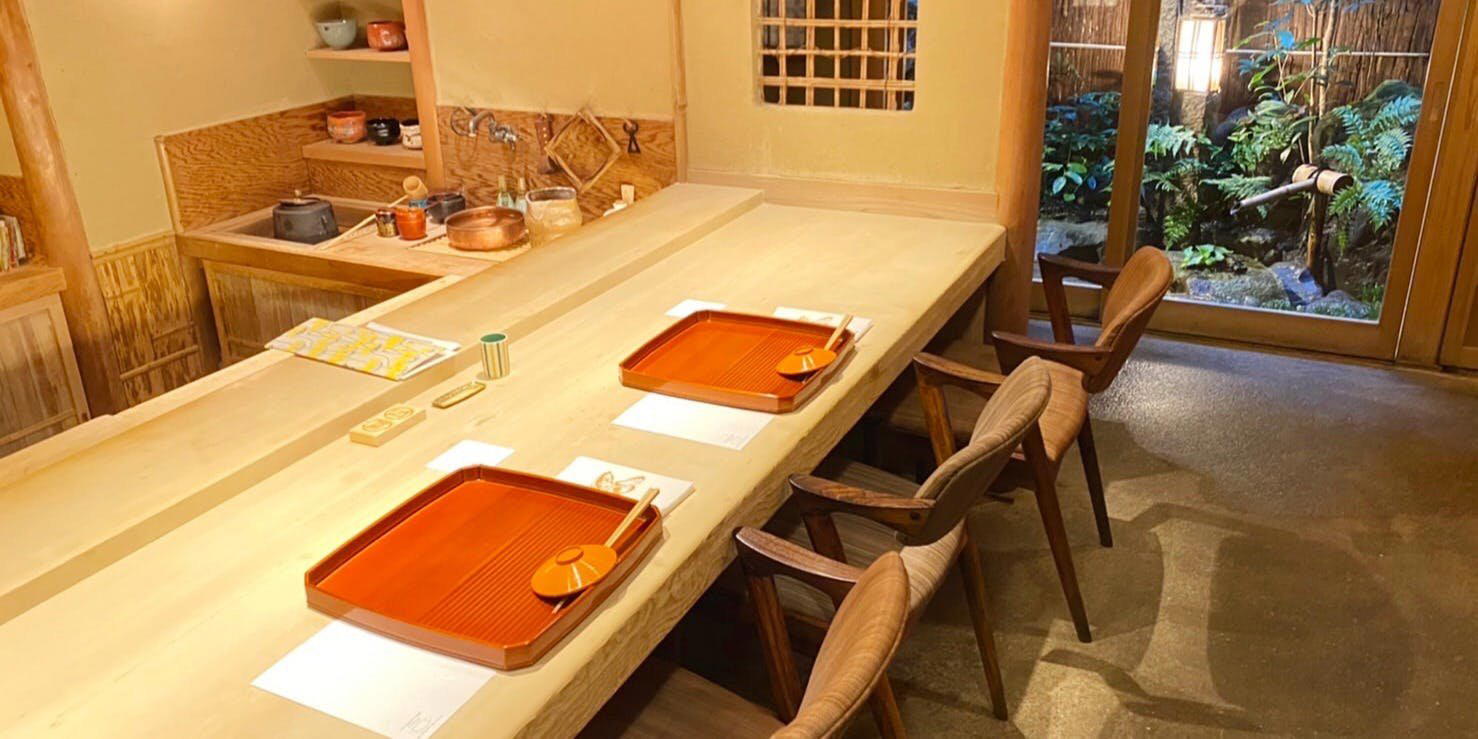
Matsumoto compresses that Kyoto pattern into a seven-seat counter, changing the register before the first order. Small counters expose everything: pacing, boiling, plating, and drinking all happen in a narrow field of attention. For soba, that scale is a virtue. The category rewards immediacy, and a compact room keeps the meal close to the craft rather than ceremony for its own sake.
City context matters. Around Kawaramachi and Nakagyo-ku, Kyoto dining shifts within a short walk between department-store convenience, alleyway counters, old confectioners, and serious noodle specialists. That density can flatten decisions for visitors, but soba deserves its own category. It is not a fallback between kaiseki bookings. At this level, it is a disciplined meal built around buckwheat, dipping broth, texture, and the after-drink culture that often sits beside noodles in Japan.
A seven-seat soba counter in a city of larger dining rituals
Kyoto’s formal dining reputation can make every meal seem to require a long menu and hushed room. Soba resists that instinct. The pleasure is narrower: water, noodle, broth, and the tempo of a counter where dishes do not need explanation to justify themselves. Matsumoto’s small scale places it closer to a specialist craft format than a broad Japanese restaurant.
The Tabelog 100 Soba WEST selection in 2025 is the clearest external signal, especially as the same recognition appears for 2024 and 2022. Tabelog’s Hyakumeiten lists are not Michelin stars and should not be read that way, but in Japan they signal sustained local attention within a defined genre. For soba, that matters: the field is deep, and the category unforgiving because diners know the form well.
Useful contrasts clarify expectations. Yanagikoji TAKA, in the comparison set at a similar dinner band but lower lunch band, sits in a different decision frame; Mendokoro Janomeya points to ramen, a separate noodle grammar built around broth weight and speed; Tsukiji and koe donuts Kyoto ten occupy lighter, lower-spend stops. This is not hierarchy. A soba counter asks for a different attention than ramen, coffee, or a casual sweet stop.
For travelers building a Kyoto day around temples, shopping arcades, and dinner reservations, soba can restore scale. It does not need a multi-course arc to feel complete. It needs clarity, a room that does not dilute the food, and a drinks program that understands how sake sits beside buckwheat rather than overpowering it.
Soba, sake, and the quiet discipline of restraint
The listed categories, soba and Japanese sake bar, say more than a generic cuisine tag. In Japan, soba and drink culture have long overlapped: noodles may anchor the meal, but sake gives it a slower social shape. The “soba bar” idea feels more adult than a quick noodle stop because it invites pacing, not excess. The non-smoking policy and scent-sensitive dress guidance fit that logic, since aroma is part of soba’s structure rather than decoration.
Kyoto visitors often chase visible markers: lacquered counters, garden views, seasonal kaiseki language, and sweets tied to shrine approaches. Soba offers a less photogenic but revealing test of taste. Buckwheat noodles do not hide behind luxury ingredients. The craft is legible in texture, temperature, broth balance, and timing. A small counter makes those variables immediate, even when the meal remains modest in format.
That is where Matsumoto’s recognition helps. A Tabelog score of 3.69 in Japan’s restaurant-rating culture, paired with repeated Hyakumeiten selection, points to respect within a local specialist category rather than a broad tourist-facing address. For visitors who already have sushi, kaiseki, or tempura elsewhere, soba offers another reading of Japanese precision: less luxury signaling, more control.
The alcohol note is practical too. A soba-and-sake counter is not built for diners treating noodles as a quick refuel between sights. It suits a slower meal, preferably with companions happy to let the format dictate pace. The better comparison is not a nearby noodle shop, but a compact specialist where the meal’s narrowness is the point.
How to place it within a Kyoto itinerary
Kyoto rewards sequencing. A soba counter near the central commercial belt works differently from a destination meal in the hills or a tea stop near a shrine. It can sit between cultural stops without becoming filler, or anchor an evening when a long tasting menu would feel excessive. Limited seating makes spontaneity a poor strategy, especially for travelers whose Kyoto days already depend on rail movements and timed cultural visits.
For broader planning, pair this meal with wider city research rather than treating it as a single-note recommendation. EP Club’s Our full Kyoto restaurants guide maps the city’s dining range, while Our full Kyoto hotels guide, Our full Kyoto bars guide, Our full Kyoto wineries guide, and Our full Kyoto experiences guide help position the meal within a larger stay.
Other Kyoto addresses show the range of compact dining culture: 3TOKU6MI Shijo karasuma ten, 551蓬莱, [ki:], Abbesses, and Aburi Mochi Honke Nemoto Kazariya sit in different registers of the city’s food culture. For a wider Japan and overseas comparison file, see -Grilled beef Sukiyaki- KAMAKURA TANUKIAN 鎌倉 たぬき庵 in Kamakura. 鮪と炭火焼き うお炭 秋葉原店 in Tokyo.cafe in Osaka.know in Kumamoto, (Shoku) Vietnam in Kawasaki, [Curry Senmon Ten] Maruyama Kyoju. in Sapporo, Jōdo Saké Bar in Los Angeles, and Onigiri Time in Pasadena.
The editorial read is clear: choose Matsumoto when the goal is concentration, not spectacle. Kyoto has grander rooms and broader menus, yet a seven-seat soba counter can teach the city’s dining logic with fewer gestures. The meal asks for attention to modest forms, controlled pace, and the relationship between noodles and drink. That is a serious Kyoto experience, in a quieter register.
Comparable Spots, Quickly
Comparable venues for orientation by cuisine and category.
| Venue | Cuisine | Price | Notes |
|---|---|---|---|
| MatsumotoThis venue — the venue you are viewing | Japanese Soba and Sake Bar | $$$ | Not listed |
| KANEGURA | Wagyu-focused Japanese Izakaya & Hot Pot | $$$ | Shimogyō |
| Tempura Kawatatsu | Kyoto-style Tempura & Wine Pairing | $$$ | Minami |
| Hachikian Marutacho (八起庵 丸太町本店) | Traditional Kyoto Chicken Kaiseki | $$$ | Sakyo-ku |
| 食堂おがわ | Japanese Izakaya-Style Counter Dining | $$$ | 西木屋町 |
| 蛸薬師ふるかわ | Traditional Japanese Kaiseki | $$$ | Nakagyo-ku |
Recognition history
Dated appearances from independent guides and award organizations, with the underlying list record or original source where available.
Tabelog 100 #90 · No. 90
Tabelog · Tabelog 100 - Soba - WEST - 2025
Continue exploring
More in Kyoto
Restaurants in Kyoto
Browse all →
Bars in Kyoto
Browse all →
Hotels in Kyoto
Browse all →
Wineries in Kyoto
Browse all →
At a Glance
- Intimate
- Quiet
- Sophisticated
- Classic
- Solo
- Casual Hangout
- Special Occasion
- After Work
- Standalone
- Sake Program
A small, counter-only space with a relaxed, understated atmosphere focused on quiet, close-up dining rather than bustle.