Masseria


1 Michelin Star
Our verdict
A Michelin-starred Italian in Washington D.C.'s NoMa neighbourhood, Masseria occupies a converted warehouse where brick walls and a glass-encased wine cellar set the stage for Puglian-rooted cooking from chef Nicholas Stefanelli. Ranked among Opinionated About Dining's top restaurants in North America in both 2024 and 2025, it sits at the upper tier of the city's Italian dining scene.

Pearl is the En Primeur Club membership app — saves, bookings, and concierge access live there. Same editors, same standards.
- Address
- 1340 4th St NE, Washington, DC 20002
- Phone
- (202) 608-1330
- Hours
- Mon ClosedTue–Fri 6–9:30 PMSat 5–9:30 PMSun Closed
- Website
- masseria-dc.com
- Directions
- Get directions
- Booking
- Book on Tock
The menu
What to order
- Maccheroni with goat ragu
- Focaccia
- Foie gras
- Pasta with truffles
A Warehouse Transformed: The Physical Logic of Masseria
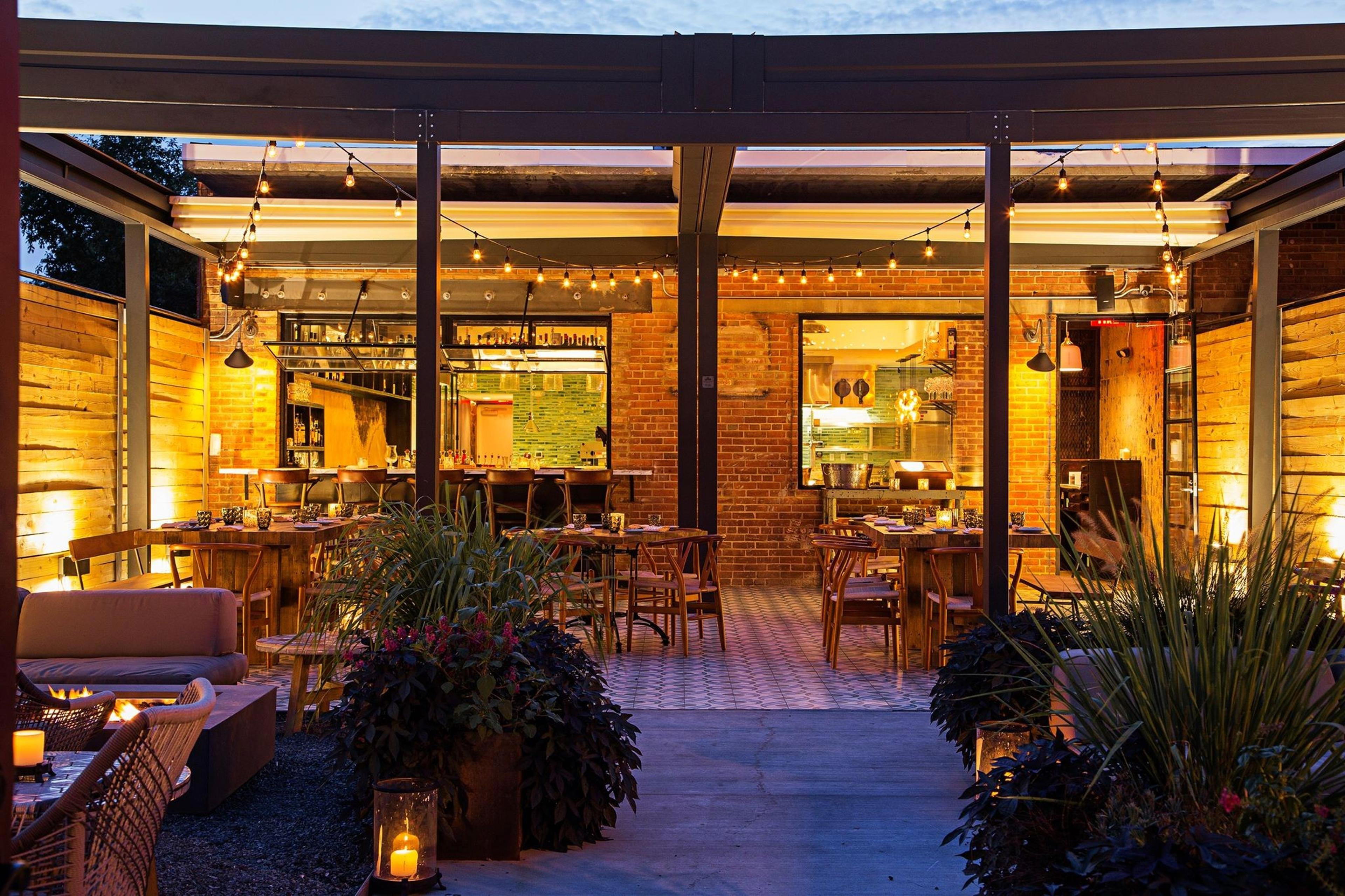
NoMa is not the address most people picture when they think of Washington D.C.'s fine dining. The neighbourhood north of Massachusetts Avenue has spent the better part of a decade trading warehouses for high-rises, and 1340 4th St NE reflects that transition in almost literal terms. The building retains its industrial bones — exposed brick, vaulted ceilings, the kind of spatial generosity that only former warehouse footprints afford — while the interior has been finished with stainless-steel kitchen surfaces, chrome accents, and a glass-encased wine cellar that functions as both storage and centrepiece. The result sits somewhere between farmhouse and gallery: deliberately spare, quietly theatrical. Approaching the space, the indoor-outdoor flow reads as intentional rather than incidental, the kind of design decision that rewards lingering rather than discouraging it. The staff, by multiple accounts, seem to have absorbed that same unhurried register.
Where Masseria Sits in D.C.'s Italian Tier
Masseria belongs to the third category. Its Michelin star, held through 2024, and its consecutive Opinionated About Dining North America rankings, Recommended in 2023, #537 in 2024, and #529 in 2025, place it on a trajectory of sustained critical recognition that few D.C. Italian addresses have matched.
Among the city's Italian options, the competitive set is instructive. Fiola operates at a similar price point with a more explicitly luxurious register. Obelisk occupies the tighter, more austere end of the Italian fine-dining spectrum. Cucina Morini and Officina represent the broader, more accessible Italian market. L'Ardente stakes a claim on modern Italian with a cocktail-forward positioning. Masseria's differentiation lies in the specificity of its regional source material: chef Nicholas Stefanelli's Puglian heritage shapes a menu that draws from southern Italy's larder rather than the more generic pan-Italian vocabulary that many upscale American Italian restaurants default to.
Internationally, the ambition of transplanting rigorous Italian regional cooking into a non-Italian context is a well-documented challenge. It is what makes tables like 8 1/2 Otto e Mezzo Bombana in Hong Kong and cenci in Kyoto editorially interesting, they each answer the question of how Italian precision travels. Masseria poses a domestic version of the same question: what does rigorous southern Italian cooking look like in a mid-Atlantic American city, filtered through a chef with direct lineage to the source?
The Food and the Wine: An Inseparable Frame
The editorial angle on Masseria that holds up to scrutiny is not the biography of its chef but the particular discipline required to cook Puglian food at this level. Southern Italian cuisine operates on a different logic from its northern counterpart: less butter, more olive oil; less cream, more texture from legumes, grains, and preserved ingredients; a flavour register built on fermentation, bitterness, and salinity rather than richness. Stefanelli's kitchen does not abandon that logic for the sake of accessibility. The turbot with mazza frissa, a Puglian cooked cream derived from sheep's milk, and brown butter-poached artichoke hearts is a textbook example of how southern Italian technique absorbs influence without losing identity: the brown butter is a concession to classical French idiom, but the mazza frissa anchors the dish to a regional tradition most American diners will not recognise by name. Similarly, the risotto enriched with parmesan, butter, and fermented black truffle oil uses fermentation as a building block rather than a finishing flourish.
The wine cellar visible through its glass enclosure is not decorative. In Italian fine dining at this tier, the sommelier's function is more structural than it tends to be at comparable French or American contemporary tables: the pairing task involves not just matching weight and acidity but mapping Italy's fragmented regional DOC system onto a menu that is itself geographically specific. A kitchen rooted in Puglia opens arguments for Primitivo, Negroamaro, and Fiano di Avellino that a more generically Italian menu would not support. For diners arriving with regional Italian wine interests, the cellar warrants a direct conversation with the floor team before ordering.
Closing note on Opinionated About Dining's entry is telling: reviewers single out the lemon soufflé with lemon verbena gelato as a strong finish, which is notable precisely because soufflé is an exacting test of kitchen discipline, a dessert that cannot be held, rushed, or approximated. That it registers as a point of distinction rather than an outlier suggests a kitchen operating with consistent technical control across the full arc of a meal.
Masseria in the Broader Starred Dining Conversation
D.C.'s Michelin-starred Italian addresses are few enough that Masseria's position carries weight by default. But the more useful framing is national. The small tier of American restaurants where Italian regional specificity is treated as structural rather than decorative includes a short list of addresses. Tables like Le Bernardin in New York City, Alinea in Chicago, The French Laundry in Napa, Single Thread Farm in Healdsburg, Lazy Bear in San Francisco, and Emeril's in New Orleans each represent a different model of what serious American fine dining looks like when it draws on a non-American culinary tradition with discipline. Masseria's model is quieter and more geographically specific than most: it does not globalise Italian cooking or inflate it with luxury signifiers beyond what the cuisine supports.
The OAD ranking improvement from #537 in 2024 to #529 in 2025 is a modest but directionally positive signal in a survey that weights peer-critic opinion heavily. For a restaurant in its sixth or seventh year of operation, continued upward movement in a ranking system dominated by New York and California addresses is not automatic.
For readers building an itinerary around D.C.'s serious dining tables, Masseria sits alongside other addresses in our full Washington, D.C. restaurants guide, and connects naturally to the wider city coverage in our Washington, D.C. hotels guide, bars guide, wineries guide, and experiences guide.
Know Before You Go
- Address: 1340 4th St NE, Washington, DC 20002
- Hours: Tuesday to Friday, 6:00 PM to 9:30 PM; Saturday, 5:00 PM to 9:30 PM; closed Sunday and Monday
- Price range: $$$$
- Awards: Michelin 1 Star (2024); Opinionated About Dining Leading Restaurants in North America #529 (2025), #537 (2024), Recommended (2023)
- Neighbourhood: NoMa, Washington, D.C.
- Booking: Reservations advised; contact details available on the venue's website
Frequently asked questions
What do regulars order at Masseria?
Based on Opinionated About Dining's published review, two dishes from the savoury courses draw consistent attention from critics: the turbot with mazza frissa and brown butter-poached artichoke hearts, and the parmesan and butter risotto finished with fermented black truffle oil. Both illustrate the kitchen's approach to Puglian source material, grounded in southern Italian technique, precise in execution, and not oriented toward crowd-pleasing familiarity. The lemon soufflé with lemon verbena gelato is noted as a strong dessert close, worth requesting when it appears on the menu. For wine, a conversation with the floor team about the cellar's southern Italian holdings is worth initiating early in the evening, given the regional specificity of the food.
The Minimal Set
| Venue | Cuisine | Price | Awards | Notes |
|---|---|---|---|---|
| MasseriaThis venue — the venue you are viewing | Modern Puglian Italian Fine Dining | $150–200 | 1 Michelin Star | Not listed |
| Albi | Modern Levantine Fine Dining | $300–500 | 1 Michelin Star · World's 50 Best #6 | United States, Middle Eastern |
| Causa | Modern Peruvian Fine Dining | $150–200 | 1 Michelin Star · James Beard Award Best Chef: Mid-Atlantic | Peruvian |
| Oyster Oyster | Modern Vegetable-Focused Tasting Menu | Not listed | 1 Michelin Star · James Beard Award Outstanding Chef #1 | New American, Vegetarian, Vegetarian (Sustainable) |
| Bresca | Modern French Bistronomy | $150–200 | 1 Michelin Star · James Beard Award Semi Finalist | Modern French, Contemporary |
| Gravitas | Modern American Fine Dining | $150–200 | 1 Michelin Star | New American, Contemporary |
Recognition history
Dated appearances from independent guides and award organizations, with the underlying list record or original source where available.
Michelin 1 Star
Michelin
Opinionated About Dining Top Restaurants in North America Recommended
Opinionated About Dining
Full recognition history (6 entries)
Opinionated About Dining Top Restaurants in North America Ranked #529
Opinionated About Dining
Michelin 1 Star
Michelin
Opinionated About Dining Top Restaurants in North America Ranked #537
Opinionated About Dining
Opinionated About Dining Top Restaurants in North America Recommended
Opinionated About Dining
Continue exploring
More in Washington DC
More from Chef Nicholas Stefanelli
Browse all →
Restaurants in Washington DC
Browse all →
Bars in Washington DC
Browse all →
Hotels in Washington DC
Browse all →

Details
- Elegant
- Rustic
- Intimate
- Sophisticated
- Date Night
- Special Occasion
- Celebration
- Open Kitchen
- Courtyard
- Private Dining
- Extensive Wine List
- Sommelier Led
- Tasting Menu
- A La Carte
- Vegetarian Friendly
- Allergy Accommodating
Current opening hours
- Monday
- Closed
- Tuesday
- 6–9:30 PM
- Wednesday
- 6–9:30 PM
- Thursday
- 6–9:30 PM
- Friday
- 6–9:30 PM
- Saturday
- 5–9:30 PM
- Sunday
- Closed
Hours can change for holidays and private events. Last verified .
Elegant indoor-outdoor space with open kitchen buzz, warm staff energy, and sophisticated Puglian-inspired rustic charm.