Our verdict
Maren Anna sits at Gamle Sørvågen 12 in the fishing village of Sørvågen, at the southern tip of the Lofoten Islands. The setting places it squarely within Norway's most consequential seafood geography, where the provenance of what arrives on the plate is inseparable from the landscape visible through the window. For travelers moving through the islands' southern reaches, it is a natural anchor point.

Pearl is the En Primeur Club membership app, where members save venues, book tables and use the concierge.
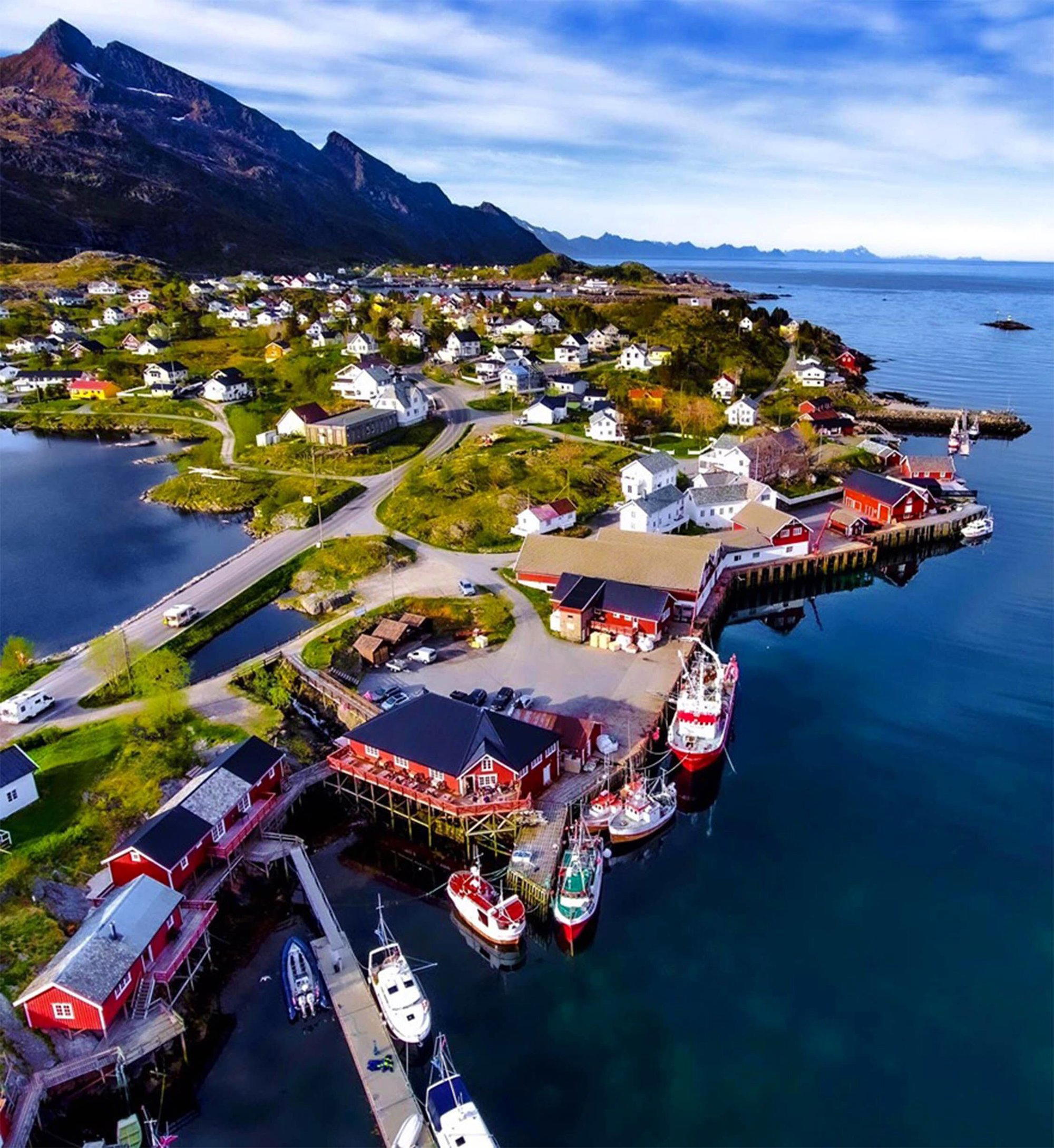
Where the Catch Defines the Kitchen
At the southern end of Lofoten, where the road runs out and the Vestfjorden opens toward the Norwegian Sea, fishing villages like Sørvågen have been organizing their economies around cod, skrei, and arctic char for centuries. This is not incidental context for dining here, it is the entire premise. The produce that reaches tables in this part of Norway travels distances measured in minutes and meters rather than days and kilometers, and that compression of supply chain is something no amount of metropolitan sourcing sophistication can replicate. Maren Anna, addressed at Gamle Sørvågen 12, sits inside that tradition rather than beside it.
Norway's fine dining conversation has long been anchored in its cities: Maaemo in Oslo, RE-NAA in Stavanger, FAGN in Trondheim. These are kitchens working in the New Nordic idiom at €€€€ price points, with Michelin recognition and the infrastructure of urban supply networks. But there is a parallel current in Norwegian eating, one that runs through coastal villages rather than city boulevards, where proximity to source is not a marketing claim but a structural fact. Under in Lindesnes made that current internationally legible; in Lofoten, it has been the quiet operating logic of places like Anita's Sjomat for decades.
The Geography of Sourcing at This Latitude
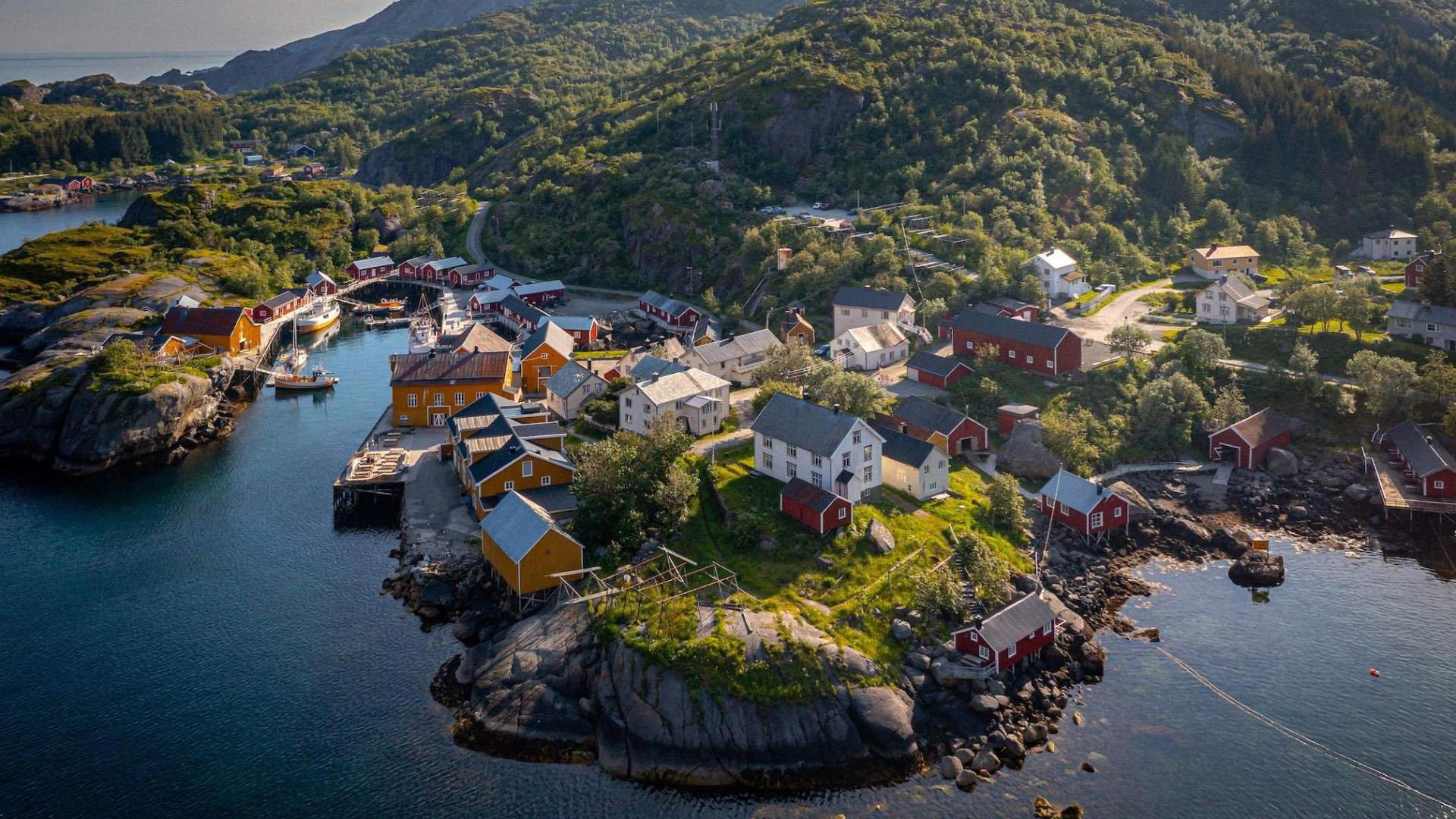
Sørvågen sits at roughly 67.9°N, well above the Arctic Circle, in an archipelago whose waters are among the most productive cold-water fisheries in the world. The Lofoten cod fishery, one of the oldest managed fisheries in Europe, has shaped the physical infrastructure of every village in the chain: the wooden drying racks that line the shorelines, the boat houses that crowd the harbors, the processing traditions that predate refrigeration by centuries. A kitchen operating in this village is not choosing to emphasize local sourcing as a concept; it is working within a supply geography that simply does not require anything else.
This matters for a diner because the conversation around ingredient provenance in contemporary Nordic cooking is often conducted at a remove from actual production. At city-based New Nordic restaurants, sourcing credentials are verified through supplier relationships and documentation. Here, the verification is often visual: the boats unloading at the quay, the racks of drying fish visible from the dining room window, the seasonal rhythm that dictates what is and is not available on any given week. That directness is what separates Lofoten's coastal dining tier from the broader Norwegian fine dining category, and it is what makes venues like Maren Anna worth understanding on their own terms rather than as provincial approximations of the city model.
Elsewhere in the archipelago, this sourcing logic plays out at different scales. Fiskekrogen in Henningsvær and Underhuset Restaurant in Reine operate within the same Lofoten supply geography, each working the local catch into formats calibrated to their particular harbor setting. Børsen Spiseri in Svolvær represents the archipelago's largest town and its closest approximation to a conventional restaurant district. Sørvågen, by contrast, is quieter, further south, and less trafficked by the main tourist loop, which makes the dining that exists here feel less mediated.
Approaching Gamle Sørvågen
Arriving in Sørvågen by road means traveling the full length of Lofoten from its northern entry points, a drive that takes the better part of a day from the ferry at Moskenes or longer from the E10 connection to the mainland. The journey itself functions as a form of orientation: by the time you reach the southern villages, the scale of the landscape, granite peaks dropping directly into fjord water, the absence of any intervening flatland, has reconfigured your sense of distance and effort. Dining in this context carries a different weight than dining in a city where fifty alternatives exist within a ten-minute walk.
The address at Gamle Sørvågen 12 places Maren Anna within the old village core, the part of Sørvågen that predates the modern road infrastructure and retains the compressed, harbor-facing architecture typical of historic Lofoten settlements. These buildings were designed around the logic of fishing operations: proximity to water, storage for equipment and catch, and a dense clustering that provided some shelter from the wind that moves through these channels at speed for much of the year. Eating in that built environment is not a scenic backdrop, it is a direct material connection to the economic history that created the food supply in the first place.
For planning purposes, Sørvågen is most practically reached by driving the E10 south from Leknes or Svolvær, or by arriving via the Bodø-Moskenes ferry and driving north the short distance to the village. The ferry crossing from Bodø takes roughly three to four hours and operates year-round, though schedules compress outside the summer season and advance booking is advisable. Travelers combining Maren Anna with other Lofoten dining should also note Karoline Restaurant in Ramberg, which sits along the same southern route. For those extending the trip into broader northern Norway, Aurora Restobar in Kirkenes and Umami Harstad in Harstad represent distinct regional expressions worth comparing. Our full Sørvågen restaurants guide covers the broader local context.
The Coastal Tier in Norwegian Dining
Norwegian dining increasingly resolves into two distinct categories: the urban fine dining circuit, where Gaptrast in Bergen, Maaemo, and RE-NAA compete at international reference level; and the coastal village tier, where sourcing geography and fishing tradition create a different kind of authority. The latter category does not compete with the former on technique or presentation, it operates on a different logic entirely, one in which the quality of the ingredient at the moment of cooking is the primary variable, and the chef's most consequential decision is often what not to do to it.
This is the tradition that internationally recognized seafood-focused restaurants at the highest level, Le Bernardin in New York City, for instance, attempt to replicate through supplier relationships and logistics networks. In Sørvågen, the replication is unnecessary because the supply chain is structural. What it does answer is the question of context: this is a kitchen with direct access to one of the world's most consequential cold-water fisheries, in a village that has been processing that fishery for longer than most national culinary traditions have existed.
For a comparative reference point from an entirely different register, Atomix in New York City demonstrates how sourcing specificity and provenance transparency function at the top of the fine dining market, a useful lens for understanding why proximity to source carries weight regardless of price tier or format. At Maren Anna's latitude and address, that proximity is not a choice but a condition of operation.
Practical Planning Notes
Sørvågen is a small village with limited alternative dining options, which makes confirming availability in advance more consequential here than in a larger center. The summer months from June through August bring extended daylight, including periods of midnight sun, and the highest visitor volume to Lofoten; shoulder season visits in May or September offer quieter conditions and the same seafood supply, as the major fisheries operate on schedules that do not map neatly onto tourist seasons. Brasserie 8622 in Mo i Rana is a useful reference point for travelers planning the broader northern Norway itinerary.
Frequently asked questions
Is Maren Anna okay with children?
Given Sørvågen's position as a small fishing village at the southern tip of Lofoten, the setting tends toward the informal end of Norwegian coastal dining rather than a formal tasting-menu environment.
What is the atmosphere like at Maren Anna?
Maren Anna occupies an address on Gamle Sørvågen, the historic core of a working fishing village where the road through Lofoten terminates at the Vestfjorden. That geography sets the tone: the surrounding built fabric is modest and functional, shaped by generations of cod fishing rather than tourism infrastructure. Expect an atmosphere defined by place rather than design concept.
Is Maren Anna worth the drive to the end of Lofoten?
Reaching Sørvågen from the northern entry points of Lofoten takes the better part of a full day by road, placing Maren Anna at Gamle Sørvågen 12 among the most geographically committed dining stops in Norway. Travelers who have already committed to the Lofoten route will find the village sits where the archipelago's character is most concentrated, with fishing infrastructure still functioning alongside whatever the restaurant offers. Those flying into Bodø or Svolvær should factor the full return distance before making the drive the sole purpose of a trip.
What's the must-try dish at Maren Anna?
What the location does confirm is access to some of the most productive cold-water fisheries in Norway, with Sørvågen sitting at roughly 67.9°N in the Lofoten archipelago. Any kitchen operating at that address has an argument for letting the catch drive the plate.
How It Stacks Up
Comparable venues nearby, for context on price, style, and recognition.
| Venue | Cuisine | Price | Notes |
|---|---|---|---|
| Maren AnnaThis venue (the venue you are viewing) | Nordic Seafood | Not listed | Not listed |
| Krambua Restaurant | Scandinavian | $20–30 | Trondheim |
| Thai City Wok | Asian Fusion Wok & Grill | Not listed | Alesund |
| Anita's Sjomat | Traditional Norwegian Seafood Bar | $20–30 | Sakrisøy |
| Karoline Restaurant | Arctic Nordic Seafood | $50–100 | Nusfjord |
| Asian Healthy Foods | Thai Fast Food | $10–20 | Storgata |
Continue exploring
More in Sørvågen
Restaurants in Sørvågen
All restaurants in Sørvågen →
Bars in Sørvågen
Browse all →
Hotels in Sørvågen
Browse all →
Details
- Cozy
- Scenic
- Historic
- Special Occasion
- Waterfront
- Historic Building
- Extensive Wine List
- Local Sourcing
- Waterfront
- Mountain
- A La Carte
- Vegetarian Friendly
- Vegan Options
- Gluten Free Options
Current opening hours
- Monday
- Closed
- Tuesday
- Closed
- Wednesday
- 6–9 PM
- Thursday
- 6–9 PM
- Friday
- 6–9 PM
- Saturday
- 6–9 PM
- Sunday
- 6–9 PM
Hours can change for holidays and private events. Hours as of .
Cozy and welcoming harbor atmosphere with characteristic scenic views.