Mamoun's Falafel
On St Marks Place in the East Village, Mamoun's Falafel has operated as one of New York City's most enduring quick-service falafel counters for decades. The address sits in a neighbourhood that has cycled through dozens of food trends while the format here has remained consistent: falafel, pita, and the kind of pricing that makes it a daily stop rather than an occasion. A reference point for the city's Middle Eastern street food tradition.
Pearl is the En Primeur Club membership app — saves, bookings, and concierge access live there. Same editors, same standards.
- Address
- 30 St Marks Pl, New York, NY 10003
- Phone
- +1 646 870 5785
- Website
- mamouns.com
- Directions
- Get directions
 Saves & bookings on Pearl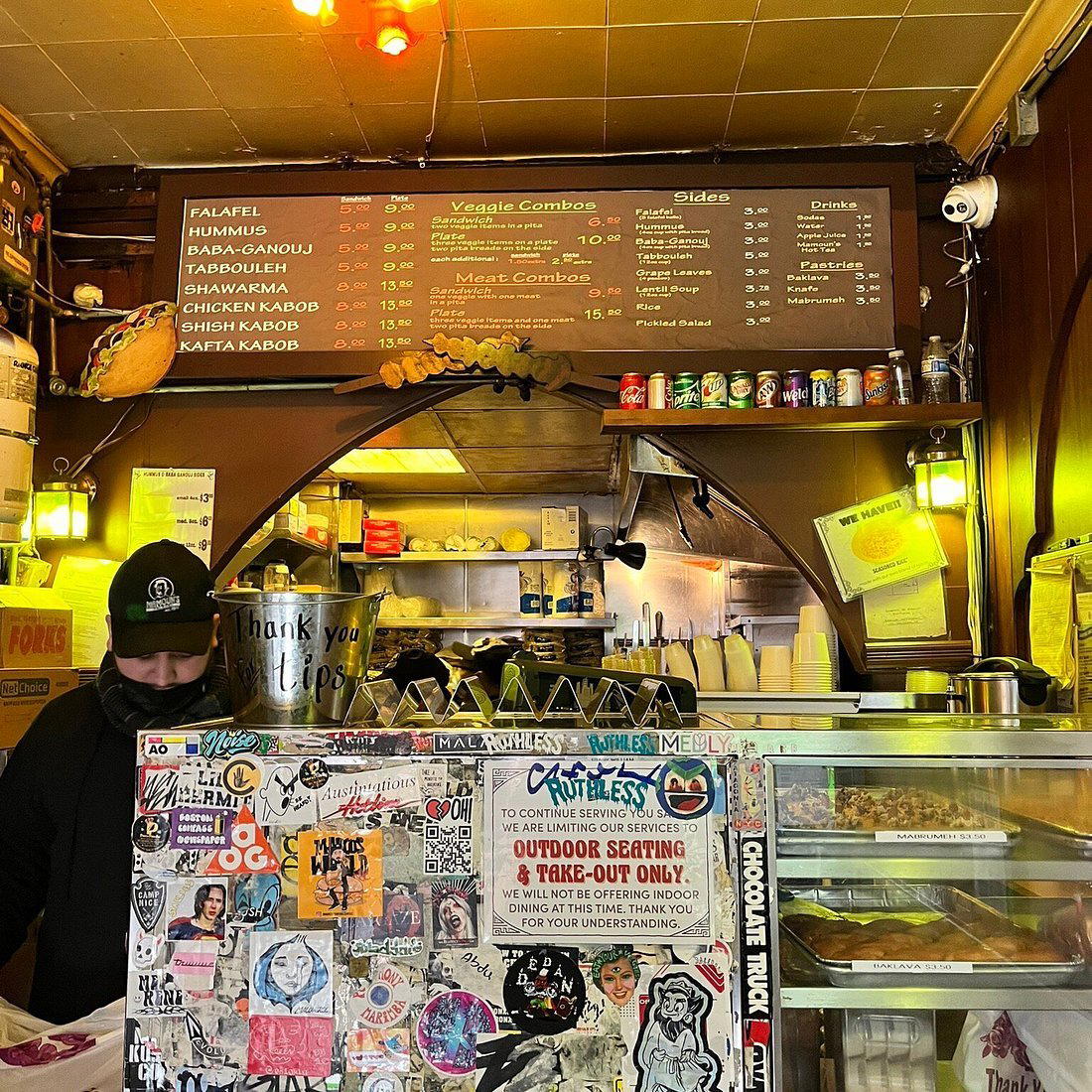
St Marks Place and the Economics of Staying Power
There is a particular kind of New York restaurant that survives by refusing to participate in them. St Marks Place has housed everything from punk record stores to ramen counters to CBD shops across the decades, and the throughline for the block has always been a specific kind of democratic street energy. Mamoun's Falafel at 30 St Marks Pl sits inside that tradition, occupying a position that has nothing to do with the tasting-menu circuit and everything to do with what the East Village has historically done well: feed a lot of different people, at any hour, without ceremony.
The East Village's food identity has long operated differently from the rest of Manhattan's dining scene. While Midtown produces the kind of prix-fixe rooms that draw comparison to Le Bernardin or Per Se, and the further reaches of the city generate the kind of hyper-conceptual cooking associated with Atomix, the East Village has always had a different brief: accessibility, volume, and neighbourhood loyalty. Falafel counters fit that brief exactly.
The Counter Format as an Editorial Statement
New York's Middle Eastern quick-service category operates with a logic that owes more to the street food traditions of Beirut and Cairo than to anything that has emerged from the American restaurant industry's obsession with concept and narrative. The counter model, specifically, demands a kind of operational discipline that formal dining rooms do not. There is no wine program to hide behind, no tasting menu to structure the experience, no front-of-house theatrics to compensate for inconsistency in the kitchen. What comes out of the fryer and onto the pita is the complete proposition.
In a city where the gap between a meal at Masa and a meal at a falafel counter can span several hundred dollars, the lower tier of the market carries its own kind of scrutiny. Regulars in these neighbourhoods are not forgiving audiences. They return daily, they notice when something changes, and they vote with their feet immediately. That kind of repeated local pressure is, in its own way, as demanding as any critical review process.
Where Mamoun's Sits in New York's Broader Food Picture
New York's restaurant scene is frequently discussed at its highest altitude: the Michelin-starred rooms, the reservation-lottery tasting counters, the farm-to-table destinations that draw comparison to Blue Hill at Stone Barns or the ingredient-driven formats found at places like Eleven Madison Park. But the city's actual food culture is mostly conducted several floors below that altitude, in the kind of counters and walk-ups that do not appear in award cycles and do not need to.
Mamoun's occupies a tier of the New York food economy that functions differently from destination dining. The competitive frame is neighbourhood-level: how does this counter perform against the other Middle Eastern options within walking distance, and does it justify the loyalty of the people who live nearby?
The East Village answer to that question has been yes. Longevity in a neighbourhood this commercially contested is not accidental. Rents on St Marks have forced out restaurants with significantly larger operational budgets and more recognizable names. The falafel counter's durability in that environment is itself a form of editorial evidence about how it performs at the basics.
The Team Dynamic in a Counter Operation
The editorial angle of collaboration between kitchen, service, and front-of-house reads differently at a counter than it does inside a formal dining room. There is no sommelier at Mamoun's, no maître d' managing table turns, no brigade structure in the European sense. What exists instead is the kind of tight operational rhythm that counter service demands: speed without sloppiness, consistency under pressure, and the specific social intelligence of managing a line that includes students, tourists, local workers, and late-night traffic in the same shift.
In quick-service formats, the team dynamic is compressed but no less consequential. The person taking the order and the person building the pita are often working within arm's reach of each other, and the handoff between them determines the pace of the entire operation. The comparable model appears in fast-casual formats across the country, from hospitality-focused rooms in Boulder to the tightly coordinated service teams at destination restaurants like Single Thread in Healdsburg, though the application is categorically different. At the counter level, efficiency and consistency are the metrics, and they are visible in real time.
St Marks Place as Context
The address matters for understanding who uses this place and when. St Marks Place between Second and Third Avenues has historically drawn a particular mix: NYU students, East Village residents who have been in the neighbourhood long enough to have survived multiple rent cycles, and the kind of late-evening foot traffic that comes from the bars and venues on the surrounding blocks. That mix shapes the operational demands of any food business at this address in ways that are distinct from, say, running a counter in Midtown or on the Upper West Side.
The extended hours that many St Marks counters keep, by necessity rather than marketing strategy, create a clientele that is genuinely broad. For comparison with the kind of destination-level cooking that represents the opposite end of the city's range, the tasting counters at Atomix or the prix-fixe rooms at Eleven Madison Park offer a useful frame for just how wide that range is.
Planning Your Visit
Cuisine Lens
Comparable venues nearby, for context on price, style, and recognition.
| Venue | Cuisine | Price | Notes |
|---|---|---|---|
| Mamoun's FalafelThis venue — the venue you are viewing | Authentic Middle Eastern Falafel | $ | Not listed |
| Mombar | Traditional Egyptian | $ | Astoria (Central) |
| The Halal Guys | American Halal Street Food | $ | Midtown-Times Square |
| Bedouin Tent | Middle Eastern | $ | Downtown Brooklyn-DUMBO-Boerum Hill |
| Xe May Sandwich Shop | Vietnamese Banh Mi Sandwiches | $ | East Village |
| The Hummus & Pita Co. | Mediterranean Fast-Casual | $ | Chelsea-Hudson Yards |
Continue exploring
More in New York City
Restaurants in New York City
Browse all →
Bars in New York City
Browse all →
Hotels in New York City
Browse all →




At a Glance
- Well Known
- Lively
- Bohemian
- Casual Hangout
- Late Night
- Solo
- Group Dining
- Historic Building
- Standalone
- Street Scene
Current opening hours
- Monday
- 11 AM–11 PM
- Tuesday
- 11 AM–11 PM
- Wednesday
- 11 AM–11 PM
- Thursday
- 11 AM–11 PM
- Friday
- 11 AM–11 PM
- Saturday
- 11 AM–11 PM
- Sunday
- 11 AM–11 PM
Hours can change for holidays and private events. Last verified .
Tiny, always-crowded joint with a quintessential New York energy; casual and unpretentious with lightning-quick service and a historic, bohemian atmosphere.