
Malini South Indian & Fusion brings Indian and Indian curry cooking into Kawasaki’s stronger-value dining tier, with Tabelog 100 Asian cuisine / Ethnic cuisine EAST 2024 recognition giving it weight beyond a neighborhood address. The appeal is less ceremony than range: vegetable-focused options, wine, a compact room, and pricing that keeps the experience closer to everyday dining than destination splurge.
Pearl is the En Primeur Club membership app — saves, bookings, and concierge access live there. Same editors, same standards.
- Address
- 神奈川県川崎市中原区木月1-12-8
- Phone
- +81449489276
- Website
- tabelog.com
 Saves & bookings on Pearl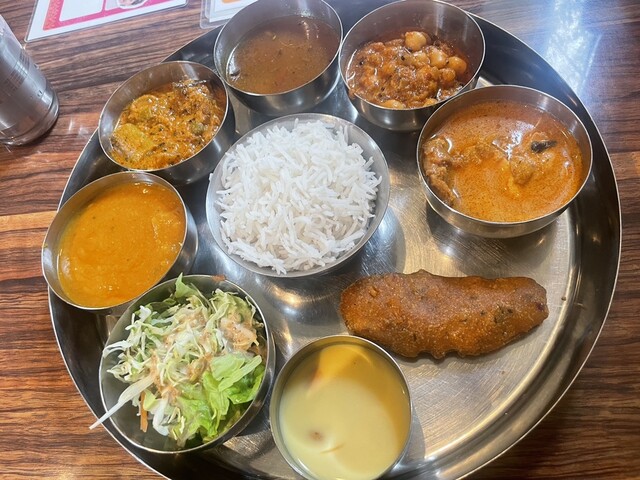
Approaching the small Kizuki address near Motosumiyoshi, the cue is scale rather than spectacle: a compact local room, a short walk from the station, and the kind of Indian-curry category that in Japan often splits between quick lunch sets and more serious regional cooking. Kawasaki’s dining strength has long lived in these middle registers, where commuters, families, and food-focused regulars overlap. Malini South Indian & Fusion belongs to that useful tier: accessible enough for a weekday meal, but with enough recognition to justify crossing municipal lines from Tokyo or Yokohama.
The value proposition is the point. In central Tokyo, ambitious Indian cooking can drift into tasting-menu pricing or cocktail-bar polish. In Kawasaki, the calculation is different. Diners are often paying for concentration rather than theater: fewer frills, a smaller room, and a menu identity anchored in Indian and Indian curry rather than pan-Asian gloss. Selection for Tabelog 100 Asian cuisine / Ethnic cuisine EAST 2024 gives Malini South Indian & Fusion a credential that matters in this category, especially because the list tends to surface restaurants whose reputations are built through repeat local use as much as destination dining.
South Indian signals in a Kawasaki value bracket
South Indian cooking occupies a specific place in Japan’s Indian restaurant culture. The broader market is still crowded with North Indian templates, naan sets, butter-rich curries, tandoori plates, and lunchtime speed. South Indian formats bring a different vocabulary: rice, lentils, sharper acidity, vegetable-led plates, and spice structures that do not depend on cream or heaviness. Even where a restaurant uses the word “fusion,” the useful question is whether the kitchen gives diners something beyond the familiar curry-house formula.
Here, the available signals point toward a more flexible reading of Indian dining in Kawasaki. The restaurant is categorized as Indian and Indian curry, with particular attention to vegetables and vegetarian options. That matters in a city where meat-heavy ramen, pork, and casual grilled formats dominate much of the affordable dining conversation. The presence of wine also shifts the frame slightly. It does not turn the meal into fine dining, but it suggests a table rhythm closer to a relaxed dinner than a purely functional curry stop.
Within Kawasaki, the comparison is instructive. Buta Boshi and Ramen Marusen sit in the ramen-value bracket, where speed, broth depth, and low spend define the decision. Kayu Nabou occupies a similar spend range to Malini South Indian & Fusion, but through a different comfort-food lens. Boulangerie Metier Pa-ku shiti musashi kosugi za ga-den is a lower-ticket bakery play, while L’atelier Hiro Wakisaka and C'EST UNE BONNE IDEE! reflect Kawasaki’s quieter French and pâtisserie-adjacent side. Against that spread, this restaurant’s role is clear: it gives the city an award-noted Indian option without forcing the occasion into a luxury frame.
Recognition without the expense of ceremony
Tabelog’s Hyakumeiten lists are not Michelin equivalents, and they should not be read as a promise of haute cuisine. Their usefulness lies elsewhere. They identify restaurants with enough consistency, public attention, and category relevance to rise above the enormous volume of everyday Japanese dining. For an Asian and ethnic cuisine selection in eastern Japan, that is a meaningful filter, particularly for travelers who want to eat well outside the usual central-city circuit.
Malini South Indian & Fusion opened in 2022, which places its recognition on a compressed timeline. That speed is notable, but the more interesting editorial point is how quickly Japan’s non-Japanese dining categories now reward specificity. Generic “ethnic” restaurants have less room to hide than they did a decade ago. Diners understand regional distinctions, review platforms reward precision, and vegetarian-friendly cooking has moved from special request to visible selling point. Kawasaki benefits from that shift because it can support serious neighborhood restaurants without demanding destination-restaurant pricing.
The room size also shapes the experience. A 20-seat restaurant changes the economics of attention: small enough to feel personal, not so small that the meal becomes a performance. Private rooms are not part of the format, and the restaurant is non-smoking, which aligns it with modern casual dining expectations in Japan. Families are explicitly accommodated, another clue that the restaurant’s seriousness sits in the cooking rather than in formality.
How to place it in a Kawasaki itinerary
For travelers using Kawasaki as more than a rail junction, Motosumiyoshi is a useful reminder that the city’s food culture is not concentrated in a single postcard district. The Tokyu Line links the area easily with Musashi-Kosugi, Hiyoshi, and central Tokyo connections, making this kind of meal practical as part of a broader west-side itinerary. The address is close enough to the station to function as a planned dinner rather than a taxi-dependent detour.
Reservations are available, and the award signal makes planning sensible for peak meal periods. The restaurant’s compact scale is part of its appeal, but it also means casual optimism can work against visitors with fixed schedules. Payment is easier for travelers than at many small Japanese restaurants because credit cards are accepted, though electronic money is not part of the setup. Parking is not attached to the restaurant, with coin parking nearby, so rail remains the cleaner move for most diners.
Readers mapping a broader Kawasaki day can place this meal alongside the city’s varied casual strengths rather than treating it as a lone destination. For more local context, see our full Kawasaki restaurants guide, then widen the trip planning through our full Kawasaki hotels guide, our full Kawasaki bars guide, our full Kawasaki wineries guide, and our full Kawasaki experiences guide. Nearby and related dining references include (Shoku) Vietnam and Belmatine, while wider Japan planning can stretch from -Grilled beef Sukiyaki- KAMAKURA TANUKIAN 鎌倉 たぬき庵 in Kamakura and. 鮪と炭火焼き うお炭 秋葉原店 in Tokyo to.cafe in Osaka.know in Kumamoto, [Curry Senmon Ten] Maruyama Kyoju. in Sapporo, and [ki:] in Kyoto. For transpacific Japanese dining context, Jōdo Saké Bar in Los Angeles and Onigiri Time in Pasadena show how focused formats travel beyond Japan.
Where the Accolades Land
Comparable venues at a glance for context.
| Venue | Cuisine | Price | Notes |
|---|---|---|---|
| Malini South Indian & FusionThis venue — the venue you are viewing | South Indian & Fusion | $$ | Not listed |
| Pan Jabi Daba | Halal Punjabi & North Indian Curry House | $ | Nakahara-ku |
| Menya Deko | Niboshi Ramen & Tsukemen | $$ | Shin-Maruko / Musashi-Kosugi |
| madras meals | South Indian curries and veg meals | $$ | Nakahara-ku (Musashi-Kosugi / Shin-Maruko) |
| Yakiniku Jingisukan Tsuruya | Traditional Japanese BBQ (Jingisukan) | $$ | Hatchonawate / Kawasaki Ward |
| Krua Prik Thai | Authentic Isaan Thai & Curry | $$ | Musashi-Kosugi / Shin-Maruko |
Recognition history
Dated appearances from independent guides and award organizations, with the underlying list record or original source where available.
Tabelog 100 #4 · No. 4
Tabelog · Tabelog 100 - Asian cuisine / Ethnic cuisine - EAST - 2024












At a Glance
- Cozy
- Lively
- Family
- Casual Hangout
- Group Dining
- After Work
- Solo
- Standalone