Maide Manti occupies a specific niche in Berlin's increasingly varied Central Asian and Anatolian dining scene, serving manti, the hand-folded dumplings that function as a touchstone of Turkish and Central Asian home cooking. Located on Schulstraße in the Wedding district, the restaurant sits at a remove from the Michelin-tracked circuit of places like Rutz or Nobelhart & Schmutzig, operating instead in the register of neighbourhood specificity and culinary heritage.
Pearl is the En Primeur Club membership app — saves, bookings, and concierge access live there. Same editors, same standards.
- Address
- Schulstraße 18, 13347 Berlin, Germany
- Phone
- +493064492731
- Directions
- Get directions
 Saves & bookings on Pearl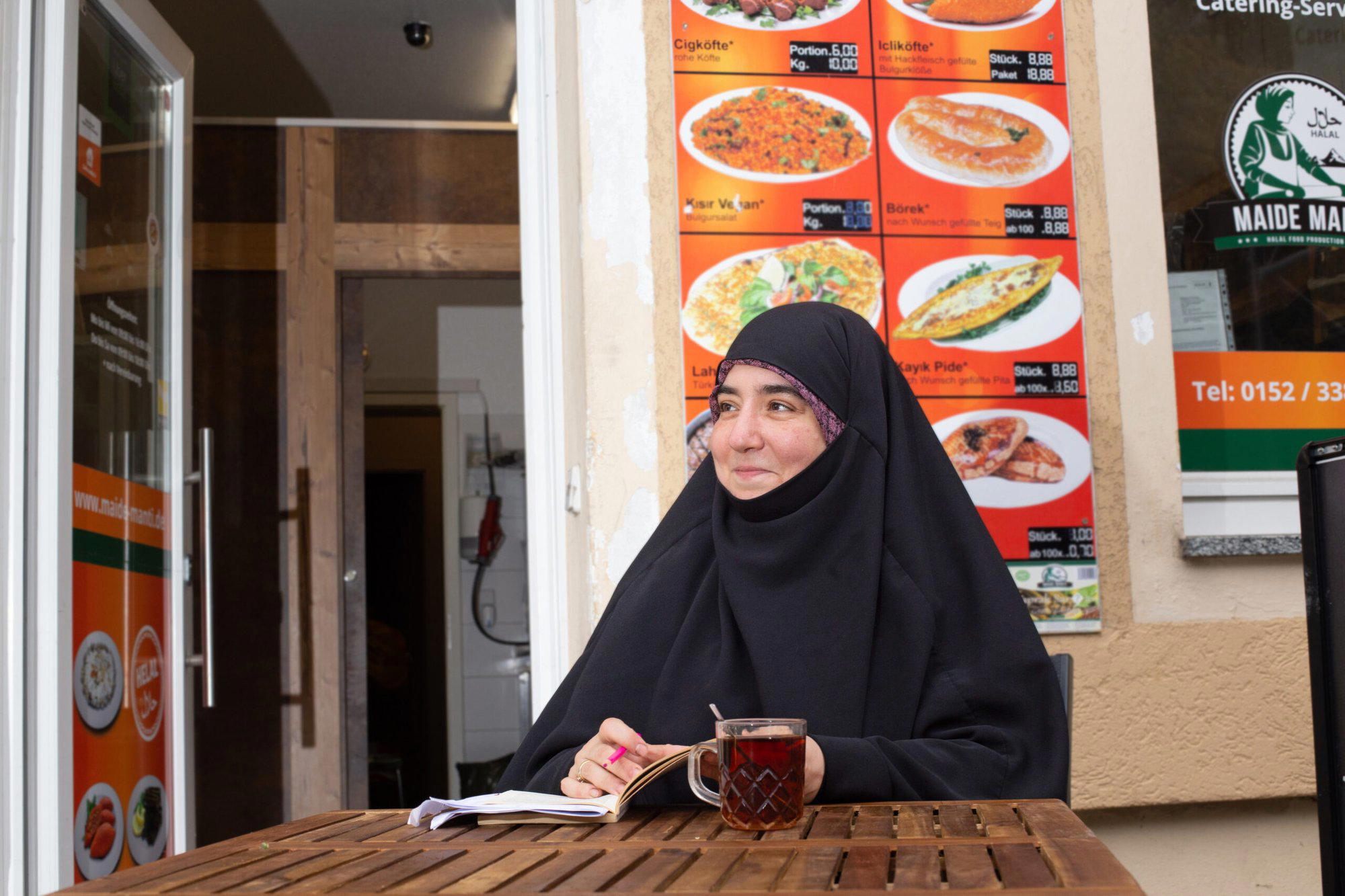
Wedding's Quiet Argument for Dumpling Seriousness
Approach Schulstraße 18 in Wedding and the immediate context tells you something useful about where Berlin's most interesting eating is happening right now. FACIL or CODA Dessert Dining operate with tasting menus and award certificates on the wall. Wedding has been absorbing waves of Turkish, Kurdish, and Central Asian communities for decades, and the restaurants that have emerged from that demographic pressure are doing something structurally different from the city's fine-dining tier: they are transmitting cooking traditions that have no natural entry point into the Michelin or 50 Best frameworks, and doing so in rooms that prioritise function over statement.
Maide Manti sits in that register. The address places it inside one of Berlin's most culturally layered northern districts, where the dining scene operates on neighbourhood logic rather than destination logic. That distinction matters when you are trying to understand what the restaurant is and what it is not.
The Physical Container and What It Signals
Berlin's neighbourhood restaurants of this kind tend toward a shared spatial grammar: rooms that are modest in footprint, with tables close enough together that the smell of browned butter and dried mint moves freely between them, and interiors that foreground the food rather than an architectural concept. This is not a design failure. It is a prioritisation. The dining rooms that have come to define Turkish and Central Asian eating in Berlin's working districts communicate something through their lack of ornamentation: the cooking is the proposition, not the setting.
At an address like Schulstraße 18, you are not paying for the container. You are paying for proximity to a cooking tradition that the city's higher-priced venues, from Nobelhart & Schmutzig to Rutz, have no particular interest in representing. That is not a criticism of either end of the spectrum. It is a description of how Berlin's restaurant ecology actually distributes its specialisations.
Where the city's creative fine-dining addresses treat space as an extension of the menu's argument, the manti restaurant tradition in Berlin treats space as neutral ground. What arrives on the table does the communicating. In that sense, the physical austerity is coherent rather than accidental.
Manti as a Category, Not Just a Dish
Understanding what Maide Manti is serving requires some background on manti itself as a culinary form. These are small, hand-folded dumplings, with origins claimed across Central Asia, Turkey, and the Caucasus, and their preparation is one of the more technically demanding exercises in Anatolian home cooking. The dough must be thin enough to cook through quickly without tearing, the filling compact and seasoned with precision, and the finishing sauces, typically a garlic-heavy yogurt layered with clarified butter and dried chilli, applied in a sequence that keeps temperatures distinct.
This is not fast food translated into a sit-down format. It is a specific regional specialisation that Berlin's Turkish and Central Asian communities have sustained largely within domestic contexts and a small number of dedicated restaurants. The city has more kebab and lahmacun operations than it has serious manti houses, which is what makes an address focused on the dumpling format worth taking seriously as a category position. For comparison, the kind of specialisation manti restaurants represent in the Berlin context is roughly analogous to what ramen specialists or xiaolongbao counters represent in other European cities: a dish with deep technique requirements being executed by people for whom it is a cultural inheritance rather than a menu trend.
Across Germany's broader restaurant scene, the venues attracting critical attention tend to operate in European fine-dining idioms. Aqua in Wolfsburg, JAN in Munich, Schwarzwaldstube in Baiersbronn, Vendôme in Bergisch Gladbach, and ES:SENZ in Grassau all occupy that bracket. What they share is an orientation toward French or contemporary European technique as the governing language. A manti specialist operates in an entirely separate tradition and a separate competitive frame, which is partly why it remains outside the formal award circuits that track Victor's Fine Dining by Christian Bau, Waldhotel Sonnora, Restaurant Haerlin, Schanz, and Bagatelle.
Where This Fits in the Berlin Dining Map
Berlin in 2024 has one of Europe's more genuinely heterogeneous restaurant populations. The Michelin-tracked tier, represented by addresses like Restaurant Tim Raue with its China-inflected tasting menus, operates at a different price point and with different booking dynamics than the neighbourhood-rooted specialists of Wedding and Neukölln. These two tiers are not competing. They serve different decision moments for different visitors and residents.
A restaurant operating on Schulstraße in Wedding is unlikely to be the destination for someone organising a single high-occasion dinner in Berlin. It is, however, directly relevant to anyone who wants to eat well within a district, understand a specific food tradition in depth, or find the kind of price-to-technique ratio that the fine-dining tier cannot offer.
For international reference, the dynamic is not entirely unlike what Korean restaurants like Atomix in New York represent relative to the city's haute cuisine tier: a separate tradition with its own technical depth, operating outside the French-derived evaluation frameworks but not beneath them. Similarly, the rigour applied at the high end of European seafood cooking, represented by a restaurant like Le Bernardin, is simply a different kind of rigour from what a manti specialist applies, not a superior one.
Planning Your Visit
Schulstraße 18 is in the 13347 postcode, in the heart of Wedding, accessible by U-Bahn from central Berlin without significant travel time. Maide Manti is open Monday to Wednesday from 9 AM to 4 PM, Thursday to Saturday from 9 AM to 6 PM, and closed on Sunday. Wedding's restaurant density means that if a particular address is unexpectedly closed, alternatives are within walking distance. The neighbourhood operates on walk-in culture more than the reservation-heavy fine-dining tier, though confirming availability in advance remains sensible.
Just the Basics
Comparable venues nearby, for context on price, style, and recognition.
| Venue | Cuisine | Price | Notes |
|---|---|---|---|
| Maide MantiThis venue — the venue you are viewing | Wedding, Turkish Manti Dumplings | $$ | Not listed |
| Kebap with Attitude | Mitte, Contemporary Turkish Döner Kebab | $$ | Not listed |
| Imren Grill | Not listed | $ | Kreuzberg, Traditional Turkish Döner Kebab |
| Hasir | Charlottenburg, Authentic Turkish Grill | $$ | Not listed |
| STADTSALAT | Mitte, Premium Organic Bowls & Salads | $$ | Not listed |
| ama Café | Mitte, Healthy European Café | $$ | Not listed |
Continue exploring
More in Berlin
Restaurants in Berlin
Browse all →
Bars in Berlin
Browse all →
Hotels in Berlin
Browse all →



At a Glance
- Cozy
- Rustic
- Casual Hangout
- Open Kitchen
Current opening hours
- Monday
- 9 AM–4 PM
- Tuesday
- 9 AM–4 PM
- Wednesday
- 9 AM–4 PM
- Thursday
- 9 AM–6 PM
- Friday
- 9 AM–6 PM
- Saturday
- 9 AM–6 PM
- Sunday
- Closed
Hours can change for holidays and private events. Last verified .
Unassuming neighborhood shop with warm, homey atmosphere from fresh baking and family operation.