Our verdict
On a narrow street beside the Roman amphitheatre, La Gueule du Loup occupies the kind of address that Arles does quietly and well: small rooms, serious cooking, and a sense that the city's Provençal larder is being treated with genuine care. The restaurant sits in the mid-range of Arles dining, where regional tradition and considered technique share the same table.

Pearl is the En Primeur Club membership app, where members save venues, book tables and use the concierge.

The menu
What to order
- Taureau de Camargue
- Telline de Camargue
- Poissons de Méditerranée
Rue des Arènes runs close enough to the Roman amphitheatre that you can hear the crowd noise on corrida days. The street is narrow, the stonework old, and the buildings press close enough to keep the afternoon sun at bay. It is the kind of address that feels earned rather than chosen for effect, and La Gueule du Loup occupies it with the low-profile confidence that characterises the better independent restaurants of provincial Provence. Before you assess the menu, the room has already told you something about what to expect: this is cooking in service of a place, not a statement.
Arles at the Table: The Provençal Mid-Range Scene
Arles has a dining scene that operates across a surprisingly wide register for a city of its size. At the upper end, Chardon runs modern cuisine with the kind of technique-led precision that places it in a different competitive tier. At the creative apex, Les Maisons Rabanel works at a €€€€ price point with produce-driven invention that draws visitors specifically for the cooking. Between those poles and the casual bistros is a mid-register where places like La Gueule du Loup operate: serious enough to be worth planning around, accessible enough that locals actually fill the tables on a Tuesday.
That mid-range is where Provence's larder does its most honest work. The Camargue is minutes away, supplying rice and salt and the flat-iron beef that Gardians have been eating for centuries. The Alpilles push herb-scented lamb down from the north. Market vegetables in this part of southern France are not a selling point; they are simply the starting condition. What a kitchen does with that material is the editorial question, and the restaurants that answer it without importing affectation tend to last.
For a broader picture of how the city's restaurants map to different traditions and price points, the full Arles restaurants guide gives comparative context across all categories.
The Arc of a Meal
The editorial angle on a restaurant at this address and in this category is the progression of a meal rather than the theatre of arrival. Provençal cooking at its most functional moves through recognisable arcs: something cold and bright to open, a protein course that leans on the season's dominant ingredient, and a close that usually reaches for local cheese or fruit rather than pastry complexity. The virtue is in execution at each stage rather than surprise at any single one.
In the southern Rhône corridor and the Camargue fringe, that opening note tends to be anchored in olive oil, raw or lightly cooked vegetables, and the clean acidity that comes from a kitchen comfortable with vinegar and citrus. The transition into a main course here draws from a short list of credible regional sources: Camargue beef or lamb from the Alpilles or Crau plain appear repeatedly on menus in this price band, with fish from the Mediterranean coast available as an alternative rather than a centrepiece. The closing sequence, where a kitchen's confidence shows most clearly, tends at this tier to be an unpretentious plateau of regional cheeses or a fruit-based dessert calibrated to the season.
What distinguishes the better mid-range addresses from the adequate ones in Arles is whether the kitchen holds its discipline across all three stages or coasts on the quality of raw ingredients through the middle and loses focus at the close. The name La Gueule du Loup translates loosely as the wolf's mouth, a phrase in French that also means a precarious situation, which is a quietly pointed name for a restaurant that has to deliver at every course without the safety net of a grand tasting-menu format.
Within Arles, the relevant comparisons are informative. Drum Café operates a farm-to-table model at a similar price point, with supply-chain transparency as its organising principle. Chez Bob anchors the more traditional end of Arlesian eating, where the Camargue gardian tradition is treated as a cultural document rather than a culinary starting point. Allora and Gaudina cover different reference points again.
The address on Rue des Arènes is also logistically convenient in a way that matters for how a visitor might structure a day. The amphitheatre, one of the best-preserved Roman arenas in Europe with a capacity that still hosts events today, is effectively adjacent. The Musée Départemental Arles Antique and the photography venues around the LUMA Foundation campus are all within walking distance. A lunch here slots into a walking afternoon without requiring a taxi or a schedule rebuild, which is not an incidental point at a price tier where the meal should serve the day rather than dominate it.
The Broader French Reference Frame
Arles does not operate in isolation from the wider French restaurant conversation, and a visitor who uses the city as part of a longer southern itinerary will likely be cross-referencing it against other registers. At the technical summit of southern French cooking, Mirazur in Menton and AM par Alexandre Mazzia in Marseille represent what is possible when Michelin-level technique meets Mediterranean produce at its most intense. At the institutional end of French gastronomy, Paul Bocuse in Collonges-au-Mont-d'Or, Auberge de l'Ill in Illhaeusern, and Troisgros in Ouches define a different tradition altogether. In the mountain register, Flocons de Sel in Megève and Bras in Laguiole show what happens when terrain becomes primary ingredient. Closer to the capital, Alléno Paris au Pavillon Ledoyen and Assiette Champenoise in Reims hold the northern end of the formal French dining spectrum. Au Crocodile in Strasbourg represents the Alsatian register. Internationally, the comparison extends to precision-led rooms like Le Bernardin in New York City and Atomix in New York City, where tasting-progression format is used to very different ends. La Gueule du Loup sits far from all of those in scale and ambition, but the Provençal mid-range it represents is not a lesser category, it is a different discipline.
Planning a Visit
La Gueule du Loup is at 39 Rue des Arènes, Arles, in the historic centre close to the amphitheatre. Given the limited published data on booking channels and hours, the most reliable approach for a visit is to contact the restaurant directly on arrival in the city, or to check current hours through Google Maps or a local concierge in the days before. Arles in July and August runs at full visitor capacity, and smaller independent restaurants in the historic core can fill their modest number of covers quickly during festival periods, including the Rencontres d'Arles photography festival that runs from early July through late September. A midweek lunch in the shoulder season, April through June, or October, gives the leading chance of a relaxed table without advance planning.
Frequently asked questions
Where do I go for La Gueule du Loup?
La Gueule du Loup is located at 39 Rue des Arènes, 13200 Arles, France, Arles.
Is La Gueule du Loup suitable for a meal close to the Arles Roman amphitheatre?
The address at 39 Rue des Arènes places La Gueule du Loup directly adjacent to the amphitheatre, one of the most complete surviving Roman arenas in France and the centrepiece of Arles's UNESCO-listed historic core. This makes it a practical option for lunch before or after a visit to the arena, without requiring a cross-city journey. Timing around arena events, which draw large crowds, is worth factoring into any visit.
What's the signature dish at La Gueule du Loup?
The restaurant sits in the Provençal mid-range tier in Arles, a category where kitchens typically draw on local ingredients, lamb from the Camargue, seasonal vegetables, and olive-oil-led preparations, though specific menu details require confirmation directly with the restaurant at 39 Rue des Arènes.
What's the best way to book La Gueule du Loup?
For restaurants in Arles's mid-range tier near the amphitheatre, walk-in visits or enquiries in person at 39 Rue des Arènes are a practical approach, particularly outside peak summer months when the city draws significant visitor traffic.
Accolades, Compared
Comparable venues nearby, for context on price, style, and recognition.
| Venue | Cuisine | Price | Awards | Notes |
|---|---|---|---|---|
| La Gueule du LoupThis venue (the venue you are viewing) | Modern Provençal Bistro | $50–100 | Not listed | Not listed |
| Le Galoubet | Provençal French Bistro | $30–50 | Not listed | historic centre |
| L'Epicier Moderne | Bistronomic French Seafood | $20–30 | Not listed | La Roquette |
| Mesa | Seasonal French Bistro | $30–50 | Not listed | historic centre |
| Le Seize | Modern French Bistro | $50–100 | Michelin Plate | centre historique |
| Le Nord-Pinus | Italian-influenced Provençal Bistro | $50–100 | Not listed | Place du Forum |
Continue exploring
More in Arles
Restaurants in Arles
All restaurants in Arles →

Bars in Arles
Browse all →

Details
- Cozy
- Rustic
- Intimate
- Elegant
- Date Night
- Special Occasion
- Open Kitchen
- Historic Building
- Extensive Wine List
- Local Sourcing
- Farm To Table
- Street Scene
- A La Carte
- Vegetarian Friendly
- Vegan Options
- Gluten Free Options
Current opening hours
- Monday
- Closed
- Tuesday
- 12:15–1:45 PM, 7:15–9 PM
- Wednesday
- 12:15–1:45 PM, 7:15–9 PM
- Thursday
- 12:15–1:45 PM, 7:15–9 PM
- Friday
- 12:15–1:45 PM, 7:15–9 PM
- Saturday
- 12:15–1:45 PM, 7:15–9 PM
- Sunday
- Closed
Hours can change for holidays and private events. Hours as of .
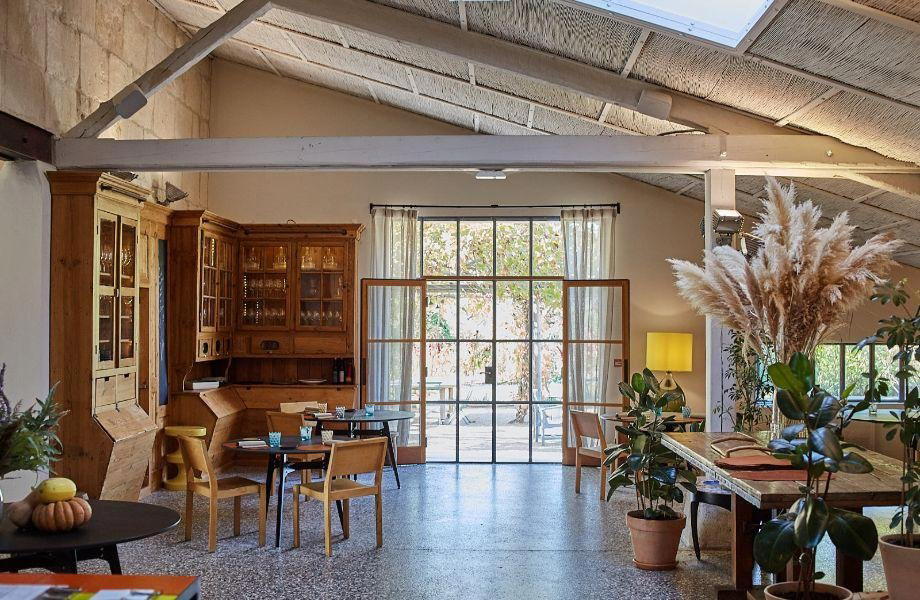
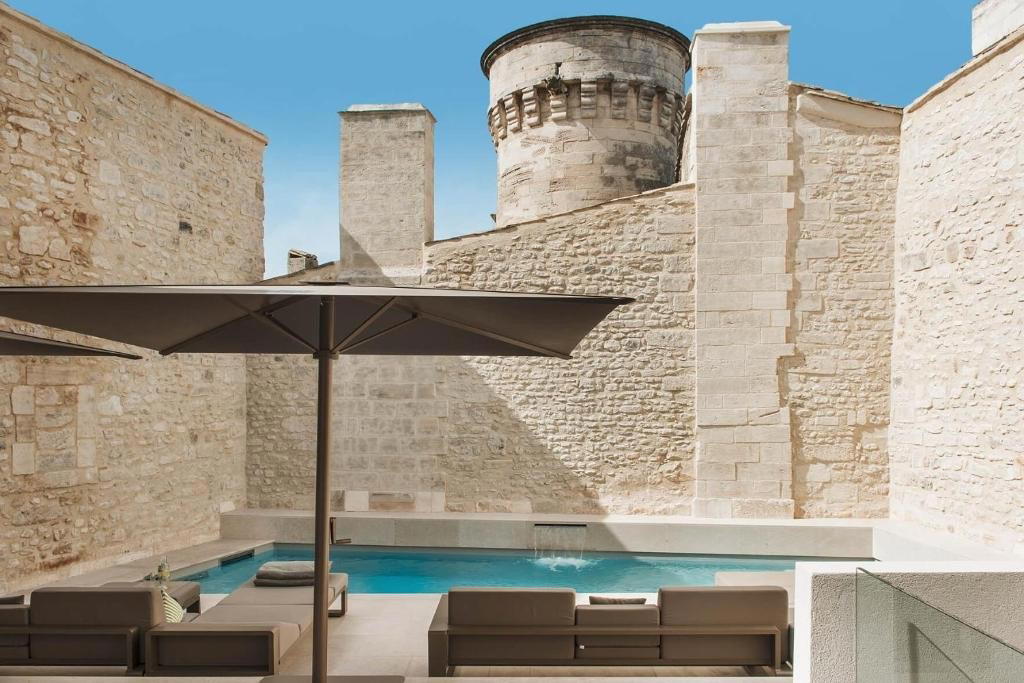
Cozy and charming atmosphere in rustic stone-walled rooms, one with open kitchen view and the other featuring exposed stone upstairs, full of Provençal charm.