Tufano's Vernon Park Tap


Tufano's Vernon Park Tap at 1073 W Vernon Park Place is one of Chicago's oldest Italian-American taverns, operating from the same University Village address for generations. The room trades on red-sauce tradition and neighbourhood loyalty rather than culinary ambition, placing it squarely in a category that Chicago's fine-dining boom has largely bypassed. For visitors tracking the city's food history, it functions as a reference point rather than a destination.
Pearl is the En Primeur Club membership app — saves, bookings, and concierge access live there. Same editors, same standards.
- Address
- 1073 W Vernon Park Pl, Chicago, IL 60607
- Phone
- +1 312 733 3393
- Website
- sites.google.com
- Directions
- Get directions
 Saves & bookings on Pearl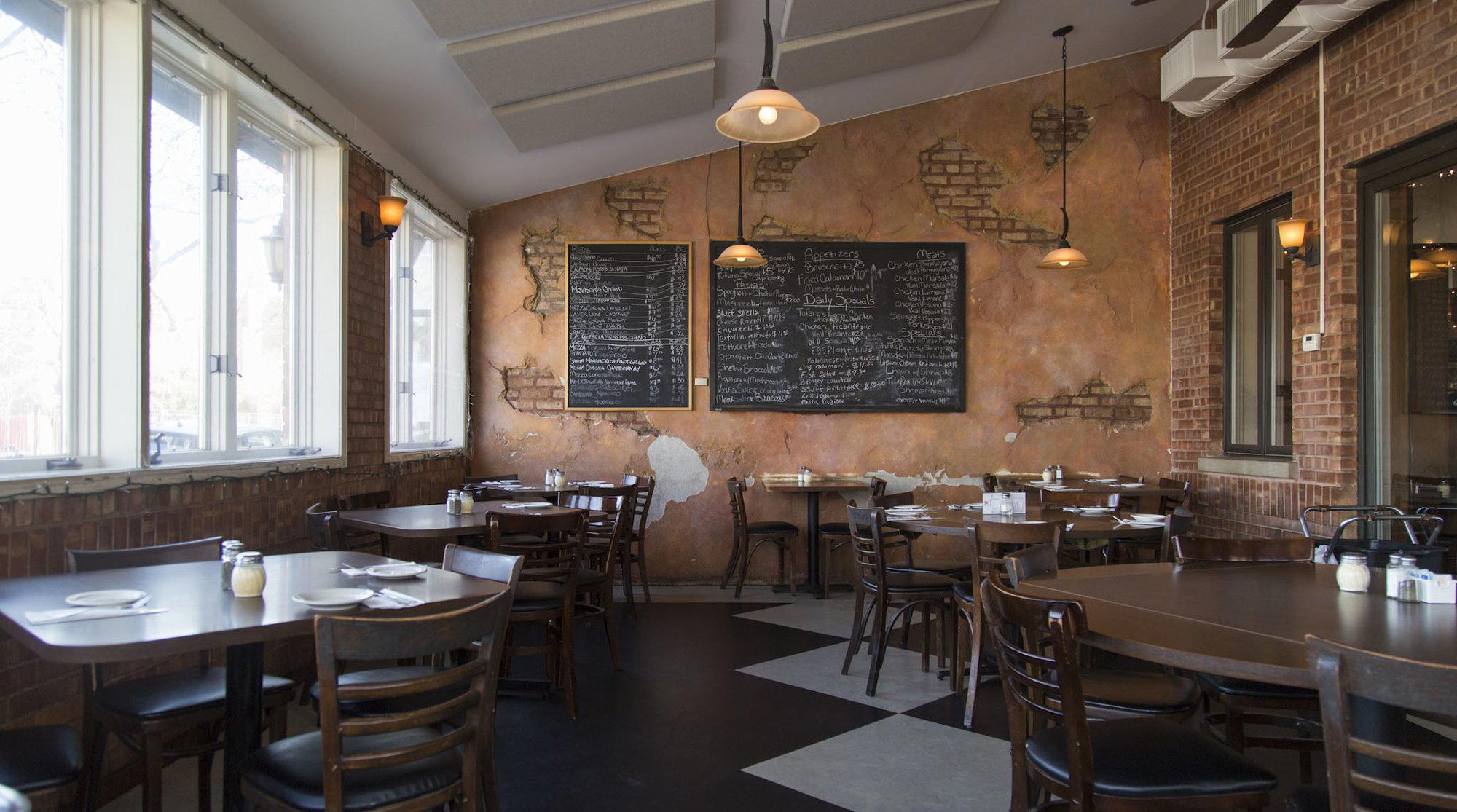
University Village and the Persistence of the Neighbourhood Tavern
Chicago's dining conversation in recent years has concentrated on the city's upper tier: the tasting-menu rooms of the West Loop, the Michelin-decorated counters, the progressive American formats represented by places like Alinea, Smyth, and Oriole. That conversation mostly skips University Village, the neighbourhood west of the Medical District where Tufano's Vernon Park Tap has occupied its corner on Vernon Park Place for decades. The building is unassuming in the way that only genuinely old places can be. There is no design concept at work, no curated vintage aesthetic applied after the fact. The room looks the way it does because it has always looked that way, and the neighbourhood around it has come to accept its presence as something close to geographical fact.
University Village sits between the University of Illinois at Chicago campus and the old Taylor Street corridor, itself a remnant of Chicago's Italian immigrant belt. That lineage matters here. The Italian-American red-sauce tavern was not invented in Chicago, but it found particular density along Taylor Street and its surrounding blocks, where Sicilian and southern Italian families settled in the late nineteenth and early twentieth centuries. Tufano's belongs to that tradition in a literal sense: a neighbourhood place built for regulars rather than visitors, operating on the logic that a consistent bowl of pasta and a glass of house wine, delivered without ceremony, is sufficient reason to return.
What the Room Tells You Before You Sit Down
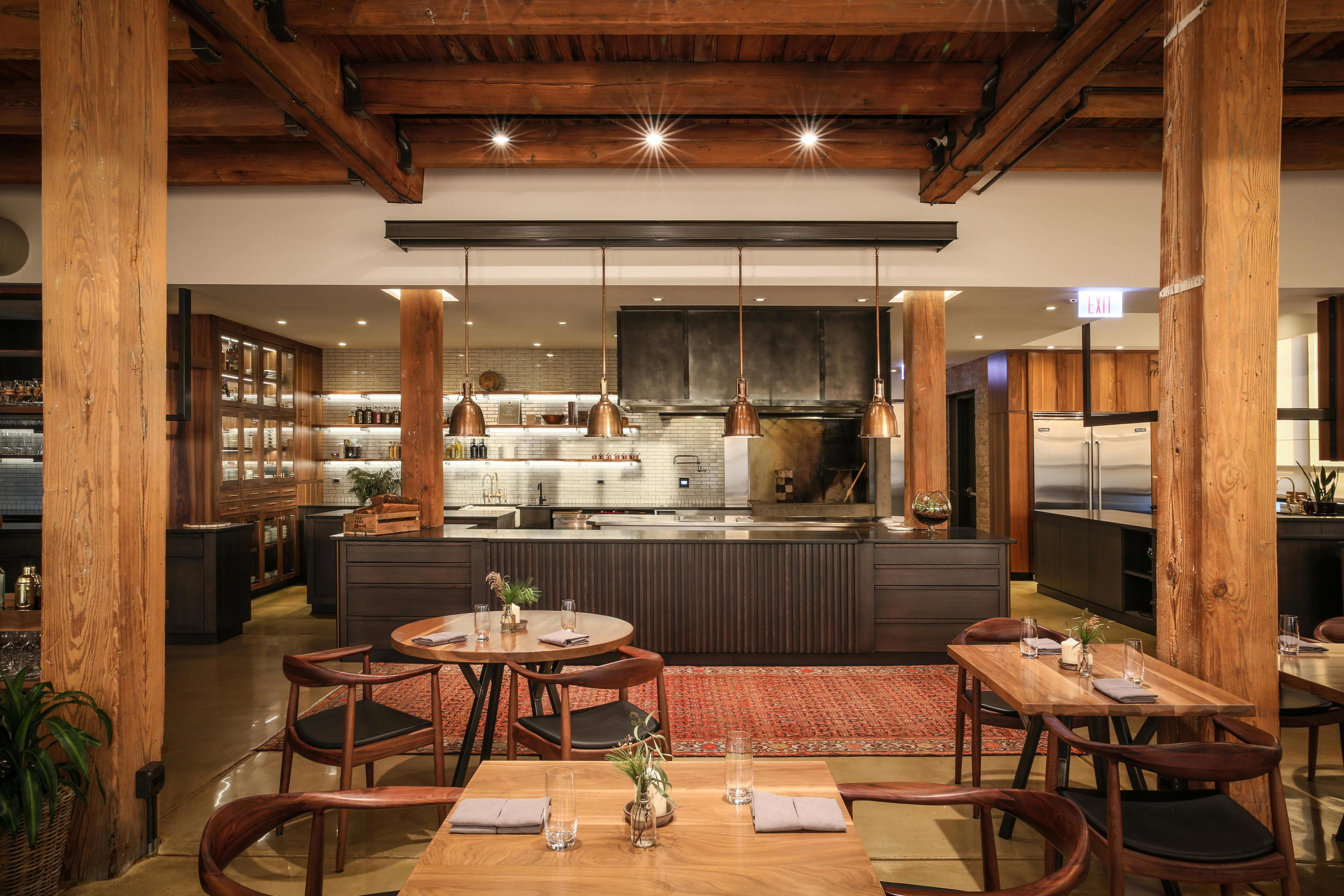
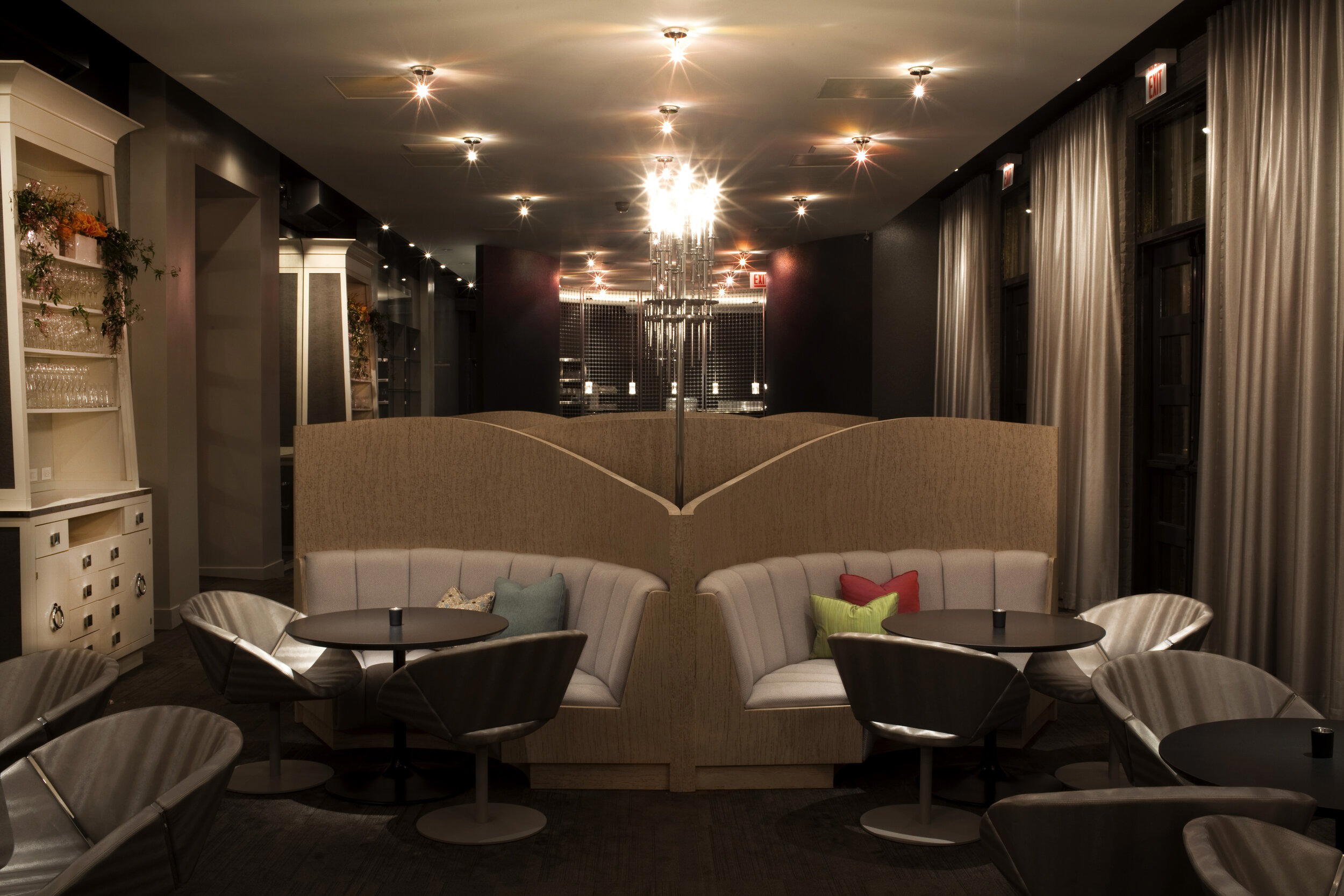
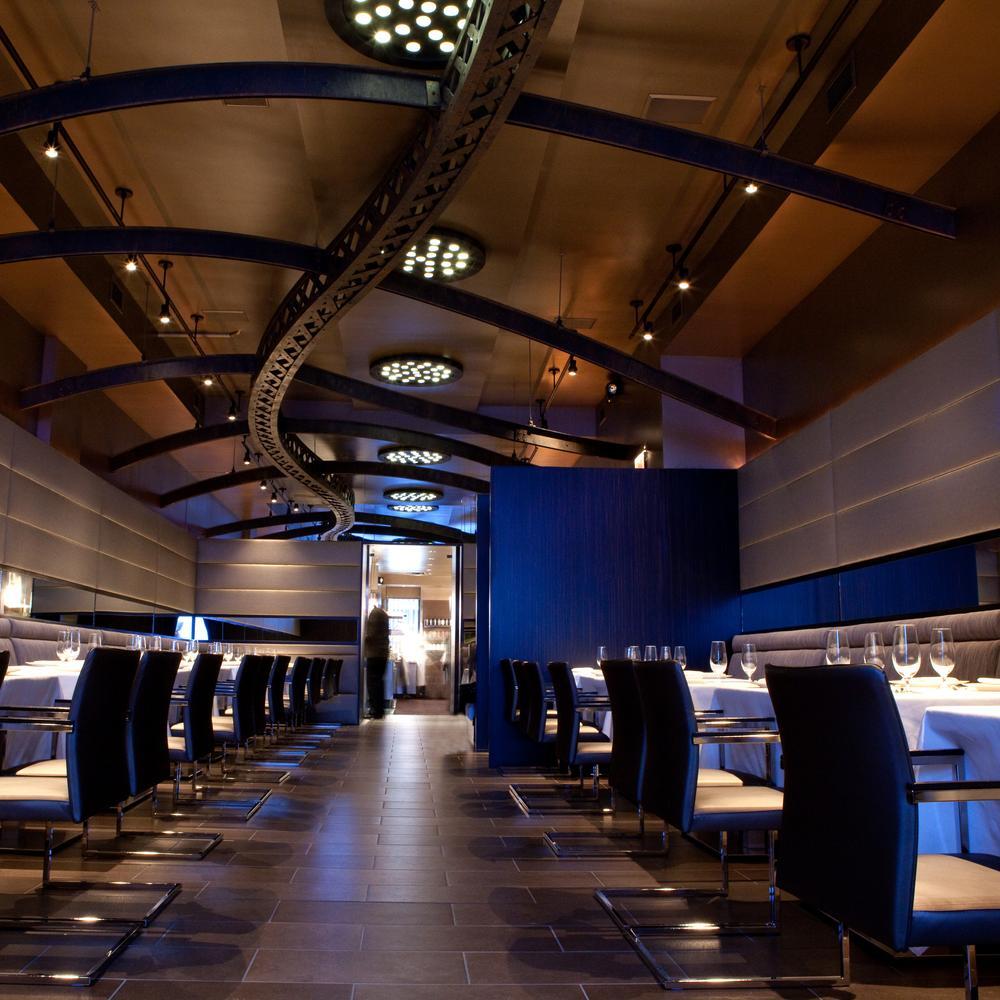
The physical approach to Tufano's sets expectations accurately. Vernon Park Place is a short residential street, and the tavern shares its block with the kind of low-scale Chicago housing that precedes any gentrification pressure. Walking in, the room reads as a working dining room rather than a destination: tables close together, lighting functional rather than atmospheric, walls that document history through accumulated photographs and memorabilia rather than through deliberate curation. This is a format that has largely disappeared from American cities, where even places positioning themselves as casual have absorbed enough design thinking to feel constructed.
In this respect, Tufano's operates in a different register entirely from the city's higher-investment Italian rooms or the wave of format-driven American restaurants that have defined Chicago's reputation since the early 2000s. Venues like Next Restaurant and Kasama represent Chicago's ambition to reframe what a restaurant can be as a concept. Tufano's represents the opposite impulse: the refusal to reframe anything at all. Neither position is inherently superior; they answer different questions about what eating out is for.
Italian-American Tavern Cooking in Context
The red-sauce Italian-American tradition that Tufano's represents has undergone a complicated critical reassessment over the past two decades. For a period, it was dismissed by serious food writers as a corruption of regional Italian cooking, too heavy with tomato, too generous with garlic, too removed from the source. That dismissal has softened considerably. The cuisine is now more often understood as its own thing: a distinct American regional form that developed in immigrant communities and reflects the ingredient availabilities, economic conditions, and social functions of those communities. Comparing it unfavourably to the trattorias of Emilia-Romagna misses the point in the same way that measuring a New Orleans po'boy against a Parisian baguette sandwich would. The frame of reference has to be internal to the tradition.
Across American cities, places that have maintained this tradition without modernising it occupy a specific cultural function. They serve as connection points to a previous version of urban life, where the restaurant was an extension of the home kitchen and the owner likely knew a significant percentage of the dining room by name. That function is not gastronomically neutral: it produces a particular kind of meal, one whose value is partly relational and partly historical rather than purely culinary. For context, the equivalent phenomenon in other American cities might include places like Emeril's in New Orleans, which anchored a different kind of neighbourhood food culture, or the farmstead traditions represented by Blue Hill at Stone Barns in Tarrytown, which, while formally opposite in ambition, shares the characteristic of being deeply embedded in a specific place and history. The comparison illuminates how different a localism rooted in immigrant working-class tradition looks from one rooted in agricultural idealism.
Who Goes, and Why
The customer base at Tufano's has historically skewed toward longtime neighbourhood residents and Chicagoans who grew up eating there, along with the curious visitor who arrives specifically because longevity is its own credential. The tavern format suggests a room that is tolerant of noise and children, where the pacing of the meal is not managed by front-of-house choreography, and where ordering a single pasta and a beer without a full multi-course commitment carries no social cost. That combination is rarer in Chicago than it was twenty years ago, as restaurant economics have pushed even casual rooms toward higher covers and shorter table turns.
For the visitor working through Chicago's dining range, Tufano's sits at the opposite end of the spectrum from the city's ambitious tasting rooms. A full survey of what Chicago does well might move between the precision-driven formats at Alinea or Smyth, the regional specificity of Kasama, and a place like this, where the value proposition is continuity rather than innovation. Comparable institutional weight, in the sense of a place defined by its years rather than its ambitions, can be found at venues like Frasca Food & Wine in Boulder or the long-established dining rooms documented in our full Chicago restaurants guide.
Internationally, the analogue to what Tufano's represents, a restaurant whose authority derives from duration and community function rather than culinary ambition, appears in forms as different as Le Bernardin in New York City, which has maintained its position through sustained excellence, or Atelier Moessmer Norbert Niederkofler in Brunico, where place-rootedness drives the entire culinary logic. The specific expression at Tufano's is more modest than either, but the underlying argument, that a restaurant gains something from staying put and staying itself, connects them.
Planning Your Visit
Tufano's Vernon Park Tap is located at 1073 W Vernon Park Place in University Village, accessible from the city centre by the Blue or Pink Line to the UIC-Halsted stop, a short walk east. The neighbourhood is residential and quiet in the evenings, which means parking is less fraught than in the West Loop or River North. Open Tuesday through Friday from 11 AM to 9 PM, Saturday from 4 to 9:30 PM, and Sunday from 3 to 8:45 PM; closed Monday. Walk-ins are welcome, and the dress code is casual.
Pricing, Compared
Comparable venues nearby, for context on price, style, and recognition.
| Venue | Cuisine | Price | Notes |
|---|---|---|---|
| Tufano's Vernon Park TapThis venue — the venue you are viewing | Little Italy, Classic Italian-American | $$ | Not listed |
| Lou Malnati's Pizza | multiple, Chicago Deep Dish Pizza | $$ | Not listed |
| Ricobene's | Not listed | $$ | Bridgeport, Classic Chicago Italian Sandwiches |
| Oggi Trattoria | West Town, Classic Italian Trattoria | $$ | Not listed |
| Nonnina | River North, Homemade Italian Trattoria | $$ | Not listed |
| Riccardo Osteria | Not listed | $$ | West Loop, Authentic Northern Italian Osteria |
Recognition history
Dated appearances from independent guides and award organizations, with the underlying list record or original source where available.
Diners, Drive-Ins and Dives Featured Restaurant
Diners, Drive-Ins and Dives · 2026 Diners, Drive-Ins and Dives Featured Restaurants
James Beard Award America's Classics
James Beard Award

At a Glance
- Classic
- Cozy
- Lively
- Family
- Group Dining
- Casual Hangout
- Historic Building
Current opening hours
- Monday
- Closed
- Tuesday
- 11 AM–9 PM
- Wednesday
- 11 AM–9 PM
- Thursday
- 11 AM–9 PM
- Friday
- 11 AM–9 PM
- Saturday
- 4–9:30 PM
- Sunday
- 3–8:45 PM
Hours can change for holidays and private events. Last verified .
Old-school Italian with checkered tablecloths, lively and lively family atmosphere.