On the Aker Brygge waterfront at Stranden 75, Lofoten Fiskerestaurant has anchored Oslo's serious seafood dining for decades. The menu reads as a structured argument for Norwegian coastal ingredients, positioned squarely between the city's New Nordic tasting-counter tier and its casual harbourside options. For visitors mapping Oslo's fish-forward dining, this is the reference point against which other addresses are measured.
 Discover on Pearl
Pearl is the En Primeur Club membership app — saves, bookings, and concierge access live there. Same editors, same standards.
- Address
- Stranden 75, 0250 Oslo, Norway
- Phone
- +4722830808
- Website
- lofoten-fiskerestaurant.no
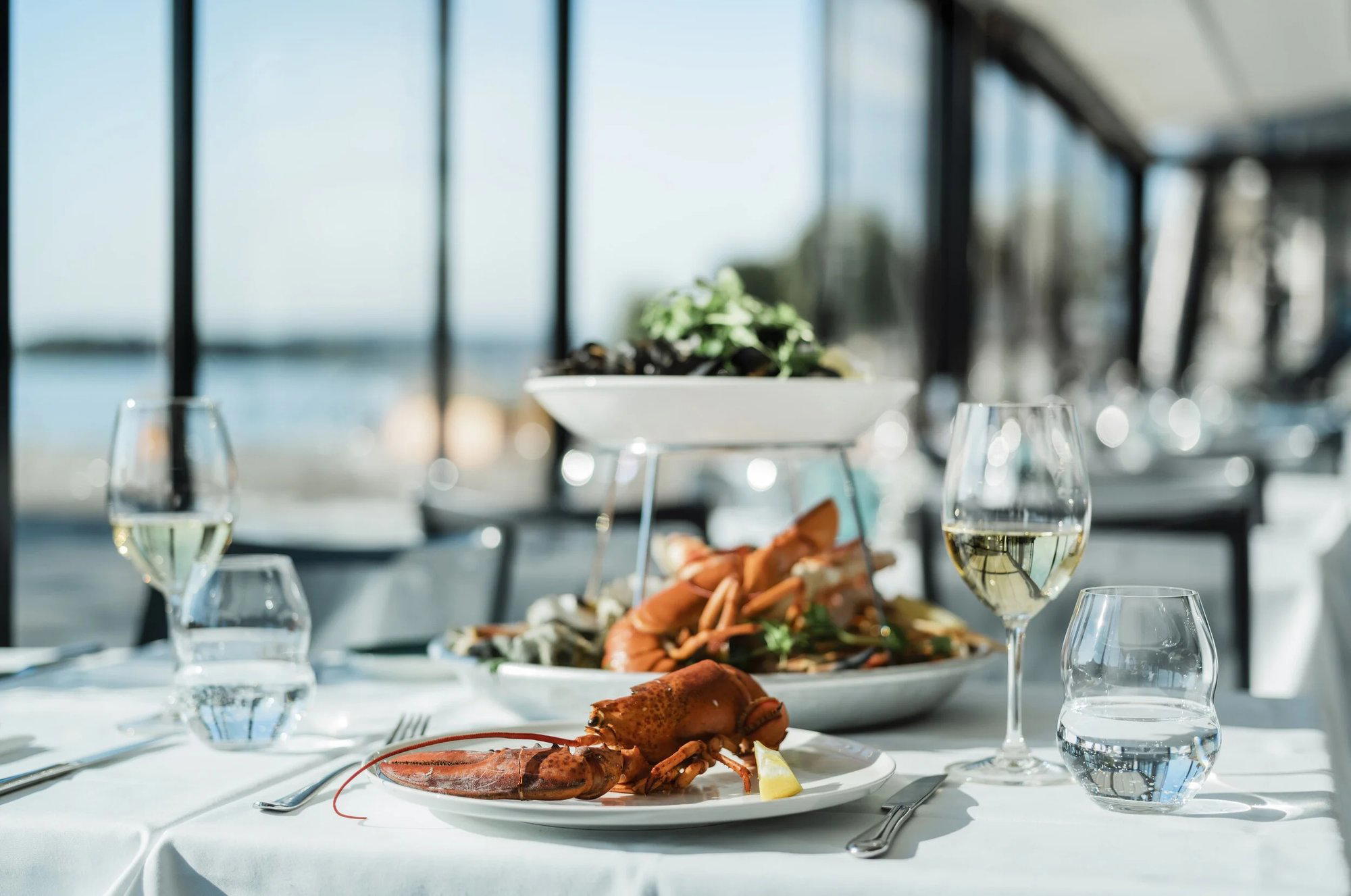
The Waterfront and What It Promises
Aker Brygge has a particular gravitational pull in Oslo's dining geography. The former shipyard district, now a dense cluster of restaurants and apartments along the western edge of the Oslofjord, draws visitors and locals alike to its boardwalk strip. What distinguishes a serious seafood address here from the surrounding tourist-facing options is menu discipline: the willingness to let Norwegian coastal ingredients carry the room rather than dressing them up for an audience expecting spectacle. Lofoten Fiskerestaurant, at Stranden 75, has earned its reputation on the logic of its menu rather than its view.
Approaching along the waterfront, the fjord sits to your right and the low-slung profile of the restaurant to your left. The physical setting primes a specific expectation: that what arrives at the table will have some honest relationship to the water outside. That expectation is the lens through which the menu here is leading read.
How the Menu Is Structured, and What It Argues
Norwegian seafood dining exists on a spectrum. At one end sit the New Nordic tasting-counter addresses, Maaemo and Kontrast among them, where the fish arrives as part of a longer conceptual conversation, with producer credits and foraging narratives embedded in every course. At the other end is the direct fish-and-potato tradition of the Norwegian coast, unmediated and priced accordingly. Lofoten Fiskerestaurant sits in the middle tier: ingredient-led but accessible, structured around a la carte choice rather than a fixed sequence, and priced to reflect the quality of its sourcing without the premium of a full tasting format.
That middle position is a deliberate editorial stance. A menu built around a la carte selection rather than a set progression tells the guest something important: the kitchen is confident that individual dishes will hold interest on their own terms, without the narrative scaffolding of a multi-course arc. The dishes are expected to justify themselves. This is a harder discipline than it sounds. At the New Nordic tier, a weaker course can be carried by context, the arc of the menu, the explanation from the server, the drama of the format. At a la carte, each plate competes directly for the guest's attention and money.
The menu's orientation toward Norwegian coastal species rather than international luxury product is consistent with a broader trend in Oslo's better seafood rooms. Skrei cod during the winter season, shellfish from the western fjords, salmon prepared with more care than its ubiquity might suggest, these are the pillars. For comparison, the Lofoten archipelago itself, which lends this restaurant its name, is one of Norway's most significant fishing grounds, the source of the world-famous stockfish trade and the setting for addresses like Anita's Sjomat and Fiskekrogen in Henningsvær. Drawing that geographic reference into an Oslo waterfront address is an implicit promise about sourcing ambition.
Oslo's Seafood Tier and Where This Address Fits
Oslo's fish-forward dining has expanded and stratified considerably over the past decade. The city's Michelin-starred tier, anchored by addresses like Maaemo, has pushed Norwegian ingredients into an international critical conversation, while the mid-market has filled with options ranging from the technically serious to the merely waterfront-convenient. The dining options at Aker Brygge reflect this tension: the address has enough foot traffic to sustain less committed kitchens alongside the more careful ones.
Lofoten Fiskerestaurant belongs to the more careful cohort. The guest profile it attracts tends toward visitors who want the Norwegian seafood experience handled competently rather than conceptually, and locals who want a reliable harbour-view meal without the ceremony of a tasting menu. That's a wide bracket, and holding it requires consistency rather than innovation. For those wanting the full New Nordic progression in Oslo, Kontrast or the creative energy of Bar Amour offer a different register. For those who want the city's more relaxed modern end, Hot Shop and Mon Oncle represent other directions entirely.
Across Norway's coastal dining circuit, the seafood restaurant as a category has produced some of the country's most discussed addresses: Under in Lindesnes, the submerged dining room that became a global architecture and gastronomy story; RE-NAA in Stavanger; FAGN in Trondheim; and the more remote options like Hardanger House in Jondal, Aurora Restobar in Kirkenes, Børsen Spiseri in Svolværet, and Underhuset in Reine. Against that national map, a central Oslo waterfront address like Lofoten Fiskerestaurant plays a different role: it is the accessible urban anchor, not the destination journey. Internationally, the closest comparison in terms of fish-forward, a la carte formality without tasting-menu structure might be found at addresses like Le Bernardin in New York City, though the price point and ceremony differ considerably, or the more conceptual Korean-seafood hybrids emerging at venues like Atomix.
For a broader map of Oslo's dining options across categories and price tiers, our full Oslo restaurants guide covers the city's current scene with neighbourhood-level detail.
Planning Your Visit
Lofoten Fiskerestaurant sits at Stranden 75 in the Aker Brygge district, reachable by tram (line 12 to Aker Brygge stop) or a fifteen-minute walk from Oslo Central Station along the harbourfront. The waterfront location means summer bookings fill early, particularly for evening tables with fjord-facing positions. Winter visits carry the advantage of the skrei cod season, roughly January through April, when Norwegian coastal kitchens are at their most ingredient-focused. Given the restaurant's profile and the density of dining competition along this stretch, reservations are the more reliable approach than walking in, particularly on weekends. For the most current booking options and hours, checking directly with the restaurant is advised, as operational details are subject to change.
Standing Among Peers
Comparable venues nearby, for context on price, style, and recognition.
| Venue | Cuisine | Price | Awards | Notes |
|---|---|---|---|---|
| Lofoten FiskerestaurantThis venue — the venue you are viewing | Norwegian Seafood | $$$$ | , | |
| Restaurant Havsmak | Norwegian Seafood Fine Dining | $$$$ | St. Hanshaugen | |
| Hos Peder | Modern Mediterranean Seafood | $$ | , | Fredensborg |
| Grand Café | Modern Nordic Brasserie | $$$$ | , | Vika |
| Ekebergrestauranten | Modern Scandinavian & Norwegian | $$$$ | , | Gamlebyen |
| Kitchen & Table Fishery | Norwegian Seafood | $$ | , | Youngstorget |
Continue exploring
More in Oslo
Restaurants in Oslo
Browse all →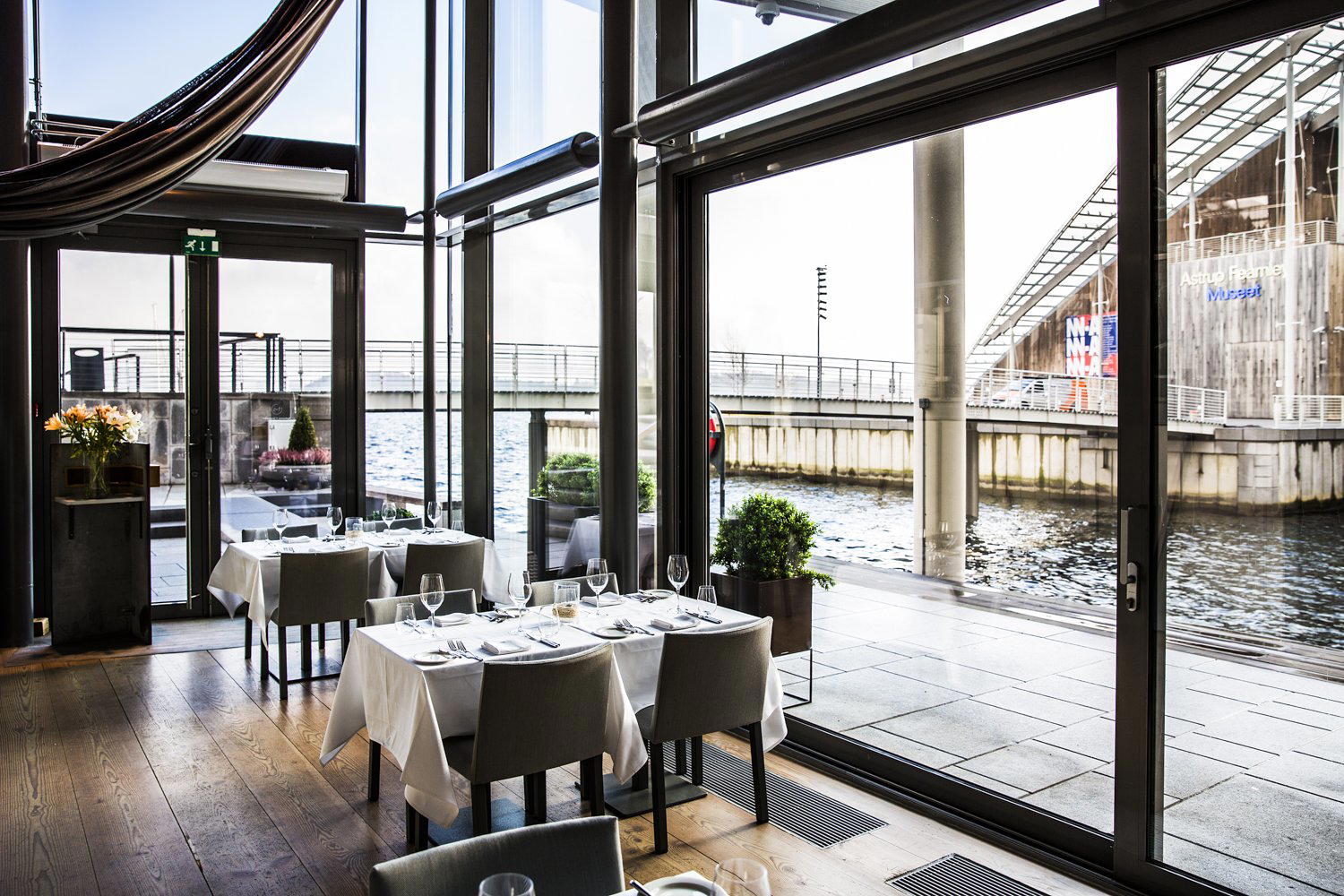
Bars in Oslo
Browse all →

Hotels in Oslo
Browse all →
Wineries in Oslo
Browse all →
At a Glance
- Elegant
- Scenic
- Classic
- Sophisticated
- Date Night
- Business Dinner
- Special Occasion
- Celebration
- Waterfront
- Terrace
- Panoramic View
- Private Dining
- Extensive Wine List
- Local Sourcing
- Sustainable Seafood
- Waterfront
Modern elegance blended with maritime charm, featuring natural light from glass-fronted design overlooking the harbor, creating a refined yet welcoming atmosphere.