
Locanda delle Grazie holds back-to-back Michelin Bib Gourmand recognition (2024 and 2025) for exactly the kind of cooking that earns it: pumpkin tortelli, pike with salsa verde, slow-cooked meats, and sbrisolona served in generous portions at a single-euro price point. Set on the piazzale of a pilgrimage village overlooking the Mincio river, it represents one honest end of Mantuan home cooking, without pretension or ceremony.
Pearl is the En Primeur Club membership app — saves, bookings, and concierge access live there. Same editors, same standards.
- Address
- Piazzale Santuario, 2, 46010 Curtatone MN, Italy
- Phone
- +39 0376 348038
- Website
- facebook.com
- Directions
- Get directions
 Saves & bookings on Pearl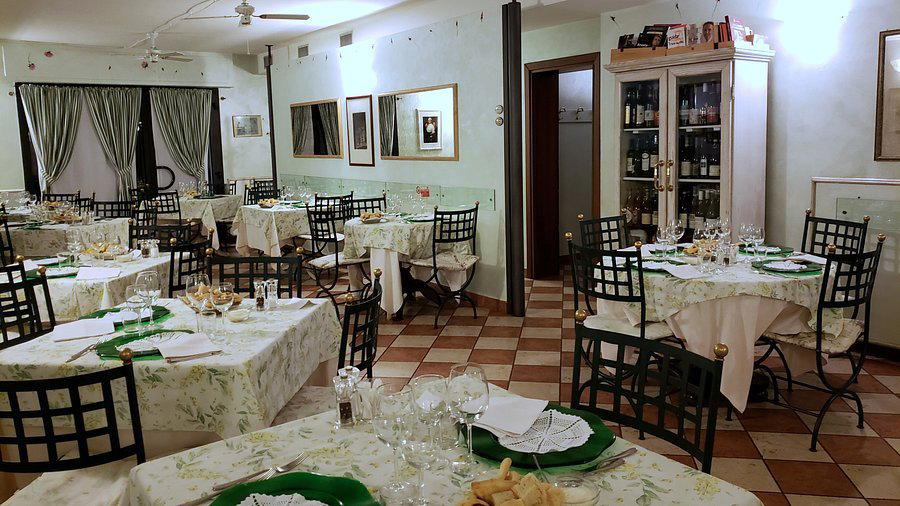
A Village Square, a River View, and a Specific Kind of Cooking
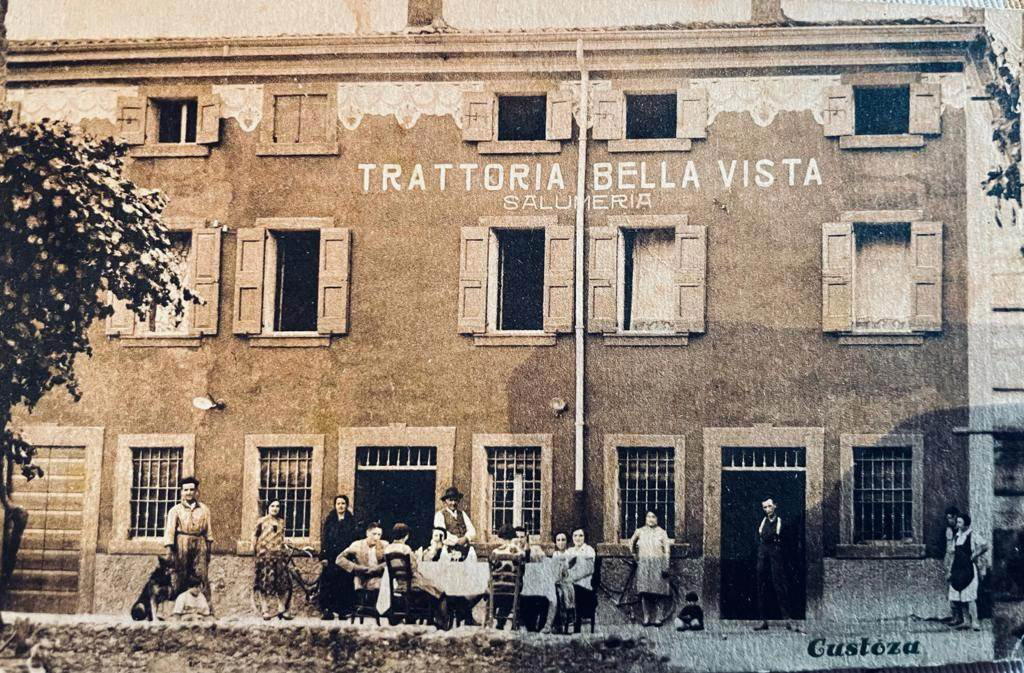
The approach to Curtatone sets the register before you reach the door. Grazie is a pilgrimage village on the Mincio river, the kind of settlement where the santuario dominates the piazza and the rhythm of the place has not been recalibrated for tourism. Locanda delle Grazie sits on the Piazzale Santuario, meaning the square itself is your arrival, not a side street or a converted warehouse. That physical context matters for understanding what the cooking is doing. This is not a destination restaurant that happens to be in the countryside. It is a local institution that has accumulated outside recognition while remaining precisely what it always was.
That recognition is now consecutive: Michelin Bib Gourmand in 2024 and 2025. The Bib Gourmand category has its own logic within the Guide's hierarchy, it identifies restaurants delivering quality cooking at prices that sit below the starred tier, and it is awarded seriously. Retaining it across two editions signals consistency of execution and value rather than a single strong inspection year. For a restaurant at the €€ price point in a village of this scale, it places Locanda delle Grazie in a narrow peer group: Mantuan cooking, genuinely affordable, verified twice over.
What Mantuan Cuisine Actually Means at This Level
Mantua's culinary identity is one of the more coherent regional food traditions in northern Italy. The city and its surrounding province sit in the Po Valley, surrounded by water, the Mincio loops around three sides, and the cooking reflects that geography directly. Freshwater fish, river pike in particular, have been part of the local diet for centuries. Pumpkin, grown in the flat agricultural land around the lakes, became the base of one of the region's defining pasta dishes. Slow-cooked meats reflect a peasant economy where cheap cuts and long hours over heat produced the leading results. These are not nostalgic reconstructions. They are working dishes that have remained central to Mantuan tables because they are structurally sound.
The menu at Locanda delle Grazie maps directly onto this tradition. Pumpkin tortelli, cured meats, pike with salsa verde, slow-cooked meats, sbrisolona, and zabaglione form the core. Chef Guillaume Barengo is working within a canon rather than rewriting it, which in this context is the correct decision. Mantuan home cooking does not improve through intervention. It improves through sourcing and repetition. The kitchen's position on generous portions reflects that same logic: this style of cooking is calibrated for quantity as much as refinement, and pulling back on portion size in favour of presentation would misread the tradition entirely.
Salsa verde alongside pike is worth noting as a specific signal of culinary lineage. The pairing is ancient in this part of Italy, the sharpness of the herb sauce cutting the oiliness of river fish, and it has remained unchanged because it works. Restaurants that still execute it as a primary preparation rather than a garnish or a nostalgic footnote are increasingly rare even within Lombardy, which makes the restaurant's continued focus on it editorially significant. Among the regional specialists in the area, Corte Matilde, Mantuan in Pieve di Coriano and Hostaria Viola, Mantuan in Castiglione delle Stiviere operate in the same culinary tradition, offering useful comparison points for anyone building a serious Mantuan itinerary.
Where It Sits Relative to the Wider Italian Scene
Italian fine dining at the leading end has moved decisively toward tasting menu formats, creative interpretation, and international price points. Osteria Francescana in Modena, Enrico Bartolini in Milan, Le Calandre in Rubano, Piazza Duomo in Alba, and Reale in Castel di Sangro all operate in the €€€€ bracket with creative formats that reflect years of technical development by their respective chefs. Enoteca Pinchiorri in Florence, Uliassi in Senigallia, Quattro Passi in Marina del Cantone, and Atelier Moessmer Norbert Niederkofler in Brunico occupy similar territory. Even Dal Pescatore in Runate, which is geographically the closest of the group and also draws on Po Valley tradition, has long operated at a price and formality level that places it in a different conversation. Casa Perbellini 12 Apostoli in Verona adds further regional reference. The restaurant is not competing with any of these restaurants. It is doing something categorically different: preserving a specific regional cooking tradition at a price point that keeps it accessible, and doing it well enough to earn repeated Michelin attention.
That positioning is not a limitation. The Bib Gourmand tier exists precisely because Michelin recognised that the leading value restaurants required their own recognition category. Earning it twice in the same decade is a signal the Guide takes seriously.
Visiting: What to Know Before You Go
The restaurant is at Piazzale Santuario, 2 in Curtatone, a small commune in the province of Mantua, in Lombardy. The village is compact and the piazza is the practical centre of it, making the restaurant direct to locate on arrival. The surroundings, specifically the Mincio river and the pilgrimage church, make the approach worth the drive from Mantua proper, which sits a short distance to the east. Visitors combining this stop with the city should plan for lunch: the setting and the menu format suit midday rather than a long evening, though the restaurant has served the local community for years in both capacities.
Booking in advance is advisable given the restaurant's profile and the limited capacity typical of village trattorie in this part of Lombardy. The € price range means the meal represents one of the lower per-cover costs available in the Michelin-recognised tier across the region, a practical consideration for anyone managing a multi-restaurant trip through northern Italy.
Comparison Snapshot
Comparable venues nearby, for context on price, style, and recognition.
| Venue | Cuisine | Price | Awards | Notes |
|---|---|---|---|---|
| Locanda delle GrazieThis venue — the venue you are viewing | Traditional Mantuan Trattoria | $$ | Bib Gourmand | Not listed |
| Osteria Mondo d'Oro | Modern Italian Osteria | $$ | Bib Gourmand | Citta' Antica |
| Trattoria Lanzagallo | Seafood Trattoria | $$ | Bib Gourmand | Gaibana |
| Boivin | Modern Trentino Cuisine | $$ | Bib Gourmand | Levico Terme |
| Osteria la Fefa | Emilian Trattoria | $$ | Bib Gourmand | Finale Emilia |
| Trattoria da Probo | Traditional Emilian Trattoria | $$ | Bib Gourmand | Bagnolo In Piano |
Recognition history
Dated appearances from independent guides and award organizations, with the underlying list record or original source where available.
Michelin Bib Gourmand
Michelin
Michelin Bib Gourmand
Michelin
Michelin Bib Gourmand
Michelin
Continue exploring
More in Grazie
Restaurants in Grazie
Browse all →
Bars in Grazie
Browse all →
Hotels in Grazie
Browse all →
At a Glance
- Rustic
- Cozy
- Classic
- Family
- Special Occasion
- Historic Building
- Street Scene
Current opening hours
- Monday
- 12–2:30 PM, 7:30–10 PM
- Tuesday
- 12–2:30 PM, 7:30–10 PM
- Wednesday
- Closed
- Thursday
- 12–2:30 PM, 7:30–10 PM
- Friday
- 12–2:30 PM, 7:30–10 PM
- Saturday
- 12–3 PM, 7:30–10:30 PM
- Sunday
- 12–3 PM, 7:30–9:30 PM
Hours can change for holidays and private events. Last verified .
Charming village setting with simple, homey atmosphere focused on authentic regional cuisine.