Google: 4.4 · 408 reviews
.png)
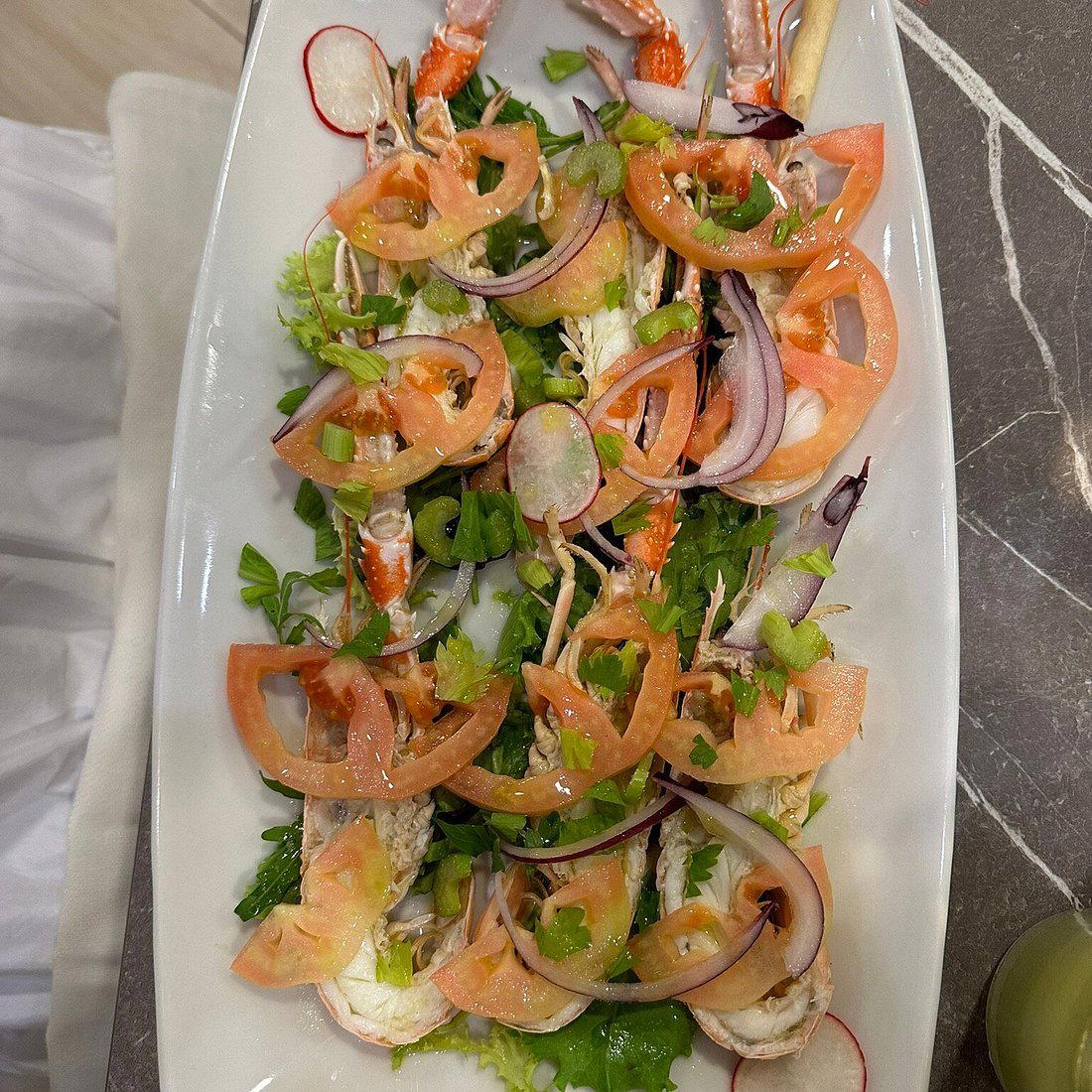
Lo Squalo has operated in Tortoreto for long enough to earn the kind of quiet authority that rarely announces itself. The kitchen runs an exclusively seafood menu, executed in a contemporary register with careful plating and handwritten menus that signal deliberate restraint over trend-chasing. For a coastal Abruzzo dining room that could easily coast on location, the wine pairings and vegetable work suggest a kitchen still paying attention.
 Discover on Pearl
Pearl is the En Primeur Club membership app — saves, bookings, and concierge access live there. Same editors, same standards.
Adriatic Seafood, Abruzzese Context
Along the Adriatic coast of Abruzzo, the relationship between the fishing harbour and the dining room has always been transactional in the most direct sense: what the boats bring in determines what the kitchen serves. This is not a romantic convention but a practical one, shaped by the region's distance from Italy's major urban restaurant markets and its proximity to some of the central Adriatic's most productive waters. Tortoreto sits in that coastal strip, a smaller comune between Pescara and San Benedetto del Tronto, where the dining scene rewards visitors who look past the beachfront trattorie and seek out kitchens operating with more considered intentions. Lo Squalo, on Via Giusti, belongs to the latter category. For the wider picture of where to eat and drink in the area, see our full Tortoreto restaurants guide.
What the Room Signals Before the Menu Arrives
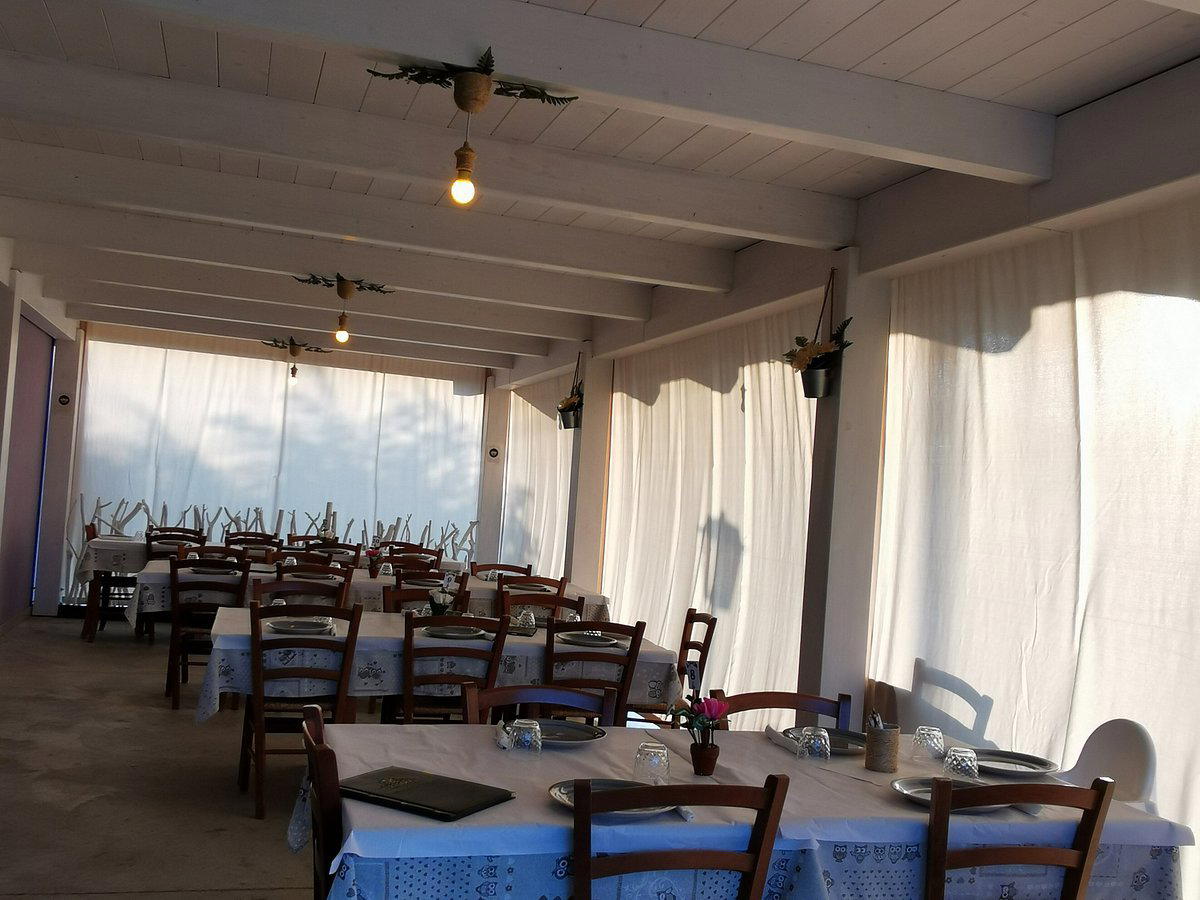
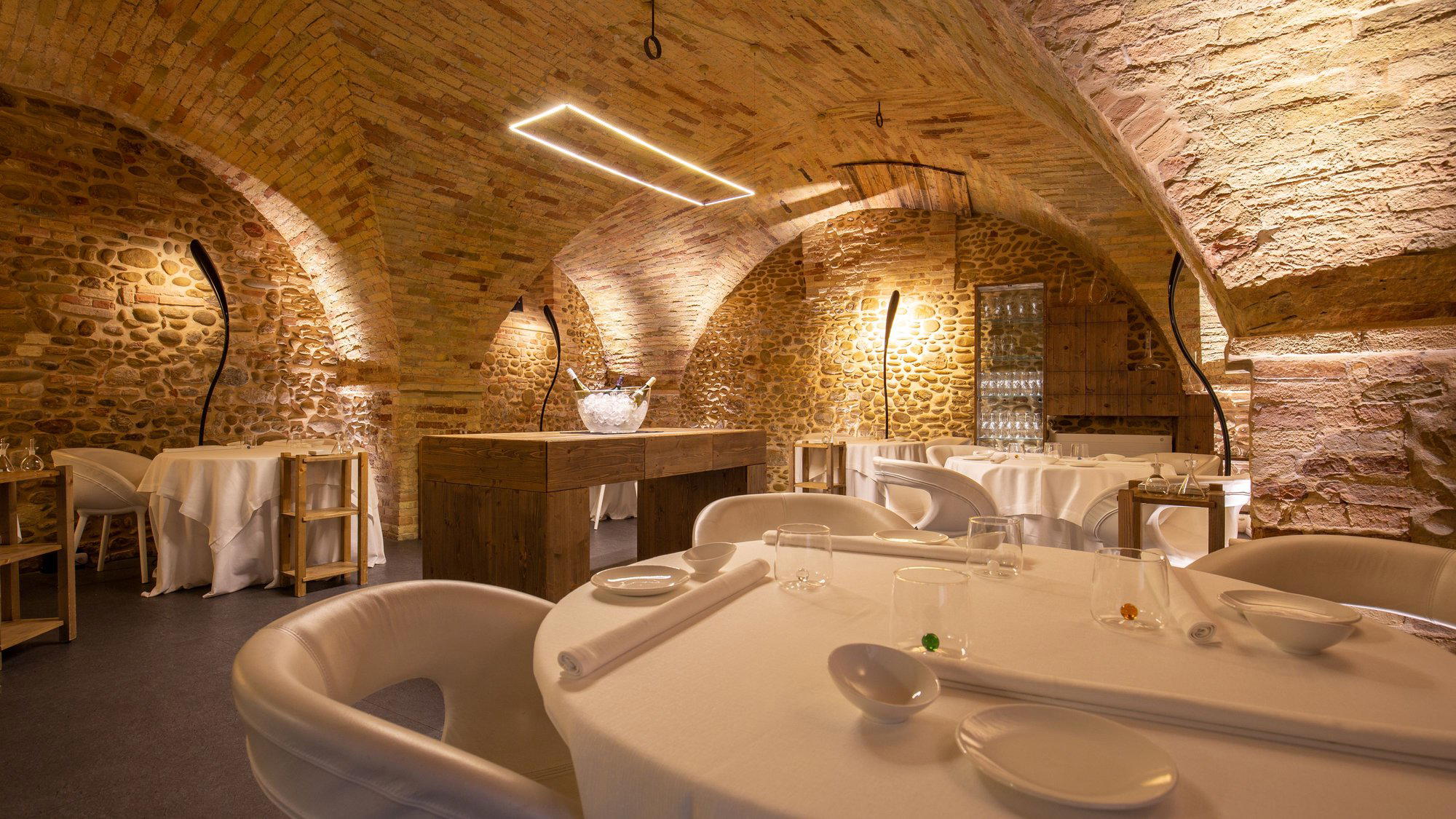
Contemporary in its current register but carrying the credibility of a long-established operation, Lo Squalo presents a dining room where the details tell you something before the food arrives. The menu and wine list are both handwritten, a choice that in most contexts would read as nostalgic affectation. Here it reads differently: as a signal that the offering changes with what is available, that the kitchen is not locked into a printed programme months in advance. That flexibility has practical implications for sourcing. A room operating on a seasonal, catch-dependent basis cannot standardise its menu the way a kitchen working from commodity suppliers can. The handwritten format is, in this reading, a sourcing commitment made visible.
Seafood as the Sole Discipline
The decision to run an exclusively seafood menu in a coastal Abruzzo town might seem obvious, but it carries real editorial weight. Many restaurants in comparable positions hedge, offering meat secondi as a fallback or maintaining a bifurcated menu to accommodate guests with no appetite for fish. Lo Squalo does not hedge. That exclusivity, sustained across what the venue's own description confirms as a long operating history, creates a kitchen identity built around depth in one category rather than breadth across several. The central Adriatic supplies a distinctive roster of species: cuttlefish, mantis shrimp, clams from the sandy-bottom beds, and various pelagic fish that move through the region seasonally. A kitchen focused exclusively on these materials develops a fluency with them that divided attention rarely achieves.
The preparations at Lo Squalo are described as classic in their foundations, executed with well-developed technique and presented with careful plating. The important qualifier here is that the contemporary register applies to execution and presentation rather than to concept. This is not a kitchen reaching for avant-garde provocation. The ambition is to do classical seafood preparations with sufficient precision that they read as current without abandoning the culinary logic that makes them cohere. That is a harder discipline than it sounds, and it places Lo Squalo in a different register from the modernist Italian restaurants operating at the highest price tier elsewhere in the country. For comparison, kitchens like Uliassi in Senigallia or Quattro Passi in Marina del Cantone represent the Adriatic and Campanian seafood traditions at their most decorated tier, with Michelin recognition and international profiles to match. Lo Squalo operates in a different price and visibility bracket, but within a comparable seafood-first discipline.
The Role of Vegetables in a Seafood-Led Kitchen
Sourcing angle sharpens when you consider the kitchen's noted use of fresh vegetables as regular accompaniments and pairings for the seafood menu. Abruzzo is not only a coastal region; the interior runs quickly into the Apennine foothills, and the agricultural output from that hinterland, including greens, pulses, and seasonal vegetables, has long been part of the regional pantry. A seafood kitchen that draws on local agricultural produce rather than treating garnish as an afterthought is making a sourcing decision with flavour and identity implications. The freshness emphasis in the venue's own description suggests an operation attentive to the dialogue between land and sea that defines the better end of Adriatic coastal cooking.
This approach connects Lo Squalo to a broader movement in Italian coastal dining, where the rigid separation between mare and terra is giving way to menus that treat both as part of a single regional larder. You see this at different scales across the peninsula, from the experimental registers of kitchens like Reale in Castel di Sangro, which draws on Abruzzo's interior in a radically different conceptual mode, to more direct coastal trattorie that have simply always cooked this way. Lo Squalo's position in that spectrum appears to be grounded and technically accomplished rather than conceptually driven.
Wine List as Evidence of Ambition
The wine pairings noted in Lo Squalo's record are described as lively, which in the context of a handwritten list at a seafood-only coastal restaurant suggests something beyond the reflexive local-white-with-fish approach. Abruzzo produces Trebbiano d'Abruzzo in styles ranging from the neutral and commodity-priced to genuinely structured, age-worthy whites from producers like Valentini, whose Trebbiano is one of the most consequential white wines made anywhere in Italy. Whether Lo Squalo's list reaches that tier is not confirmed by available data, but the emphasis on pairing quality at a restaurant with long-established credibility and contemporary execution implies a list assembled with genuine attention. For visitors interested in the broader wine context of the region, our full Tortoreto wineries guide covers local producers worth seeking out.
Where Lo Squalo Sits in the Italian Seafood Dining Picture
Italy's most decorated seafood restaurants tend to cluster in specific coastal zones and operate at price tiers well above the regional norm. The Adriatic side, from Romagna south through the Marche and into Abruzzo, has produced serious seafood kitchens that often remain below the international radar compared to their Sicilian or Ligurian counterparts. Uliassi is the exception that proves the rule, holding three Michelin stars while remaining rooted in Senigallia rather than migrating to a more visible city. Elsewhere along this coast, quality tends to be distributed among smaller, longer-established restaurants where the sourcing relationships and technical discipline accumulate over time rather than through media cycles. Lo Squalo's long operating history and the consistency implied by its contemporary reputation place it in that category of Adriatic coastal institutions that reward knowledge of the local scene over reliance on international guides.
For visitors building a full itinerary around the area, our full Tortoreto hotels guide, our full Tortoreto bars guide, and our full Tortoreto experiences guide cover the rest of the picture. Those with an interest in Italy's wider fine dining geography, from Osteria Francescana in Modena to Dal Pescatore in Runate, Enoteca Pinchiorri in Florence, Enrico Bartolini in Milan, Le Calandre in Rubano, Piazza Duomo in Alba, Casa Perbellini 12 Apostoli in Verona, and Atelier Moessmer Norbert Niederkofler in Brunico, will find Lo Squalo occupies a different register from those multi-starred destinations, but with a clarity of focus that the more generalist competition in coastal Abruzzo rarely matches. For seafood-first dining at an international reference point, Le Bernardin in New York City and Atomix illustrate the upper end of the spectrum.
Planning Your Visit
Lo Squalo is located at Via Giusti, 25, in Tortoreto, in the Teramo province of Abruzzo. Specific hours, pricing, and booking details are not confirmed in available records, so contacting the restaurant directly before visiting is advisable, particularly outside the peak summer coastal season when opening patterns along this stretch of the Adriatic can vary. Given the handwritten menu format and the sourcing model implied by it, visiting with flexibility about what you will eat is part of the proposition.
Comparable Spots, Quickly
These are the closest comparables we have in our database for quick context.
| Venue | Cuisine | Price | Awards | Notes |
|---|---|---|---|---|
| Lo Squalo | With a long history, this restaurant has a contemporary vibe, where expert manag… | This venue | ||
| Atelier Moessmer Norbert Niederkofler | Italian, Creative | €€€€ | Michelin 3 Star | Italian, Creative, €€€€ |
| Dal Pescatore | Italian, Italian Contemporary | €€€€ | Michelin 3 Star | Italian, Italian Contemporary, €€€€ |
| Enoteca Pinchiorri | Italian - French, Italian Contemporary | €€€€ | Michelin 3 Star | Italian - French, Italian Contemporary, €€€€ |
| Enrico Bartolini | Creative | €€€€ | Michelin 3 Star | Creative, €€€€ |
| Osteria Francescana | Progressive Italian, Creative | €€€€ | Michelin 3 Star | Progressive Italian, Creative, €€€€ |
Continue exploring
More in Tortoreto
Restaurants in Tortoreto
Browse all →
Hotels in Tortoreto
Browse all →
Wineries in Tortoreto
Browse all →
At a Glance
- Classic
- Elegant
- Date Night
- Standalone
- Local Sourcing
Contemporary vibe with modern quality in a space with long history.