Villa Corallo

1 Michelin Key
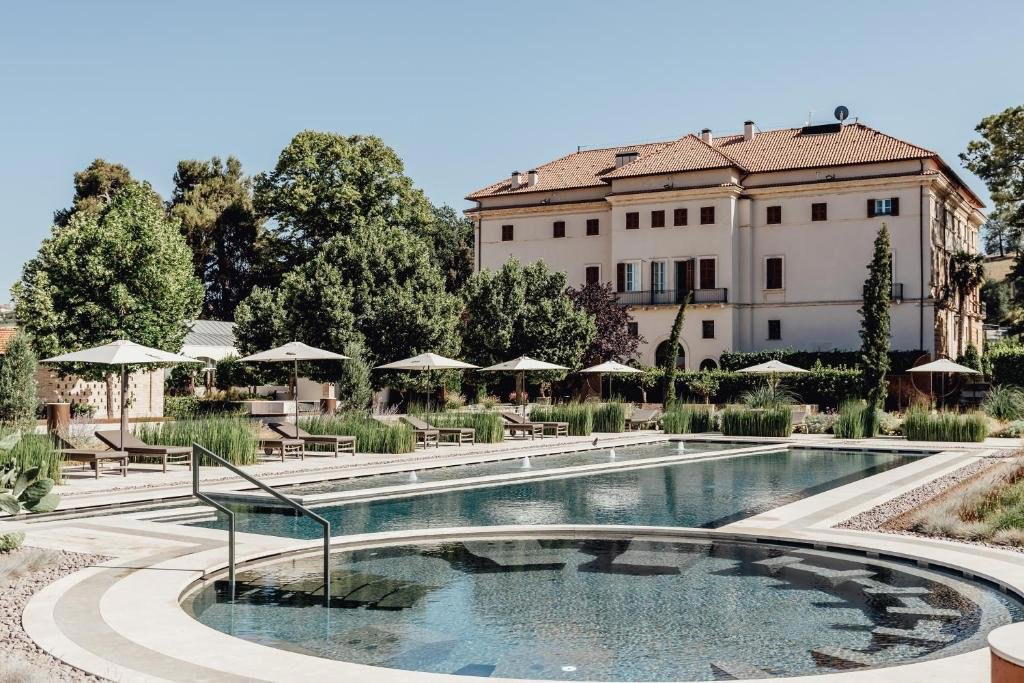
A mid-19th-century stone mansion converted into an eight-suite relais near the Abruzzo-Marche border, Villa Corallo holds its original parquet floors, ornate fireplaces, and chandelier-lit staircases largely intact. The estate's organic farm supplies the on-site Retrovilla Bistrot, pressing its own olive oil from trees beside the pool. For travellers who find Tuscany's circuit overcrowded, this stretch of central Italy offers a quieter alternative with comparable architectural weight.

Pearl is the En Primeur Club membership app — saves, bookings, and concierge access live there. Same editors, same standards.
- Address
- Via Metella Nuova, 37, 64027 Sant'Omero TE
- Phone
- +39 0861 887002
- Website
- villacorallo.it
- Directions
- Get directions
Central Italy's Quieter Corridor
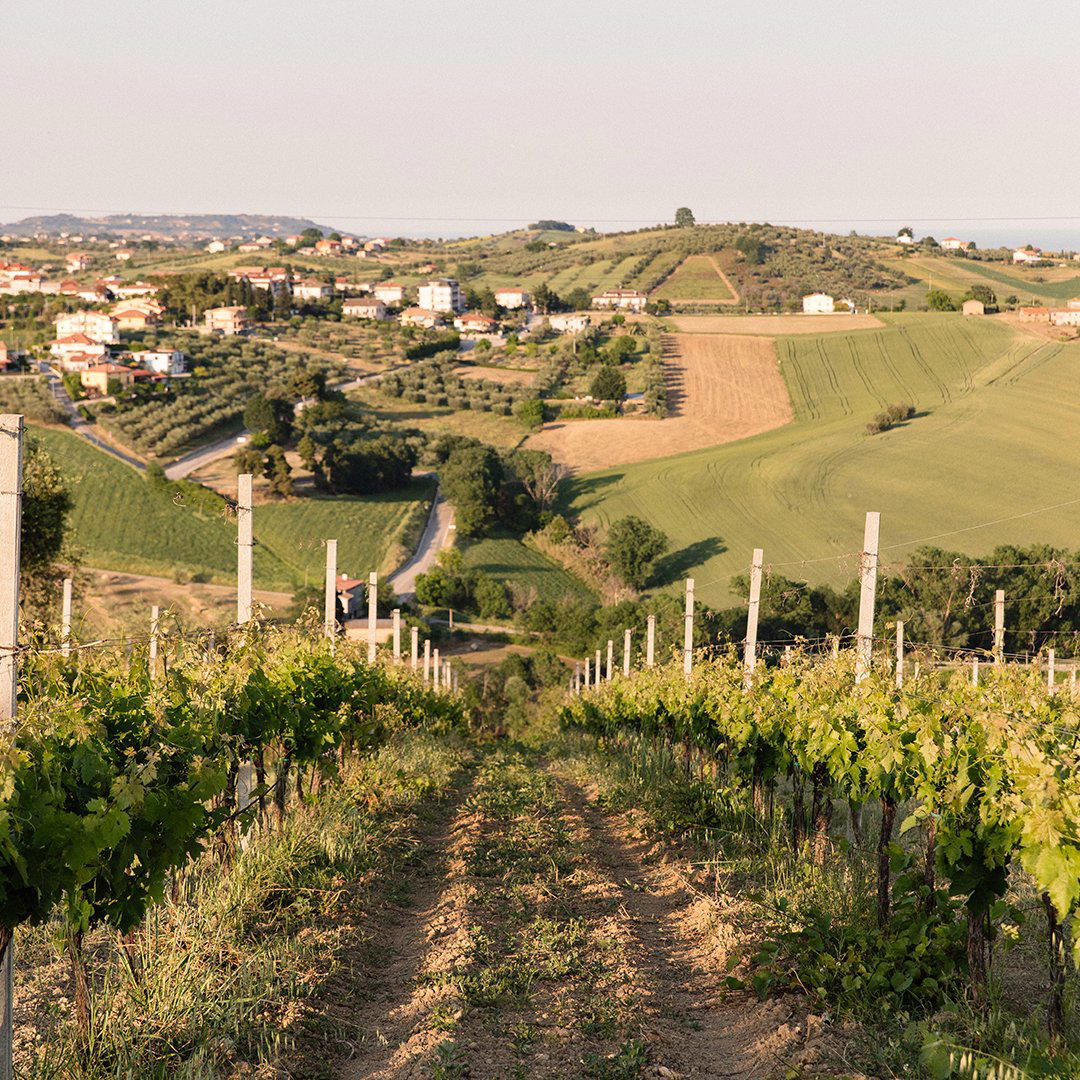
The border zone between Abruzzo and Marche has resisted the heritage-tourism machinery that long ago transformed Tuscany and Umbria into household names. Towns along this stretch of the Adriatic hinterland remain known primarily to Italians, and the accommodation stock reflects that: agriturismos, small family hotels, and a handful of converted estates that have never needed to market themselves beyond the region. Villa Corallo, positioned near Sant'Omero and not far from the Adriatic coast, belongs to the last category. Its eight suites occupy a stately stone mansion constructed as a private residence in the mid-19th century, and the property has retained enough of its original fabric to function as a serious argument for this corridor as an alternative to the better-mapped stretches of central Italy.
The comparison to Tuscany's estate circuit is worth making directly. Properties like Rosewood Castiglion Del Bosco in Montalcino or Borgo San Felice Resort in Castelnuovo Berardenga operate within a dense competitive set, where price, brand affiliation, and Michelin-adjacent dining programmes define positioning. Villa Corallo competes on different terms: a lower-volume format of eight rooms, architectural authenticity that predates any recent renovation cycle, and a farm-to-table programme rooted in the estate's own land rather than imported as a marketing concept.
The Architecture of Continuity
Mid-19th-century stone construction in central Italy followed conventions that were already centuries old: thick external walls designed to retain cool air in summer, interior spaces arranged around grand staircases built to impress visitors before they reached the reception rooms. Villa Corallo's physical form is consistent with that tradition. The original parquet flooring survives through the principal rooms, and the ornate fireplaces remain structurally present rather than sealed behind plaster. Grand staircases connect the floors in the expected sequence, and chandeliers maintain the scale relationship between ceiling height and light source that the original builders intended.
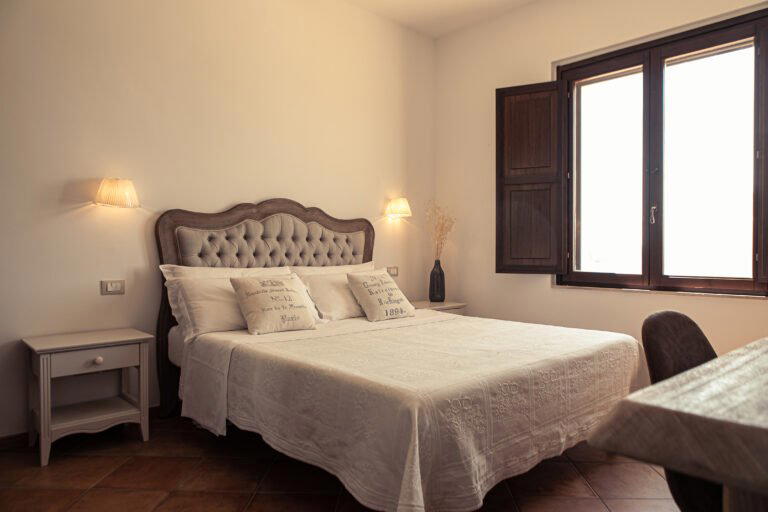
This kind of continuity is harder to achieve than it appears. Many Italian estate conversions strip the original interiors to install climate control and contemporary amenity packages, producing rooms that read as modern hotels inside historic shells. The approach at Villa Corallo runs in a different direction. The eight suites preserve period details — four-poster beds, designer wallpaper chosen to complement rather than override the existing character, marble bathrooms with freestanding tubs — within a framework that acknowledges the building's original function as a private residence. The effect is closer to staying in a well-maintained family house than to occupying a designed hotel room, which is either a selling point or a caution depending on what you are looking for.
For a comparable sensibility applied to a different region and scale, Corte della Maestà in Civita di Bagnoregio and Castelfalfi in Montaione operate within the same design philosophy of period preservation over renovation. Among properties with a larger international footprint, Four Seasons Hotel Firenze in Florence and Aman Venice in Venice demonstrate what happens when institutional capital and extensive restoration programmes are applied to comparable historic fabric, higher consistency of delivery, but a different relationship to the original building.
Grounds, Farm, and the Logic of the Estate
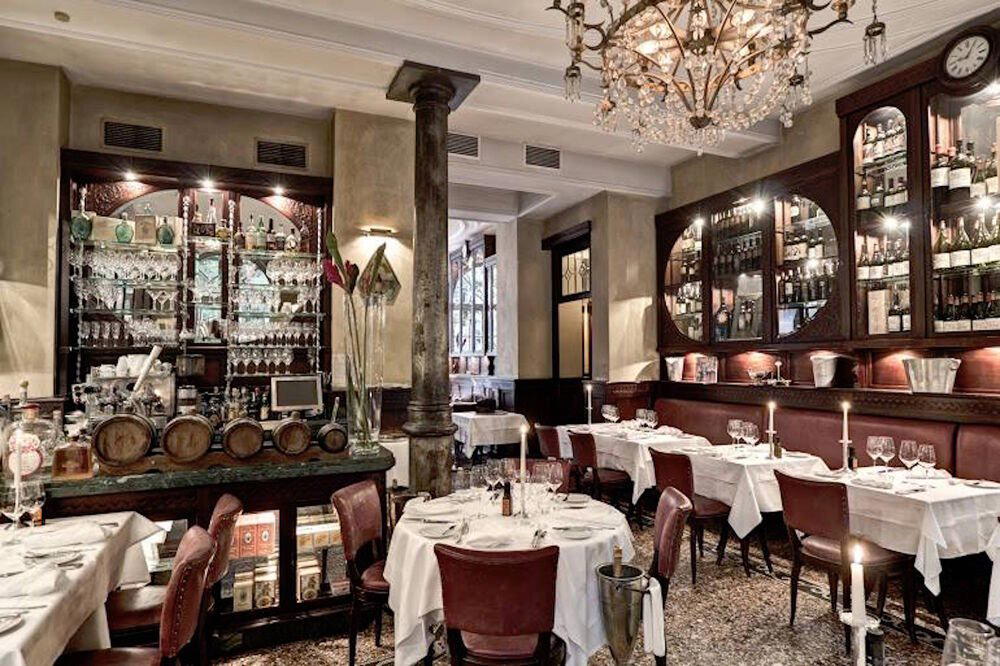
The surrounding park is planted with oak and cypress, the combination that has defined central Italian estate grounds for centuries. Paths through the park are navigable on foot or by bicycle, which keeps the property self-contained for guests who prefer not to drive between activities. The agricultural component is more substantive than decorative: the estate runs an organic farm that supplies the majority of ingredients for the Retrovilla Bistrot, including olive oil pressed on site from trees beside the pool.
Farm-to-table has become a standard claim across Italian agriturismo and relais properties, but the on-site olive pressing detail is specific. Producing estate oil requires sustained agricultural management, the trees, the harvest timing, the pressing equipment, not a simple supply agreement with a local producer. That specificity suggests the farm operation is genuinely integrated into the estate rather than retrofitted for marketing purposes. Whether the bistrot's cooking rises to the level of the ingredient programme is a question the menu would need to answer, but the structural conditions are in place.
Italy's most celebrated estate dining programmes, at properties like Casa Maria Luigia in Modena, tend to anchor around a named chef with a documented culinary position. The Retrovilla Bistrot does not operate at that scale or with that level of institutional recognition, which is appropriate for a property of eight suites in a relatively undiscovered area. The proposition is ingredient quality and estate authenticity, not destination dining.
Positioning Within the Italian Relais Tier
Italy's smaller relais properties occupy a distinct tier below the flagship international luxury brands. They are generally characterised by limited room counts, family or private ownership, and a relationship to their immediate geography, agricultural, architectural, or both, that larger branded properties cannot replicate at scale. Villa Corallo, with eight suites in a building that has functioned continuously since the mid-19th century, fits that category precisely.
Within Italy's broader estate hotel market, properties in this tier include Castello di Reschio in Lisciano Niccone, which operates at a higher price point with a more developed design programme, and Castel Fragsburg in Merano, which combines historic architecture with a more codified luxury offering. Villa Corallo's differentiating factor is geography: the Abruzzo-Marche border zone remains outside the primary Italian travel circuit, which keeps the property's profile lower and the surrounding area less subject to the seasonal pressures that affect more prominent regions. For travellers who have covered Tuscany, Umbria, the Amalfi Coast, properties like Borgo Santandrea or Il San Pietro di Positano, and are looking for comparable architectural quality in a quieter context, this corridor is worth the consideration.
Planning a Stay
Villa Corallo holds eight suites across the original mansion, which means availability can tighten during the summer months when the Adriatic coast attracts regional visitors. The property sits near Sant'Omero in the Teramo province of Abruzzo, roughly an hour's drive from Pescara, which has regular connections to several Italian and European airports. The surrounding area rewards slow travel: the Gran Sasso massif lies to the south and west, the coast is accessible to the east, and the hill towns of southern Marche are within day-trip range. Check availability and booking conditions directly, as the property's contact details are managed through the estate rather than a central reservations platform. For a broader picture of what the area offers, see our full Sant'Omero guide.
Quick Comparison
Comparable venues nearby, for context on price, style, and recognition.
| Venue | Cuisine | Price | Awards | Notes |
|---|---|---|---|---|
| Villa CoralloThis venue — the venue you are viewing | Restored 19th-century villa | Not listed | 1 Michelin Key | Not listed |
| Schwarzer Adler | Concept Living | Concept living apartment hotel fusing historic roots with modern luxury. | Not listed | Michelin Selected | Vipiteno main square |
| Nhow Milan | Fashion & Design hotel in a repurposed industrial building | Not listed | Michelin Selected | Tortona |
| Palazzo Seneca | Historic 16th-century palazzo restored with fusion of design and tradition | $100–200 | Michelin Selected · Relais Chateaux Award | centro storico |
| Villa Monty Banks | Restored 1939 historical villa with British Liberty and Art Deco influences. | $100–200 | Michelin Selected | hills of Cesena |
| Locanda Fontelupa | Rustic agriturismo with bohemian interiors featuring Anatolian kilims, Berber fabrics, and Suzani tapestries in an ancient hillside farmhouse. | $100–200 | Michelin Guide New Hotels New Hotel · Michelin Selected | Maremma |
Recognition history
Dated appearances from independent guides and award organizations, with the underlying list record or original source where available.
Michelin 1 Key
Michelin
Full recognition history (2 entries)
Michelin 1 Key
Michelin
Continue exploring
More in Sant'Omero
Hotels in Sant'Omero
Browse all →
Restaurants in Sant'Omero
Browse all →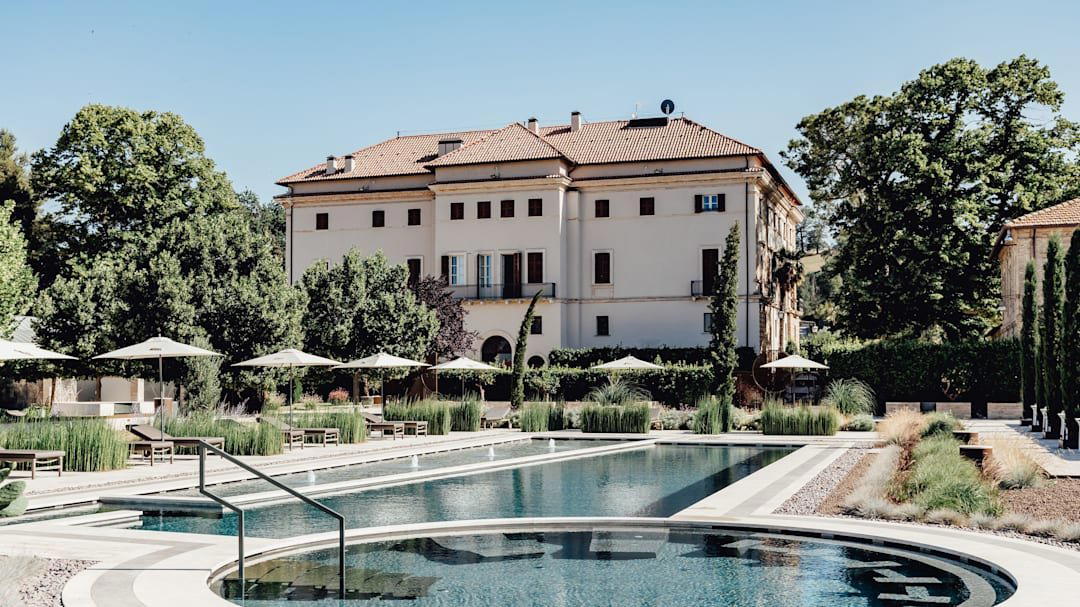

Details
- Romantic
- Elegant
- Scenic
- Cozy
- Rustic
- Romantic Getaway
- Honeymoon
- Anniversary
- Historic Building
- Garden
- Pool
- Spa
- Sauna
- Fitness Center
- Massage
- Restaurant
- Wi Fi
- Concierge
- Garden
- Wheelchair Accessible
- Elevator
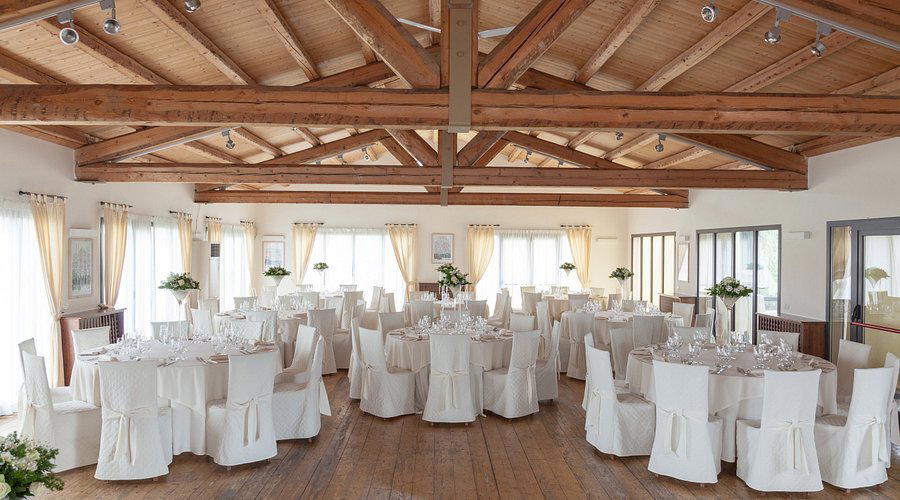
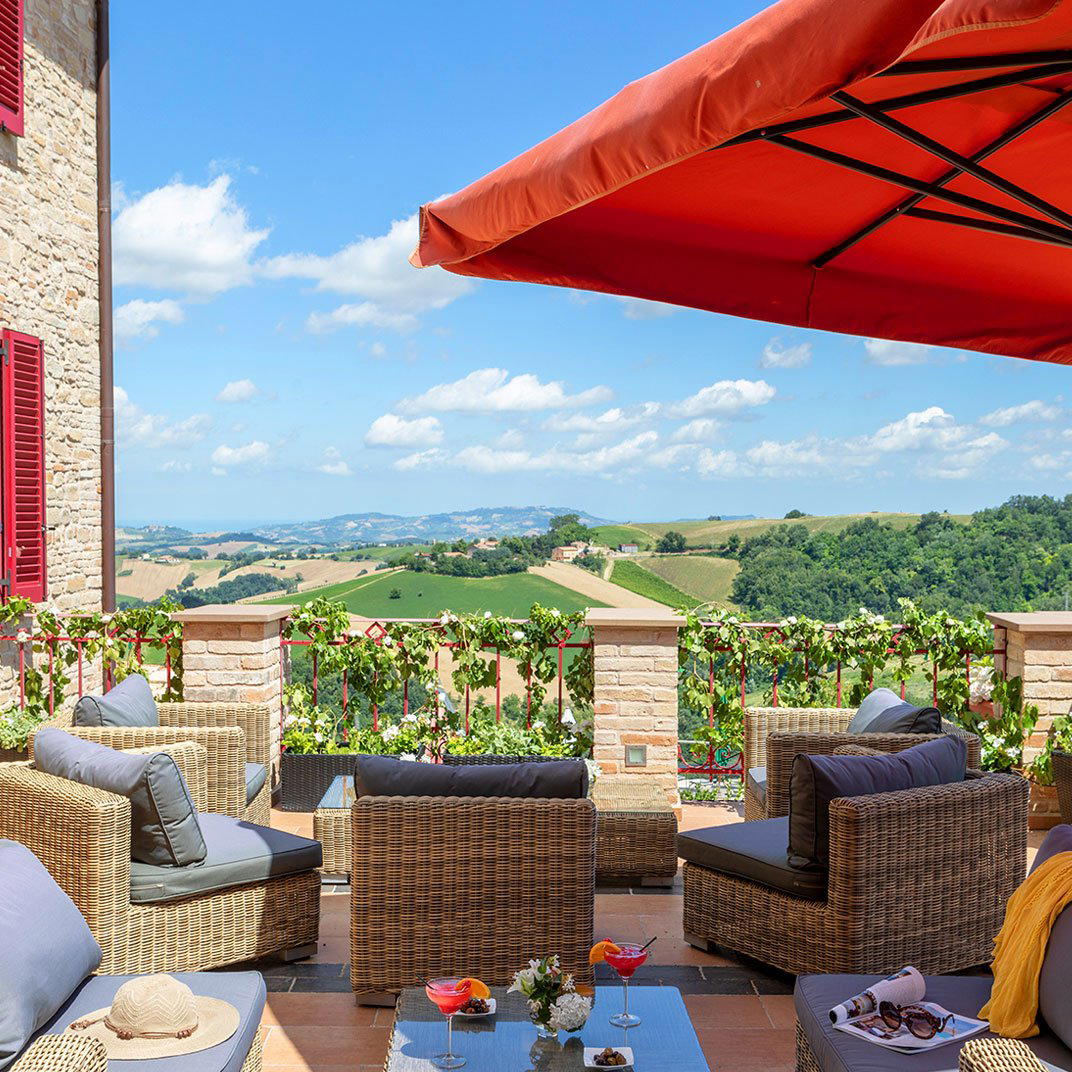
Relaxing atmosphere around the beautiful grounds and swimming pool area with elegant, light-filled interiors.