Livingston belongs to Marseille’s small-plate, produce-led dining current rather than the city’s formal dining lane. The useful way to read it is through sourcing and tempo: a dinner-only address where the meal is likely to make more sense beside Marseille’s market culture than against tasting-menu ceremony.
Pearl is the En Primeur Club membership app — saves, bookings, and concierge access live there. Same editors, same standards.
- Address
- 5 Rue Crudère, 13006 Marseille, France
- Phone
- +33496100000
- Website
- livingstonmarseille.com
- Directions
- Get directions
 Saves & bookings on Pearl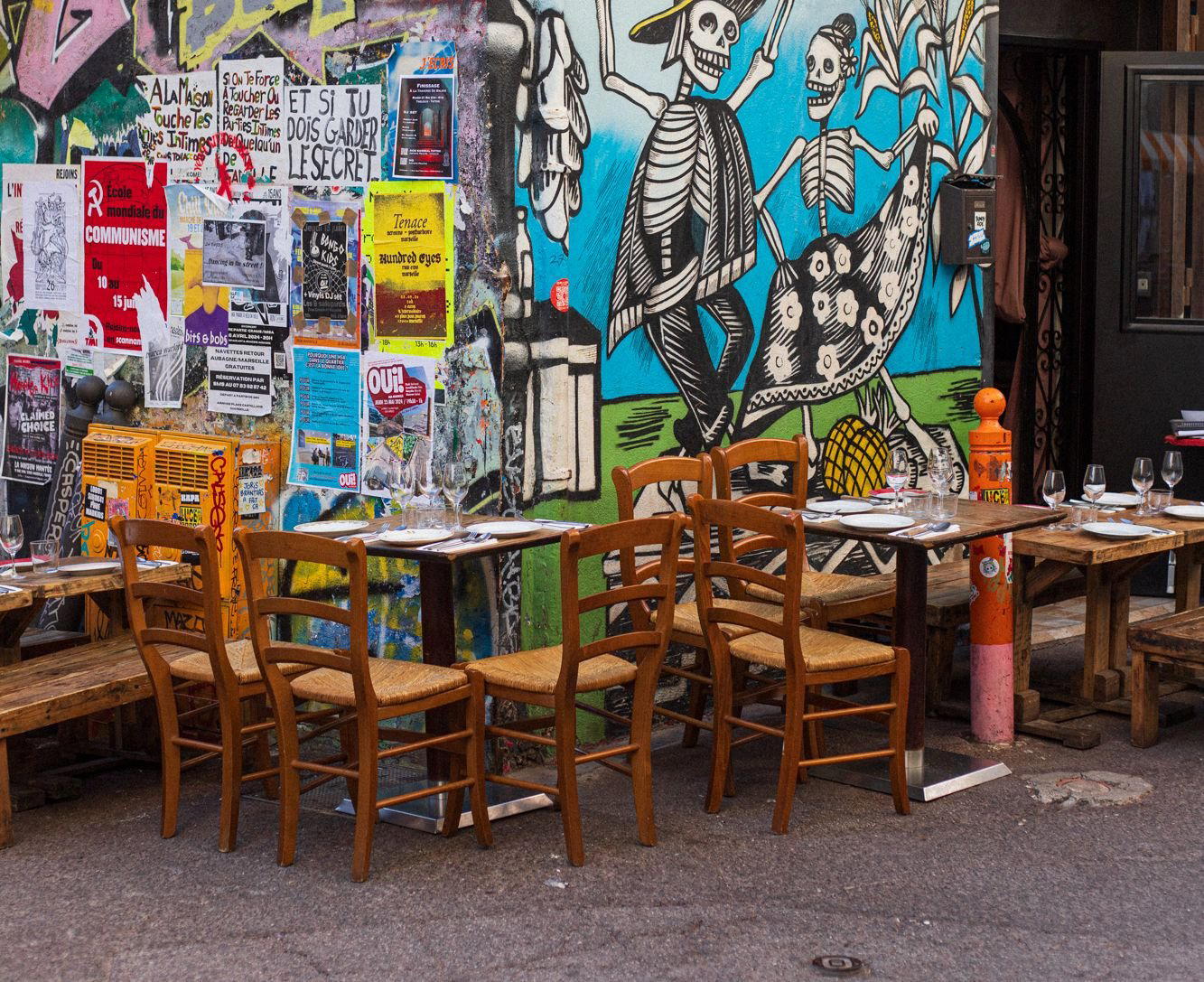
Marseille changes register quickly after dark: shutters drop, service doors open, and the city’s appetite moves from daytime shopping into compact dining rooms built around immediacy. Livingston fits that evening rhythm. The more interesting story is not a chef biography or a trophy cabinet, but a strand of Marseille dining that treats supply as the starting point: what is good that day, what is in season, and menus that read less like fixed doctrine than a response to what can be bought well.
That matters in Marseille because the city’s restaurant culture has never been only about polish. It is a port city with layered habits colliding at street level, from longstanding local routines to contemporary French dining. At one end of the spectrum sit higher-ceremony destination rooms, where creative cooking is framed with more formality. At another are smaller addresses that trade on proximity, season, and a shorter distance between supplier and plate. Livingston belongs closer to that second camp.
Marseille cooking is increasingly about supply, not spectacle
The city’s serious casual restaurants have grown more confident about leaving luxury codes aside. A good Marseille table does not need to mimic Paris, and the stronger contemporary rooms tend to understand that. The city gives restaurants a vivid grammar: brightness, freshness, market buying, and a tolerance for bolder seasoning than classic northern French dining usually allows. The risk is cliché; the reward is food that feels anchored to place without staging nostalgia.
Livingston is better understood through that lens than through a cuisine label, since no narrow category is attached to it. That absence is useful. Marseille’s current middle tier often resists neat filing: not quite bistro, not quite wine bar, not quite tasting-menu restaurant. The format lets sourcing carry the identity. A plate can feel local in spirit, contemporary in handling, and informal in delivery without needing a manifesto.
Among Marseille peers, that puts the address in conversation with places such as Café Vian, La Baleine, Prosper, and Tumulte: restaurants where the value is less about grand-room formality than how well the kitchen reads the city around it. For a broader sweep of the category, our full Marseille restaurants guide maps the city’s range from creative dining rooms to looser formats. Nearby comparisons also help clarify the choice: other Marseille dining rooms may point more directly toward a fixed cuisine label, while still more addresses sit elsewhere in the city’s dining spread.
The room makes sense for diners who care how a menu is built
The strongest case for Livingston is editorial rather than decorative: it suits diners who want Marseille’s ingredient logic without committing to the city’s higher-ceremony end. In practical terms, that means reading the meal as a sequence shaped by season and sourcing, not as a parade of signatures. No defining dish is provided here, and that is not a weakness for this kind of address. Restaurants in this lane are often judged by the buying: how ingredients are treated, whether the cooking feels appropriate to the place, how balance is used, and whether the kitchen lets Marseille do some of the work.
That sourcing-first approach has become a sharper dividing line in French cities. Formal restaurants can impress through technique, tableware, and pacing; smaller contemporary rooms have to win on judgment. The question is not whether a plate looks expensive, but whether it tastes as if the kitchen made a clear decision that morning. Marseille rewards that kind of cooking because the surrounding food culture is already public and practical. Markets, bakeries, counters, and daily shopping set a high baseline for ingredient literacy.
For travelers building a Marseille itinerary, Livingston should be slotted as a dinner address rather than a monument meal. It pairs well with a day spent seeing the city at street level, then choosing a restaurant that keeps the same scale. Those using Marseille as a base may also want to separate dining from lodging and drinking research: our full Marseille hotels guide, our full Marseille bars guide, our full Marseille wineries guide, and our full Marseille experiences guide cover the wider trip planning frame.
How to place Livingston against a wider French dining circuit
Marseille is not operating in isolation. Across France, the interesting middle ground is full of restaurants that reject both old bistro heaviness and full tasting-menu choreography. In larger cities, some rooms represent a more established luxury-hotel lane; in other regions, restaurants belong to different local conversations or more pastoral settings. Livingston reads smaller and more urban than those references, which is exactly the point.
The comparison becomes clearer when looking beyond Marseille. Restaurants in coastal towns, mountain resorts, and regional capitals all sit in different local economies, with different expectations around occasion, season, and spend. Marseille’s advantage is its directness. A restaurant here can feel serious without adopting resort or capital-city manners.
International comparisons underline the same point. Dining rooms in other global cities may operate in completely different food cultures, yet they share a useful lesson for travelers: tightly focused formats often reveal more about a city than overbuilt dining rooms. Livingston’s appeal lies in that economy of scale. It is a Marseille dinner address for readers who want the city’s produce and port-city looseness to remain visible, not polished out of the experience.
Snapshot
Comparable venues by cuisine and price in the same metro.
| Venue | Cuisine | Price | Notes |
|---|---|---|---|
| LivingstonThis venue — the venue you are viewing | Modern Fusion Small Plates | $$ | Not listed |
| Lima Lemon | Peruvian Cevicheria | $$ | Castellane |
| Coquille | Provençal Seafood Bistro | $$ | Opera |
| Emile 1933 | Classic French Brasserie | $$ | Le Rouet |
| La Piscine | Modern French Mediterranean Bistro | $$ | Hotel De Ville |
| La Baleine | Mediterranean Bistronomie | $$ | Notre Dame Du Mont |
Continue exploring
More in Marseille
Restaurants in Marseille
Browse all →
Bars in Marseille
Browse all →
Hotels in Marseille
Browse all →
At a Glance
- Trendy
- Lively
- Modern
- Energetic
- Date Night
- Casual Hangout
- Group Dining
- Open Kitchen
- Natural Wine
- Extensive Wine List
- Organic
- Local Sourcing
Current opening hours
- Monday
- Closed
- Tuesday
- 7–9:30 PM
- Wednesday
- 7–9:30 PM
- Thursday
- 7–9:30 PM
- Friday
- 7–9:30 PM
- Saturday
- 7–9:30 PM
- Sunday
- Closed
Hours can change for holidays and private events. Last verified .
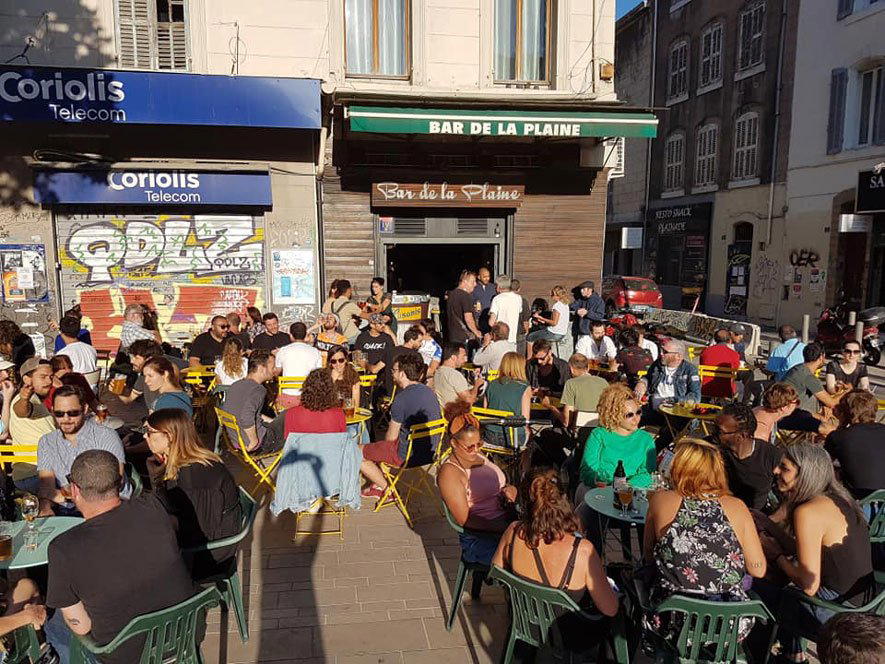
Graffiti-covered facade with neon signage, bistro tables, Baumann chairs, film posters, and an open, energetic atmosphere with loud music.