Little Whale
Little Whale occupies a Newbury Street address that places it squarely within Boston's most traversed dining corridor, where the competition for attention runs from casual to formally ambitious. The venue's name signals an orientation toward the sea, fitting for a city whose culinary identity has long been shaped by the Atlantic. What distinguishes it within that context is worth understanding before you arrive.
Pearl is the En Primeur Club membership app — saves, bookings, and concierge access live there. Same editors, same standards.
- Address
- 314 Newbury St, Boston, MA 02115
- Phone
- +18572770800
- Website
- littlewhaleboston.com
- Directions
- Get directions
 Saves & bookings on Pearl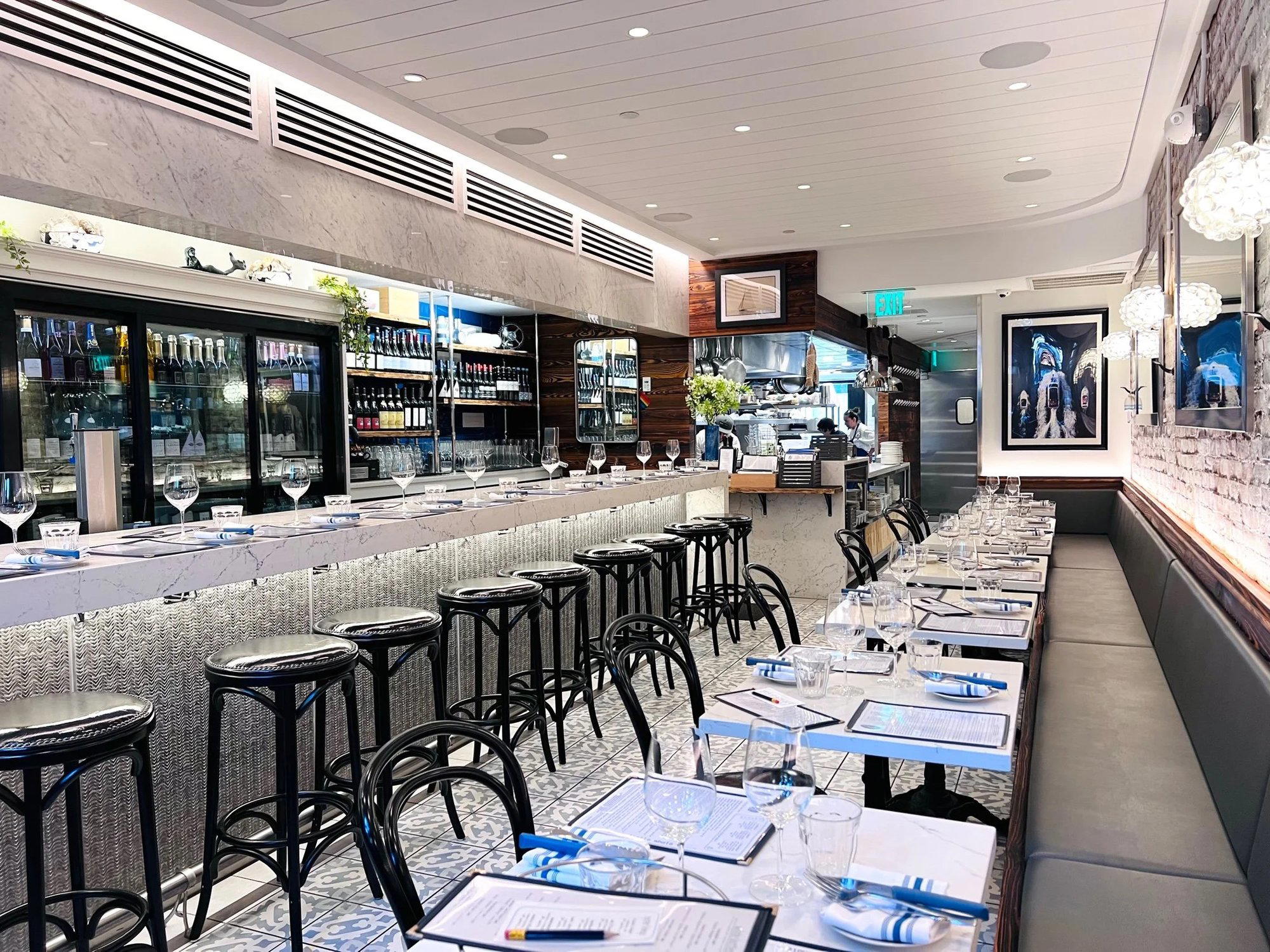
Newbury Street and the Ritual of the Boston Seafood Table
Newbury Street has always operated as Boston's most legible dining signal. Walk its eight blocks and you pass through nearly every register of the city's appetite, from patio brunch crowds to quietly serious dinner rooms where the pacing slows and the glassware improves. At 314 Newbury St, Little Whale is a Boston restaurant in Back Bay, with a casual price tier and a walk-in-friendly approach. That positioning matters. It sets a particular kind of dining contract with the guest before they've read a menu.
The name itself anchors the room in a tradition. Boston's relationship with the sea is not decorative. The city's fish trade predates the republic, and its raw bar culture, built around oysters sourced from the cold Atlantic waters of Massachusetts and Rhode Island, remains a defining part of the local dining scene. When a venue chooses a marine reference in this city, it is either leaning into that weight or trading on sentiment. The address on Newbury suggests the former.
How the Meal Tends to Move in Rooms Like This
Boston's mid-to-upper dining tier has developed a recognizable rhythm over the past decade. The city's leading seafood-leaning rooms share a common structure: the meal opens cold and restrained, moving through raw preparations before the kitchen applies heat. This sequencing mirrors the logic of the New England tasting tradition, where the quality of the ingredient is meant to speak first, and technique arrives as clarification rather than transformation.
Compare this to the approach at a place like 1928 Rowes Wharf, where the waterfront setting and hotel context shape a more formal, occasion-driven tempo, or the counter-forward precision of 311 Omakase, where the chef's pace governs the room entirely. Little Whale's Newbury Street position suggests a different kind of ritual: one that accommodates drop-ins alongside deliberate reservations, where the bar functions as an entry point rather than an afterthought.
The raw bar, where it exists in the Boston model, is never incidental. Neptune Oyster on Salem Street has spent years demonstrating that a focused shellfish program can anchor an entire reputation. Ostra, operating at the summit of the seafood grill category in the city, has shown what happens when that shellfish commitment gets paired with more structured kitchen ambition. Little Whale operates in the space between these two reference points, on a street that has historically rewarded venues that read their room correctly.
The Newbury Street comparable set
Within the Back Bay specifically, the dining comparable set is defined less by cuisine type than by register and intent. Abe and Louie's anchors the steakhouse tier with decades of Back Bay presence. Agosto, with its Portuguese-inspired tasting menu format at a chef's counter, represents the more formally ambitious end of the street's current offering. The restaurant reads, by name and position, as something that fits between these poles: more focused than a broad brasserie, less ceremonial than a chef's counter experience.
For guests familiar with Boston's waterfront options, the contrast with 75 on Liberty Wharf is instructive. That venue operates at scale, with a view-driven appeal and a menu designed to serve large covers efficiently. The restaurant's Newbury address implies smaller capacity and a different kind of attention, though
Boston Seafood in the American Context
Placing Boston's seafood tradition within the broader American dining map requires some precision. The city is not operating in the same register as Le Bernardin in New York City, where French technique and three Michelin stars define the ceiling of seafood ambition on the East Coast. Nor does it share the farm-to-table philosophy framework of Blue Hill at Stone Barns, where the sourcing narrative is the organizing principle of the meal.
Boston's seafood identity is more vernacular than either of those reference points, rooted in the actual geography of its fishing industry rather than in culinary philosophy borrowed from elsewhere. That vernacular quality is Boston's competitive strength. The oysters arriving from Duxbury Bay or Wellfleet carry a provenance that needs no elaboration for anyone who has eaten them. The leading rooms in this city understand that and resist overworking their sourcing story into the service script.
For context on how this compares to seafood-forward fine dining at the serious end of the American spectrum, the programs at Providence in Los Angeles and Addison in San Diego show how California has developed a parallel set of coastal dining conventions, where the Pacific's ingredient profile drives a different temperature and texture vocabulary. The Atlantic rooms of Boston operate with a colder, tighter sensibility. That difference is not a limitation; it is the source of their character.
Equally, venues like Lazy Bear in San Francisco, Alinea in Chicago, and The French Laundry in Napa define what is possible high on American fine dining, while Boston's most ambitious rooms, including Atomix in New York City for comparison, chart a path toward that tier from different regional starting points. Single Thread Farm in Healdsburg and The Inn at Little Washington represent the country-house formality end of that American spectrum. Boston sits apart from all of these, in a tradition that prizes directness over ceremony. Emeril's in New Orleans and 8½ Otto e Mezzo Bombana in Hong Kong each anchor the fine dining identity of their respective cities in ways that Boston's leading venues aspire to, and the city's seafood rooms are particularly credible candidates for that kind of defining role.
Standing Among Peers
Comparable venues nearby, for context on price, style, and recognition.
| Venue | Cuisine | Price | Notes |
|---|---|---|---|
| Little WhaleThis venue — the venue you are viewing | Classic New England Seafood Raw Bar | $$$ | Not listed |
| Union Oyster House | Classic New England Seafood | $$$ | Downtown |
| Row 34 - Kenmore Square | New England Seafood & Raw Bar | $$$ | Kenmore |
| Rowes Wharf Sea Grille | Seafood Grill | $$$ | Waterfront |
| Row 34 | New England Seafood Raw Bar | $$$ | Fort Point |
| Battery Wharf Grille | Modern New England Seafood | $$$ | North End |
Continue exploring
More in Boston
Restaurants in Boston
Browse all →
Bars in Boston
Browse all →
Hotels in Boston
Browse all →

Wineries in Boston
Browse all →
At a Glance
- Classic
- Cozy
- Date Night
- Casual Hangout
- Group Dining
- Open Kitchen
- Craft Cocktails
Current opening hours
- Monday
- 11:30 AM–9:30 PM
- Tuesday
- 11:30 AM–9:30 PM
- Wednesday
- 11:30 AM–9:30 PM
- Thursday
- 11:30 AM–9:30 PM
- Friday
- 11:30 AM–10:30 PM
- Saturday
- 11:30 AM–10:30 PM
- Sunday
- 11:30 AM–9:30 PM
Hours can change for holidays and private events. Last verified .
Airy and bright with a breezy nautical feel across two floors in a charming brownstone.