Row 34
Our verdict
The format tilts toward the working waterfront heritage of New England shellfish culture, with a menu built around raw bar programs and regional catches. It sits in a tier of Boston seafood restaurants that treat provenance as the primary editorial statement.

Pearl is the En Primeur Club membership app, where members save venues, book tables and use the concierge.

Fort Point and the New England Oyster Bar Tradition
Boston's Fort Point district has spent the better part of a decade converting industrial warehouse space into a dining corridor with genuine conviction. The neighbourhood's shift from printing houses and wool warehouses to restaurants and breweries follows a familiar urban pattern, but the seafood contingent that has taken root here connects to something older and more specifically local: the New England shellfish economy that built this waterfront long before anyone called it a destination.
The oyster bar format that Row 34 represents is not a recent invention. Along the Atlantic seaboard, from the Chesapeake north through Wellfleet and on to Prince Edward Island, raw bar culture has functioned as both commerce and ritual for over two centuries. What changed in the last decade is the critical framing around it. Restaurants that once needed to position themselves as casual adjuncts to fine dining now occupy a credible upper tier of their own, where the sourcing story, the turnover rate of shellfish, and the knowledge of the person shucking behind the counter carry the same weight that a tasting menu might in a different register. Boston has been particularly receptive to this repositioning, partly because of its proximity to the primary growing regions and partly because the city's dining culture has historically valued directness over theatrics.
Where Row 34 Sits in the Boston Seafood Tier
Boston's seafood dining scene has fragmented into distinct approaches. Neptune Oyster in the North End represents the compact, high-turnover raw bar model, where queues form early and the space operates at maximum density. Ostra moves further toward the seafood-as-fine-dining register, with a grill-focused format and a pricing structure that signals formal occasion dining. Row 34 occupies different territory: a brewpub-influenced, volume-capable operation that nonetheless maintains sourcing discipline at the center of its identity. The combination of an in-house beer program alongside a serious raw bar is not a contradiction in this context. It reflects an honest reading of how New England's working waterfront actually drinks.
The comparison set nationally helps locate Row 34 more precisely. The kind of seafood-forward, provenance-led restaurant that has become a serious dining category in American cities appears in different configurations depending on the market. Providence in Los Angeles operates at the formal fine-dining end of that spectrum, with a tasting menu architecture and a wine program calibrated to match. Le Bernardin in New York City defines the haute seafood register at its furthest point. Row 34 is neither of those things, and the distinction is deliberate. It functions closer to the democratic end of serious seafood dining, where the quality floor is high but the format encourages the kind of repeat, habitual visits that define a neighbourhood institution rather than a special-occasion destination.
Within Boston's broader dining ecosystem, the Fort Point area also hosts Agosto, a Portuguese-inspired tasting-menu chef's counter that represents the formal end of the neighbourhood's ambitions, and 75 on Liberty Wharf nearby along the waterfront corridor. The diversity of formats in this concentrated geography reflects Fort Point's emergence as a multi-register dining area rather than a single-note destination. For broader context on where Row 34 fits into the city's full picture, the EP Club Boston restaurants guide maps the competitive set across neighbourhoods.
The Cultural Logic of Raw Bar Dining
Raw bar dining carries a cultural specificity that other restaurant formats do not. The experience of eating shellfish at a counter, with minimal transformation between harvest and plate, is one of the oldest and most place-bound forms of eating on the American coast. The varieties of oyster available at any given counter tell a story about water temperature, salinity, and growing technique that shifts by season and by harvest location. A Wellfleet in October tastes different from the same oyster in March, and a serious raw bar program communicates that distinction to the people eating at it.
This places the oyster bar in a category of dining where seasonality is not a marketing posture but a structural reality. The same logic applies to fin fish availability, which varies with migratory patterns and regulatory cycles in ways that a menu built around year-round product cannot accommodate. Row 34's position in Boston's seafood dining scene aligns it with this tradition of responsive, sourcing-led programming, where what is on the menu on any given night reflects what the regional supply chain has actually produced.
For diners comparing raw bar experiences across the city, it is worth noting that the format rewards repeat visits more than single high-stakes meals. The oyster selection rotates with supply, and understanding a restaurant's sourcing approach across multiple visits teaches you more about regional shellfish than any single tasting. That dynamic distinguishes the raw bar from formats like the omakase counter at 311 Omakase, where the chef-directed progression is the defining framework, or the steakhouse format at Abe and Louie's, where the ordering logic is more fixed.
Beyond Boston, the conversation around seafood-led dining in the United States connects to a set of restaurants where ocean sourcing and technique are the organizing principles. Single Thread Farm in Healdsburg and Blue Hill at Stone Barns in Tarrytown both situate sourcing as a philosophical foundation, though in a farm-to-table rather than ocean-to-counter framing. The underlying discipline is related: what is available and in what condition determines what gets served. Row 34 applies that same discipline at a more accessible price point and a higher operational tempo.
Other significant points of comparison in the American dining conversation include The French Laundry in Napa, Alinea in Chicago, Lazy Bear in San Francisco, Addison in San Diego, The Inn at Little Washington, Atomix in New York City, Emeril's in New Orleans, and 8 1/2 Otto e Mezzo Bombana in Hong Kong. These represent the formal tasting-menu and fine-dining end of the spectrum where Row 34 is not competing, but understanding where it sits relative to that tier clarifies its value proposition: serious sourcing, lower friction, and a format built for frequency rather than ceremony. Also in the Boston neighbourhood context, 1928 Rowes Wharf represents the hotel dining register along the same waterfront corridor.
Do they take walk-ins at Row 34?
Walk-in policy at Row 34 is subject to availability and varies by day and time. Fort Point has become a high-traffic dining area, particularly on weekends, which affects counter and bar seat availability across all restaurants in the corridor. Contacting the restaurant directly before arriving is advisable, particularly during peak Boston dining seasons. The EP Club Boston guide provides broader context on booking patterns across the city's seafood tier.
What is Row 34 best at?
The raw bar program is where Row 34's sourcing discipline is most visible. Oysters in the New England context carry genuine regional specificity, and a restaurant that maintains turnover discipline and supply chain relationships delivers a materially different experience from one that treats shellfish as a generic category. The combination of that raw bar focus with an in-house beer program positions Row 34 in a niche that neither pure fine-dining seafood restaurants nor casual raw bars occupy.
How does Row 34 handle allergies?
Shellfish allergy management at a restaurant where the entire format is built around bivalves and fin fish requires direct communication with the venue. Row 34's menu structure means that shellfish contact is a kitchen-wide reality rather than a containable risk in certain sections. Guests with shellfish or finfish allergies should contact the restaurant directly and in advance. Boston also offers non-seafood focused alternatives across the Fort Point and broader waterfront area for those with significant restrictions.
Is eating at Row 34 worth the cost?
The value calculation at a seafood restaurant in this tier depends on what the diner is paying for. If the frame is raw bar dining, the relevant comparison is Neptune Oyster, Ostra, and the broader Boston shellfish market rather than fine-dining tasting menus. Row 34's format is designed for frequency and accessibility within the serious-sourcing segment, which typically means it prices below the formal occasion tier while maintaining quality standards that distinguish it from casual bar-and-grill seafood.
Is Row 34 connected to any other restaurant group in Boston?
Row 34 is part of the Island Creek Oyster Group, which also operates Island Creek Oysters in Boston and has direct links to an oyster farm in Duxbury, Massachusetts. That vertical integration between farm, raw bar supply, and restaurant operation is relatively unusual in the American seafood dining market and explains the sourcing consistency that distinguishes Row 34 from competitors who rely entirely on wholesale supply chains. The Duxbury connection places the restaurant within the specific geography of South Shore Massachusetts aquaculture, one of the most productive oyster-growing regions on the East Coast.
Cuisine-First Comparison
Comparable venues nearby, for context on price, style, and recognition.
| Venue | Cuisine | Price | Notes |
|---|---|---|---|
| Row 34This venue (the venue you are viewing) | New England Seafood Raw Bar | $30–50 | Not listed |
| Celine | seafood | Not listed | Boston |
| Rowes Wharf Sea Grille | Seasonal New England Seafood | $50–100 | Waterfront |
| Boqueria Seaport | Spanish Tapas | $50–100 | Fort Point |
| Legal Harborside | New England Seafood | $50–100 | Inner Harbor |
| Arya Trattoria | Old World Italian Trattoria | $50–100 | North End |
Continue exploring
More in Boston
Restaurants in Boston
All restaurants in Boston →

Bars in Boston
All bars in Boston →






Details
- Industrial
- Lively
- Modern
- Business Dinner
- Group Dining
- Casual Hangout
- Open Kitchen
- Craft Cocktails
- Beer Program
- Sustainable Seafood
- Local Sourcing
- A La Carte
- Small Plates
- Craft Cocktails
- Beer Program
- Gluten Free Options
Current opening hours
- Monday
- 11:30 AM–10 PM
- Tuesday
- 11:30 AM–10 PM
- Wednesday
- 11:30 AM–10 PM
- Thursday
- 11:30 AM–10 PM
- Friday
- 11:30 AM–10 PM
- Saturday
- 11:30 AM–10 PM
- Sunday
- 11:30 AM–9 PM
Hours can change for holidays and private events. Hours as of .
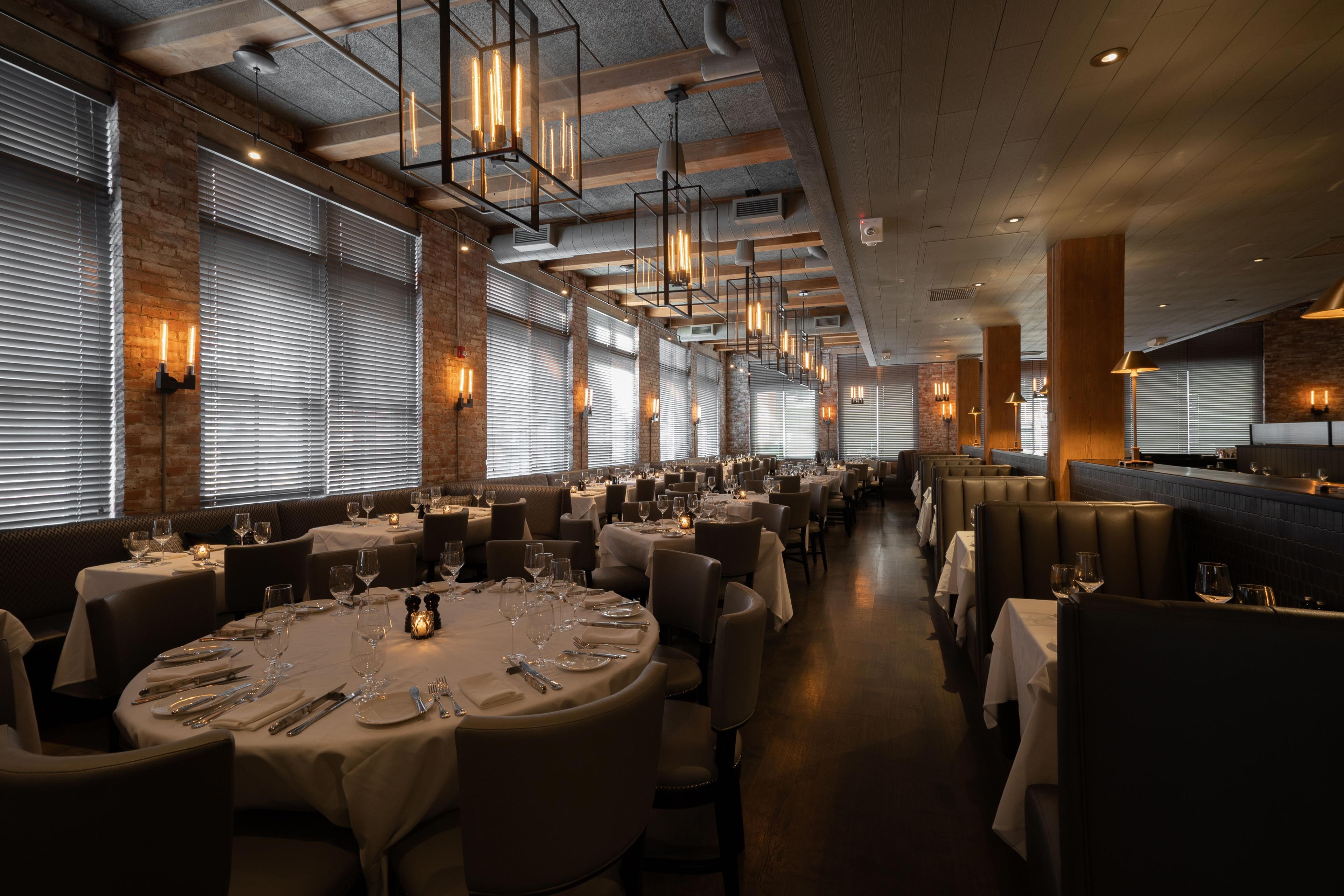
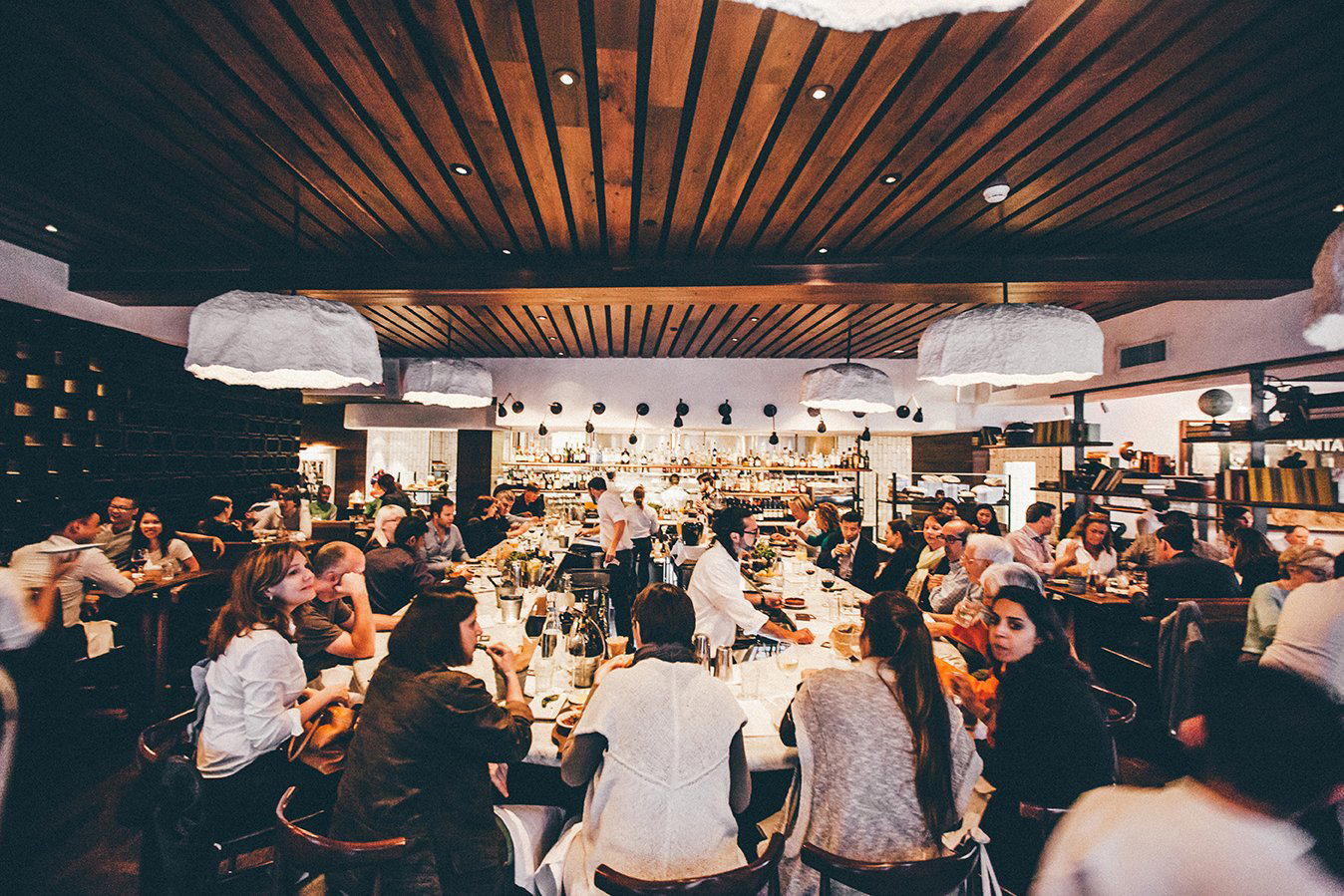
Bright, airy, and spacious with modern industrial feel featuring tall ceilings, brick walls, and wooden pillars.