Li-Mots
Li-Mots sits on Avenue Michelet in Saint-Ouen-sur-Seine, a commune north of Paris where independent restaurants operate at a remove from the capital's more scrutinised dining circuit.
Pearl is the En Primeur Club membership app — saves, bookings, and concierge access live there. Same editors, same standards.
- Address
- 38 Av. Michelet, 93400 Saint-Ouen-sur-Seine, France
- Phone
- +33140100007
- Website
- limots-brasserie.com
- Directions
- Get directions
 Saves & bookings on Pearl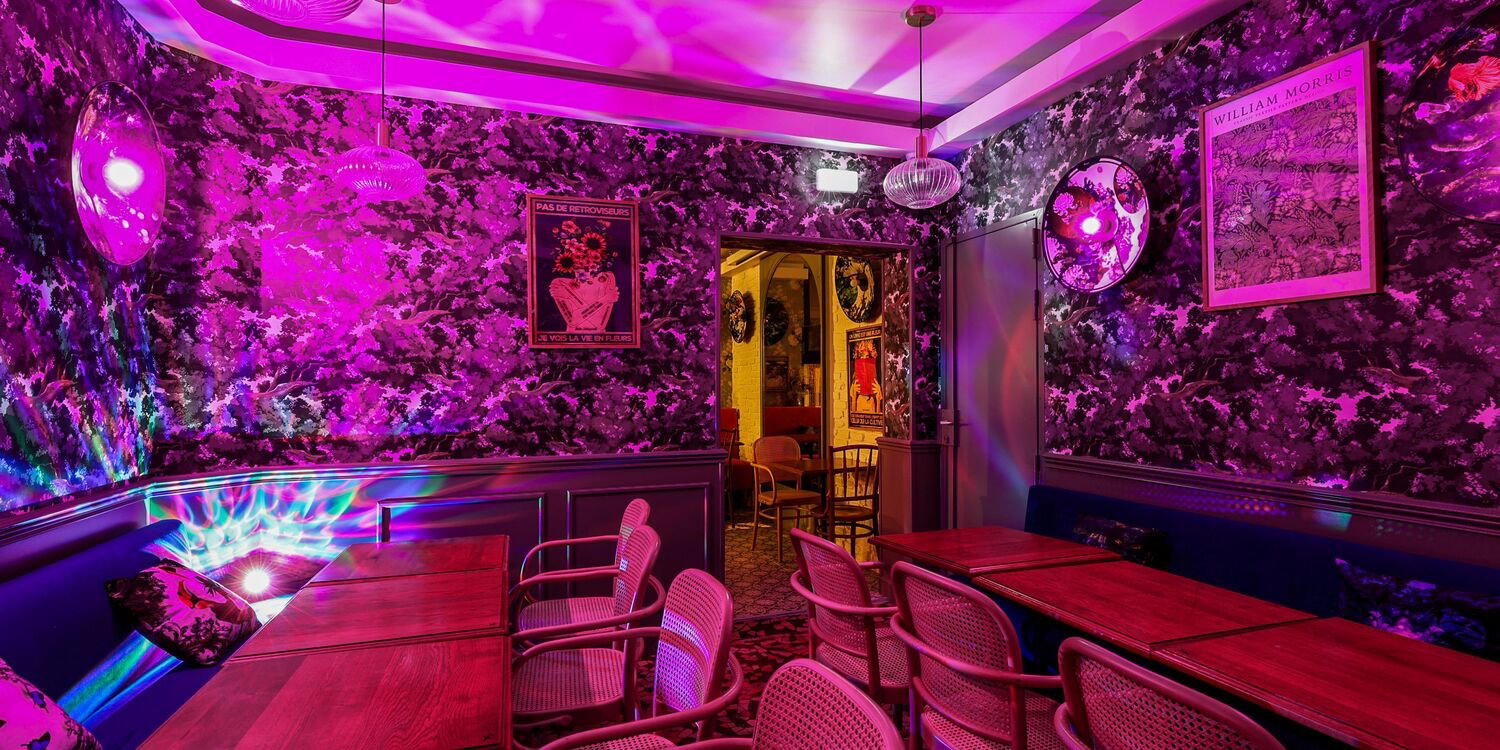
Saint-Ouen-sur-Seine and the Restaurants Defining Its Own Dining Register
The communes immediately north of Paris occupy an ambiguous position in the French dining conversation. They are close enough to the capital to absorb its culinary influences, yet far enough outside the Michelin-mapped arrondissements to develop their own rhythms. Saint-Ouen-sur-Seine, known to most visitors primarily for the Marché aux Puces de Saint-Ouen, one of Europe's largest flea markets, has historically been treated as a day-trip appendage to Paris rather than a destination with independent gastronomic credentials. That framing is increasingly incomplete. A cluster of independent operators along and near Avenue Michelet has begun to constitute something more deliberate: a local dining scene that answers to its own neighbourhood, not to the tourist circuits of the 18th arrondissement across the périphérique.
Li-Mots is a French Bistro in Saint-Ouen-sur-Seine, Paris, with. It sits within this context, at 38 Avenue Michelet. The address places it in the fabric of everyday Saint-Ouen rather than in any curated dining district, which carries its own logic. Restaurants that establish themselves outside the gravity of high-profile zones tend to succeed on repeat local custom and genuine word-of-mouth rather than on walk-in traffic from visitors following a published list. That dynamic shapes how a place cooks, how it prices, and who it treats as its primary audience.
Sourcing and Proximity: What It Means to Cook in the Inner Banlieue
France's ingredient sourcing conversation has long centred on the grandes maisons, the celebrated addresses where producers send their leading allocations and where the relationship between kitchen and farm is treated as an extension of the restaurant's identity. At Mirazur in Menton, the kitchen draws from its own terraced gardens above the Mediterranean. At Bras in Laguiole, the Aubrac plateau is the menu's primary reference. At Flocons de Sel in Megève, Alpine producers form the supply chain. These are kitchens whose geographic isolation from Paris is, paradoxically, their sourcing advantage.
The inner banlieue presents a different set of conditions. Saint-Ouen-sur-Seine is roughly eight kilometres from Les Halles, and a restaurant operating here has access to the same Île-de-France distribution networks that supply the capital's kitchens. The Rungis International Market, the wholesale hub that replaced Les Halles in 1969, operates within accessible distance and remains the primary sourcing infrastructure for restaurants across greater Paris. What distinguishes one neighbourhood kitchen from another in this context is not geographic exclusivity of supply, but selectivity of choice: which producers a kitchen chooses to work with, how it sequences its menu around seasonal availability, and whether it treats Rungis as a convenience or as a curated resource.
For a restaurant on Avenue Michelet, ingredient sourcing is less a marketing proposition than a quiet operational commitment. The restaurants in Saint-Ouen that have built local followings tend to communicate their sourcing through the plate rather than through signage. Les Gastropodes, another independent in the commune, has developed a following precisely through this kind of understated consistency. Li-Mots operates within the same neighbourhood framework.
The Broader French Context: Where Saint-Ouen Fits
To understand what a restaurant in Saint-Ouen-sur-Seine is doing, it helps to map it against France's wider dining spectrum. At one end sit the institutions: Alléno Paris au Pavillon Ledoyen, Paul Bocuse - L'Auberge du Pont de Collonges, Auberge de l'Ill in Illhaeusern, and Georges Blanc in Vonnas, which carry decades of critical recognition and operate in part as custodians of classical French technique. Further along the spectrum sit the more directional kitchens: AM par Alexandre Mazzia in Marseille, Christopher Coutanceau in La Rochelle, and Auberge du Vieux Puits in Fontjoncouse, each anchored to a regional ingredient identity but pushing against convention. And at a different register entirely, one closer to where Saint-Ouen operates, are the neighbourhood restaurants that sustain French culinary culture at street level, without the apparatus of awards or international press.
The comparison is not a hierarchy so much as a map of different kinds of ambition. Troisgros - Le Bois sans Feuilles in Ouches, Assiette Champenoise in Reims, and Au Crocodile in Strasbourg occupy a middle register where regional identity and formal precision coexist. L'Oustau de Baumanière in Les Baux trades on Provençal grandeur. These are different projects from a neighbourhood address in Saint-Ouen, and comparing them directly misses the point of what each is attempting. Internationally, addresses like Le Bernardin in New York City and Atomix in New York City operate in yet another register, major-city flagship dining with dedicated international audiences.
A restaurant at 38 Avenue Michelet is not competing in that arena. It is doing something more localised and, in many ways, more structurally important to a city's dining ecosystem: providing consistent quality at a neighbourhood scale, for a neighbourhood audience, in a commune that does not benefit from the automatic attention directed at the capital's arrondissements.
Planning a Visit
Saint-Ouen-sur-Seine is accessible directly from central Paris via the Saint-Ouen station on Line 13 of the Paris Métro, which connects the commune to Montparnasse, Châtelet, and the northern arrondissements without a transfer. Avenue Michelet is within walking distance of the station, which makes the logistics direct for visitors approaching from the city. The Marché aux Puces operates on weekends, so Saturday and Sunday see significantly heavier foot traffic in the area around the market; visiting on a weekday offers a quieter version of the neighbourhood. As with most independent restaurants in the Paris region, booking ahead is advisable rather than optional, particularly for weekend service.
Fast Comparison
Comparable venues nearby, for context on price, style, and recognition.
| Venue | Cuisine | Price | Notes |
|---|---|---|---|
| Li-MotsThis venue — the venue you are viewing | French Bistro | $$ | Not listed |
| les Gastropodes | French Bistro Classics & Street Food | $$$ | Marché aux Puces |
| Loufoque Paris 9 | Modern French Bistro with International Influences | $$ | Paris 9 |
| Jaja | Modern French Bistro | $$ | Marais |
| Le Sabodet | Traditional Lyonnais Bistro | $$ | Levallois-Perret |
| L'Alsace | Alsatian Brasserie | $$ | 8th Arr. |
Continue exploring
More in Saint Ouen Sur Seine
Restaurants in Saint Ouen Sur Seine
Browse all →

Bars in Saint Ouen Sur Seine
Browse all →
Hotels in Saint Ouen Sur Seine
Browse all →
Wineries in Saint Ouen Sur Seine
Browse all →


At a Glance
- Cozy
- Lively
- Business Dinner
- Casual Hangout
- After Work
- Terrace
- Natural Wine
Current opening hours
- Monday
- 7 AM–10 PM
- Tuesday
- 7 AM–10 PM
- Wednesday
- 7 AM–10 PM
- Thursday
- 7 AM–10 PM
- Friday
- 7 AM–10 PM
- Saturday
- 9 AM–10 PM
- Sunday
- Closed
Hours can change for holidays and private events. Last verified .
Ambiance chaleureuse et électrique avec musique, cadre cosy et terrasse.