





On Avenue Hoche in the 8th arrondissement, Le Royal Monceau occupies a position that few Paris hotels can match: a Philippe Starck-designed interior beneath a five-star Raffles operation, two minutes from the Arc de Triomphe. The 149-room property earned two Michelin Keys in 2024 and 96.5 points from La Liste Top Hotels in 2026, placing it firmly in the upper tier of the city's luxury hotel set.
Pearl is the En Primeur Club membership app — saves, bookings, and concierge access live there. Same editors, same standards.
- Address
- 37 Av. Hoche, 75008 Paris
- Phone
- +33 1 42 99 88 00
- Website
- raffles.com
 Saves & bookings on Pearl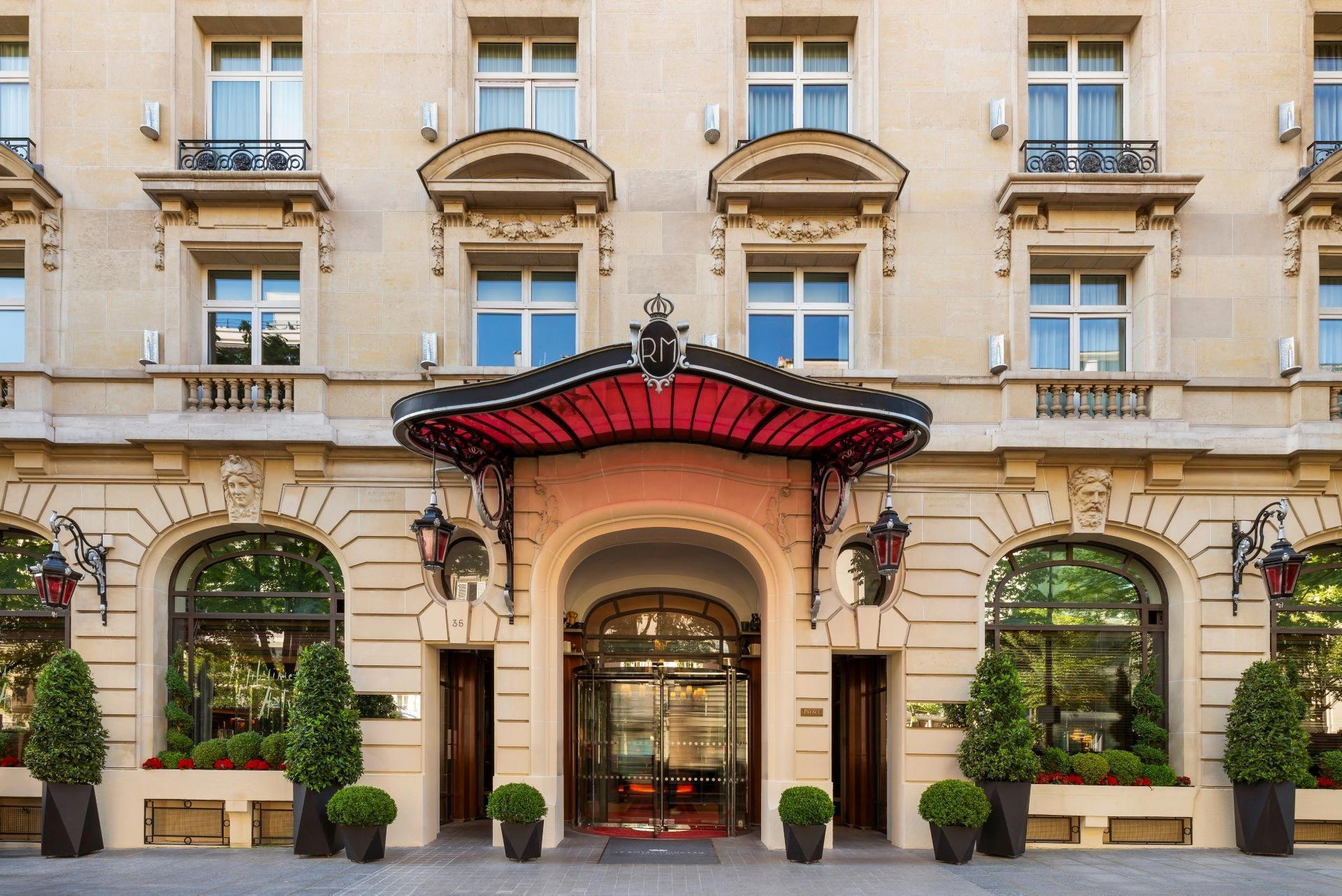
Where Philippe Starck Meets the 8th Arrondissement
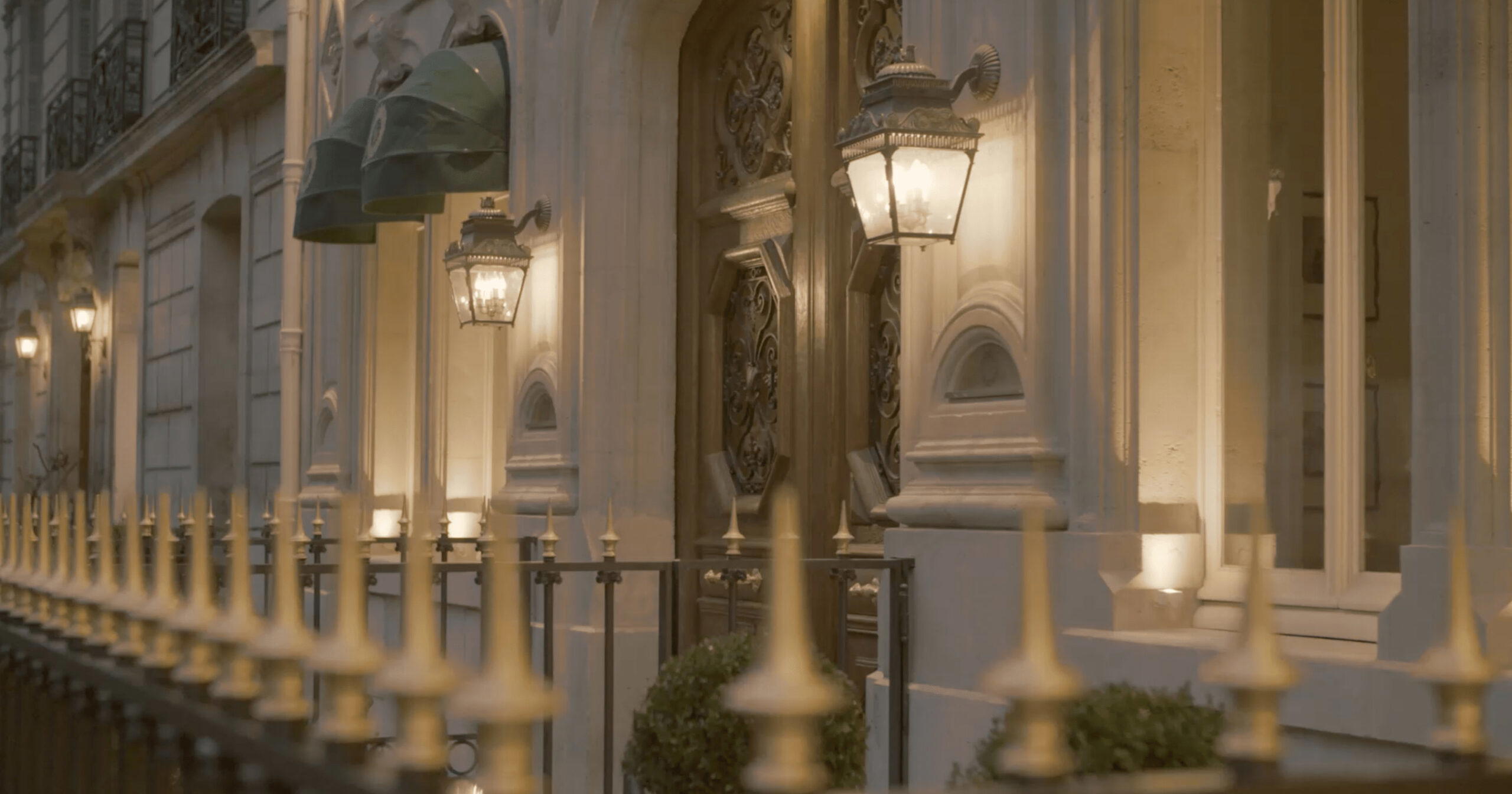
On Avenue Hoche, a limestone street that feeds into the Arc de Triomphe's orbit, the red glass lanterns and Art Deco awning of Le Royal Monceau, Raffles Paris announce something different from its neighbours. The entrance is formal in the Parisian tradition, but what waits inside runs against the grain of the city's grand hotel conventions. When the property reopened following its full redesign by Philippe Starck, it showed that Paris luxury could be far less conservative than the city’s five-star norm.
Starck's intervention here is comprehensive rather than cosmetic. Hallucinogenic stripe patterns generate op-art effects in the corridors. The staircase is threaded with what amounts to a cascade of tiny crystal chandeliers. Bathrooms reach toward hall-of-mirrors territory. The overall effect recalls the original logic of the nineteenth-century grand hotel: sensory density, bold materials, the deliberate intention to overwhelm and delight. At Le Royal Monceau, that logic has been refracted through a contemporary lens rather than preserved under glass.
The Physical Container: 149 Rooms and a Design Grammar
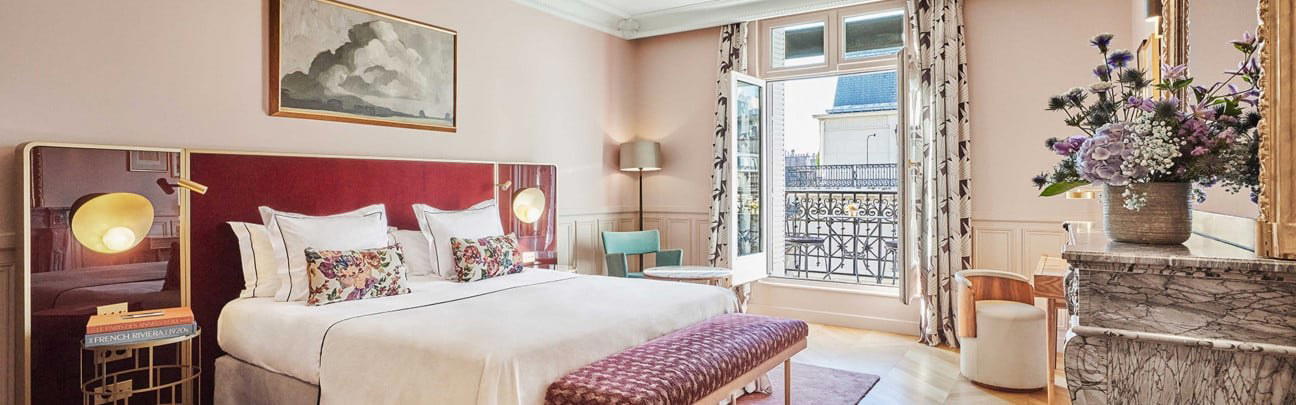
The hotel holds 149 rooms and suites across categories that run from the more compact artist rooms up to presidential suites that function as private apartments. Across all of them, Starck's grammar is consistent: Murano-glass chandeliers positioned above midcentury-modern leather sofas, writing desks by Philippe Hurel with illustrated Paris street maps inlaid on their surfaces, and acoustic guitars standing in corners, an idiosyncratic touch that signals the hotel's commitment to cultural atmosphere. Private balconies are available in select rooms, and the overall palette draws from warm materials and rigorous lines that the hotel associates with 1940s and 1950s French sensibility.
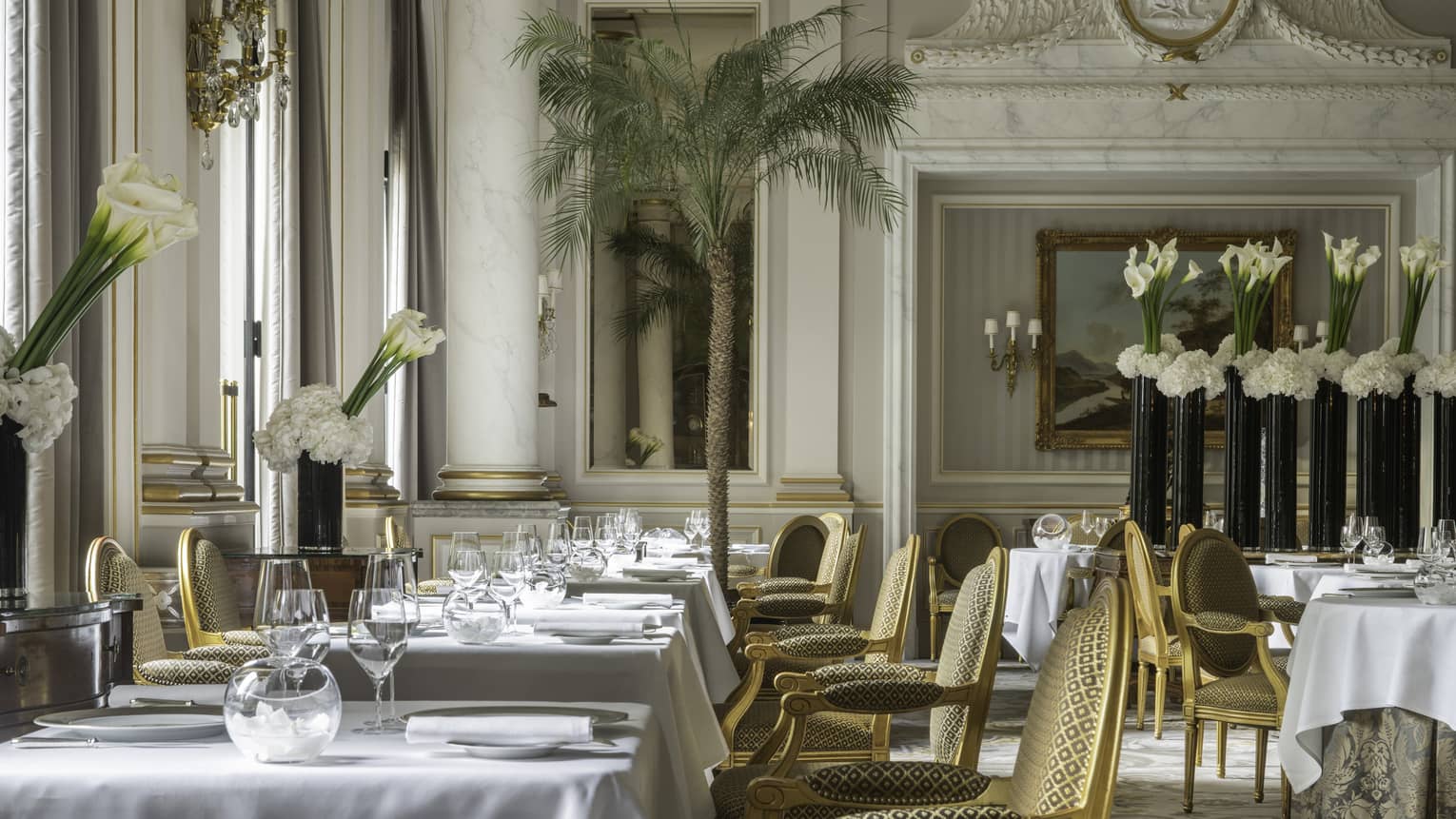
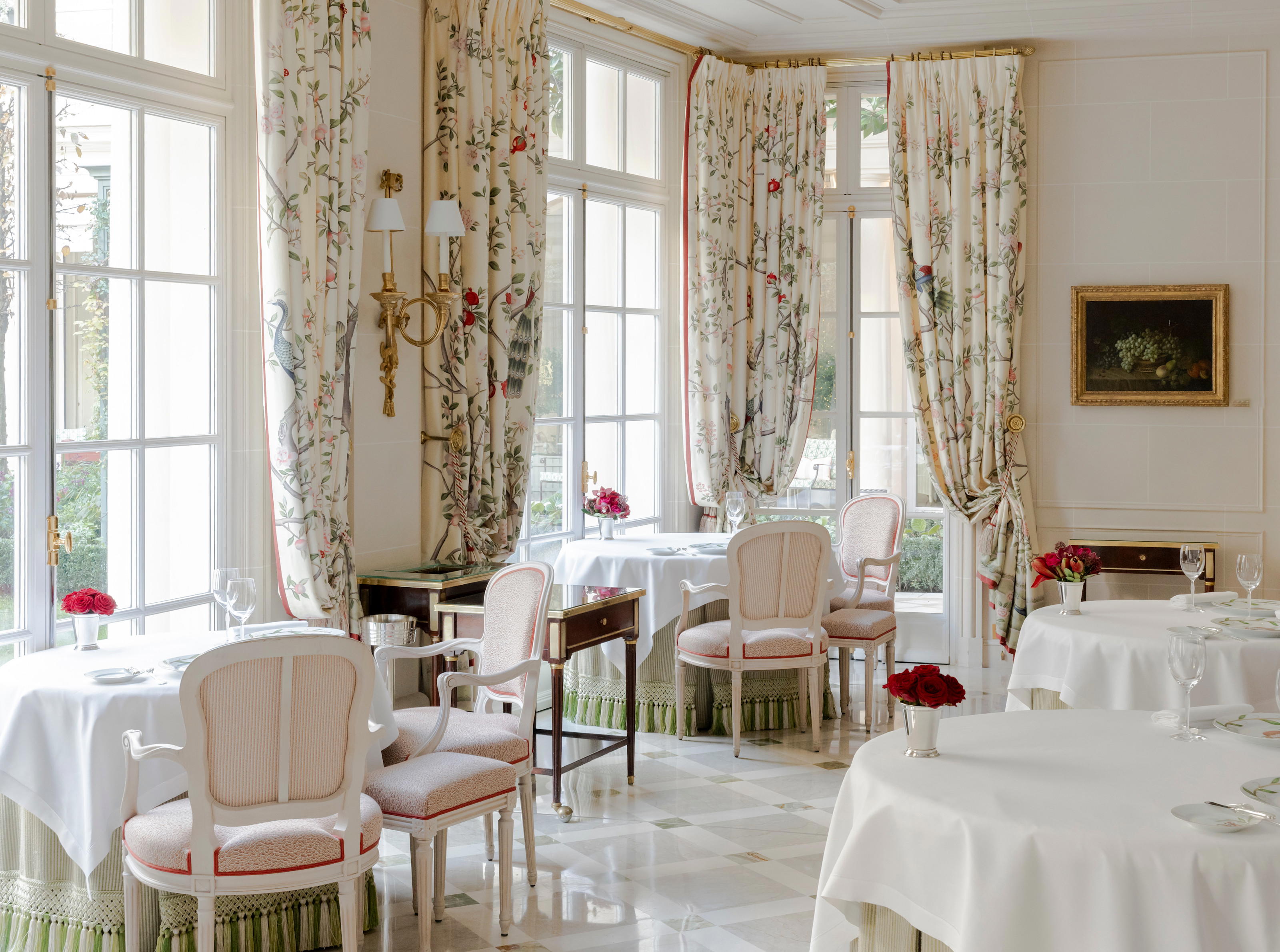
The spatial logic of the public areas deserves particular attention, because it is in the lobby and its adjacent spaces that the design argument is made most clearly. Rather than staging a single monumental hall, Starck breaks the ground floor into a sequence of smaller, more specific rooms: a wood-paneled concierge area, an art-focused bookshop, a smoking lounge, and connections to the restaurants and cinema. The scale shifts allow a 149-key hotel to operate with a duality that most properties in its size bracket cannot manage: formal enough to satisfy guests who expect the gravity of a Parisian palace, informal enough that local residents treat Le Bar Long as a neighbourhood stop for coffee or weekend brunch.
That last point matters. In the upper tier of Parisian hotels, the separation between hotel guest and Parisian local is often near-total. At Le Royal Monceau, the ground floor absorbs a consistent churn of non-resident visitors, shoppers, friends, people living nearby who treat the building as a social infrastructure rather than a sealed luxury capsule. This is partly a product of the design's accessibility, and partly a consequence of having dining and cultural programming that operates on its own terms.
Art as Architecture
The hotel's engagement with contemporary art goes beyond decorative placement. Art District, the hotel's in-house gallery, operates with its own street-level entrance next to the main building, signalling that the programming is intended for a broader public rather than exclusively for hotel guests. Commissioned installation pieces occupy the common spaces on a permanent basis, and the hotel maintains a photographic collection currently running to 285 prints, distributed across the rooms and suites and continuing to grow.
Art functions as a structural part of the identity here. The hotel's 99-seat cinema sits inside this same logic, offering a programme that extends the cultural agenda beyond the visual into film. Few hotels in Paris at this price point maintain a functioning cinema as a permanent amenity. In the broader context of the 8th arrondissement, where the dominant hotel offer remains oriented toward classical luxury without pronounced cultural programming, this makes the property's positioning genuinely distinct within its immediate neighbourhood comparable set.
The Dining Floor
Three restaurants occupy the ground floor. Il Carpaccio is the Italian gastronomic option, its interior referencing Sicilian grottos. Matsuhisa Paris, the first French outpost of Nobu Matsuhisa's global network, brings a Japanese-Latin American fusion format to the building. Le Bar Long operates as the all-day anchor, serving a broader range of guests across longer hours and functioning as the social gravitational centre of the hotel's public life.
In the context of Paris's dining scene, the Matsuhisa presence is worth contextualizing. The city's Japanese restaurant offer has expanded significantly over the past decade, with high-end omakase counters and fusion formats multiplying in the 1st, 8th, and surrounding arrondissements. A hotel-housed restaurant by an internationally recognized name occupies a specific position in that scene: different from the independent counter omakase format, more accessible in booking terms, and oriented toward a guest mix that includes both hotel residents and local diners seeking a known reference point.
Placement in the Paris Luxury Hotel Tier
Le Royal Monceau holds Michelin's 2 Keys designation.
The competitive set in the 8th arrondissement and adjacent areas is dense. Four Seasons George V, a few minutes away on Avenue George V, operates with three Michelin-starred dining and a more classical decorative approach. Hotel Plaza Athénée holds a comparable position on Avenue Montaigne with a different brand heritage. Further out across the city, Cheval Blanc Paris and Le Meurice represent the competing poles of contemporary design-forward luxury and historic palace tradition respectively. Hôtel de Crillon and La Réserve Paris complete the picture of properties operating at this tier with distinct aesthetic and programming identities.
What separates Le Royal Monceau within this peer group is the coherence of its design argument. It is a 5-star hotel in Paris with 149 rooms and 2 Michelin Keys. Where many Paris luxury hotels present art and cultural programming as peripheral amenities, here the gallery, cinema, photographic collection, and Starck's interior language constitute the core identity. Guests choosing between it and, say, Le Bristol Paris or Airelles Château de Versailles are making a choice about what kind of luxury they want to inhabit, not simply comparing room sizes or star counts.
For those extending travel across France, the property belongs to the Raffles network and sits alongside other reference-point French properties worth considering: Hotel Du Cap-Eden-Roc in Cap d'Antibes, Domaine Les Crayères in Reims, Les Sources de Caudalie in Bordeaux, and the Provençal properties including La Bastide de Gordes, Villa La Coste, and Baumanière Les Baux-de-Provence all merit consideration depending on routing. On the Riviera, The Maybourne Riviera, La Réserve Ramatuelle, and Airelles Saint-Tropez offer the same calibre of commitment with Mediterranean positioning. Mountain travellers should note Cheval Blanc Courchevel, Four Seasons Megève, and Royal Champagne Hotel and Spa in Champillon. For international comparison points, Aman New York, The Fifth Avenue Hotel, and Aman Venice represent the same design-serious approach applied to different urban contexts. Also worth noting: Hôtel and Spa du Castellet in Le Castellet for those touring the south of France by road.
Know Before You Go
- Address: 37 Avenue Hoche, 75008 Paris
- Rooms: 149 rooms and suites, including artist rooms, standard suites, and presidential suites
- Rate from: Approximately $1,122 per night
- Recognition: Michelin 2 Keys (2024); La Liste Leading Hotels 96.5 points (2026); World Travel Awards France's Leading Luxury City Hotel (2025)
- On-site amenities: Three restaurants (Matsuhisa Paris, Il Carpaccio, Le Bar Long), Raffles Spa and Wellness, 99-seat cinema, Art District gallery, kids' club (arranged on request)
- Location context: 8th arrondissement, within walking distance of the Arc de Triomphe and the Champs-Élysées
- Google rating: 4.5 from 2,184 reviews
Comparable Spots, Quickly
Comparable venues nearby, for context on price, style, and recognition.
| Venue | Cuisine | Price | Awards | Notes |
|---|---|---|---|---|
| Le Royal MonceauThis venue — the venue you are viewing | Contemporary Parisian palace with art-infused luxury | $$$$ | Michelin 2 Key | |
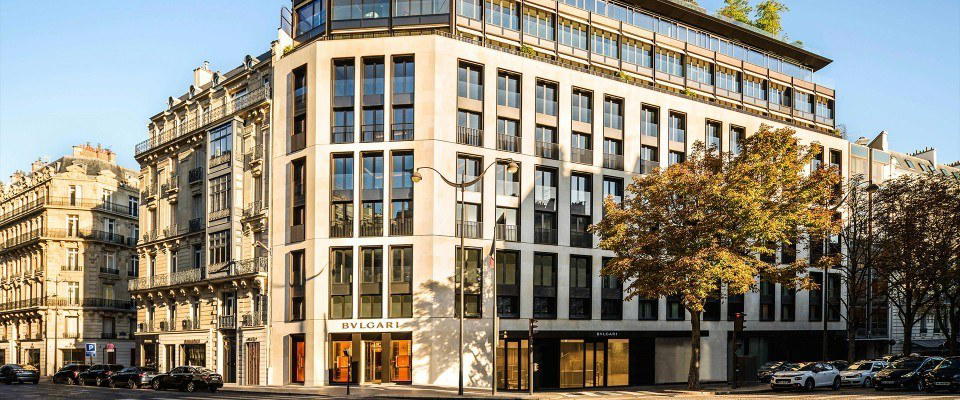
| Bulgari Hôtel Paris | Contemporary Italian luxury with Roman heritage influences, blending timeless elegance with state-of-the-art modern amenities in a prestigious Parisian setting. | $$$$ | Michelin 2 Key | Golden Triangle |
| Shangri-La Paris | Luxury historic palace blending French grandeur and Asian hospitality | $$$$ | Michelin 2 Key | Trocadéro |
| The Peninsula Paris | Haussmannian palace with modern luxury | $$$$ | Michelin 2 Key | 16th arrondissement |
| Nolinski | Boutique luxury with private apartment-style rooms | $$$$ | Michelin 2 Key | 1st arrondissement |
| J.K. Place Paris | luxury residential-style boutique | $$$$ | Michelin 2 Key | Left Bank |
Continue exploring
More in Paris
Hotels in Paris
Browse all →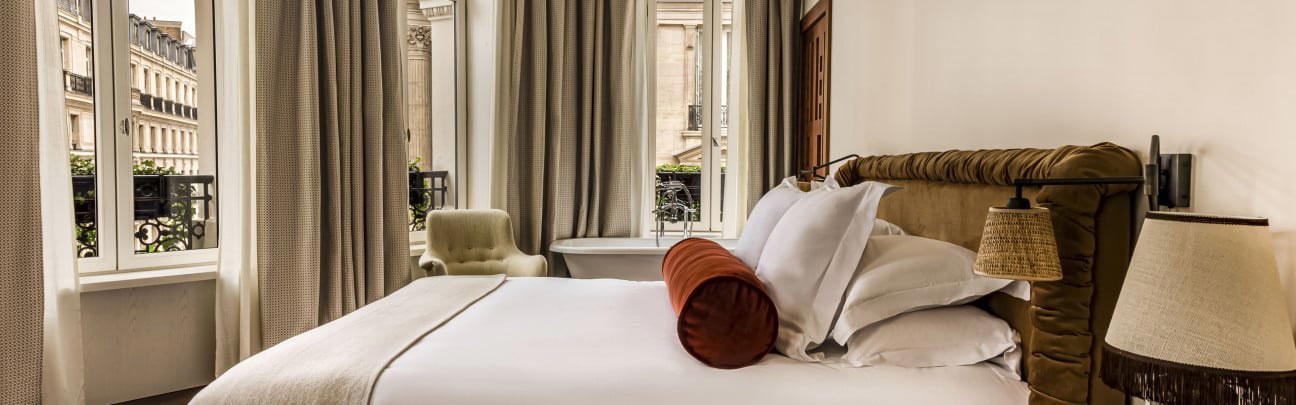
Bars in Paris
Browse all →
Restaurants in Paris
Browse all →

At a Glance
- Elegant
- Sophisticated
- Opulent
- Iconic
- Romantic Getaway
- Honeymoon
- Business Trip
- Anniversary
- Historic Building
- Design Destination
- Terrace
- Wifi
- Pool
- Spa
- Fitness Center
- Room Service
- Concierge
- Business Center
- Valet Parking
- Street Scene
Elegant and luminous Parisian atmosphere with sophisticated lighting, soundproofed rooms, and serene wellness spaces.