Lianglukou Hotpot sits on Jingyi Road in Jiaxing's Nanhu District, bringing the Chongqing-rooted hotpot tradition into a city better known for its lake crab and rice dumplings. The format centers collective dining around a simmering pot, with ingredient quality doing the heavy lifting. For Jiaxing residents and visitors moving through Zhejiang, it fills a specific gap in the local dining map.
Pearl is the En Primeur Club membership app — saves, bookings, and concierge access live there. Same editors, same standards.
- Address
- 221 Jingyi Rd, Nanhu District, Jiaxing, Zhejiang, China, 314051
- Directions
- Get directions
 Saves & bookings on Pearl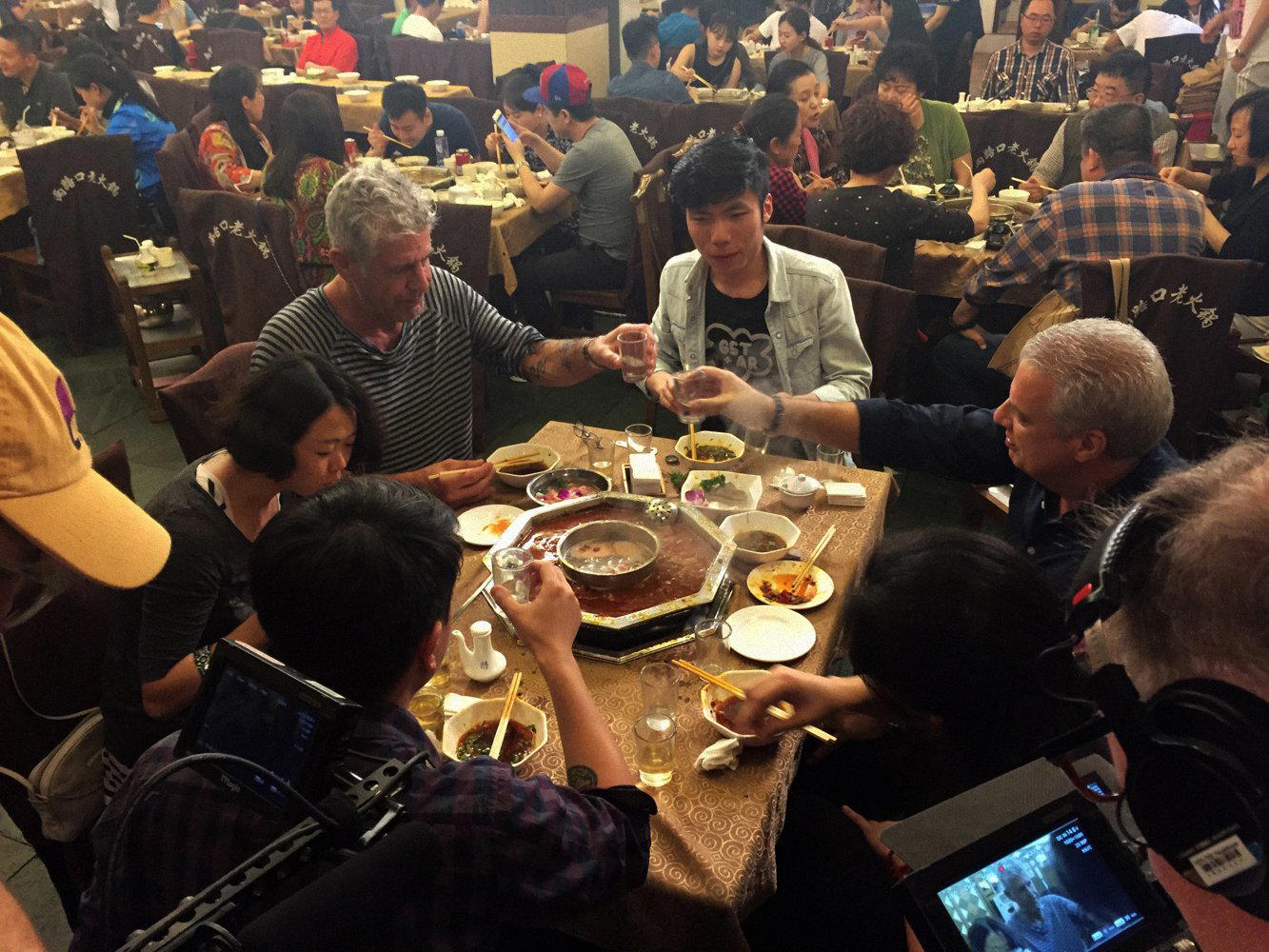
Hotpot in a Zhejiang City: Why the Format Travels
Jiaxing is not a hotpot city by instinct. Its culinary identity runs toward the delicate: nanhu crab from the lake at the city's center, zongzi rice dumplings wrapped in reed leaves, and the restrained sweetness that defines much of Zhejiang cooking. Hotpot, with its assertive broths and communal pace, belongs to a different register entirely, one more commonly associated with Chongqing or Chengdu than with the canal towns of the Yangtze Delta. That tension is what makes venues like Lianglukou Hotpot worth examining. They sit at a crossroads between an imported format and a local dining culture that has its own deeply established priorities.
The Lianglukou name itself carries regional signal. Lianglukou is a major interchange district in Chongqing, a place synonymous with the city's hotpot culture in much the same way that certain street names in other Chinese cities have become shorthand for a food tradition. Using that name in Jiaxing is a positioning statement: this is hotpot operating from a Sichuan-Chongqing reference point, not a diluted approximation built around local taste preferences.
What the Broth and the Table Say About Sourcing
In hotpot, ingredient sourcing is not a secondary concern, it is the entire argument. Unlike a kitchen-driven format where technique can compensate for average produce, hotpot places its ingredients into direct contact with the diner and the broth with almost no intervening preparation. A thinly sliced piece of beef reaches the table raw. Tripe arrives unadorned. The quality of the cattle, the freshness of the offal, the thickness of the cut: none of it can be obscured. This is why the sourcing conversation in serious hotpot circles is relentless.
Zhejiang sits in a position that is logistically useful for ingredient supply. The province has well-developed cold-chain infrastructure connecting it to livestock regions further inland, and Jiaxing's position along major transport corridors means that fresh product from Sichuan, Guizhou, and Yunnan suppliers can arrive with relatively short lead times. For a hotpot venue drawing on Chongqing precedent, that supply access matters. The broth base, typically constructed around doubanjiang (fermented broad bean paste), dried chilies, Sichuan peppercorns, and rendered tallow, depends on ingredient provenance for its depth. A broth made from correctly sourced Pixian doubanjiang aged for two years or more has a fundamentally different flavour profile from one made with a younger or less carefully fermented paste.
Beyond the broth, the dipping sauce station is where individual sourcing decisions become visible to the diner. Sesame paste quality, fresh coriander, chili oil rendered from properly dried and stored peppers, these are small signals that collectively indicate how seriously a kitchen treats its supply chain. Venues at the more considered end of the hotpot spectrum treat the condiment counter with the same attention as the protein selection.
The Nanhu District Setting and What It Implies
Lianglukou Hotpot's address on Jingyi Road places it in the Nanhu District, the area surrounding Jiaxing's South Lake, a site with considerable historical weight as the location of the First National Congress of the Communist Party of China in 1921. The district draws both domestic tourism and local foot traffic, which shapes the commercial environment for restaurants operating there. A hotpot venue in this location is positioned for a mixed diner profile: residents seeking a reliable communal meal, visitors to the lake area looking for something more substantial than tourist-facing snacks.
Hotpot as a format suits this context well. It is inherently social, scales across group sizes, and does not require the kind of advance booking depth or hushed reverence that a formal tasting menu demands. Compared to the precision formats you find at venues like Fu He Hui in Shanghai or the Taizhou craft on offer at Xin Rong Ji in Chengdu, hotpot operates at a different register: louder, faster, more participatory. The diner is a co-author of the meal.
How Jiaxing Hotpot Fits the Wider Regional Picture
Across eastern China, hotpot venues have fragmented into a tiered market. At one end, large chain operators standardize the experience to a repeatable formula, controlling cost and consistency at scale. At the other, smaller independent venues compete on broth authenticity, protein sourcing, and atmosphere. The Sichuan-Chongqing style sits in active competition with Cantonese clear-broth formats, Yunnan-style mushroom hotpot, and Mongolian lamb variations. Each carries a distinct ingredient logic and appeals to a different segment of the dining public.
For a Zhejiang city audience already accustomed to ingredient-forward cooking, whether in the form of West Lake fish or hairy crab from Yangcheng Lake, the quality-of-ingredient argument should be a natural point of entry. A hotpot operation that can credibly source its proteins and broth components is making a case that local diners are equipped to evaluate. That same sensibility around provenance shows up in different register at fine dining venues across the region: at Ru Yuan in Hangzhou, at Pingjiangsong in Suzhou, and further afield at Dai Yuet Heen in Nanjing. The concern for where ingredients originate is not exclusive to formal dining, it runs through Chinese food culture at every price point.
For reference further afield, Sichuan-informed cooking has found serious audiences in unexpected cities before: Blue Kylin in Changsha and Cai Feng Lou in Xi'an both demonstrate how spice-forward traditions adapt across regional Chinese contexts. The hotpot format, being more democratic and less chef-dependent than tasting menus, tends to travel with particular ease.
Planning Your Visit
Lianglukou Hotpot is located at 221 Jingyi Road in the Nanhu District of Jiaxing, Zhejiang. Jiaxing sits on the Shanghai-Hangzhou high-speed rail corridor, making it accessible from both cities in under an hour; the city's train connections are a practical entry point for visitors combining Jiaxing with a broader Zhejiang itinerary. No phone number or website is listed in current records, which suggests walk-in or local platform booking (Dianping and Meituan are the standard channels for restaurant reservations and menus in mainland China). For a hotpot venue serving a neighbourhood district, weekday evenings are likely to offer shorter waits than weekend peak hours, when communal dining formats tend to draw large groups.
Fast Comparison
Comparable venues nearby, for context on price, style, and recognition.
| Venue | Cuisine | Price | Notes |
|---|---|---|---|
| Lianglukou HotpotThis venue — the venue you are viewing | Sichuan Hot Pot | $$ | Not listed |
| MING JIA | Chinese Seafood & Lu Cuisine | $$ | Laoshan District |
| 小锅巴纳西美食 | Naxi Yunnan Cuisine | $$ | Lijiang Ancient Town |
| Shi Er Qiao Bao Zhi Dian | Sichuan Cuisine | Not listed | Chengdu |
| Longji Rice Farm | Traditional Zhuang Rice Terrace Cuisine | $$ | Longji Town |
| 纳西靓菜坊 | Naxi Cuisine | $$ | Lijiang Ancient Town |


At a Glance
- Group Dining
- Casual Hangout