L'Entrecôte at 4 Cours du 30 Juillet sits at the centre of a Bordeaux dining tradition that needs almost no introduction: a single-dish formula built around entrecôte steak and the house's proprietary walnut-herb sauce, served without a printed menu. In a city whose fine-dining scene runs to Michelin-starred complexity, this stripped-back format has held its ground for decades as the counterpoint — a study in restraint through repetition.
Pearl is the En Primeur Club membership app — saves, bookings, and concierge access live there. Same editors, same standards.
- Address
- 4 Cr du 30 Juillet, 33000 Bordeaux, France
- Phone
- +33556817610
- Website
- entrecote.fr
- Directions
- Get directions
 Saves & bookings on Pearl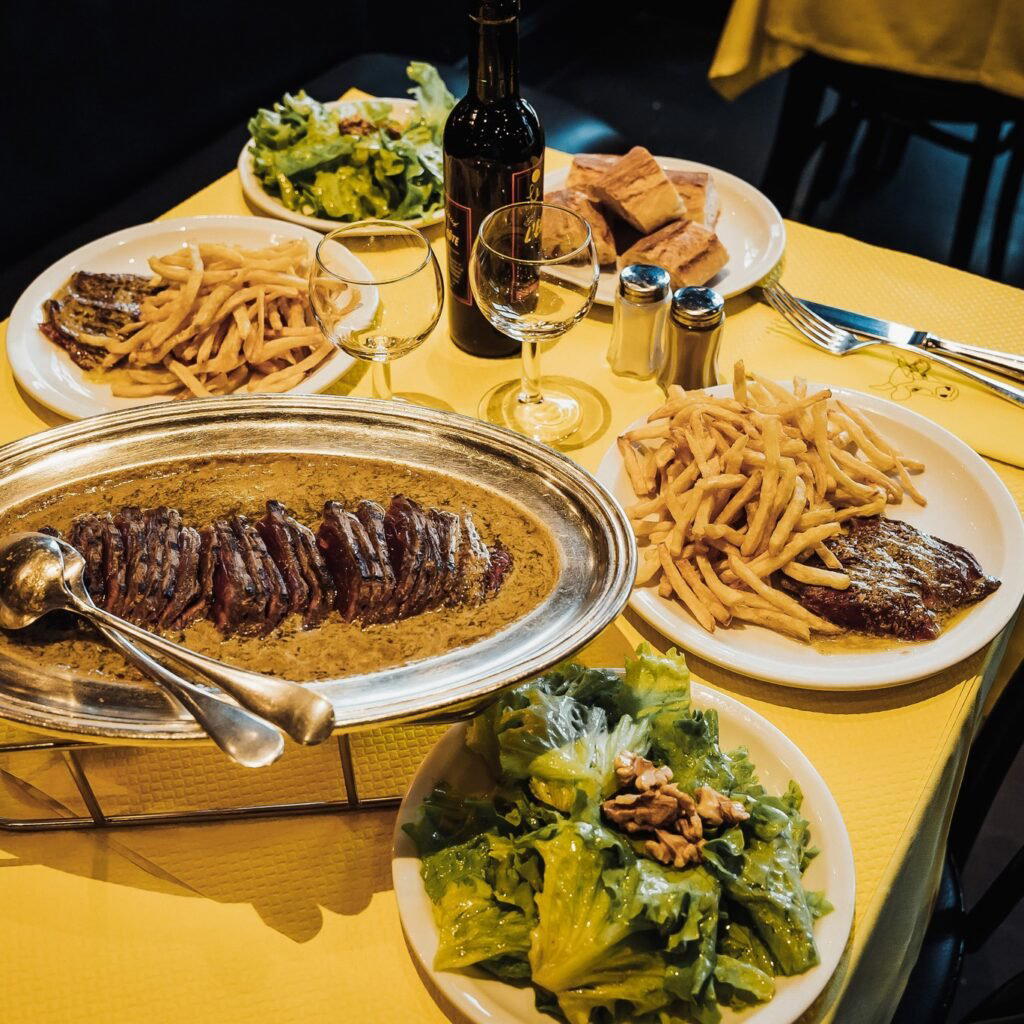
One Dish, One Decision, One Room on the Cours du 30 Juillet
Approaching L'Entrecôte from the broad sweep of the Cours du 30 Juillet, the visual grammar is immediately familiar to anyone who has encountered the format elsewhere in France: white tablecloths, bentwood chairs visible through glass, a queue that forms before service begins. The address — one of Bordeaux's most transited avenues, flanked by the Grand Théâtre and a short walk from the Garonne quays — places this restaurant squarely in the city's civic centre rather than in any neighbourhood known for culinary concentration. That positioning is not accidental. The format thrives on foot traffic and accessibility, not on destination pilgrimage.
The room operates according to a logic that predates contemporary tasting menus and chef-driven narrative dining. There is no printed menu to deliberate over. The format is fixed: a starter of green salad with walnuts, followed by entrecôte steak with the house sauce and unlimited shoestring fries, with dessert available from a short list. The sauce, a walnut-herb preparation whose exact composition remains undisclosed, is the single point of genuine mystery in an otherwise transparent dining proposition. That one withheld detail has done more for the restaurant's reputation than any amount of tasting-note complexity could.
The Single-Dish Format as a French Dining Tradition
The entrecôte-only formula is not an invention of this address. It belongs to a lineage that traces back to a founding family in Paris, with the original Relais de l'Entrecôte on Rue Marbeuf establishing the concept and spawning subsequent branches across France and internationally. The Bordeaux location on the Cours du 30 Juillet operates within that broader tradition, which by now encompasses restaurants in Geneva, London, and New York among other cities.
What the format demonstrates, across all its iterations, is a particular strand of French restaurant thinking: that mastery of a single dish, executed consistently at volume, can sustain a viable and respected dining room indefinitely. This sits at some remove from the dominant contemporary French restaurant culture, where venues like L'Observatoire du Gabriel and Le Pressoir d'Argent pursue seasonal tasting menus and Michelin recognition. The entrecôte format makes no claim on that territory. It competes on a different axis entirely: reliability, speed, price accessibility relative to its central location, and a formula that removes the friction of choosing.
Bordeaux's broader restaurant scene has tilted heavily toward creative and modern cuisine in the past decade. Maison Nouvelle, Amicis, and L'Oiseau Bleu each represent a dining culture that prizes chef identity and ingredient sourcing as narrative. Against that backdrop, L'Entrecôte occupies a deliberate counter-position, and the queues outside suggest that counter-position has a substantial audience.
Why the Sauce Matters Culturally
In French culinary tradition, the sauce has long been the measure of technical achievement. Classical brigade kitchens were structured around sauciers; Escoffier's foundational texts devote more attention to sauces than to any other single category. The entrecôte format collapses that entire tradition into a single proprietary preparation, served tableside from a jug, replenished without being asked. The sauce becomes both the restaurant's intellectual property and its democratising gesture, available to every table in the same measure, without upselling or ceremony.
This is culturally distinct from the sauce work happening at France's highest-tier dining rooms. At Alléno Paris au Pavillon Ledoyen, sauce-making is treated as a discipline unto itself, with extractions and concentrations built over multiple days. At Mirazur or Bras, saucing idioms are tied to specific terroir or seasonal produce windows. The entrecôte sauce works by an opposite logic: it is fixed, unvarying, and designed to be immediately recognisable rather than contextually surprising. That predictability is a feature, not a compromise.
Bordeaux as Context: Wine Capital, Steak Tradition
Bordeaux's identity as a wine capital is inseparable from its relationship with beef. The city's position in the French Southwest places it in proximity to Limousin cattle country and the broader tradition of southwestern French cooking that centres on red meat, duck, and preserved fats. Restaurants like La Tupina have built their reputation on precisely this regional specificity, open hearths, local breeds, lard-rendered potatoes. The entrecôte format draws from the same cultural reservoir while stripping away the folklore and rusticity. The result is a version of the same impulse, steak as serious dining, rendered in a brasserie register.
That register matters in Bordeaux more than in most French cities. The wine trade has historically shaped dining here: négociants and châteaux owners needed restaurants that could turn tables efficiently and pair reliably with the city's primary export. An entrecôte and a glass of Bordeaux rouge is not a sophisticated food-and-wine pairing in the sommelier's sense, but it is a historically coherent one. The format makes implicit sense in this city in a way it might not elsewhere.
For a full picture of where L'Entrecôte sits within Bordeaux's broader dining options, from bistros to tasting-menu rooms, the EP Club Bordeaux restaurants guide maps the competitive set in detail. French regional dining at comparable or higher price points can also be tracked through EP Club's coverage of venues including Flocons de Sel in Megève, Troisgros in Ouches, Auberge de l'Ill in Illhaeusern, Paul Bocuse in Collonges-au-Mont-d'Or, Assiette Champenoise in Reims, Au Crocodile in Strasbourg, and AM par Alexandre Mazzia in Marseille. For international reference points where format discipline and repetition define the offer rather than seasonal menus, Le Bernardin in New York and Atomix represent very different but instructive comparisons.
Planning Your Visit
L'Entrecôte is located at 4 Cours du 30 Juillet in central Bordeaux, within walking distance of the Grand Théâtre tram stop and the main riverside quays. The format and location make it a natural choice for lunch or dinner without advance planning, though the queue that commonly forms before the doors open suggests arriving at or before service start is worth the calculation. No booking infrastructure has been publicised for this location, which aligns with the walk-in tradition of the broader entrecôte-format restaurants. Dress code expectations match the brasserie register of the room: no formality is required or implied.
How L'Entrecôte Bordeaux compares with similar nearby venues.
| Venue | Cuisine | Price |
|---|---|---|
| La Table d'Hôtes - Le Quatrième Mur | Modern Cuisine | €€€€ |
| Quanjude | Chinese | €€€ |
Continue exploring
More in Bordeaux
Restaurants in Bordeaux
Browse all →
Bars in Bordeaux
Browse all →
Hotels in Bordeaux
Browse all →
At a Glance
- Classic
- Well Known
- Casual Hangout
- Special Occasion
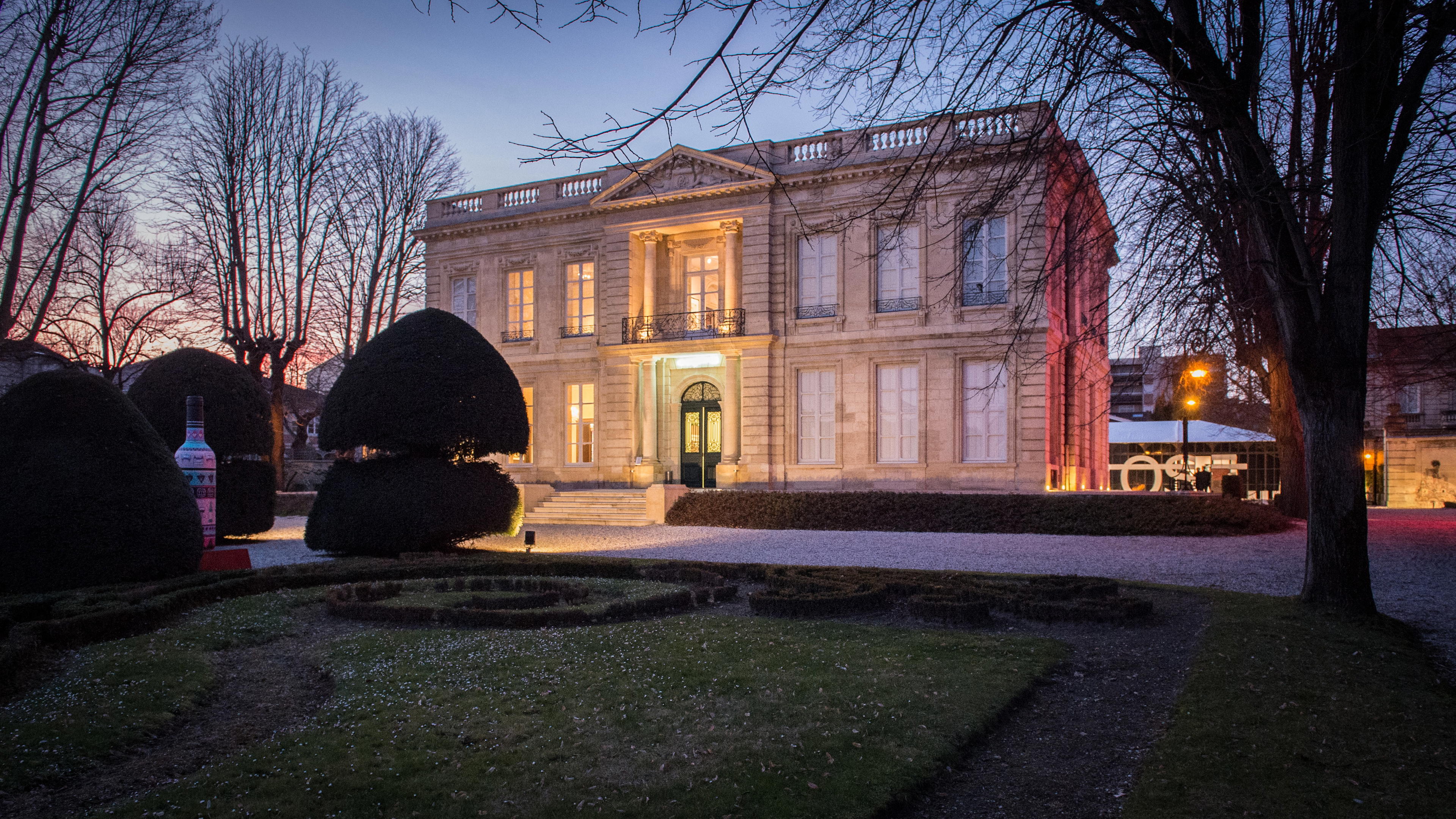
- Historic Building
- Extensive Wine List
Current opening hours
- Monday
- 12–2 PM, 7–10:15 PM
- Tuesday
- 12–2 PM, 7–10:15 PM
- Wednesday
- 12–2 PM, 7–10:15 PM
- Thursday
- 12–2 PM, 7–10:15 PM
- Friday
- 12–2 PM, 7–10:15 PM
- Saturday
- 12–2 PM, 7–10:15 PM
- Sunday
- 12–2 PM, 7–10:15 PM
Hours can change for holidays and private events. Last verified .
Cozy classic bistro with yellow and black Scottish decor, efficient bustling atmosphere, and multi-floor seating creating an well-known, lively dining experience.
Know Before You Go
- Getting there
- 4 Cr du 30 Juillet, 33000 Bordeaux, France