Legast sits on the Chaussée de Roeulx in Soignies, a Walloon town that rarely appears on Belgian fine-dining circuits despite its proximity to the Hainaut agricultural belt.
Pearl is the En Primeur Club membership app — saves, bookings, and concierge access live there. Same editors, same standards.
- Address
- Chau. de Roeulx 409, 7062 Soignies, Belgium
- Phone
- +3267213022
- Website
- legastchocolatier.com
- Directions
- Get directions
 Saves & bookings on Pearl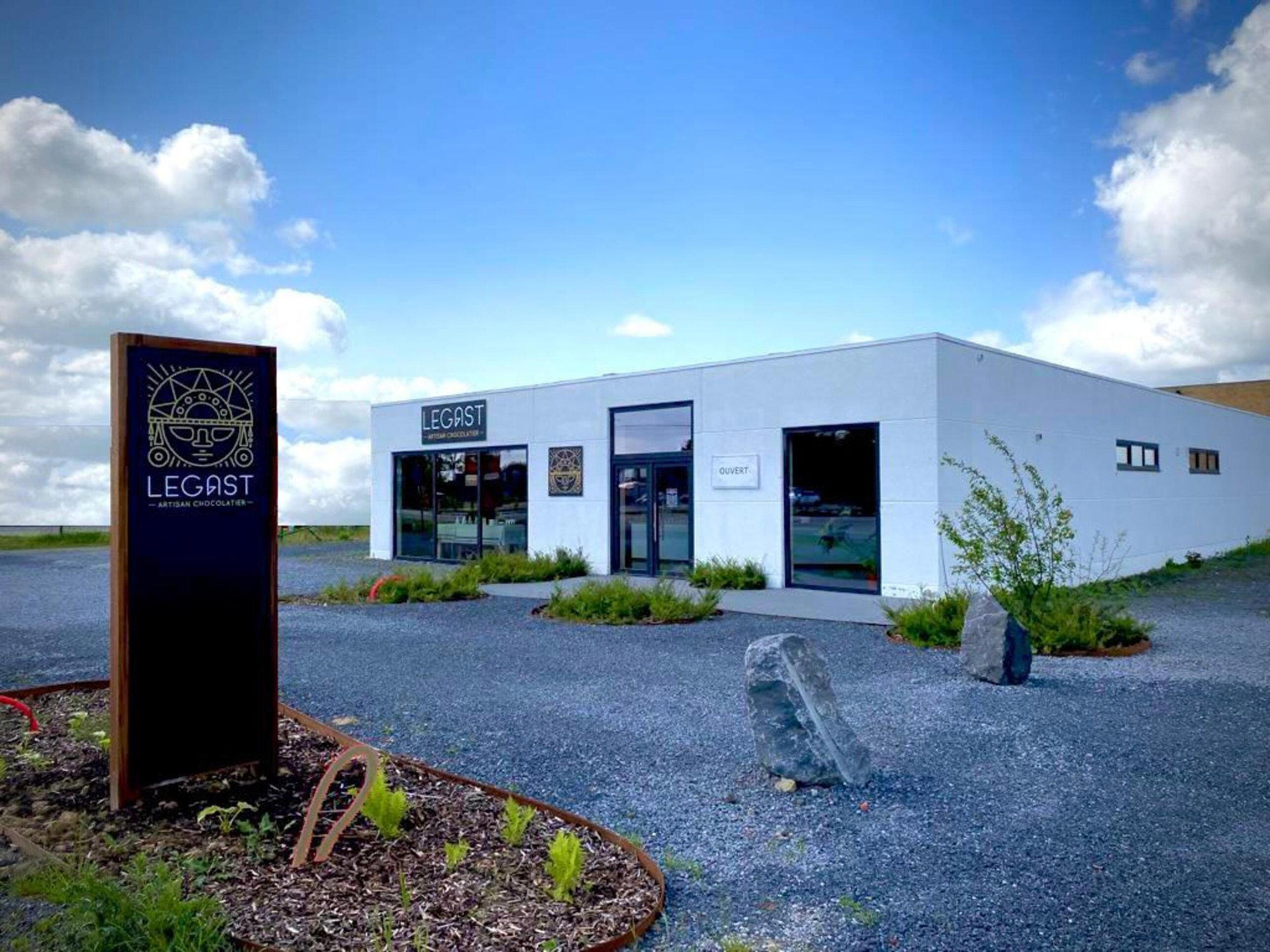
Soignies and the Hainaut Dining Circuit
Belgium's most-discussed restaurants cluster in Ghent, Bruges, and the Flemish coast, where Michelin inspectors make regular rounds and chefs like Tim Boury at Boury in Roeselare or the team at Zilte in Antwerp have built reputations that cross national borders. Wallonia operates differently. The province of Hainaut, which stretches from the French border eastward through Soignies, sits on some of Belgium's most productive agricultural land — cereal crops, sugar beet, dairy — yet rarely produces the kind of media-ready restaurant story that draws international attention. That gap between what the land produces and what the dining scene receives in coverage is exactly where a restaurant like Legast, on the Chaussée de Roeulx at the western edge of Soignies, occupies its position.
The Soignies restaurant scene is compact. L'Embellie handles modern cuisine at the more formal end of the local market, while Le Bouchon et l'Assiette anchors the farm-to-table conversation in town. Within that small field, Legast holds a distinct address: the Chaussée de Roeulx corridor runs through an area where agricultural supply chains are close to the kitchen door, not several distribution layers removed. For a full picture of where Legast sits relative to the town's other options, the EP Club Soignies restaurants guide maps the broader scene.
What the Hainaut Terroir Argument Looks Like in Practice
Across Belgian fine dining, the sourcing conversation has moved from general principle to specific accountability. Restaurants at the level of L'air du temps in Liernu or Willem Hiele in Oudenburg have built part of their critical identity around traceability, named farms, defined geographies, seasonal windows that dictate the menu rather than decorate it. This is not a minor aesthetic preference. It represents a structural shift in how serious Belgian kitchens source, price, and construct their menus, with shorter supply chains producing both better produce and higher food-cost ratios that press upward on price.
Hainaut is well-positioned to support that model. The region's flat, clay-rich soils produce vegetables, grains, and livestock within short transport distances of any kitchen on the Chaussée de Roeulx. Restaurants that commit to this supply geography are making a decision about seasonality that limits flexibility but increases specificity: asparagus from the Gaume has a different texture profile than Flemish varieties; Hainaut chicory has its own harvest calendar. When a kitchen builds around what is actually growing nearby, the menu becomes a function of place rather than preference, a distinction that matters to the reader deciding between restaurants in the same price tier.
Comparable kitchens that have made sourcing geography a defining element of their identity include Castor in Beveren and De Jonkman in Sint-Kruis, both of which operate at the €€€€ tier with sourcing practices that anchor their menus to regional produce cycles. At the international level, the sourcing-led model has been applied across very different contexts, from Le Bernardin in New York City, where supply chain control defines product quality, to Atomix in New York City, where origin narrative is built directly into the dining format.
The Broader Wallonian Context
Restaurants in Wallonia that operate outside Brussels face a structural challenge: the Belgian fine-dining audience is concentrated in the capital and in Flanders, and the review infrastructure reflects that. Bozar Restaurant in Brussels benefits from proximity to the national media and diplomatic circuit. Le Chalet de la Forêt in Uccle operates within Brussels' most affluent residential commune. Provincial Wallonian restaurants, including those in Soignies, do not have those advantages, which means their reputations are built more slowly through local regulars and regional word-of-mouth than through national press cycles.
That dynamic has a predictable effect on how such restaurants are discovered and evaluated. The absence of extensive published data on Legast is consistent with this pattern rather than being a signal about quality. Restaurants like d'Eugénie à Emilie in Baudour and La Table de Maxime in Our operate in similarly low-profile Hainaut settings, drawing regional loyalty without the same media footprint as their Flemish or Brussels counterparts. The same is true for Bartholomeus in Heist and Hof van Cleve in Kruishoutem, which took years to build national profiles from provincial bases. La Durée in Izegem follows a similar trajectory.
Planning a Visit
Soignies sits roughly 40 kilometres southwest of Brussels, accessible by train from Brussels-Midi with a journey time under an hour. The Chaussée de Roeulx address places Legast at the edge of the town centre, reachable on foot from the station or by a short taxi connection. This kind of pre-visit confirmation is standard practice for smaller provincial restaurants in Belgium that do not maintain active online booking systems.
How Legast Soignies compares with similar nearby venues.
| Venue | Cuisine | Price |
|---|---|---|
| Le Bouchon et l'Assiette | Farm to table | €€€ |
| L'Embellie | Modern Cuisine | €€ |
| Le Pilori | Modern French | €€€ |
| Le Métro | Italian | €€€ |
Continue exploring
More in Soignies
Restaurants in Soignies
Browse all →
Bars in Soignies
Browse all →
Hotels in Soignies
Browse all →
Wineries in Soignies
Browse all →
At a Glance
- Casual Hangout
- Local Sourcing
Current opening hours
- Monday
- Closed
- Tuesday
- 10 AM–1:30 PM, 2–6 PM
- Wednesday
- 10 AM–1:30 PM, 2–6 PM
- Thursday
- 10 AM–1:30 PM, 2–6 PM
- Friday
- 9:30 AM–1:30 PM, 2–6 PM
- Saturday
- 10 AM–1:30 PM, 2–6 PM
- Sunday
- Closed
Hours can change for holidays and private events. Last verified .
Charming and passionate workshop atmosphere focused on artisanal chocolate making.
Know Before You Go
- Getting there
- Chau. de Roeulx 409, 7062 Soignies, Belgium