


Michelin Plate · Tabelog 100 #29
Our verdict
A Minami-Aoyama basement restaurant holding a Michelin Plate for two consecutive years, L'EAU frames French cuisine through a Japanese naturalist lens. Chef Takamitsu Shimizu uses driftwood, charcoal, and stone to create a dining room that reads as landscape first, restaurant second. The seasonal menu, anchored by the 'Water, Leaf, Soil, Tree' amuse bouche, draws from specific Japanese producers and growing regions.

Pearl is the En Primeur Club membership app, where members save venues, book tables and use the concierge.
The menu
What to order
- Miso-Glazed Black Cod
- Sashimi Platter
- Eel with Chrysanthemum
- Abalone with Cep Mushroom
A Basement That Reads as Forest Floor
Minami-Aoyama has long operated as Tokyo's quieter counterpoint to the Roppongi dining circuit. The neighbourhood attracts galleries, architecture studios, and a restaurant cohort that tends toward considered restraint rather than spectacle. On a side street off Aoyama-dori, descending into the B1F of the Kfk Building, you enter a room where the design vocabulary is driftwood, charcoal, and raw stone, materials that signal intention before a single dish arrives. The space is less decorated than curated, each element chosen to reinforce a single editorial point about the natural world.
This is the physical context in which L'EAU operates, and understanding it matters for the food. Tokyo's French dining tier has spent the better part of two decades splitting into distinct camps: the classical formalists (see Château Restaurant Joël Robuchon), the technique-led innovators (see L'Effervescence and Sézanne), and a smaller cohort that treats French structure as a frame for Japanese ingredient philosophy. L'EAU belongs to that third group, and its design scheme is not decoration, it is argument.
The Evolution: From French Technique to Nature Document
Tokyo's French restaurants have undergone a visible trajectory over the past decade. An earlier generation prioritised classical credentials and imported references; what followed was a period of explicit Japan-France hybridity, with chefs making the cross-influence legible through ingredient sourcing, plating aesthetics, and menu language. The current phase, represented by rooms like L'EAU, goes further: the cuisine is less about negotiating two traditions and more about using French technical grammar to articulate something specific about Japanese terroir, seasonality, and producer relationships.
This shift has parallels elsewhere in the city. Florilège traces a similar arc from technique-showcase to social-context cooking. ESqUISSE situates French craft within Japanese material culture. What distinguishes L'EAU's iteration is that the naturalist premise extends from the room itself into every component of the meal, functioning more like a sustained curatorial statement than a menu format.
Chef Takamitsu Shimizu's role here is that of interpreter rather than star: the menu is organised around his reading of specific producing regions and the seasonal logic of mountain and sea harvests. The Michelin Plate recognition in both 2024 and 2025 confirms a floor of technical execution without placing L'EAU in the starred tier occupied by neighbours like L'Effervescence, a distinction that matters for how you should calibrate expectations and budget. At ¥¥¥ pricing, L'EAU sits a tier below the ¥¥¥¥ French houses in Tokyo, which include some of the city's most booked rooms.
The Menu Logic: Seasons as Architecture
The amuse bouche titled 'Water, Leaf, Soil, Tree' functions as a thesis statement: four elements that frame everything that follows. Serving vessels are moulded into the shapes of mosses and plants, a formal choice that extends the room's naturalist argument into the tableware itself. Bite-sized portions drawn from mountain and sea sourcing are presented as a producer map as much as a tasting progression.
This approach to menu architecture, where ingredient provenance and seasonal specificity drive the sequence rather than classical French course structure, has become a recognisable signature in a certain tier of Tokyo French dining. It asks the diner to read each plate as a document of where and when, not just what. For guests accustomed to kaiseki's explicit seasonal logic, the framework will feel immediately legible. For those arriving from purely classical French backgrounds, it represents one of the more coherent translations of Japanese ingredient culture into a Western fine-dining format.
No specific signature dishes appear in the available record, which means ordering strategy should be guided by what is seasonal at time of visit rather than any fixed reference point. This is, in itself, consistent with the restaurant's stated premise: the menu is designed to change as producing regions change.
Tokyo French Dining: Where L'EAU Sits
Positioning L'EAU within Tokyo's French restaurant hierarchy requires acknowledging that the city now sustains one of the most competitive French dining ecosystems outside France itself. Three-star French houses, two-star innovators, and Michelin Plate-level practitioners coexist across price tiers, with meaningful differences in format, ambition, and audience. L'EAU's ¥¥¥ positioning places it in the same general bracket as Florilège and the innovative-Japanese tier represented by Den, rather than the ¥¥¥¥ rooms where L'Effervescence and Sézanne operate.
For context across Japan's broader French-influenced fine dining scene, the naturalist and terroir-led approach visible at L'EAU finds regional parallels at HAJIME in Osaka, where French technique and Japanese ecological thinking intersect at a higher star level, and at akordu in Nara, which applies European craft to a deeply regional Japanese ingredient base. Internationally, the question of how French restaurant discipline translates into a non-French cultural context is one addressed by rooms as different as Les Amis in Singapore and Hotel de Ville Crissier in Crissier, though the specific naturalist register L'EAU occupies is a more localised proposition.
This is consistent with the B1F basement format, which tends to reinforce deliberate destination dining rather than spontaneous visits.
Planning Your Visit
L'EAU is located at 2 Chome-14-14 Minami-Aoyama, Minato City, Tokyo, in the basement level of the Kfk Building. Minami-Aoyama is accessible from Omotesando Station on the Ginza, Chiyoda, and Hanzomon lines. The ¥¥¥ price tier places it at a meaningful step below the city's top-tier French houses, making it a practical entry point into Tokyo's nature-led French dining cohort. The Michelin Plate designation for 2024 and 2025 provides a recognised benchmark for quality at this address.
For broader planning across the city, see our full Tokyo restaurants guide, our full Tokyo hotels guide, our full Tokyo bars guide, our full Tokyo wineries guide, and our full Tokyo experiences guide. For dining beyond Tokyo, Gion Sasaki in Kyoto, Goh in Fukuoka, 1000 in Yokohama, and 6 in Okinawa represent the range of serious dining available across Japan's regions.
Quick reference: L'EAU, B1F Kfk Building, 2-14-14 Minami-Aoyama, Minato City, Tokyo. French, ¥¥¥.
Frequently asked questions
What should I order at L'EAU?
The menu at L'EAU is structured around seasonal sourcing from specific Japanese producing regions, which means no fixed dish list operates year-round. The 'Water, Leaf, Soil, Tree' amuse bouche sequence is the established opening framework and gives the clearest signal of the kitchen's philosophy: mountain and sea ingredients presented in vessels shaped like mosses and plants, each portion tied to a specific producer. Given the Michelin Plate recognition in both 2024 and 2025 and the naturalist premise that governs the room, the most reliable approach is to take the full menu as offered at the time of your visit rather than selecting a la carte. The cuisine is designed as a seasonal document, and the sequence is the product.
What is the ideal way to book L'EAU?
At this price tier in Tokyo (¥¥¥, Michelin Plate), reservations are generally handled either through the restaurant directly, via a hotel concierge with Tokyo relationships, or through a specialist dining reservation service. Advance planning of at least several weeks is advisable, and if you are visiting from outside Japan, a concierge approach tends to produce more reliable results than self-booking across a language barrier. The Minami-Aoyama address and basement format indicate a destination that rewards intentional scheduling rather than spontaneous visits.
Cuisine Context
A quick peer check to anchor this venue’s price and recognition.
| Venue | Cuisine | Price | Awards | Notes |
|---|---|---|---|---|
| L'EAUThis venue (the venue you are viewing) | Innovative French with Japanese Seasonal Ingredients | $200–300 | Michelin Plate · Tabelog 100 #29 | Not listed |
| Harutaka | Edo-Style Omakase Sushi | $200–300 | 3 Michelin Stars · World's 50 Best #76 | Sushi |
| RyuGin | Modern Kaiseki | $500+ | 3 Michelin Stars · World's 50 Best #41 | Kaiseki, Japanese |
| L'Effervescence | Modern French with Japanese Influences | $200–300 | 3 Michelin Stars · World's 50 Best #69 | French |
| HOMMAGE | Modern French with Japanese Influences | $150–200 | 2 Michelin Stars · World's 50 Best #78 | Innovtive French, French |
| MAZ | Innovative Peruvian-Japanese Fusion | $150–200 | 2 Michelin Stars · World's 50 Best #28 | Innovative |
Recognition history
Dated appearances from independent guides and award organizations, with the underlying list record or original source where available.
Michelin Plate
Michelin
Opinionated About Dining Top Restaurants in Japan Recommended
Opinionated About Dining
Tabelog 100 #29 · No. 29
Tabelog · Tabelog 100 - French - TOKYO - 2025
Full recognition history (5 entries)
Michelin Plate
Michelin
Michelin Plate
Michelin
Continue exploring
More in Tokyo
Restaurants in Tokyo
All restaurants in Tokyo →




Bars in Tokyo
All bars in Tokyo →




Details
- Elegant
- Sophisticated
- Intimate
- Modern
- Date Night
- Special Occasion
- Celebration
- Business Dinner
- Open Kitchen
- Design Destination
- Standalone
- Sommelier Led
- Farm To Table
- Organic
- Local Sourcing
- Sustainable Seafood
- Zero Waste
- Tasting Menu
- Prix Fixe
- Wine
- French Wine
- Allergy Accommodating
- Organic Focus
- Pescatarian Friendly
Current opening hours
- Monday
- Closed
- Tuesday
- Closed
- Wednesday
- 12–3 PM, 6–10 PM
- Thursday
- 12–3 PM, 6–10 PM
- Friday
- 12–3 PM, 6–10 PM
- Saturday
- 12–3 PM, 6–10 PM
- Sunday
- 12–3 PM, 6–10 PM
Hours can change for holidays and private events. Last verified .
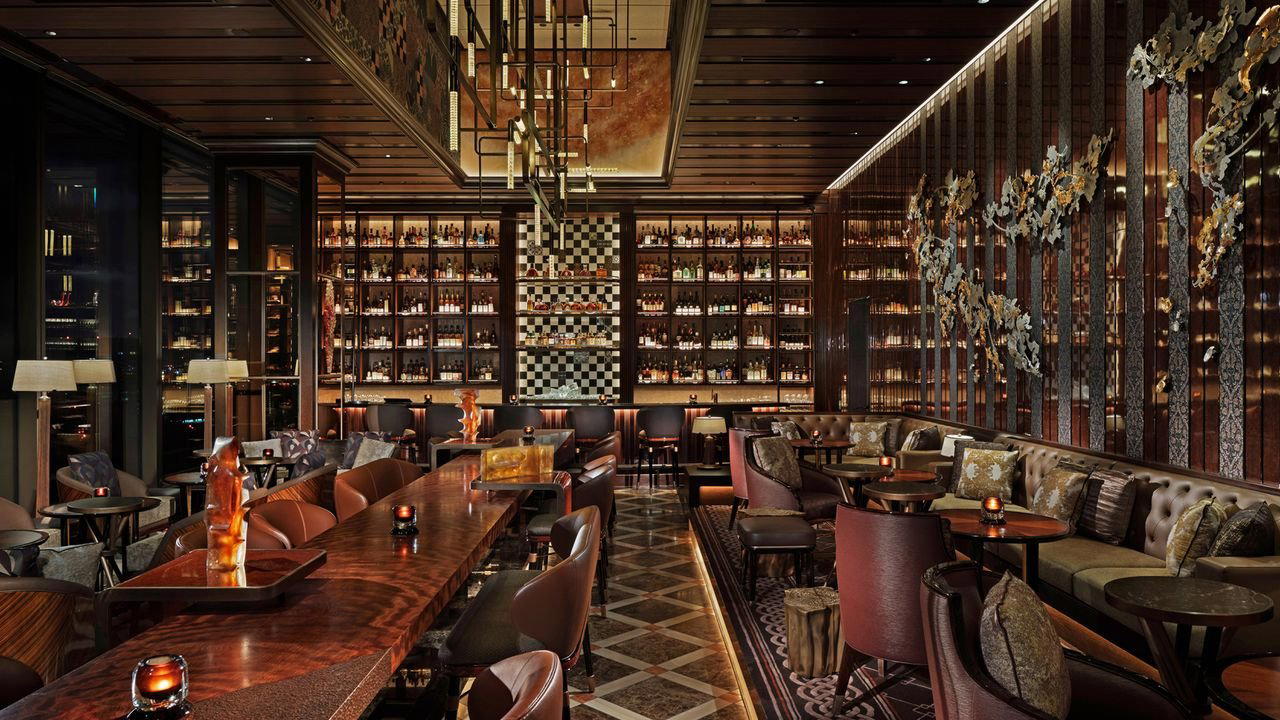
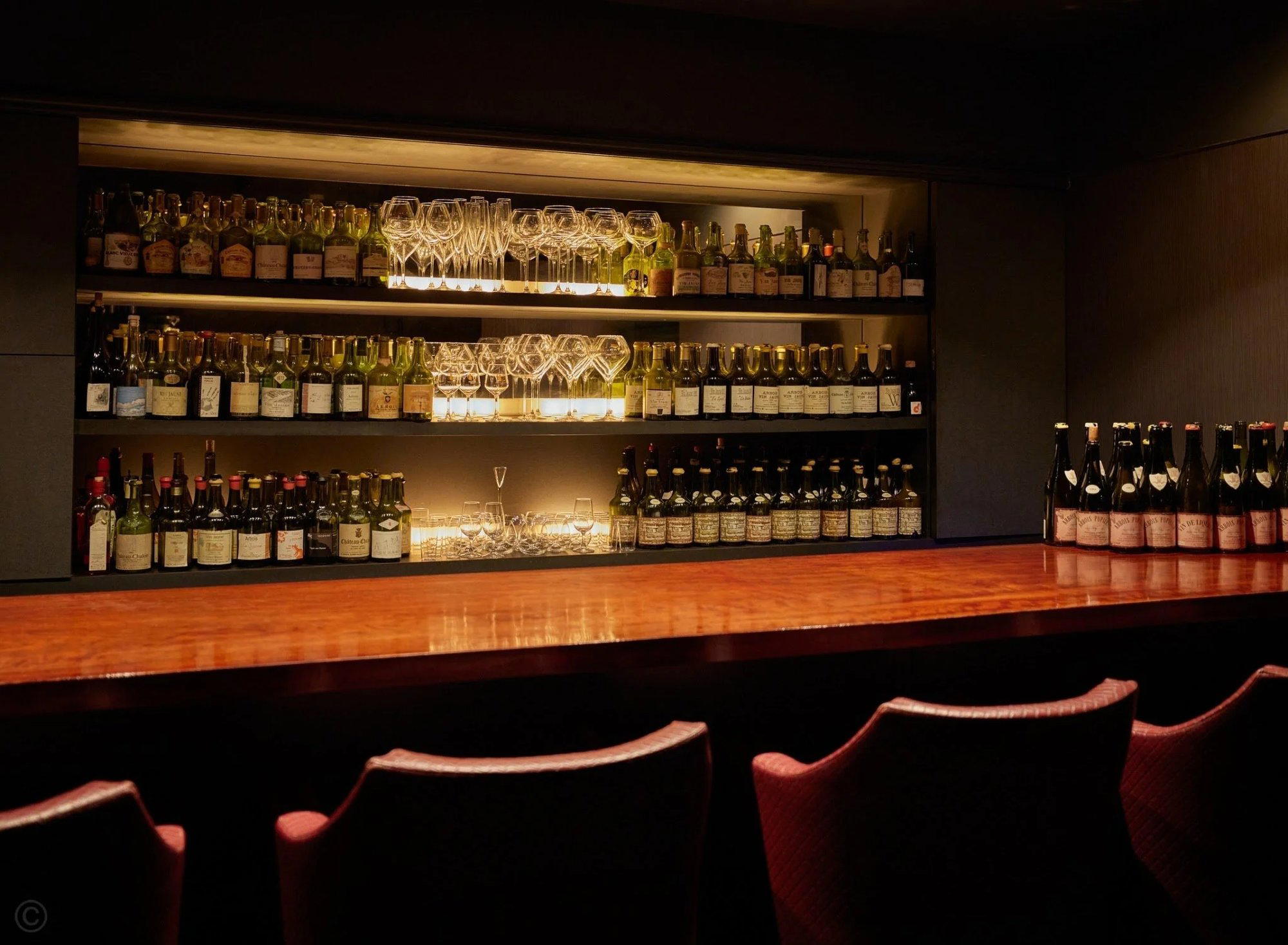
Underground elegant space with warm, sophisticated atmosphere; stone walls adorned with driftwood and charcoal; spacious seating with sofa options; calm yet refined setting that feels like stepping into a peaceful forest.