On the edge of the 17th arrondissement, Le Truffaut sits in a part of Paris where neighbourhood restaurants still operate on the logic of produce first, theatre second. The address on Rue Truffaut places it among a quieter cohort of French dining rooms that position ingredient sourcing as the central editorial argument, rather than a footnote to the chef's biography.
Pearl is the En Primeur Club membership app — saves, bookings, and concierge access live there. Same editors, same standards.
- Address
- 89 Rue Truffaut, 75017 Paris, France
- Phone
- +33987566756
- Website
- restaurantletruffaut.com
- Directions
- Get directions
 Saves & bookings on Pearl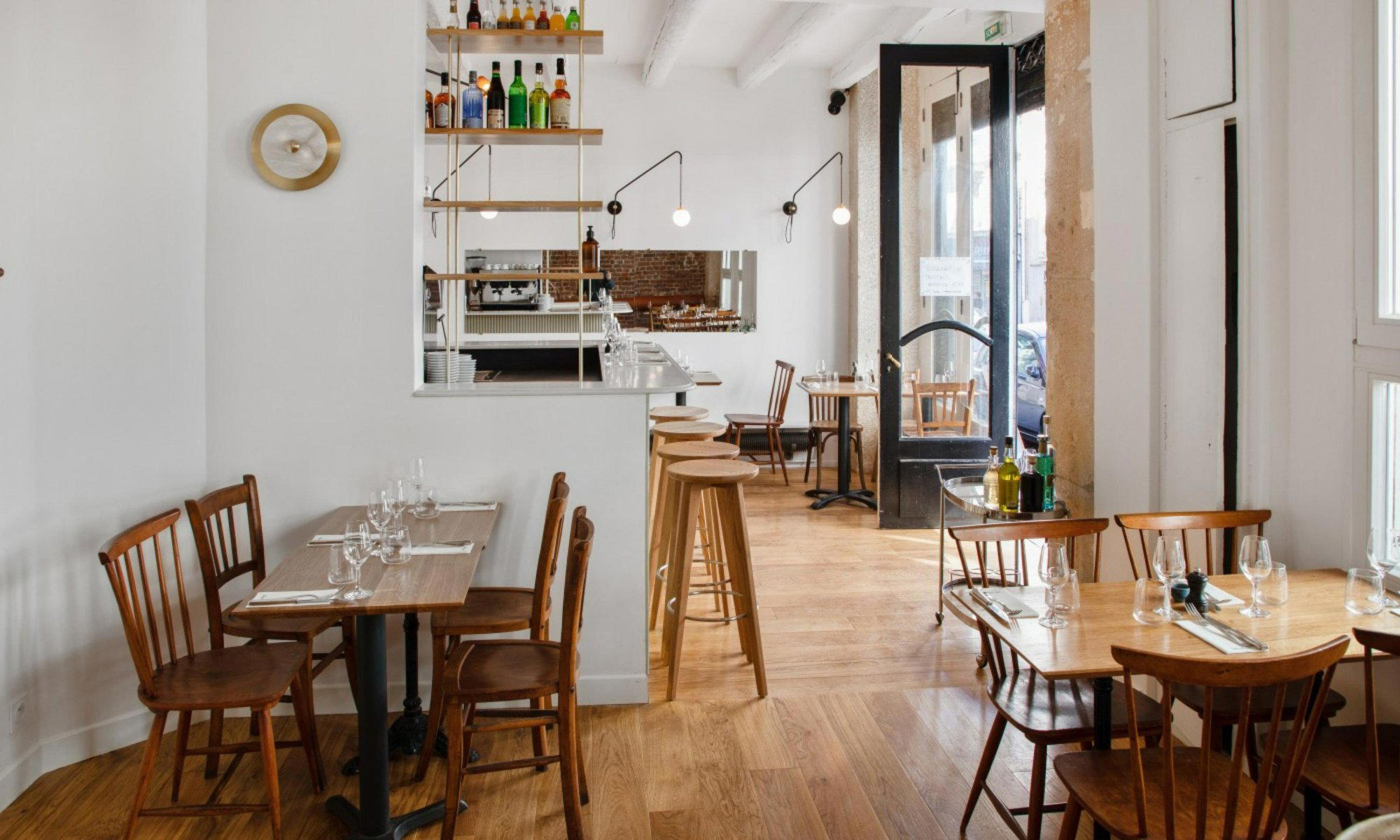
Where the 17th Arrondissement Eats Seriously
The Batignolles quarter of Paris's 17th arrondissement has always occupied an ambiguous position in the city's restaurant hierarchy. Too residential to attract the trophy-dining crowd, too close to the city's serious food infrastructure to settle for mediocrity, it produces a particular kind of dining room: one that earns its reputation through the quality of what arrives from the market rather than the size of its press file. Le Truffaut is a Modern French Bistro at 89 Rue Truffaut in Paris's 17th arrondissement. Le Truffaut, at 89 Rue Truffaut, sits squarely inside that tradition.
Paris's premium dining tier is well-documented. Counters like Alléno Paris au Pavillon Ledoyen and Arpège operate at a level where the sourcing story is inseparable from the proposition, Passard's vegetable garden in the Sarthe being one cited example in French fine dining. But sourcing-led cooking is not exclusive to three-star addresses. A second, less visible tier of Parisian restaurants has built its credibility on the same logic: fewer intermediaries between field and plate, seasonal constraint treated as a discipline rather than a marketing claim, and menus that change as supply changes rather than as the calendar dictates.
The Sourcing Argument in French Cooking
France's appellation and terroir culture, so dominant in wine, has a slower but genuine equivalent in food. The idea that geography determines flavour, that a Bresse chicken tastes different from a factory bird for specific, traceable reasons, underpins a school of French cooking that predates the modern farm-to-table idiom by several decades. Kitchens that operate inside this tradition tend to share a set of practices: relationships with named producers, menus that acknowledge seasonal scarcity, and a reluctance to substitute when the right ingredient isn't available.
This approach places Le Truffaut in a different competitive conversation from the grand-hotel dining rooms of the 8th arrondissement. Le Cinq at the Four Seasons George V and Kei operate in a format where the room and the service structure carry as much weight as the plate. The Batignolles model, by contrast, asks the ingredient to do more of the work. It is a stricter test, and one that rewards consistency over spectacle.
Among the French kitchens that have made sourcing the central argument, particularly instructive comparisons lie outside Paris. Bras in Laguiole built its reputation on the Aubrac plateau's specific flora, embedding geography into every plate in a way that would be impossible to replicate in another region. Flocons de Sel in Megève draws the same connection between alpine terrain and table. Mirazur in Menton has made its own garden and the Mediterranean's seasonal rhythms the organising principle of its menu. These are the terms in which serious produce-led cooking is now evaluated in France.
The 17th as a Dining Address
The 17th arrondissement is not where most visitors expect to find serious cooking. The 8th and 1st dominate international coverage, with L'Ambroisie on Place des Vosges representing the apex of the classic French tradition in a setting that justifies the pilgrimage. But the 17th has its own logic. The Batignolles market, one of the city's organic-certified weekly markets, anchors a neighbourhood culture around produce in a way that few other Paris quartiers match. Restaurants in the immediate vicinity benefit from proximity to that supply chain, and the neighbourhood's relative affordability (compared to the 6th or 8th) means that kitchen budgets can be weighted toward ingredients rather than rent.
Rue Truffaut itself runs through a part of the arrondissement that retains the physical character of the pre-Haussmann village: narrow frontages, ground-floor commerce, a pace that has more in common with a provincial market town than with the grands boulevards a few kilometres south. The address is not incidental to the proposition.
France's Broader Sourcing Tradition
Particularly durable French restaurants outside Paris share a common structure: a relationship with a specific landscape, communicated through the produce that landscape generates. Auberge de l'Ill in Illhaeusern has sustained its position through Alsatian produce and technique for decades. Troisgros in Ouches relocated to be closer to its supply sources, a decision that clarified the kitchen's priorities publicly. Auberge du Vieux Puits in Fontjoncouse operates from a village of fewer than 200 people, a location that functions as a statement about what the kitchen values. Even Paul Bocuse's Auberge du Pont de Collonges built its foundational reputation on Lyon's produce economy before accumulating the institutional weight it carries today.
The French provinces have also generated more recent sourcing-led projects. AM par Alexandre Mazzia in Marseille and Assiette Champenoise in Reims both operate within strong regional produce cultures. Au Crocodile in Strasbourg has maintained the Alsatian tradition of market-driven menus across multiple generations. These are the reference points against which a sourcing-serious Paris address is reasonably measured.
For international context, the conversation extends further. Le Bernardin in New York has built a decades-long reputation on fish sourcing that rivals anything in Paris. Atomix in New York applies a comparable rigour to Korean ingredients within a tasting-menu format. The sourcing argument, in other words, is not a French monopoly, but France remains the tradition in which it carries cultural weight.
Know Before You Go
- Address: 89 Rue Truffaut, 75017 Paris, France
- Neighbourhood: Batignolles, 17th arrondissement
- Nearest Metro: Rome (Line 2) or La Fourche (Line 13), both within walking distance of Rue Truffaut
- Price range: around $40 per person
- Booking: reservation recommended
- Hours: Mon: 12–2 PM, 7:30–10 PM; Tue: 12–2 PM, 7:30–10 PM; Wed: 12–2 PM, 7:30–10 PM; Thu: 12–2 PM, 7:30–10 PM; Fri: 12–2:30 PM, 7:30–10 PM; Sat: Closed; Sun: Closed
The Minimal Set
Comparable venues nearby, for context on price, style, and recognition.
| Venue | Cuisine | Price | Notes |
|---|---|---|---|
| Le TruffautThis venue — the venue you are viewing | Batignolles, Modern French Bistro | $$$ | Not listed |
| L’Endroit | Not listed | $$$ | Batignolles, Bistronomic French Brasserie |
| Les Poulettes Batignolles | Not listed | $$$ | Batignolles-Monceau, French-Catalan Bistro |
| Joy | Not listed | $$$ | 8th Arr., Modern French Bistro |
| L'Entr'Acte | Not listed | $$$ | 18th Arrondissement - Butte-Montmartre, Traditional French Bistro |
| Bistrot Belhara | Not listed | $$$ | 7th Arrondissement, Modern French Bistro with Basque Influences |
Continue exploring
More in Paris
Restaurants in Paris
Browse all →

Bars in Paris
Browse all →
Hotels in Paris
Browse all →



At a Glance
- Classic
- Cozy
- Elegant
- Date Night
- Casual Hangout
- Terrace
- Natural Wine
- Local Sourcing
Current opening hours
- Monday
- 12–2 PM, 7:30–10 PM
- Tuesday
- 12–2 PM, 7:30–10 PM
- Wednesday
- 12–2 PM, 7:30–10 PM
- Thursday
- 12–2 PM, 7:30–10 PM
- Friday
- 12–2:30 PM, 7:30–10 PM
- Saturday
- Closed
- Sunday
- Closed
Hours can change for holidays and private events. Last verified .
Clean, traditional bistro with brick walls, orange banquettes, warm suspension lighting, and an animated yet cozy neighborhood feel.