On Rue Duvivier in the 7th arrondissement, Bistrot Belhara occupies the kind of address that rewards those who plan ahead rather than wander in. The cooking sits within the Basque-inflected bistrot tradition that has carved a quiet but serious niche in Paris's left bank dining scene. Booking strategy matters here as much as menu choice.
Pearl is the En Primeur Club membership app — saves, bookings, and concierge access live there. Same editors, same standards.
- Address
- 23 Rue Duvivier, 75007 Paris, France
- Phone
- +33 1 45 51 41 77
- Website
- bistrotbelhara.com
- Directions
- Get directions
 Saves & bookings on Pearl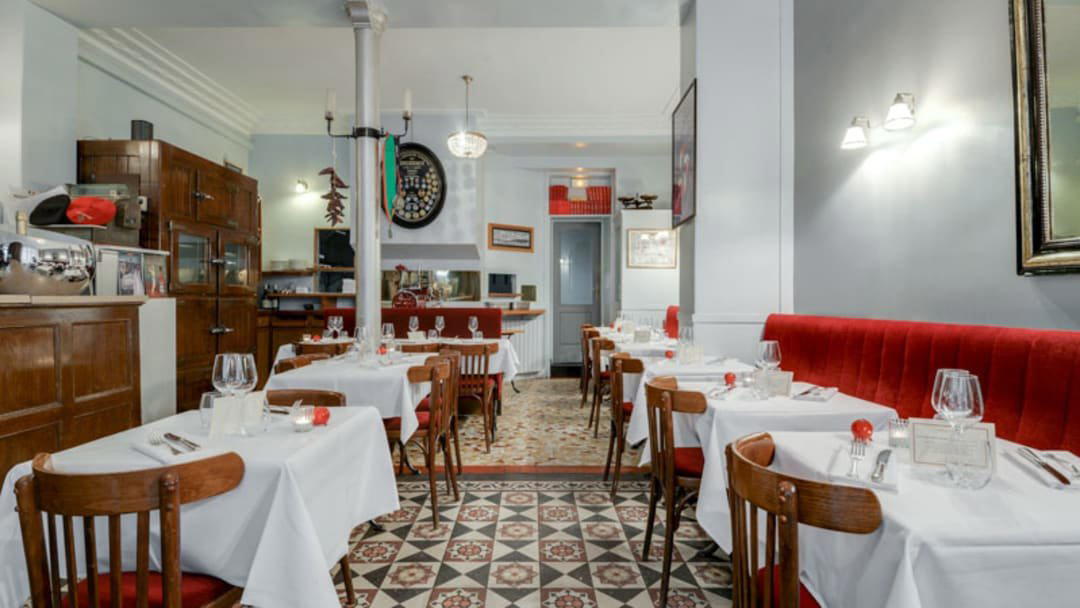
The 7th Arrondissement and the Bistrot Tradition It Sustains
Bistrot Belhara is a Paris restaurant in the 7th arrondissement, serving modern French bistro cooking with Basque influences and averaging about US$50 per person. One is the grand institutional tier: the rooms where jacket-wearing diners sit beneath chandeliers and pay €€€€ for the privilege, the kind of address represented by Arpège or L'Ambroisie a few arrondissements over. The other is quieter, less photographed, and more Parisian: the neighbourhood bistrot operating at a register where cooking quality and room intimacy matter more than ceremony. Bistrot Belhara at 23 Rue Duvivier belongs to that second track, and it pulls from a specific regional tradition to do it.
Basque-influenced cooking in Paris has a particular character. It draws on the larder of the southwest, piperade, piment d'Espelette, salt cod preparations, Ibérico-adjacent charcuterie, and tends toward directness rather than elaboration. Where the city's three-Michelin-star rooms in the €€€€ tier are building intricate architectural plates, the better Basque bistrots are building flavour. The distinction is intentional. Rue Duvivier, tucked between the Champ de Mars and the Ecole Militaire metro, is a residential pocket that suits the format precisely.
Planning the Booking: What You Need to Know Before You Arrive
Paris's most serious neighbourhood bistrots, not the tourist-orbit brasseries, not the destination tasting-menu rooms, but the compact, high-quality addresses with loyal local clientele, operate on limited covers and fill steadily through repeat custom and word of mouth. Bistrot Belhara fits that model. The address on Rue Duvivier is not the kind of place you walk past and decide to try on the night. Its reputation in the 7th travels primarily through Parisian dining circles rather than international tourism feeds.
That pattern has a practical implication: booking ahead is the operating assumption, not the exception. In the same way that counters at the serious omakase tier in Tokyo or dinner slots at Lazy Bear in San Francisco require advance planning rather than spontaneity, Paris's most consistent neighbourhood bistrots reward callers and bookers who treat the reservation as part of the experience rather than an afterthought. The room is small, the covers are limited, and the regulars know this.
It's the kind of address worth planning a Paris dinner around, particularly if the itinerary already includes a heavier, more formal meal and requires something more grounded and neighbourhood-scaled to balance it.
Where Belhara Sits in the Paris Bistrot Spectrum
France's serious regional cooking traditions have always sustained a diaspora in Paris. The Basque and southwest traditions, specifically, have produced some of the city's most credible mid-market addresses over the past two decades. That's a different competitive comparable set from the national-monument kitchens in the provinces, the cooking of Troisgros in Ouches, Bras in Laguiole, or Auberge de l'Ill in Illhaeusern, but it draws from the same broader French regional-produce logic those rooms have always championed.
In the Paris context, the distinction that matters is between bistrots using regional identity as shorthand and those actually building menus around it with rigour. Belhara's reputation in the 7th places it in the latter group. The Basque label is not decorative here; it orients the sourcing, the technique, and the flavour register. That specificity is exactly what separates it from the generic Parisian bistrot that lists steak-frites and a crème brûlée and calls the job done.
For travellers who have eaten through France's southwest, whether at Les Prés d'Eugénie or at the table-linen end of the Basque Country proper, Belhara reads as a Paris translation of that regional logic rather than an imitation of it. The 7th arrondissement provides the audience; the Basque tradition provides the editorial content of the plate.
For those building a wider French dining picture, the comparison is also useful against the country's other serious regional addresses: Flocons de Sel in Megève, Mirazur in Menton, or Georges Blanc in Vonnas are all expressions of terroir worked into formal dining structures. Belhara applies a version of that regional seriousness at a bistrot scale and a Paris postcode.
The Room and the Register
Small rooms define the serious Paris bistrot category. They create the acoustic intimacy that separates the experience from a brasserie and the relational dining culture that keeps regulars returning. The restaurant's address on Rue Duvivier is residential and low-traffic enough that the room functions as a neighbourhood room first and a destination address second. That balance is one of the harder things to sustain in Paris, where even genuinely local restaurants tend to attract international attention once the reputation reaches a certain altitude.
The approach compares structurally to what the leading French seafood cooking achieves at a room like Le Bernardin in New York City: a clear regional and product logic expressed without excess ceremony. The formats differ enormously by price and scale, but the underlying discipline, knowing what kind of restaurant you are and executing it precisely, is the connective thread. Belhara's version is affordable, neighbourhood-anchored, and Basque-inflected. That clarity of identity is what gives the room its reputation in the 7th.
Planning Your Visit
Reservations: Book ahead; walk-in availability is limited and the room fills through regulars and advance bookings. Address: 23 Rue Duvivier, 75007 Paris; nearest metro is Ecole Militaire (Line 8). Dress: Smart-casual is the 7th arrondissement bistrot norm; no formal dress code, but the room skews away from tourist-casual. Budget: About US$50 per person. Timing: Lunch service can be marginally easier to secure than dinner; evening slots at this tier of Paris bistrot tend to fill first.
What It’s Closest To
Comparable venues nearby, for context on price, style, and recognition.
| Venue | Cuisine | Price | Notes |
|---|---|---|---|
| Bistrot BelharaThis venue — the venue you are viewing | Modern French Bistro with Basque Influences | $$$ | Not listed |
| Saturne | Modern French with Nordic Influences | $$$ | 2nd Arrondissement |
| Truffes Folies | Truffle-Focused French Bistro | $$$ | 75008 |
| La Véraison | Modern French Bistronomic | $$$ | 15th arrondissement (Necker) |
| Le Petit Lutetia | Classic French Brasserie | $$$ | 6th Arrondissement |
| Le Relais Haussmann | Traditional French Bistro | $$$ | 8th arrondissement |
Continue exploring
More in Paris
Restaurants in Paris
Browse all →
Bars in Paris
Browse all →
Hotels in Paris
Browse all →



At a Glance
- Cozy
- Elegant
- Classic
- Intimate
- Date Night
- Casual Hangout
- Open Kitchen
Current opening hours
- Monday
- Closed
- Tuesday
- 12–2 PM, 7–10 PM
- Wednesday
- 12–2 PM, 7–10 PM
- Thursday
- 12–2 PM, 7–10 PM
- Friday
- 12–2 PM, 7–10 PM
- Saturday
- 12–2 PM, 7–10 PM
- Sunday
- Closed
Hours can change for holidays and private events. Last verified .
Cozy and authentic bistro atmosphere with wooden tables, red velvet banquettes, soothing light-gray walls, and an Art Deco ceiling.