Les Poulettes Batignolles occupies a quieter register than the grand-room French dining that dominates Paris's international reputation. Situated on Rue de Cheroy in the 17th arrondissement, it operates in a neighbourhood where the dining pace is local rather than tourist-facing, placing it in a different comparable set from the city's trophy-address tables at addresses like L'Ambroisie or Le Cinq.
Pearl is the En Primeur Club membership app — saves, bookings, and concierge access live there. Same editors, same standards.
- Address
- 10 Rue de Cheroy, 75017 Paris, France
- Phone
- +33142931011
- Website
- lespoulettes-batignolles.fr
- Directions
- Get directions
 Saves & bookings on Pearl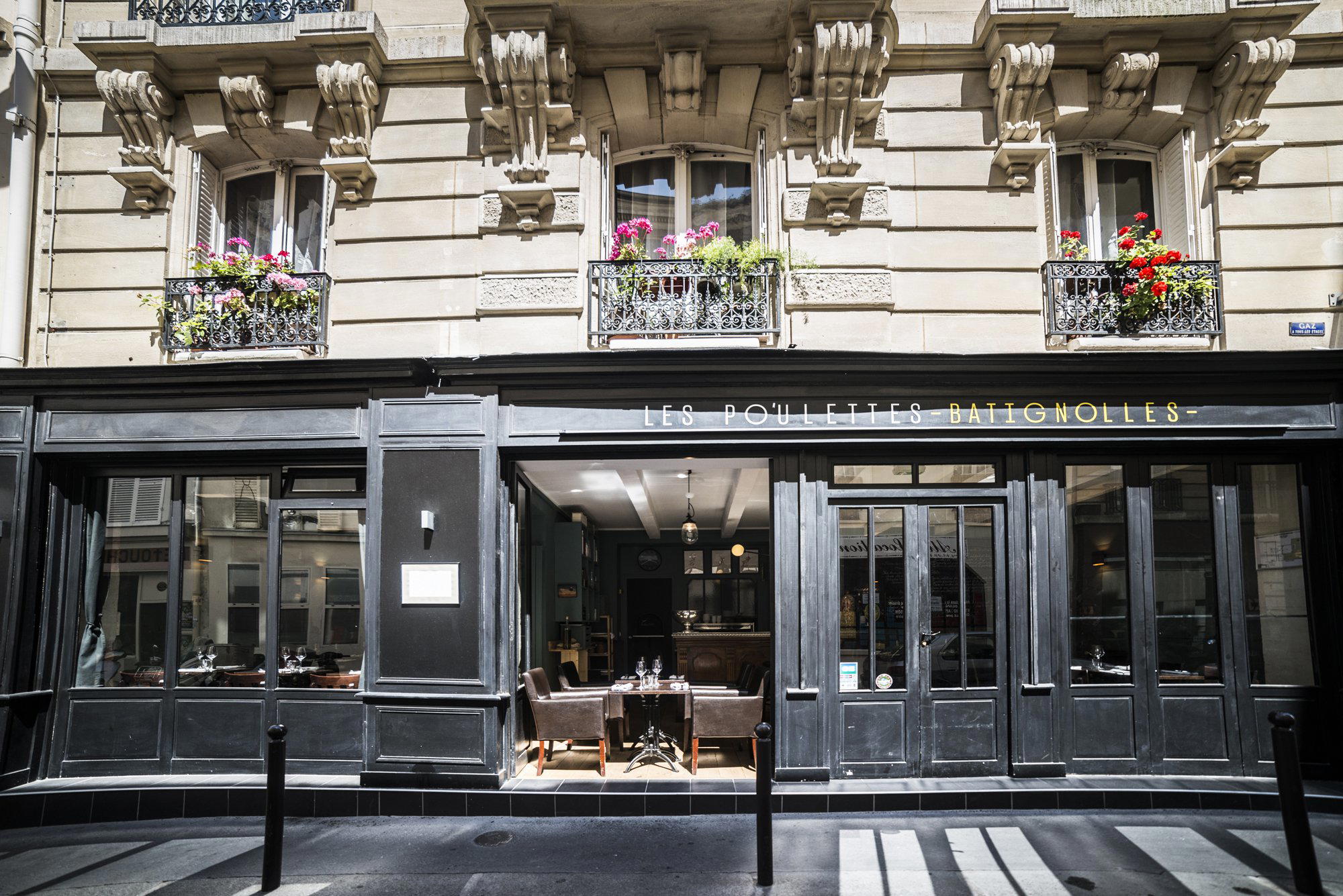
The Batignolles Register: Neighbourhood Dining in the 17th
The 17th arrondissement does not announce itself the way the 8th or the 1st does. There are no palace hotels anchoring the corners, no grand avenues lined with uniformed doormen. The Batignolles quarter, specifically, runs on a quieter social contract: covered market in the morning, local café trade through the afternoon, neighbourhood restaurants carrying the evening. It is in this context that Les Poulettes Batignolles, at 10 Rue de Cheroy, makes its case. The address places it squarely inside a Parisian dining tradition that predates the city's current fixation on tasting menus and Instagram-legible plating, the tradition of the neighbourhood table, where the room serves the quartier rather than the guidebook.
Paris's dining spectrum runs from multi-star destination restaurants such as Alléno Paris au Pavillon Ledoyen and Arpège at one end, through contemporary formats like Kei, down to the resolutely local tables that make up the city's actual daily dining life. Les Poulettes Batignolles operates in that lower register, which in Paris carries its own credibility, the ability to sustain a local clientele over time is a more reliable signal than a first-year reservation queue.
What the Room Communicates Before the Food Arrives
Batignolles bistros tend toward a legible set of physical cues: tiled floors that predate the current owner, paper or chalkboard menus that change with the market, tables close enough together that the conversation at the next seat is not quite private. Whether Les Poulettes adheres to every detail of that template is a question the room itself answers on arrival. What the address suggests is an interior calibrated to regulars, the kind of space where the distance between the kitchen and the dining room, in both physical and tonal terms, is kept short. That compression, in French neighbourhood dining, is generally the point. The formality gradient at a place like L'Ambroisie on Place des Vosges operates on an entirely different register, where the room's grandeur is part of the offer. Here, the neighbourhood itself sets the tone.
The name, poulettes, the informal French for young hens or, colloquially, young women, signals something about the register the restaurant is aiming for: unpretentious, direct, and rooted in everyday French vocabulary rather than the refined nomenclature of fine dining. That kind of naming choice is a positioning statement as much as an identity.
The 17th in Context: Where Batignolles Sits in the Paris Dining Map
The 17th is a large, internally varied arrondissement. Its southern sections, near the Parc Monceau and the upper 8th, share some of the bourgeois density that supports the dining rooms at Le Cinq at the Four Seasons George V. Batignolles, in the north of the 17th, is a different proposition: younger demographically, more mixed in its commerce, with an organic market on Boulevard des Batignolles that signals the neighbourhood's current orientation toward provenance-conscious food culture. That context matters for a restaurant called Les Poulettes. A dining room trading on casual French cooking in Batignolles is operating in a neighbourhood that, over the last decade, has moved steadily toward exactly that food culture, local sourcing, lighter formats, less sauce-heavy classicism.
For visitors arriving from outside Paris, the 17th is not a natural first stop. The neighbourhood draws fewer tourists than the central arrondissements, which means the dining rooms here are largely accountable to local opinion rather than passing trade. That accountability tends to sharpen kitchens. France's most sustained regional cooking has always depended on this model: the table at Auberge de l'Ill in Illhaeusern and Bras in Laguiole both built reputations on local loyalty long before international recognition arrived. The Batignolles neighbourhood table operates on a smaller scale but the same logic.
Planning a Visit: Practical Orientation
Rue de Cheroy is a short street in the Batignolles section of the 17th, most easily reached via the Rome or Villiers metro stations on lines 2 and 3 respectively, both within a few minutes' walk. The neighbourhood is not a destination that requires advance planning at the level of, say, securing a table at Mirazur in Menton or Flocons de Sel in Megève, where booking windows run months out. For current hours, reservation availability, and any menu details, contact the restaurant directly. As with most French neighbourhood restaurants, midweek lunches tend to be the least competitive timing, while weekend evenings fill earliest with local regulars.
The Broader French Dining Tradition It Draws From
The French neighbourhood bistro, at its functional leading, does something that the country's multi-star restaurants are not designed to do: it provides daily continuity. The tables at Paul Bocuse in Collonges-au-Mont-d'Or, Troisgros in Ouches, or Assiette Champenoise in Reims represent the apex of French culinary ambition, and each occupies a different relationship with its local community than a neighbourhood bistro does. The neighbourhood table fills a gap that destination dining cannot, the gap between occasion and routine. Les Poulettes Batignolles, positioned in a quarter with its own distinct culinary character, sits inside that tradition. Its place in that tradition is defined by the room, the kitchen, and the clientele on any given evening.
For reference points in the broader French spectrum, AM par Alexandre Mazzia in Marseille, Au Crocodile in Strasbourg, and Auberge du Vieux Puits in Fontjoncouse each illustrate how French cooking at the summit of its regional game looks outside the capital. Paris's neighbourhood tables, at their leading, connect to the same sourcing instincts without the destination-restaurant apparatus. The leading international counterparts for this kind of serious-but-unshowy urban bistro culture include the kind of technically grounded but low-ceremony rooms found at the New York end of that spectrum, where places like Le Bernardin and Atomix represent the city's high-ambition tier, leaving the neighbourhood middle ground to a different set of operators entirely, a structural gap that Paris, with its density of local bistros, does not have in the same way.
A Minimal comparable set
Comparable venues nearby, for context on price, style, and recognition.
| Venue | Cuisine | Price | Notes |
|---|---|---|---|
| Les Poulettes BatignollesThis venue — the venue you are viewing | Not listed | $$$ | Not listed |
| Momen | Not listed | $$$ | Paris 08, Modern French Bistronomy |
| Angelina | Not listed | $$$ | 1st arrondissement, Classic French Patisserie & Tea Room |
| La Rotonde | Montparnasse, Classic French Brasserie | $$$ | Not listed |
| Chefs à Table | Bastille, Modern French Bistro | $$$ | Not listed |
| Le Cardinal | Not listed | $$$ | 16th Arrondissement, French Brasserie & Seafood |
Continue exploring
More in Paris
Restaurants in Paris
Browse all →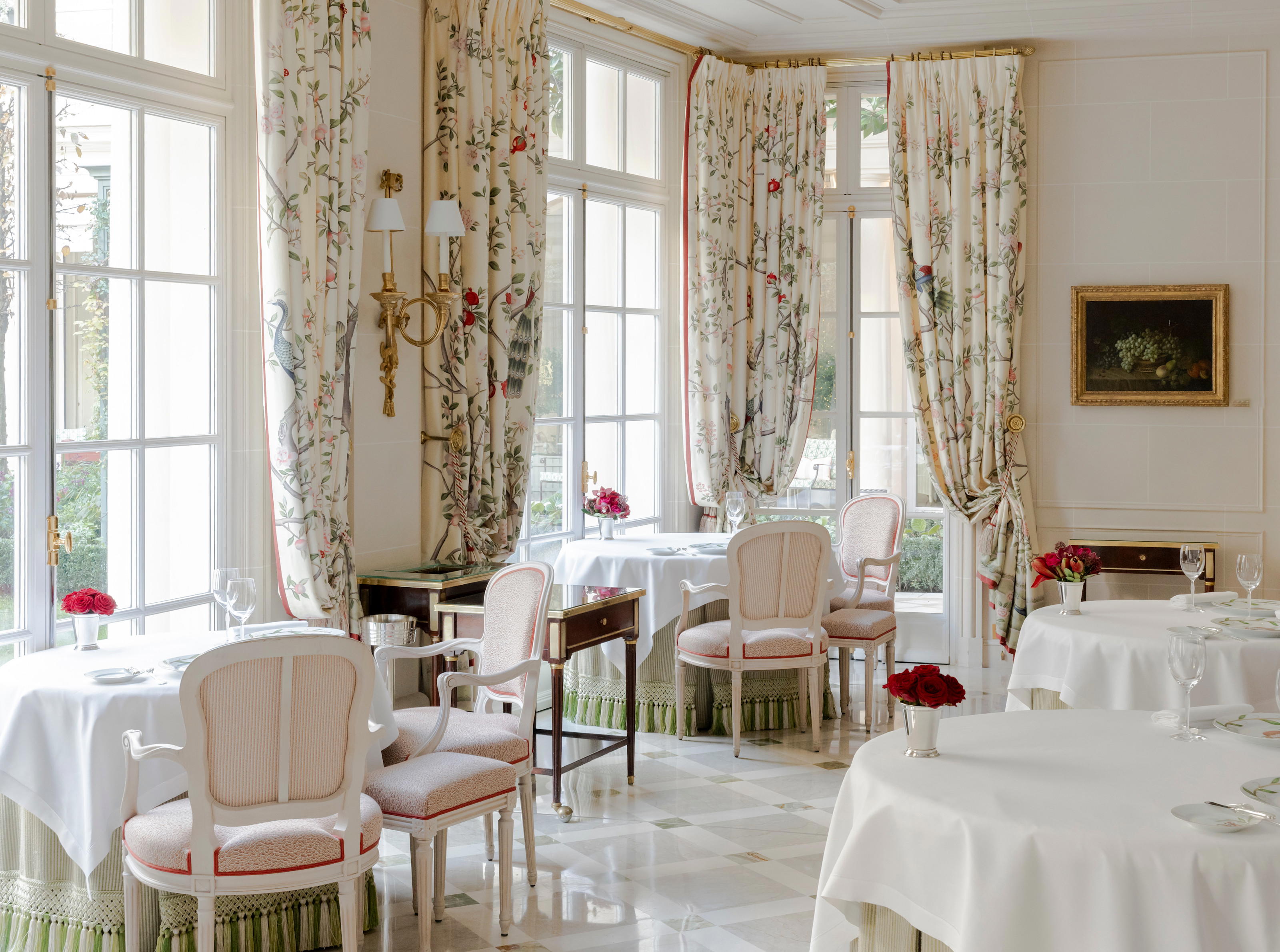

Bars in Paris
Browse all →
Hotels in Paris
Browse all →

At a Glance
- Cozy
- Modern
- Intimate
- Elegant
- Date Night
- Business Dinner
- Group Dining
- Casual Hangout
- Standalone
- Extensive Wine List
- Natural Wine
- Sommelier Led
- Biodynamic
- Local Sourcing
Current opening hours
- Monday
- Closed
- Tuesday
- 12:30–2 PM, 7:30–10 PM
- Wednesday
- 12:30–2 PM, 7:30–10 PM
- Thursday
- 12:30–2 PM, 7:30–10 PM
- Friday
- 12:30–2 PM, 7:30–10 PM
- Saturday
- 7:30–10 PM
- Sunday
- Closed
Hours can change for holidays and private events. Last verified .