
A small Nagoya bakery in Sako with serious regular traffic, Le Supreme. Sakou honten belongs to Japan’s precise, everyday bread culture rather than the grand dining circuit. Its Tabelog Bread 100 selections in 2018, 2019, 2020 and 2022 give it a credentialed place among eastern Japan’s bakery addresses, while the low price band keeps the appeal firmly local.
Pearl is the En Primeur Club membership app — saves, bookings, and concierge access live there. Same editors, same standards.
- Address
- 7-8 Sakocho, Nakamura Ward, Nagoya, Aichi 453-0033, Japan
- Phone
- +81 52-471-3667
- Website
- instagram.com
 Saves & bookings on Pearl
Approaching a neighborhood bakery in Nagoya is different from arriving at a destination restaurant: the rhythm is set by commuters, families, and regulars who know what disappears first. In Sako, the appeal sits in that everyday cadence. Bread in Japan has its own grammar, shaped by shokupan, French technique, convenience-store precision, department-store counters, and small independent shops where the serious customer buys early rather than late.
Le Supreme. Sakou honten belongs to that last category. Its public recognition is not built around a chef biography or tasting-menu theatre, but around the quieter credibility of repeat selection: Tabelog Bread 100 in 2018, 2019, 2020 and 2022, including the Bread EAST list in 2022. For a city often discussed through hitsumabushi, kishimen, miso katsu and tebasaki, a bakery with that track record shows another side of Nagoya dining: practical, technical, and folded into daily life.
Sako's bakery regulars buy by habit, not spectacle
The regulars’ perspective matters here because bakery loyalty is rarely abstract. People return when the case rewards timing, when the categories are broad enough for breakfast, lunch and a sweet stop, and when the price of a routine purchase stays within reach. The listed categories are bread, sandwich and cake, which places the shop in the Japanese boulangerie-patisserie lane rather than a single-product bakery. That range is also why repeat customers tend to develop an unwritten order: something for now, something for later, and something that survives the train ride home.
Japan’s bakery culture often rewards precision over abundance. The serious shops do not need a sprawling dining room or long-form service ritual; the format is closer to a retail counter where the buying decision is fast, visual and repeatable. A Tabelog score of 3.68 in this category carries different weight from a fine-dining rating. It signals consistent customer attention in a field where neighborhood convenience alone does not explain long-running recognition.
The shop’s price band, listed under JPY 999, keeps the experience in the realm of small daily purchases rather than occasion dining. That matters for visitors. Nagoya’s stronger restaurant memories do not always come from formal meals; they also come from understanding how locals use the city. A bakery stop near Sako reveals a different tempo from central hotel breakfasts, station-department food halls or late-night izakaya circuits.
Where it fits in Nagoya's wider eating map
Nagoya is often underestimated by travelers moving between Tokyo, Kyoto and Osaka, partly because its food culture is less dependent on a single photogenic district. The city’s dining strength is distributed: station-adjacent counters, old-school specialty houses, suburban ramen rooms, coffee shops with morning-service habits, and small bakeries that function as part of the weekly routine. Le Supreme. Sakou honten sits within that dispersed pattern rather than trying to behave like a central-city showpiece.
That makes comparison useful, but only by category. Menya Shishimaru, with a JPY 1,000 to JPY 1,999 price band, operates in the ramen lane, where the meal is immediate and bowl-focused. CALA CARMEN, listed at JPY 4,000 to JPY 4,999 for dinner and JPY 2,000 to JPY 2,999 for lunch, belongs to a different spend and pacing bracket. Barikiya, at JPY 5,000 to JPY 5,999, points toward a more deliberate evening decision. A bakery under JPY 999 competes less with those meals than with the question of how a visitor structures a day in Nagoya between stations, hotel check-in and reservations.
The address also says something about confidence. Sako is not the obvious tourist shorthand for Nagoya dining, which is precisely why a bakery with multiple Bread 100 selections is worth reading as a local signal. Recognition here does not depend on a spectacle economy. It depends on people making the same purchase pattern over years, and on list makers taking bread seriously enough to separate it from restaurant glamour.
Use it as a Nagoya food day anchor, not a detour for novelty
The smartest way to think about this stop is as a calibration point. It tells a traveler how Nagoya eats when nobody is performing for visitors. Pairing a bakery run with a broader day of meals gives more insight than treating it as a standalone trophy. The city rewards that kind of pacing: coffee or bread in the morning, a specialty lunch, a more structured dinner, then a bar or hotel nightcap if the itinerary allows.
For a fuller city plan, start with Our full Nagoya restaurants guide, then cross-check sleep, drinking and cultural time through Our full Nagoya hotels guide, Our full Nagoya bars guide, Our full Nagoya wineries guide and Our full Nagoya experiences guide. Nearby dining research can also include 1022, 451, Aaron, Alan. and All Day Dining Montmartre.
Readers comparing Japanese casual formats across cities may also want to file this alongside -Grilled beef Sukiyaki- KAMAKURA TANUKIAN 鎌倉 たぬき庵 in Kamakura. 鮪と炭火焼き うお炭 秋葉原店 in Tokyo.cafe in Osaka.know in Kumamoto, (Shoku) Vietnam in Kawasaki, [Curry Senmon Ten] Maruyama Kyoju. in Sapporo, Jōdo Saké Bar in Los Angeles and Onigiri Time in Pasadena. The through-line is not cuisine similarity; it is the usefulness of small-format places in understanding how a city actually eats.
The critical point is restraint. This is not a venue that needs inflated language. The evidence is cleaner: a Nagoya bakery in the bread, sandwich and cake category, a sub-JPY 999 spend profile, a non-smoking take-out format, and repeated Tabelog Bread 100 selection. For travelers, that combination makes it a local-knowledge stop, especially for those who prefer building a food day from the ground up rather than saving all attention for dinner.
A Credentials Check
Comparable venues by cuisine and price in the same metro.
| Venue | Cuisine | Price | Notes |
|---|---|---|---|
| Le Supreme. Sakou hontenThis venue — the venue you are viewing | Artisan Bakery & Sandwiches | $ | Not listed |
| Kato Coffee Ten | Nagoya kissaten-style coffee & light café fare | $ | Higashi |
| peu frequente | Artisan Bakery & Sandwiches | $ | Mizuho |
| Taiyo Shokudo | Ramen & fried rice counter | $ | Nakamura |
| Kanmidokoro Shibafuku | Japanese Sweets | $ | Naka |
| Nakaya Pan | Traditional Japanese neighborhood bakery | $ | Chikusa |
Recognition history
Dated appearances from independent guides and award organizations, with the underlying list record or original source where available.
Tabelog 100 #38 · No. 38
Tabelog · Tabelog 100 - Bread - EAST - 2022
Continue exploring
More in Nagoya
Restaurants in Nagoya
Browse all →
At a Glance
- Cozy
- Trendy
- Solo
- Casual Hangout
- After Work
- Standalone
Current opening hours
- Monday
- Closed
- Tuesday
- Closed
- Wednesday
- 8 AM–7 PM
- Thursday
- 8 AM–7 PM
- Friday
- 8 AM–7 PM
- Saturday
- 8 AM–7 PM
- Sunday
- 8 AM–7 PM
Hours can change for holidays and private events. Last verified .
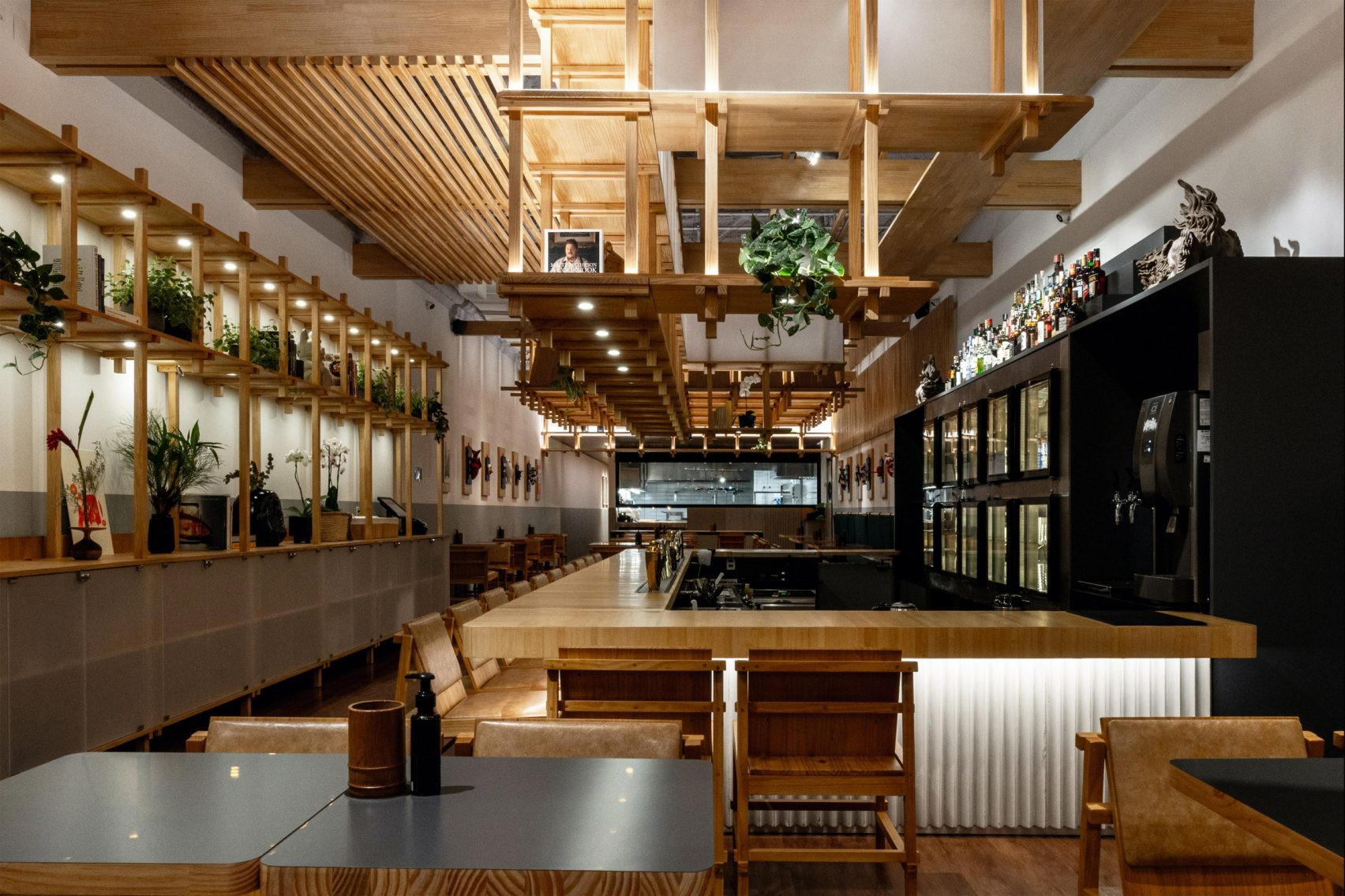
A small, product-packed bakery with limited eat‑in space where shelves are lined with hard breads, danishes, cakes, and sandwiches, creating a lively but still comfortable grab‑and‑go atmosphere typical of a neighborhood favorite.