
Tabelog 100 #87
Our verdict
Le Petit Mec Imadegawa ten is a Kyoto bakery-cafe with a serious local reputation rather than a luxury-restaurant posture. Its signal is concrete: Tabelog 100 Bread selections across multiple years, a low everyday price band, and a format built around bread, Western-style sweets, cafe use, and take-out in Kamigyo Ward.

Pearl is the En Primeur Club membership app, where members save venues, book tables and use the concierge.
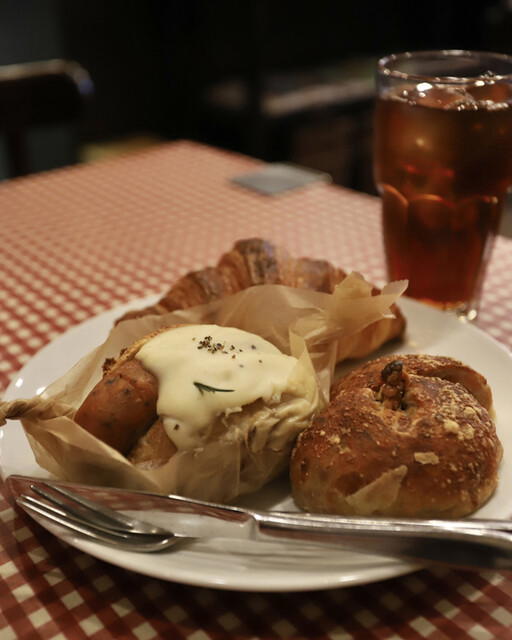
The menu
What to order
- Croissants
- Baguette
- Pain de campagne
- Sandwiches
- Galette des rois (seasonal)
Kyoto’s bakery culture works at street level: trays moving, doors opening early, butter and fermented dough persuading more than signage. Kyoto is better known abroad for formal dining rooms and temple-side sweets, but its bread scene has its own grammar, shaped by compact shopfronts and a local habit of morning and midday buying rather than drawn-out dining. Le Petit Mec Imadegawa ten fits that category: a bakery-cafe where room, counter, and take-out rhythm matter as much as the seat.
Read this address not as a substitute for Kyoto’s formal dining, but as a correction to it. A visitor can spend heavily at Nishijin Hashimoto, or build an evening around soba at Sobaya Nikola and other Kyoto dining rooms, yet the city’s daily food intelligence often appears earlier and at a lower price. Bread in Kyoto is not an imported novelty; it is a developed urban habit, with stronger bakeries competing on consistency, range, and repeat custom rather than ceremony.
Kyoto bread culture, seen through a compact counter
Bakeries occupy an interesting place in Kyoto because they sit between two expectations. One is the city’s respect for craft, visible in wagashi houses such as Onkashi Tsukasa Shioyoshiken and older snack traditions across Kyoto. The other is a practical cafe culture for local shoppers and travelers moving through the city. The result is a bakery scene that can feel exacting without becoming precious.
The editorial signal is the category itself: Bread, Western-style sweets, and cafe. That combination explains the appeal better than any single dish name. It gives the shop range across breakfast, light lunch, and take-away purchases while keeping spending accessible. In Kyoto, where a serious meal can become a reservation-driven project, this kind of bakery offers a different pleasure: judging craft quickly, by crust, crumb, and turnover.
The trust marker is specific. The shop was selected for Tabelog 100 Bread WEST in 2022, with a listed Tabelog score of 3.55. That does not make it comparable to Michelin dining, and it should not be read that way. It places the bakery in a specialist peer group, where bread quality is tested by daily buying rather than a single celebratory seating.
Why the format matters more than formality
Kyoto’s dining spectrum can mislead if viewed only through price. A meal at Meirin, a bowl at Kombu to Men Kiichi, or a structured restaurant evening answer different needs. A bakery-cafe works in another register: short dwell time, quick selection, and the option to leave with food instead of building the day around a table. That scale sharpens the experience, keeping the room close to the counter and closer to a working Kyoto bakery than a destination dining room.
For travelers, the sensory value sits there. The room is not about grand design language; it is about proximity to the bake, tray sounds, the visual pull of a filled case, and the decision pressure of a queue that knows what it wants. The point is not to romanticize a single pastry or invent a house specialty. Serious bakeries reveal themselves through replenishment and restraint: enough choice to show ambition, enough focus to keep the case coherent.
That makes Le Petit Mec Imadegawa ten a sharp daytime stop, especially when a Kyoto itinerary leaves little room for a long lunch. It also pairs naturally with broader eating around the city. For a fuller restaurant map, compare it with other Kyoto dining rooms and casual counters. Those addresses sit in different lanes, but together they show why Kyoto rewards eating across formats rather than chasing only formal reservations.
How to place it in a Kyoto day
The Kyoto location gives the bakery a useful role in the city’s eating rhythm, away from the idea that every worthwhile meal needs to be a formal reservation. Kyoto is practical as well as ceremonial, and bakeries here tend to function as neighborhood infrastructure as much as food destinations. That matters. A bakery can be highly regarded without asking for the theatrical behavior of a tasting-menu room.
Planning should stay simple. Treat it as a bakery-cafe rather than a restaurant built around a long meal. The listed budget is accessible: Dinner: - JPY 999; Lunch: - JPY 999, with the price range shown as - JPY 999 - JPY 999. The category tells you how to use it: bread, Western-style sweets, and cafe, with the focus on everyday craft rather than private dining formality.
For travelers building a wider Kyoto itinerary, keep the categories separate. Use Our full Kyoto restaurants guide for meals, Our full Kyoto hotels guide for where to base, Our full Kyoto bars guide for evening drinking, Our full Kyoto wineries guide for wine-led planning, and Our full Kyoto experiences guide for cultural structure around the day. Kyoto works better when bread, ramen, wagashi, bars, and formal dining do different jobs.
Readers extending beyond Kyoto can use the same category-first logic elsewhere: compare casual precision, regional dining notes, quick-format comfort, spice-led specialization, and Japanese casual formats abroad in broad terms rather than expecting every city to behave like Kyoto. For a more formal contrast in Japan, restaurant dining in other cities shows how expectations change once the meal shifts from bakery counter to restaurant table.
Frequently asked questions
What price level is Le Petit Mec Imadegawa ten?
Pricing at Le Petit Mec Imadegawa ten is listed as - JPY 999 - JPY 999.
When can I go to Le Petit Mec Imadegawa ten?
Le Petit Mec Imadegawa ten is best treated as a bakery-cafe stop; confirm current hours directly before going.
What part of town is Le Petit Mec Imadegawa ten in?
Kyoto.
What's Le Petit Mec Imadegawa ten best at?
Its strongest credential is Tabelog Bread WEST 100 selection in 2022, alongside a listed Tabelog score of 3.55. The format is simple: bread, Western-style sweets, and cafe service in Kyoto.
Comparable Spots, Quickly
Comparable venues at a glance for context.
| Venue | Cuisine | Price | Awards | Notes |
|---|---|---|---|---|
| Le Petit Mec Imadegawa tenThis venue (the venue you are viewing) | Authentic French bakery & café | $10–20 | Tabelog 100 #87 | Not listed |
| RESTAURANT hidamarino | Modern French in central Kyoto | $30–50 | Tabelog 100 #8 | Shimogyō |
| La famille Morinaga Restaurant | French-Japanese Seasonal Fine Dining | $50–100 | Not listed | Nakagyō |
| LA VOITURE | French Patisserie Cafe | $10–20 | Tabelog 100 #2 | Sakyō |
| Patisserie Tandresu | French Patisserie & Cake Cafe | $20–30 | Tabelog 100 #14 | Sakyō |
| L'Oiseau Bleu | Vegan French Bakery | Not listed | Not listed | Kita-ku |
Recognition history
Dated appearances from independent guides and award organizations, with the underlying list record or original source where available.
Tabelog 100 #87 · No. 87
Tabelog · Tabelog 100 - Bread - WEST - 2022
Continue exploring
More in Kyoto
Restaurants in Kyoto
All restaurants in Kyoto →
Bars in Kyoto
All bars in Kyoto →
Hotels in Kyoto
All hotels in Kyoto →
Wineries in Kyoto
Browse all →
Details
- Cozy
- Classic
- Well Known
- Solo
- Casual Hangout
- After Work
- Standalone
- Design Destination
- Local Sourcing
- Street Scene
- A La Carte
- Counter Dining
- Small Plates
- Coffee
- Tea
Current opening hours
- Monday
- 8 AM–6 PM
- Tuesday
- 8 AM–6 PM
- Wednesday
- 8 AM–6 PM
- Thursday
- 8 AM–6 PM
- Friday
- 8 AM–6 PM
- Saturday
- 8 AM–6 PM
- Sunday
- 8 AM–6 PM
Hours can change for holidays and private events. Hours as of .